


Digital Transformation Evolution Stages Of A Business




Try Before you Buy Download Free Sample Product
 Impress Your
 Audience
 100%
100% Editable
 Save Hours
 of Time


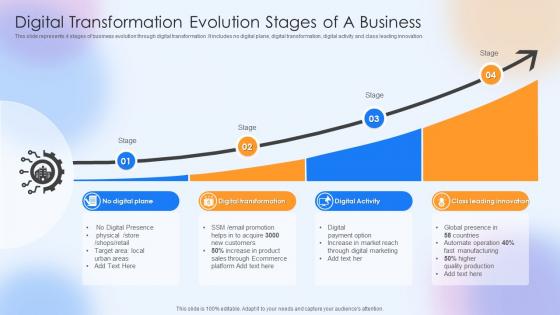
This slide represents 4 stages of business evolution through digital transformation .It includes no digital plane, digital transformation, digital activity and class leading innovation.
People who downloaded this PowerPoint presentation also viewed the following :
Digital Transformation Evolution Stages Of A Business with all 6 slides:
Use our Digital Transformation Evolution Stages Of A Business to effectively help you save your valuable time. They are readymade to fit into any presentation structure.





FAQs for Digital Transformation Evolution Stages
Honestly, it's mostly about what customers want now - they expect everything to work like Amazon, you know? Competition's huge too since everyone else is automating stuff and using data to make smarter calls. You'll get left behind if you don't keep up. Cloud tech and AI got way cheaper recently, so even small companies can afford it. COVID definitely pushed things faster with remote work and all that. My advice? Look for wherever your customers or team get most annoyed with how things work now. That's where you should probably start.
Track the stuff that actually matters - revenue from digital channels, how fast you're shipping products, customer satisfaction scores. Employee adoption rates tell you if people are buying into the changes or just going through the motions. Operational efficiency is big too. Honestly, most companies get way too caught up in vanity metrics that look impressive in PowerPoint decks but don't mean much. Measure against what you originally set out to do, not what everyone else is tracking. Monthly check-ins with stakeholders keep things on track, and don't be afraid to change course if something's clearly not working.
Think of data analytics like GPS for going digital - it shows you where you're at and the best path forward. You'll figure out which processes are actually broken, what customers really want, and where automation makes sense. Otherwise you're just throwing random tech at problems (which honestly never works out well). Most companies already have way more useful data than they think - start there and see what jumps out. Then use those insights to pick which digital projects will actually make a difference. Don't try to fix everything at once.
Honestly, the biggest mistake is just dumping changes on people without explanation. Tell them WHY this matters - like how it'll actually make their day better, not just some vague company benefit. Real conversations work way better than those boring all-hands emails everyone ignores. Training is clutch too - nobody wants to feel stupid with new tools. Find your enthusiastic people first and let them spread the word naturally. I've seen this go sideways so many times when companies treat employees like they're just along for the ride instead of actual partners.
Honestly, the biggest pain points are people fighting change and not having the digital skills to pull it off. Leadership says they're committed but then doesn't actually follow through - super frustrating. Budget's always tight too, this stuff costs serious money. Different departments can't talk to each other because their systems don't play nice, and don't even get me started on legacy tech. Oh, and companies always bite off way more than they can chew with vendors who oversell. Start with small pilot projects first. Training's huge - invest in your people or you're screwed. Get executives who actually care, not just ones paying lip service.
Honestly, you're in a better spot than those huge corporations stuck with ancient systems and red tape everywhere. Start simple - organize your customer info and automate the boring stuff first. Cloud tools are perfect since they won't break the bank and grow with you. Don't try fixing everything though, that's a recipe for burnout. Pick maybe 2-3 things that actually impact customers - online ordering, better marketing tools, whatever. You'll probably see changes way before those massive companies even finish their planning meetings.
Look, customers today expect everything instantly - personalized experiences, 24/7 support, the whole deal. Digital transformation isn't optional anymore. What's cool is you can actually predict what they want before they ask through data analytics and smart tools. Chatbots handle basic stuff while you focus on the complex problems. I'd start by looking at where customers get frustrated in your current process - that's where tech can really make a difference. The omnichannel thing sounds fancy but it just means meeting people wherever they are.
Look, I've watched companies blow millions on shiny new tech that nobody actually uses. The real issue? Culture beats strategy every time. Your team has to actually want change, and leadership needs to show they're cool with people screwing up while they learn. Without psychological safety, employees will find workarounds to avoid your fancy new systems - trust me on this. Before you launch anything big, figure out if your culture can handle transformation. Otherwise you're just throwing money at a people problem, not a tech one.
Honestly, everyone's going crazy for AI and machine learning right now - plus cloud stuff and IoT sensors. Edge computing's pretty solid if you need things happening fast. Automation tools are kinda obvious at this point, right? 5G is actually making all these work better together, which is cool. But here's the thing - don't try to do everything at once or you'll burn out your team. Pick maybe 2-3 things that'll actually fix your biggest headaches first. Start with whatever's gonna make you the most money back quickest. That's what I'd do anyway.
Look at where customers complain the most - that's where you'll find the biggest wins. Manual stuff that takes forever? Start there. Customer onboarding that sucks? Perfect target. Don't try to fix everything though (trust me on this one). Pick maybe 2-3 things that won't be a nightmare to implement but will actually move the needle. Inventory tracking, basic automation, stuff like that works well for beginners. Map out what'll give you quick results and decent ROI first. You can always get fancy later once you've got some momentum going.
Oh totally, they're way more connected than people think! Digitizing stuff naturally cuts waste and makes things run smoother - like remote work means less driving around, or AI figuring out exactly how much inventory you actually need. Digital tools are honestly a game-changer for tracking your environmental impact too, beats the hell out of endless spreadsheets. Cloud computing shrinks your physical footprint as well. I'd start by looking at whatever digital projects you've got planned anyway and see what environmental wins might come with them. You'll probably find more overlap than expected - it's kinda cool how that works out.
Here's what I've learned the hard way - cybersecurity will be your biggest headache AND your best friend during digital transformation. Don't even think about adding security later. Build it into everything from the start, whether you're moving to the cloud or launching new apps. Yeah, it'll slow things down and cost more upfront. But trust me, companies that skip this step? They end up paying 10x more when they get hacked. My advice: loop in your security people early and budget for the tools now, not later.
You'll need both tech skills and people skills, but here's the thing - you don't have to be some coding genius. Just know enough about AI, cloud stuff, and data to ask the right questions. Change management is probably the hardest part because people hate switching up how they work. Communication matters a ton since you're constantly explaining tech things to people who don't get it. Oh, and definitely work on strategic thinking - this field changes crazy fast and you'll be pivoting all the time. I'd figure out which area you suck at most and tackle that first.
APIs are your best bet here - they're like translators between old and new systems. Don't try replacing everything at once though, that's just asking for trouble. Break it down piece by piece instead. Middleware can do a lot of the heavy lifting with data routing too. Map out what you've got first (I know, sounds boring but trust me). Start with one important connection and see how it goes. We did something similar at my old job and honestly, the gradual approach saved us so many headaches.
Look, customer feedback is everything when you're trying to figure out digital transformation. Don't just guess what people want - I've watched companies blow tons of money doing that. Run surveys, test with real users, dig into your analytics. Map out where customers get frustrated in their journey with you right now. Those pain points? That's literally your roadmap for what to fix first. The feedback tells you which processes actually need digitizing and what features people care about. Honestly sounds obvious but so many businesses skip this step and wonder why their shiny new app sits unused.
-
“Slides are formally built and the color theme is also very exciting. This went perfectly with my needs and saved a good amount of time.”
-
I didn’t expect such a good service for the money I am paying. But, they exceed my expectations. Great work SlideTeam.