


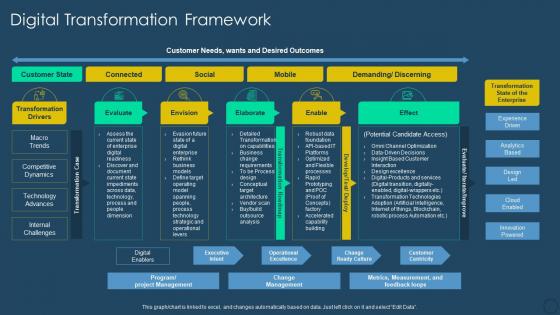
Exhaustive digital transformation deck digital transformation framework




Try Before you Buy Download Free Sample Product
 Impress Your
 Audience
 100%
100% Editable
 Save Hours
 of Time


Our Exhaustive Digital Transformation Deck Digital Transformation Framework are topically designed to provide an attractive backdrop to any subject. Use them to look like a presentation pro.
People who downloaded this PowerPoint presentation also viewed the following :
Exhaustive digital transformation deck digital transformation framework with all 6 slides:
Use our Exhaustive Digital Transformation Deck Digital Transformation Framework to effectively help you save your valuable time. They are readymade to fit into any presentation structure.






FAQs for Exhaustive digital transformation deck
Look, you need four main things: strategy that actually connects to business goals, leadership that's really on board, solid tech infrastructure, and change management. Most companies totally bomb on that last part, which is why their transformations fail. Don't just digitize stuff because it sounds cool - tie everything back to what customers actually want. Data governance matters too, plus training your people and tracking real metrics. Oh and team structure is huge, people always forget that. I'd start by figuring out where you are now vs where you want to be in like a year or so.
Start with a digital maturity assessment - basically score yourself 1-5 on tech infrastructure, data capabilities, employee skills, and customer experience stuff. Most companies are way too generous with their self-ratings, which is kinda hilarious but also useful reality check territory. McKinsey has a decent framework, or the Digital Marketing Institute's works too. Hell, you could make your own scorecard if you want. The trick is being honest about where you actually suck right now. Then use those scores to figure out what needs fixing first and throw money at the biggest gaps.
Honestly, leadership makes or breaks this stuff. Without them actually championing it, you'll just end up with another dead tech project collecting dust. They've gotta communicate the why behind everything - like constantly. Plus someone needs to knock down all those department walls that always get in the way. The budget approval thing isn't enough either, they have to be out front taking real risks on new approaches. I've watched so many transformations crash because executives just throw money at it and disappear. Your leaders need to model the change they want, otherwise people won't buy in.
Honestly, you can't mess around with cloud infrastructure and data analytics - that's your base layer right there. APIs are huge too because nothing works in isolation anymore. Automation tools will save your sanity once you get rolling. AI/ML is pretty much expected now, but don't go crazy trying to AI-ify everything (seen too many companies waste money that way). Mobile-first thinking and security need to be part of your DNA from the start. Oh, and here's what I'd actually do: nail the cloud and analytics first for some quick momentum, then gradually add automation and smarter features. Just solve real problems, not whatever's trending on Product Hunt.
Honestly, just throw everything into a 2x2 matrix - business impact vs how hard it'll be to pull off. Grab those easy wins first because you need something to show for all this effort. Leadership loves seeing quick progress, trust me on that one. After that, go after the big meaty projects that actually matter. Don't let yourself get sucked into every shiny project that comes along - I swear, some companies just chase whatever sounds cool. Set up some kind of scoring based on ROI and what resources you've actually got. Then stick to it when people start whining.
Dude, the worst mistake is diving headfirst into fancy tech while ignoring your team culture. People hate change when they're not included, trust me. Companies also try digitizing everything simultaneously - terrible idea. Pick one area first. Leadership always lowballs the timeline and budget (spoiler: double whatever you're thinking). Most places completely skip change management too, which is honestly insane. Oh, and middle managers will tank your project if they're not on board early. Start with people and processes before buying expensive software. Way less painful that way.
Look, data analytics stops you from making decisions based on hunches that are probably wrong. You'll start seeing actual patterns in how customers behave and where your processes are getting stuck. Honestly, it's way better than just crossing your fingers and hoping things work out. The trick is building dashboards that track stuff that actually matters for whatever you're trying to change. Don't go crazy with it though - just pick one area where you're basically flying blind right now and start getting some real numbers flowing there first.
Track both tech stuff and business impact - you need the full story. Technical metrics: system uptime, how many people actually use it, automation percentages. Business side is revenue from digital channels, cost savings, customer satisfaction. Time-to-market improvements are seriously underrated but they're probably the best way to prove transformation value. Don't go overboard though - pick like 3-5 metrics your stakeholders care about. I made the mistake once of tracking literally everything and nobody looked at half of it. Simple dashboard, monthly reviews with the team, and you're golden.
Dude, you absolutely need to train your people properly or you're just wasting money on tech nobody will use. I've watched companies drop crazy amounts on software that just collects digital dust because employees stick to their old ways. First, figure out what skills your team is missing. Then build training that actually connects to what you're trying to achieve - both the technical stuff and getting them to think differently about work. Honestly, the mindset shift is probably harder than learning the tools themselves. Without proper training, even the best digital transformation falls flat.
Honestly, focus on three big things: self-service stuff, personalization, and making sure everything connects smoothly. Mobile apps and chatbots are huge - people want to fix things themselves at 2am, you know? Use your data to personalize everything because we're all spoiled by Netflix now and expect that everywhere. The omnichannel thing is critical though - nothing's more annoying than repeating your info when you switch from the website to calling them. I'd start by actually mapping out how customers move through your system right now. Find the worst pain points first and tackle those.
First thing - audit everything you've got so you actually know what you're dealing with. Data formats, APIs, all that fun stuff. Don't go nuclear and rip it all out at once though, that's basically asking for disaster. Use something like MuleSoft to build bridges between your old and new systems instead. Run things in parallel for a while so you can spot problems before they blow up. Oh, and seriously - figure out your data mapping strategy first. I've seen way too many projects crash and burn because people skip that step. Trust me on this one.
So here's the thing - a digital transformation framework basically helps you spot where tech can cut your environmental impact. Map out your current processes first, then look for the biggest opportunities. Cloud migration usually beats on-premise servers for energy efficiency. Automating stuff reduces paper waste too. IoT sensors are clutch for tracking actual energy usage across your facilities. The data piece is honestly huge - you finally know your real footprint instead of guessing. I'd focus on whatever processes seem like they'll give you the most return first, sustainability-wise.
Honestly, psychological safety is everything - nobody's gonna take risks if they think they'll get fired for screwing up. Maybe try something like Google's 20% time where people can experiment with random ideas. Cross-functional teams work great too since mixing different departments usually sparks the weirdest (and best) solutions. But here's the thing - if you're preaching innovation in meetings then micromanaging every little decision, you're basically killing creativity before it starts. Give people actual autonomy to test stuff out. Oh, and celebrate the smart failures alongside wins. Start with small pilots to get momentum going.
Dude, collaboration will make or break your whole thing. I've watched so many projects crash because IT just did their own thing while everyone else got left out. Finance needs to get the numbers, marketing has to figure out the new customer stuff, operations needs to change how they work - the whole deal. Can't have departments working separately and then acting shocked when nobody wants to use the new system. My advice? Get cross-functional teams going from day one and actually let them make decisions, not just give opinions.
Look, everyone's obsessed with AI but the real magic happens when it actually gets built into boring business stuff - not just those chatbots that still can't book you a decent restaurant. Low-code platforms are exploding too. Edge computing's finally hitting mainstream, which is wild if you think about it. Companies are also pushing hard on sustainable tech and employee experience tools that don't suck. Data mesh is getting popular for breaking down those nightmare data silos we all hate. My take? Pick like 1-2 things that fix your current headaches. Don't chase every shiny trend or you'll burn out.
-
Content of slide is easy to understand and edit.
-
Amazing product with appealing content and design.