


Exhaustive digital transformation deck inventory management dashboard




Try Before you Buy Download Free Sample Product
 Impress Your
 Audience
 100%
100% Editable
 Save Hours
 of Time


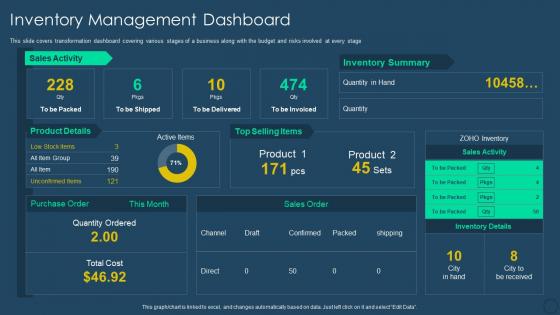
This slide covers transformation dashboard covering various stages of a business along with the budget and risks involved at every stage
People who downloaded this PowerPoint presentation also viewed the following :
Exhaustive digital transformation deck inventory management dashboard with all 7 slides:
Use our Exhaustive Digital Transformation Deck Inventory Management Dashboard to effectively help you save your valuable time. They are readymade to fit into any presentation structure.






FAQs for Exhaustive digital transformation deck
Look, you've got four main things to nail: people, tech, processes, and data. First thing though - get your executives on board or you'll be banging your head against a wall forever. Train your team properly because fancy software means nothing if nobody knows how to use it. Don't just slap technology onto your old broken processes either - that's like putting lipstick on a pig. Build out your data foundation since that's what actually drives good decisions. Oh, and pick just one area to focus on initially. Trying to fix everything at once never works.
Pick one thing that's driving you crazy - like invoicing or answering the same customer emails over and over. Don't try to automate everything at once (learned that the hard way with a client who went broke doing exactly that). Free tools like Canva and Mailchimp work great when you're starting out. Square's solid for payments too. Test it for a few weeks, see if it actually saves time, then move to the next headache. You'll build momentum without emptying your bank account. Rome wasn't built in a day and all that.
Think of data analytics like your GPS for going digital - shows you exactly where you're stuck and the best path forward. Instead of guessing what's broken, you'll actually know which processes need fixing first. Track whether your new digital tools are doing anything useful (spoiler: half of them probably aren't). Pick one thing to measure really well instead of tracking everything badly - trust me on this one. The goal is making decisions based on actual facts, not just listening to whoever shouts loudest in your meetings.
Honestly, you gotta track both the obvious stuff and the fuzzy metrics. Hard numbers like cost savings, revenue bumps, productivity gains - those are easy. But don't sleep on the harder-to-measure things like customer happiness and whether your team actually likes working there. That stuff matters way more than people think. Before you change anything, write down your current numbers. Pick maybe 3-5 KPIs that actually connect to what your business cares about - tracking everything just makes you crazy. Then check in regularly. Start measuring now if you aren't already. Trust me on this one.
Honestly, the biggest pain is gonna be your team fighting you on changes - people hate learning new stuff. Legacy systems are a total headache too, nothing connects properly. Budget's always tight and ROI takes forever to show up, which sucks when you're trying to prove it's worth it. Finding skilled people is rough right now, plus moving all that data around makes security a mess. Oh, and coordinating everything at once? Nightmare fuel. Start with small pilot projects instead of going all-in. Way smarter and you won't blow your budget learning the hard way.
Dude, training is HUGE - like make-or-break huge. People need to get the "why" before they'll buy into new tools. I've watched entire teams torpedo projects just because everyone felt clueless and panicked. Skip the boring PowerPoint stuff though. Do hands-on sessions instead, and pick a few tech-savvy people in each department to be your go-to helpers. Nobody wants to feel abandoned when everything's changing. Oh, and don't roll it out to everyone at once - that's asking for disaster. Start small with pilot groups first. Trust me on this one.
Look, AI and blockchain aren't just buzzwords anymore - they're actually critical if you want to stay competitive. With AI, you can automate tedious stuff, make way better decisions using your data, and personalize customer experiences. Blockchain's great for when you need transparency and trust, especially with supply chains or secure transactions. The companies getting left behind? They're still thinking this is "future tech" - spoiler alert, it's not. My advice: start small though. Pick one process where AI could help, or figure out where blockchain might solve a trust problem you're already dealing with.
Your customers are honestly what's pushing all this digital stuff forward. They want everything fast, personalized, and smooth no matter where they interact with you. Miss that mark and they'll bounce to whoever gets it right - which is pretty much everyone these days. The tricky part? Their expectations keep shifting, so you can't just do one big update and call it done. I'd start by figuring out what they actually want versus what you're giving them right now. That gap between the two is basically your to-do list for transformation.
Okay so first thing - actually talk to your customers instead of guessing what they want. Do surveys, interviews, look at how they're using your stuff. Then prioritize based on that data, not what's convenient for your team (which is what most companies do, honestly). Skip the fancy bells and whistles. Just make things easier for them to use. Oh and definitely test with real people before you launch anything major - I've seen so many companies learn this the hard way. Your teams need to be ready to pivot quickly when stuff breaks. Track customer satisfaction scores, not just whether it made your internal processes smoother.
So digital transformation totally changes how your team operates day-to-day. People start collaborating way more because they're all on the same platforms now. Most folks get pumped about the new tech at first - it's kinda like getting new toys. But here's the thing: if you just dump it on everyone without warning, they'll freak out. I've seen that happen before and it's messy. Get your people involved from the start instead of making decisions behind closed doors. Train them properly and make a big deal about the small victories. That keeps everyone motivated and moving forward.
Cross-functional teams are your best bet - mix IT people with business users right from the start. Communication tools like Slack actually make a huge difference (way more than you'd think). Skip the endless email chains. Regular check-ins and shared dashboards keep everyone on the same page about what's working and what's not. Celebrate small wins together, but also be upfront when things go sideways. Oh, and definitely start with pilot programs where people can experiment without breaking everything company-wide. Give teams room to learn and screw up a bit - that's honestly where the real progress happens.
Look, first thing - tie everything back to the numbers your bosses actually care about. Revenue, costs, customer happiness, whatever keeps them up at night. I've seen too many teams chase fancy AI tools just because they're trendy (guilty as charged honestly). Map each project to something measurable you can point to later. Check in with people regularly so nobody goes rogue. Oh, and here's the thing - this isn't really about technology at all. It's business strategy that happens to use tech. That mindset shift makes all the difference when you're trying to get buy-in.
Dude, poor planning will totally destroy your digital transformation. Budget goes through the roof, deadlines get missed left and right. Your employees hate it because nobody explains what's going on. Then your new systems don't even talk to each other - you're stuck with expensive tech that fixes nothing. Security becomes a nightmare too when you rush into platforms without checking risks first. Companies blow millions on this stuff all the time, it's crazy. Map out your strategy beforehand, get your team involved early, and definitely have a backup plan ready.
Honestly, don't chase every shiny new tech trend - you'll go crazy. Build stuff that can adapt instead. Modular systems work best: microservices, API-first setups, teams that can actually pivot when needed. I've watched so many companies freeze up trying to find the "perfect" tech stack (spoiler: it doesn't exist). Better to invest in teaching your people new skills and set up quick testing cycles. Try things small-scale first where failure won't kill you. Oh, and resist over-engineering everything - I'm guilty of this too. Keep those feedback loops short so you can change direction fast when the market shifts.
Dude, leadership makes or breaks this stuff. Can't just dump new tech on people and cross your fingers. Your execs need to actually walk the walk - I've watched so many projects crash because leadership preached digital but still did everything the old way. They gotta explain why you're changing, give teams the resources they need, and be willing to kill outdated processes. Oh and communicate the vision clearly, not in corporate speak. Honestly? Start by figuring out if your leaders are really committed or just saying the right buzzwords.
-
Excellent Designs.
-
Qualitative and comprehensive slides.