

Digital transformation solution powerpoint presentation slides





Try Before you Buy Download Free Sample Product
 Impress Your
 Audience
 100%
100% Editable
 Save Hours
 of Time


Introducing Digital Transformation Solution PowerPoint Presentation Slides. Integrate modernized technology into all the areas of your business by making use of this digital change plan PPT template. Fundamentally change how you deliver value and operate in the marketplace. Challenge your status quo and conquer any difficulty by incorporating this business transformation PowerPoint presentation in the way your business functions. This topic-specific and extensively researched technology change PPT graphic will prove useful for business persons looking to adopt modern technology and implement it in their work culture. Additionally, it will help you add value to every customer interaction by using more technology. Furthermore, you can discuss the importance, core elements, barriers, way to achieve and other aspects of digital transformation by employing this technology change plan PowerPoint layout. Hence, download our professional and extremely useful digital transformation ppt presentations now to facilitate technology change in your business operations.
People who downloaded this PowerPoint presentation also viewed the following :
Content of this Powerpoint Presentation
Slide 1: This slide introduces Digital Transformation Solution. State Your Company Name and begin.
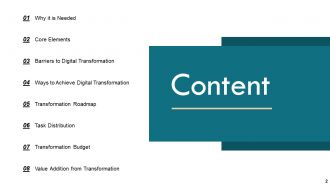
Slide 2: This slide shows Content of the presentation.
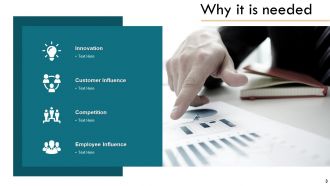
Slide 3: This slide shows Why it is Needed describing- Innovation, Customer Influence, Competition, Employee Influence.
Slide 4: This slide presents Core Elements describing- Customer Understanding, Customer Touch Points, Digitally Modified Business, Performance Management, Process Digitization, Top – Line Growth.
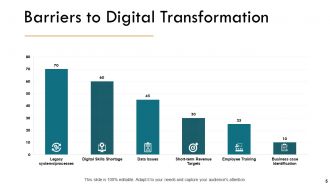
Slide 5: This slide displays Barriers to Digital Transformation in a graphical form.
Slide 6: This slide represents Ways To Achieve Digital Transformation.
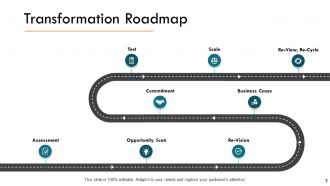
Slide 7: This slide showcases Transformation Roadmap describing- Opportunity Scan, Re - Vision, Business Cases, Commitment, Test, Scale, Re - View, Re - Cycle, Assessment.
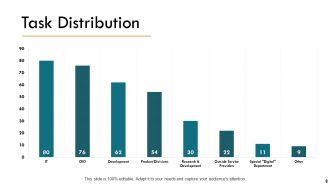
Slide 8: This slide shows Task Distribution in graphical form.
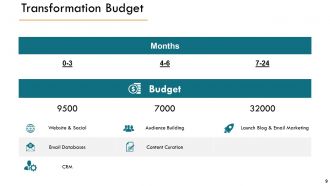
Slide 9: This slide presents Transformation Budget. You can add or edit data as per requirement.
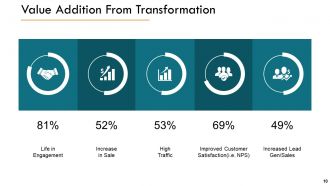
Slide 10: This slide represents Value Addition from Transformation.
Slide 11: This slide displays Digital Transformation Solution Icons.
Slide 12: This is About Us slide to show company specifications etc.
Slide 13: This is Our Team slide with names and designation.
Slide 14: This is a Quotes slide to convey message, beliefs etc.
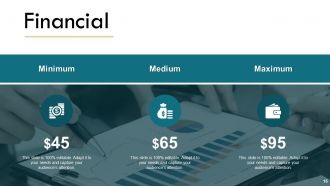
Slide 15: This is a Financial slide. Show your finance related stuff here.
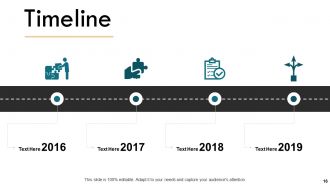
Slide 16: This is a Timeline slide to show information related with time period.
Slide 17: This is a Thank You slide with address, contact numbers and email address.
Digital transformation solution powerpoint presentation slides with all 17 slides:
Use our Digital Transformation Solution Powerpoint Presentation Slides to effectively help you save your valuable time. They are readymade to fit into any presentation structure.






FAQs for Digital transformation solution
So many companies blow this by jumping straight to fancy tech stuff, but honestly you need leadership on board first with a real vision. Employee training is huge too - change management basically. Your data infrastructure probably needs work, and yeah you'll want digital tools that actually fix real problems (not just look cool). Metrics help track if it's working. Oh and start with small pilot projects instead of going crazy trying to change everything. People, process, then technology - that order matters way more than most executives think.
Track the obvious stuff first - cost savings, revenue bumps, how much faster processes run. Customer satisfaction scores are huge too, though honestly they're harder to tie directly back to your digital changes. Employee productivity matters but it's kinda messy to measure. Here's the thing though - you need baseline numbers before you start anything, otherwise you're just guessing later. Set up quarterly check-ins to compare against where you started. Don't wait to begin measuring, even if you're still figuring out the transformation part.
Honestly, leadership makes or breaks these things. I've watched so many projects just die because executives weren't really on board - they'd say the right words but then not put their money where their mouth is. You need C-suite people who actually get technology and can explain to everyone why this isn't just another buzzword initiative. They've gotta break down those departmental walls too, which is harder than it sounds. Short version? If your leaders are just going through the motions, you're probably screwed from the start.
Honestly, AI and IoT are game-changers for going digital. IoT connects all your physical stuff to the internet, while AI makes sense of that data and automates decisions. You'll get real-time optimization, way better customer experiences, and you can catch problems before they become expensive disasters. The combo creates business models most companies haven't even imagined yet - which is pretty wild when you think about it. My advice? Pick one small project first instead of trying to transform everything at once. Way less overwhelming that way.
Honestly, the hardest part is always getting people on board - everyone freaks out about change. Your team probably doesn't have the skills yet either. Budget's another killer, especially when executives don't get that ROI takes time. Oh, and integrating with old systems? Absolute pain. Security concerns pile on top of that mess, plus you're drowning in tech options. Here's what actually works: run tiny pilot projects first to show results. Get the bosses excited early. Spend serious money on training your people - like, way more than you think you need. Change management isn't sexy but it'll save your butt.
Dude, this stuff can totally make or break everything. I've watched companies blow ridiculous amounts of money on fancy tech that just sits there collecting digital dust because nobody knows how to use it. Get your people involved from day one - show them how it actually benefits THEM, not just the company. Proper hands-on training is huge too. Oh, and find those early adopters who are excited about change? They're gold for getting everyone else on board. Honestly sounds obvious but so many places skip this step and then act shocked when nothing works.
First thing - map out what you've got now, all your systems and how data moves around. APIs are usually the way to go for connecting old stuff to new without ripping everything apart. Middleware can be a lifesaver too, basically acts like a translator between your crusty old databases and shiny new apps. Oh, and sandbox everything first - learned that one the hard way. Roll things out slowly instead of trying to do it all at once. You'll want to document every connection point obsessively because when something breaks at 2am, you'll be grateful you did.
Honestly, put your customers first when you're doing any digital stuff. I'd map out their whole journey before touching any tech - see where they're getting annoyed or stuck. That's your starting point right there. Don't just digitize things because you can (I've seen so many companies waste money doing exactly that). Every new tool or process change should make life easier for customers somehow. Short version: audit where people interact with your business, find the pain points, then figure out which technology actually fixes those problems. Makes way more sense than going backwards.
Retail, healthcare, finance, and manufacturing are getting absolutely crushed right now. Look, if you don't have solid e-commerce, you're basically toast - everyone's shopping online. Banks are scrambling to build better mobile apps while healthcare is digitizing patient records and pushing telemedicine hard. Manufacturing? They're obsessed with IoT and automation stuff. Honestly, any industry that deals directly with customers or has messy operational chains needs to figure out their digital game ASAP. My cousin works in supply chain and says it's been chaos for companies that didn't adapt.
Honestly, you've gotta make people feel safe to mess up first. Nobody's gonna try anything new if they think you'll roast them for failing. Celebrate the smart failures - yeah, even the ones that don't work out. Give teams some free time to tinker around (Google's famous for that 20% thing). Here's the real kicker though: you need to actually DO this stuff yourself. Try new things, admit when they flop. Maybe start with some hackathons or small challenges to get the ball rolling. But seriously - follow through on the good ideas that surface. Nothing kills creativity faster than watching suggestions vanish into thin air.
Oh man, don't try to digitize your whole company overnight - that's a disaster waiting to happen. Start with one process that'll actually make a difference. Your employees will either love you or hate you for this, so include them from day one. Most companies get obsessed with fancy tech but forget their actual workflows need to change too. Data security can't be an afterthought either, trust me on that one. Training takes way longer than anyone thinks it will. Pick something small, nail it completely, then build from there. Way less stressful that way.
Honestly, you need data analytics set up first or you're just blindly throwing cash at fancy tech. Think of it as your GPS - shows you which processes are actually broken (not just the ones everyone whines about). Quick wins become obvious, which keeps the bosses happy. I learned this the hard way at my last job. Short sentences work: it tracks if changes stick. Long-term success means making decisions based on real numbers instead of hunches. Set up your measurement system before you start changing anything so you can see progress from day one.
Look, digital transformation massively expands your attack surface. More cloud stuff, IoT gadgets, remote workers - each one's another way hackers can get in. It's like adding rooms to your house but leaving the doors wide open. Security can't be an afterthought you slap on later. Your security folks need to be in those planning meetings from the start, not just showing up to fix disasters. I've seen too many companies learn this the hard way. Build it into every initiative or you'll regret it.
So cloud computing is basically the foundation for going digital - gives you flexibility and cost savings without those crazy upfront costs. You can move old systems over, let people work remotely, and get access to AI stuff and analytics. Honestly, dealing with your own servers is just a pain at this point. The cool thing is you can test ideas super fast since spinning up new services is easy and you only pay for what you actually use. I'd start with moving non-critical apps first - they're good for testing the waters without risking too much.
Dude, customer feedback is everything when you're doing digital transformation. Don't just build cool tech because it sounds fun - I've watched so many companies do this and fail hard. Survey your customers first about what actually pisses them off with your current setup. That becomes your roadmap. Focus on fixing real problems, not imaginary ones. During rollouts, keep asking for feedback so you can pivot fast if something's not working. The whole point is solving pain points that matter to users, not impressing people with shiny new features they'll never use.
-
Helpful product design for delivering presentation.
-
Presentation Design is very nice, good work with the content as well.
-
Awesomely designed templates, Easy to understand.