


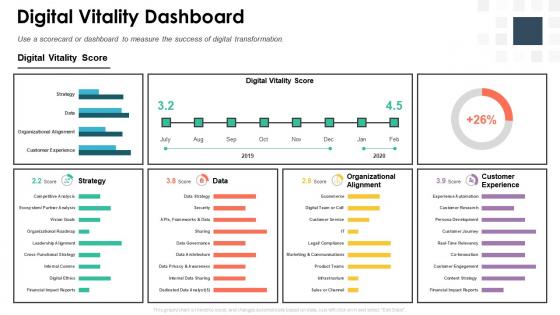
Building digital strategy roadmap for digital transformation digital vitality dashboard




Try Before you Buy Download Free Sample Product
 Impress Your
 Audience
 100%
100% Editable
 Save Hours
 of Time


Use a scorecard or dashboard to measure the success of digital transformation.
People who downloaded this PowerPoint presentation also viewed the following :
Building digital strategy roadmap for digital transformation digital vitality dashboard with all 7 slides:
Use our Building Digital Strategy Roadmap For Digital Transformation Digital Vitality Dashboard to effectively help you save your valuable time. They are readymade to fit into any presentation structure.





FAQs for Building digital strategy roadmap for digital transformation
So first thing - get your leadership on board with WHY you're doing this whole transformation thing. Map out what you currently have tech-wise and spot the gaps. The people stuff is honestly where most companies mess up, so plan how you'll train everyone and manage the chaos. Data governance and security can't be an afterthought (I've seen that disaster too many times). Oh, and don't try to do everything at once - break it into phases with some easy wins upfront. That momentum really helps when things get messy later.
First thing - do a real assessment of where you're at with tech, processes, and how comfortable your team is with digital tools. Be honest about it too, because most companies think they're way more advanced than they actually are (guilty as charged lol). Check out some free frameworks online to see how you stack up against your industry. Survey your employees about what's driving them crazy with current systems - their feedback is gold. Once you know your actual starting point, you can figure out what needs fixing first instead of just throwing money at random tech upgrades.
Honestly, your leadership team makes or breaks this whole thing. They've gotta actually get what digital transformation is about - not just throw around fancy terms at meetings. Without them setting a clear vision and fighting for budget, you're screwed. The biggest headache? Those department silos that somehow always exist. Leadership needs to tear those down and get everyone talking. Plus they have to sell people on why change is worth it, because most folks will resist it hard. I've seen too many companies waste money on pilots that sound cool but never actually scale up. Your execs need to stay visible and keep pushing progress updates, or momentum dies fast.
Look, I'd map everything against business impact vs how hard it'll be to pull off - grab those high impact, easy wins first. Focus on stuff that actually fixes customer headaches or those operational processes that make everyone want to scream. Those quick wins? They're gold for getting leadership on your side. Makes the rest so much smoother. Once you've shown some real value, then you can tackle the messier, complicated projects. Build a basic scoring system - ROI potential, what resources you'll need, how it fits your strategy. Check in every quarter and don't be stubborn about shifting when things change. Trust me on this one.
Track the money stuff first - revenue growth, cost savings, how fast you're getting new customers. Then look at the boring operational things like uptime and whether processes actually run smoother. User adoption is probably the most important though, because I've seen so many companies blow tons of cash on tech nobody touches. Customer satisfaction scores help too. Oh, and productivity gains if you can measure them without going crazy. Start with maybe 5-6 metrics max - any more and you'll just confuse yourself trying to figure out what matters.
You've gotta make failure feel safe first - that's literally everything. Pick some low-risk area where your team can mess around without consequences. Most experiments fail anyway (mine sure do), but celebrate the smart attempts publicly. Google's 20% rule works for a reason. Mix up your teams so different people bounce ideas off each other. The real trick? Actually walk the walk, not just talk about innovation. People watch what you DO way more than what you say. Start small somewhere and let them run with it.
Honestly, the worst part is dealing with people who hate change - your team will fight you on everything. Executive buy-in sounds easy but getting them to actually commit? Good luck. Don't try tackling everything at once, you'll burn out fast. Legacy systems are absolute hell to work with, and half your staff won't know the new tech anyway. Oh, and budget issues always hit right when you're making progress. Start with small pilot projects first. Get some executives actually backing you early on, not just nodding along. Spend real money on training people - seriously, it makes or breaks everything.
Honestly, just tie everything back to money - whether you're making more, spending less, or keeping customers happier. I know it sounds boring but hear me out. Every tech project needs real KPIs connected to actual business goals. Skip the shiny new tools just because they're trendy (guilty of this myself lol). Set up quarterly check-ins to see what's actually working. If a project isn't moving the needle after a few months? Cut it loose. Sounds harsh but you'll thank me later when you're not throwing money at random digital stuff.
Honestly, start with cloud infrastructure - it's like the foundation for everything else you'll build on top of. Data analytics and AI/ML tools are next so you can actually understand what all that info means. Automation has been incredible for us, saves so much time it's not even funny. Oh and don't sleep on cybersecurity and API management for connecting stuff together. If you're dealing with customers directly, mobile/web dev platforms matter too. Here's the thing though - pick one or two technologies that fix your worst headaches first. Building everything at once is a nightmare. Trust me on that one.
Think of data analytics as your roadmap through this whole mess. It'll show you what's actually broken vs what you think is broken - trust me, there's usually a difference. Track how users behave, where operations get stuck, and what's giving you decent ROI. Too many companies I know just went after the flashiest tech without any real backing. Pick 3-4 metrics that actually matter for your goals first. Then you can see if your changes are working or if you need to switch gears. The data doesn't lie, even when everything feels chaotic.
Honestly? Make them feel like they're part of the solution, not just dealing with whatever you decided. Explain WHY you're changing things - people hate being kept in the dark. Get them involved early with pilot programs where their feedback actually matters. Don't dump all the training on them at once either, that's just overwhelming. Find those tech-savvy people on each team who can help everyone else figure out the new stuff. I've seen this work way better than the top-down approach. The whole thing should feel like collaboration, not something happening TO them.
Start with a risk assessment - figure out what could blow up on you before making big moves. Honestly, the tech part is usually easier than dealing with people who hate change. Train your team well and actually explain why you're doing this stuff. Don't go all-in right away though. Run small pilots first so you can mess up on a smaller scale and learn from it. Oh, and set clear metrics upfront - otherwise you'll have no clue if it's working or if you need to change course fast.
Honestly, your customers will notice the difference right away - everything just flows better. No more of those painful "hold on, let me transfer you" situations because your data actually talks between web, mobile, and in-store. Response times get way faster since automation handles the boring stuff, and the AI recommendations aren't terrible anymore (shocking, I know). Self-service tools that don't suck mean people can fix things themselves. The real game-changer? You'll spot problems before customers even complain. I'd start by mapping out where people get frustrated in your current setup - that's your roadmap right there.
Don't wait until the end to think about compliance and security - that's a recipe for disaster. Map out your regulatory requirements first, then set up security checkpoints at each project milestone. Think of it like quality gates but for risk stuff. Get your legal, security, and IT people involved from the beginning instead of springing surprises on them later (trust me, they hate that). Regular audits and vulnerability checks are crucial as you roll things out. Oh, and create a compliance checklist that follows each project around so nothing gets forgotten.
Look, continuous learning is what stops your digital transformation from being dead on arrival. Tech changes so ridiculously fast - honestly, I feel like there's a new AI breakthrough every other day. Build feedback loops so your team can actually pivot when they find better tools. Most successful transformations? They treat roadmaps like living documents, not some sacred text. Regular retrospectives are key - and you've got to genuinely listen to what's working versus what's a total disaster. That way you're adapting from real experience instead of blindly following whatever plan you made six months ago.
-
Professional and unique presentations.