

Six Strategies For Digital Transformation Powerpoint Presentation Slides




Try Before you Buy Download Free Sample Product
 Impress Your
 Audience
 100%
100% Editable
 Save Hours
 of Time


Showcase concepts of business process automation with the help of our fully editable Six Strategies For Digital Transformation PowerPoint Presentation Slides. Talk about key steps of building a successful digital business such as creating the right mindset and acquiring digital business skills etc. by utilizing the six methods of technology transformation PowerPoint slideshow. Demonstrate six building blocks of digital transformation like strategy, focus areas, skills, partnerships, and investment, etc. using the topic-specific technology transformation business model. The technology innovation PowerPoint complete deck contains various ready-to-use PPT slides, you can change colors, edit the text as per your needs. Represent six tasks of business process automation. You can also use the IT transformation PPT deck to discuss steps of the technology transition process e.g. organizational technology, data, and analytics, etc. Therefore download this visually appealing technology innovation framework PowerPoint presentation to engage your audience. Build your base on firm ground with our Six Strategies For Digital Transformation Powerpoint Presentation Slides. They bring out cardinal facts.
People who downloaded this PowerPoint presentation also viewed the following :
Content of this Powerpoint Presentation
Slide 1: This slide introduces Six Strategies for Digital Transformation. State your Company name and begin.
Slide 2: This slide displays the Outline of the Presentation.
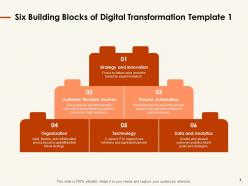
Slide 3: This slide depicts Six Building Blocks of Digital Transformation Template 1.
Slide 4: This slide describes Strategy and Innovation.
Slide 5: This slide showcases Customer Decision Journey.
Slide 6: This slide describes Process Automation with performance stages activities.
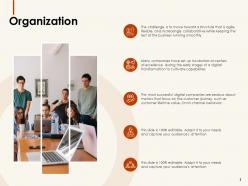
Slide 7: This slide depicts Organization with challenges.
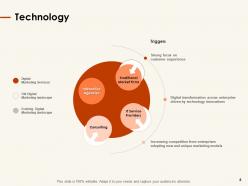
Slide 8: This slide describes Technology.
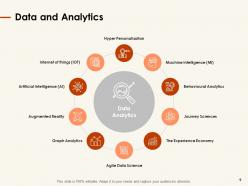
Slide 9: This slide depicts Data and Analytics with- Machine Intelligence (MI), Behavioural Analytics, Journey Sciences, The Experience Economy, Agile Data Science, Graph Analytics, Augmented Reality, Artificial Intelligence (AI), Internet of things (lOT), Hyper Personalization, Data Analytics.
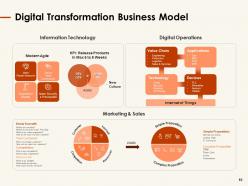
Slide 10: This slide showcases Digital Transformation Business Model.
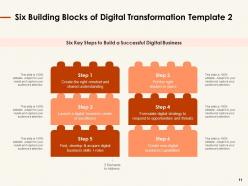
Slide 11: This slide showcases Six Key Steps to Build a Successful Digital Business.
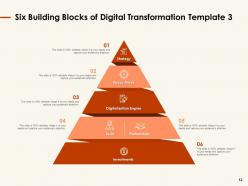
Slide 12: This slide depicts Six Building Blocks of Digital Transformation Template 3 with- Strategy, Digitalization Engine, Focus Areas, Skills, Partnerships, Investments.
Slide 13: This is Six Strategies for Digital Transformation Icons Slide.
Slide 14: This slide is titled as Additional Slides for moving forward.
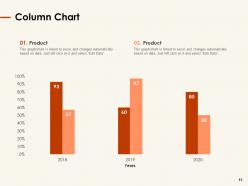
Slide 15: This slide displays the Column Chart with product comparison.
Slide 16: This slide displays the Line Chart with product comparison.
Slide 17: This is Our Mission slide with Vision, Goal, and Mission.
Slide 18: This slide is titled Post it Notes. Post your important notes here.
Slide 19: This is 30 60 90 Days Plan slide.
Slide 20: This is Thank You slide with address, Contact number, email address.
Six Strategies For Digital Transformation Powerpoint Presentation Slides with all 20 slides:
Use our Six Strategies For Digital Transformation Powerpoint Presentation Slides to effectively help you save your valuable time. They are readymade to fit into any presentation structure.











FAQs for Six Strategies For Digital Transformation
Key pillars of effective digital transformation include customer-centricity, data-driven decision making, cloud infrastructure, process automation, and cultural change management. These pillars work together by modernizing operations, enhancing customer experiences, and enabling scalability, with organizations across retail, healthcare, and financial services finding that strategic integration delivers competitive advantage and operational efficiency.
Organizations assess digital maturity through comprehensive technology audits, employee digital skills evaluations, customer experience assessments, data analytics capabilities reviews, and process automation analysis. These evaluations enable strategic roadmap development by identifying capability gaps, infrastructure limitations, and cultural readiness factors, with many enterprises finding that systematic maturity assessments ultimately streamline transformation investments and accelerate competitive positioning.
Leadership plays a pivotal role in digital transformation by establishing clear vision, allocating resources strategically, and fostering organizational culture change throughout the implementation process. Effective leaders champion these initiatives by communicating benefits across departments, removing operational barriers, and ensuring employee buy-in, with many organizations finding that executive commitment directly correlates with transformation success rates and sustainable competitive advantage.
Companies prioritize digitization by evaluating processes with high manual effort, frequent bottlenecks, significant cost impact, and customer-facing touchpoints first. Through strategic assessment frameworks, organizations typically target areas like invoice processing, customer onboarding, and inventory management, while considering implementation complexity and ROI potential, ultimately delivering operational efficiency and enhanced customer experiences.
Cloud computing, artificial intelligence, IoT sensors, automation platforms, and data analytics tools are most impactful in facilitating digital transformation across industries. These technologies streamline operations by enabling real-time insights, reducing manual processes, and enhancing customer experiences, with sectors like healthcare, manufacturing, and financial services finding significant competitive advantages through improved efficiency and scalability.
Businesses can measure digital transformation ROI through key performance indicators like operational efficiency gains, cost reduction percentages, customer satisfaction scores, revenue growth metrics, and time-to-market improvements. Organizations track these through analytics dashboards, financial benchmarking, and customer feedback systems, with many finding that combining quantitative data with qualitative insights delivers comprehensive transformation visibility.
Organizations face challenges including legacy system integration, employee resistance to change, cybersecurity concerns, insufficient digital skills, and budget constraints during digital transformation implementation. While these obstacles can slow progress, many companies find that phased approaches, comprehensive training programs, and strategic partnerships with technology providers help streamline transitions, ultimately delivering enhanced operational efficiency and competitive advantage.
Companies cultivate digital innovation cultures by investing in employee training, encouraging experimentation, establishing cross-functional collaboration, and rewarding creative problem-solving initiatives. Through comprehensive upskilling programs and innovation labs, organizations like banks and healthcare systems streamline processes while empowering teams to test new technologies, ultimately delivering enhanced operational efficiency and competitive advantage.
Organizations should establish clear communication channels, provide comprehensive employee training, secure leadership buy-in, implement phased rollouts, and maintain continuous feedback loops throughout transformation initiatives. These practices enable companies to minimize resistance, accelerate adoption, and maintain operational continuity, with many enterprises finding that strategic change management ultimately delivers higher success rates, improved employee engagement, and sustained competitive advantage.
Customer feedback can be integrated through real-time analytics platforms, customer journey mapping, social listening tools, and automated survey systems that capture insights at every touchpoint. These approaches enable organizations to identify pain points, prioritize digital initiatives, and continuously refine their transformation strategies, with many companies finding that feedback-driven transformations deliver significantly higher customer satisfaction and competitive advantage.
Digital transformation ethical considerations include data privacy protection, algorithmic bias prevention, employee displacement concerns, cybersecurity responsibilities, and transparent AI decision-making processes. Organizations must balance innovation with accountability, ensuring equitable access to digital services while protecting stakeholder rights, with many companies finding that proactive ethical frameworks ultimately enhance customer trust and competitive positioning.
Data analytics and AI enhance decision-making by providing real-time insights, predictive modeling, and automated pattern recognition across business operations. These technologies enable organizations to identify market trends, optimize resource allocation, and anticipate customer needs, with many financial services and retail companies finding that AI-driven analytics delivers faster strategic responses and significantly improved operational efficiency.
Digital transformation requires comprehensive workforce upskilling in areas like data analytics, automation tools, cloud technologies, digital collaboration platforms, and cybersecurity awareness. Organizations increasingly find that investing in continuous learning programs, microlearning modules, and cross-functional training delivers enhanced productivity, improved employee engagement, and competitive advantage, while ensuring teams can effectively leverage new technologies and adapt to evolving business processes.
Small businesses can leverage digital transformation by adopting cloud-based solutions, implementing automation tools, utilizing data analytics for decision-making, and enhancing customer experiences through digital channels. These technologies enable smaller organizations to streamline operations, reduce overhead costs, and deliver personalized services that rival larger competitors, with many finding that strategic digital adoption ultimately levels the competitive playing field.
Healthcare, financial services, retail, and manufacturing are experiencing the fastest digital transformation due to regulatory pressures, competitive demands, and customer expectations for seamless experiences. These industries leverage cloud computing, AI, and automation to streamline operations, reduce costs, and enhance service delivery, with many organizations finding that digital-first approaches deliver significant competitive advantages in increasingly demanding markets.
-
The Designed Graphic are very professional and classic.