


Transformation Strategy Powerpoint Presentation Slides





Try Before you Buy Download Free Sample Product
 Impress Your
 Audience
 100%
100% Editable
 Save Hours
 of Time


Use Transformation Strategy PowerPoint Presentation Slides to bring out a successful transformation. Be it a digital transformation, cultural transformation, organizational transformation or any other transformation, these content-ready professionally designed transformation strategy PowerPoint templates will help you execute the change without any hassles. This presentation covers transformation plan, strategy, checklist, obstacles, etc to let you have a smooth transition. Add these ready-made transformation strategy PPT slides to transform your organization to remain competitive or to serve your clients better. Implement a successful transition using ready-to-use change management PowerPoint slideshow. This deck comprises of PPT templates such as gap analysis, transformation readiness checklist, transformation obstacles, resistance management plan, communication plan, etc. Develop transformation strategy and design a plan to achieve the intended goals. This complete presentation will help you identify the potential risks to execute an effective transformation in an organization. Download transformation strategy PPT templates to achieve the desired goals. These templates are completely customizable. You can edit the color, text, icon, and font size as per your need. Grab this complete presentation now. Trigger the imagination of your audience with our Transformation Strategy Powerpoint Presentation Slides. Create a vision of the future with your thoughts.
People who downloaded this PowerPoint presentation also viewed the following :
Content of this Powerpoint Presentation
Slide 1: This slide introduces Transformation Strategy. State Your Company Name and begin.
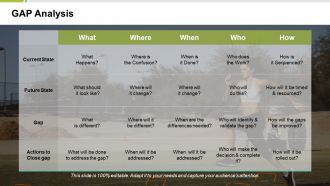
Slide 2: This slide presents GAP Analysis in tabular form.
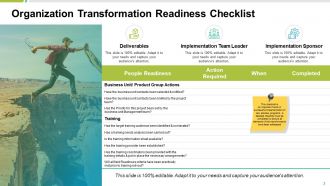
Slide 3: This slide presents Organization Transformation Readiness Checklist showcasing- Deliverables, Implementation Team Leader, Implementation Sponsor.
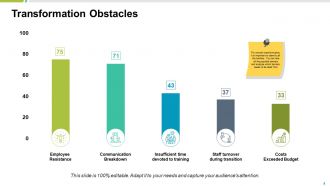
Slide 4: This slide showcases Transformation Obstacles in creative graph form displaying- Employee, Resistance, Communication, Breakdown, Insufficient time devoted to training, Staff turnover during transition, Costs, Exceeded Budget.
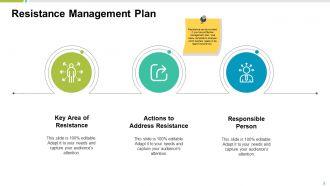
Slide 5: This slide displays a Resistance Management Plan showing- Key Area of Resistance, Actions to Address Resistance, Responsible Person.
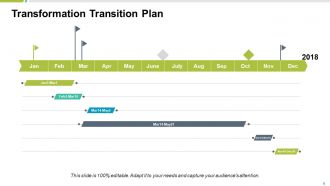
Slide 6: This slide presents a Transformation Transition Plan.
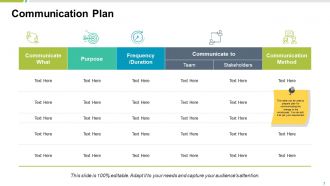
Slide 7: This slide showcases a Communication Plan in tabular form. This table can be used to prepare plan for communicating the change to the employees. You can edit it as per your requirement.
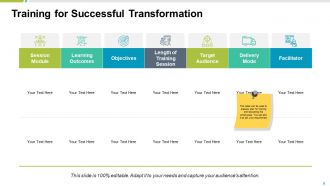
Slide 8: This slide shows Training for Successful Transformation. This table can be used to prepare plan for training and educating the employees. You can edit it as per your requirement
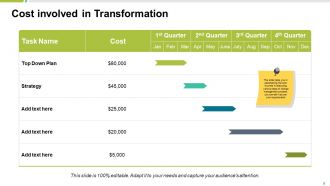
Slide 9: This slide shows Cost involved in Transformation. This slide helps you in ascertaining the cost incurred in executing various steps of change management process, you can edit it as per your requirements.
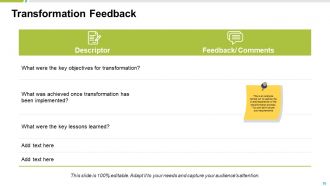
Slide 10: This is Transformation Feedback slide. This is an analysis carried out to capture the overall experience of the transformation process. You can edit it as per your requirements.
Slide 11: This is a Coffee break image slide to halt. You can change the slide content as per need.
Slide 12: This slide is titled Bars and Graphs to move forward. You can alter the slide content as per need.
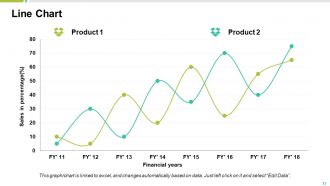
Slide 13: This is a Line Chart slide. State specifications, comparison of products/entities here.
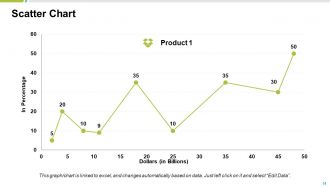
Slide 14: This is a Scatter Chart slide. State specifications, comparison of products/entities here.
Slide 15: This slide is titled Additional Slides to move forward. You can alter the slide content as per need.
Slide 16: This is Our Mission slide. State mission aspects here.
Slide 17: This is Our Awesome Team slide to state team specifications, information, etc.
Slide 18: This is an About Us slide. State company specifications here.
Slide 19: This is a Thank You slide with Address# street number, city, state, Contact Number, Email Address.
Transformation Strategy Powerpoint Presentation Slides with all 19 slides:
Be comfortable in any hemisphere with our Transformation Strategy Powerpoint Presentation Slides. They are familiar with customs everywhere.








FAQs for Transformation Strategy
Honestly, you've got to nail four things here. Vision comes first - be super specific about what you're actually transforming into and why it matters. Get your leadership on board early, plus find champions scattered throughout the company. Map out where your skills are lacking and figure out your investment priorities (the timeline part is always a nightmare but you can't skip it). Communication is huge too - everyone needs to know what's happening and how they fit in. Oh, and seriously don't move forward until that vision piece is locked down. I've seen too many transformations fall apart because people rushed past that foundation step.
Honestly, start with getting leadership on the same page - I've seen too many projects crash because executives were pulling in different directions. Map everything back to actual business goals, like if you want 20% revenue growth, your digital projects better directly feed into that. Break the big stuff into smaller chunks your team can actually hit. Oh, and don't skip the regular check-ins - quarterly works pretty well for catching problems before they snowball. The whole point is making sure every project connects to something real your business needs. Otherwise you're just doing transformation theater.
Honestly, your leaders make or break the whole thing. They set the vision and explain why you're doing this crazy transformation in the first place. When stuff inevitably goes sideways (and it will), they're the ones keeping everyone focused. You need leaders making hard calls about resources and - here's the key part - actually doing what they're asking everyone else to do. I've seen too many transformations fizzle out because leadership talked a big game but didn't follow through. People aren't stupid. They watch what the bosses actually do, not just their fancy emails about change.
Honestly, tech can be a total game-changer for transforming your business. Use analytics to see what's actually happening in real-time instead of guessing. Automation frees up your people for the stuff that matters more. Cloud solutions are probably your best bet - you can scale fast without dropping crazy money on infrastructure. Collaboration tools help break down those annoying silos between departments. Here's the thing though: don't just grab whatever tech looks flashy. Map out your biggest headaches first, then find tools that actually solve those specific problems. Otherwise you'll end up with expensive toys nobody uses.
Track both the obvious stuff (revenue, costs, ROI) and operational metrics like cycle times and error rates. Employee engagement is honestly make-or-break - grumpy teams kill everything. Customer satisfaction shows if you're actually helping people or just moving numbers around. Adoption rates matter too because change that doesn't stick is worthless. Don't go crazy with too many metrics though. Pick maybe 5-7 max, check them monthly, and assign owners so nothing falls through cracks.
Honestly, start talking about the change way before you actually implement it. People freak out when they don't know what's coming or why it matters to them specifically. Get your key players involved in the planning - they'll actually help sell it instead of fighting you on everything. Oh, and that whole "send one email and hope everyone gets it" thing? Total waste of time. Find your change champions and give them the right info to spread around. Don't ignore the pushback either - deal with it directly. Quick wins are huge for keeping momentum going. Shows people this isn't just another failed initiative.
Look, your transformation is basically dead in the water without stakeholder buy-in. People hate change they didn't help create - it's just how we're wired. You've got to talk to employees, customers, leadership, maybe even outside partners to figure out what's actually broken and what might work. Honestly, I've seen too many "brilliant" strategies crash because nobody bothered asking the people doing the actual work. When folks feel heard and involved in building the plan, they'll fight for it instead of against it. Start these conversations now and don't stop - not just some kickoff meeting and you're done.
Honestly, culture trumps strategy almost every time. Your people either get excited about change or they'll fight it tooth and nail. I've watched brilliant transformation plans crash because nobody thought about "that's not how we work here" mentality. Some companies love trying new stuff - those are the lucky ones. Others? Risk-averse teams, departments that never talk to each other, the usual suspects. You gotta figure out what you're working with first. Then decide if you can work around the culture or if you need to change it before anything else will stick.
Honestly, the worst mistake is trying to overhaul everything at once - it's a recipe for disaster. Get your team on board from day one or you're screwed. Also, be super specific about what "winning" actually looks like. I've watched so many projects crash because goals were fuzzy. People hate change when they don't get the "why" behind it. Oh, and timeline stuff always takes longer than you think. Celebrate the small stuff too - keeps morale up. My advice? Pick 2-3 things max and nail down your success metrics before doing anything else.
Look, don't treat this like some big one-time project. Build change right into how you normally operate. Get your people trained up on new stuff, listen to what customers are actually saying, and make decisions based on real data - not just gut feelings. Most of these efforts crash and burn once the expensive consultants pack up and leave, honestly. You need internal people who'll keep pushing things forward. Pick maybe 2-3 areas that really need to keep evolving and create processes around them. The goal is making adaptation feel normal, not like this huge scary thing that disrupts everything.
Be super transparent about everything - seriously, you can't overcommunicate this stuff. First thing is explaining WHY you're changing. People won't get on board if they don't understand what's driving it. Use town halls, team meetings, emails, whatever fits your company vibe. Your leadership team better all be saying the same thing though - mixed messages will absolutely tank your momentum. Oh, and set up ways for people to actually give feedback and ask questions. Those regular check-ins are clutch for stopping rumors before they spiral. Trust me, it's way better to repeat yourself than leave people guessing.
Honestly, just break those huge changes into bite-sized pieces you can actually test. Run short sprints instead of mapping out everything from day one - trust me, those giant waterfall projects are basically guaranteed disasters. Get different teams working together and do regular check-ins on what's actually moving the needle. If the data says you're going the wrong way? Pivot fast. I'd probably start with just one area as your guinea pig, nail down what works there, then roll it out everywhere else. Way less risky than going all-in from the start.
Dude, training is literally make-or-break for any big change at work. I've watched so many projects crash because management just assumed people would magically adapt - spoiler alert, they don't. When you actually teach folks the "why" behind changes, not just what buttons to click, they buy in way more. It builds their confidence too, so they won't just fall back into doing things the old way when nobody's looking. Oh and start mapping out skill gaps super early. Don't wait until you're knee-deep in chaos to realize half your team has no clue what they're doing.
Honestly, data analytics is like having X-ray vision for your business problems. Start with whatever's driving you crazy - maybe you're hemorrhaging cash somewhere or customers keep bouncing. The numbers will show you patterns that nobody's noticing, especially the gap between what executives think is happening vs reality (that gap is pure gold). Short sentences work. But you can also predict how fixes might mess with other parts of your company before you actually do anything stupid. My advice? Don't let the HiPPO - highest paid person's opinion - drive decisions when you've got actual data sitting right there.
Honestly, scaling transformation is tricky but doable if you nail three things. First - make sure your tech can actually handle the growth. I've watched projects completely fall apart because nobody stress-tested the systems beforehand. You'll need way more people championing changes across departments too, which gets expensive fast. Communication becomes a nightmare at scale, so build some solid messaging processes early. Oh and piloting is clutch - start small in one area, figure out what breaks, then expand from there. The resource competition gets brutal though since everyone wants budget for their priorities.
No Reviews