


Transformation plan powerpoint presentation slides





Try Before you Buy Download Free Sample Product
 Impress Your
 Audience
 100%
100% Editable
 Save Hours
 of Time


Business transformation is extremely important in today’s rapidly evolving and increasingly global economy. Keeping this view point in mind our team of designers have crafted this transformation plan PowerPoint template. Our transformation plan PPT slideshow has pre-designed set of various business slides which can help in aligning your people, processes and technology to your business strategy and vision. No matter what industry you are working in, you need to transform and plan your business activities to survive in the long run. All the slides are fully modifiable, so these can be altered as per the needs of your business organization. If you want to achieve your goals and targets in the changing business environment, you need to incorporate these business transformation slide designs to capture the attention of your suppliers, stakeholders, customers, etc. When you are thinking of changing your business plans and don’t know how, you can simply use our amazing PowerPoint visuals and create meaningful PPT slide designs. Our Business change plan presentation graphic slides will certainly be the best way to display the business information in a professional manner. Hurry up and download now. Our Transformation Plan Powerpoint Presentation Slides seek new horizons. They will take your vision to new frontiers.
People who downloaded this PowerPoint presentation also viewed the following :
Content of this Powerpoint Presentation
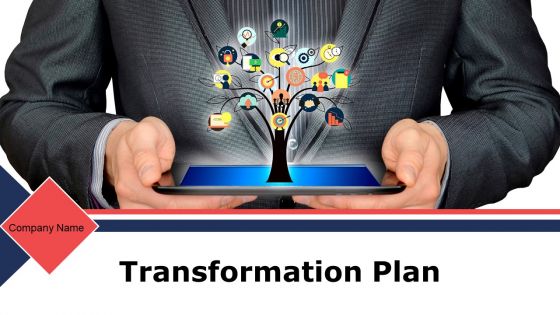
Slide 1: This slide introduces Transformation Plan with a creative imagery. State Company Name and get started.
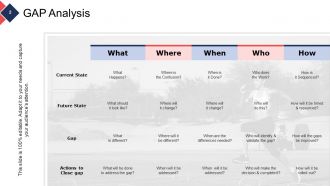
Slide 2: This slide shows GAP Analysis in tabular form.
Slide 3: This slide shows Organization Transformation Readiness Checklist with- Deliverables, Implementation Team Leader, Implementation Sponsor.
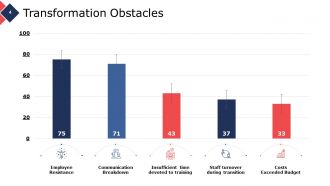
Slide 4: This slide shows Transformation Obstacles in bar graph from showcasing- Employee Resistance, Communication Breakdown, Insufficient time devoted to training, Staff turnover during transition, Costs Exceeded Budget.
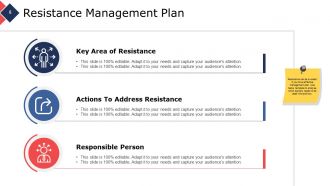
Slide 5: This slide shows a Resistance Management Plan with- Key Area of Resistance, Responsible Person, Actions To Address Resistance. Resistance can be avoided if you have effective management plan.
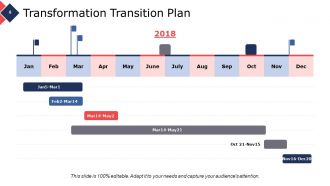
Slide 6: This slide presents a Transformation Transition Plan in gantt chart form.
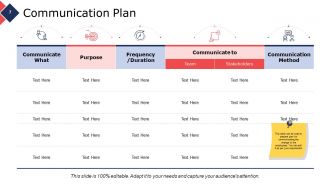
Slide 7: This slide presents a Communication Plan.
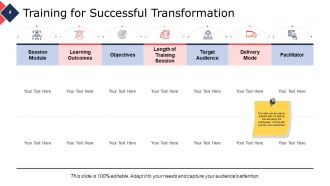
Slide 8: This slide shows Training for Successful Transformation. This table can be used to prepare plan for training and educating the employees. You can edit it as per your requirement.
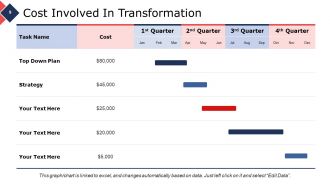
Slide 9: This slide shows Cost Involved In Transformation in gantt chart form.
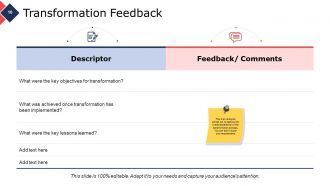
Slide 10: This slide shows Transformation Feedback. This is an analysis carried out to capture the overall experience of the transformation process. You can edit it as per your requirements.
Slide 11: This slide presents Transformation Plan Icons. Use them as per need.
Slide 12: This is a Coffee break image slide to halt. You can change the slide content as per need.
Slide 13: This slide is titled Charts and Graphs to move forward. You can alter the slide content as per need.
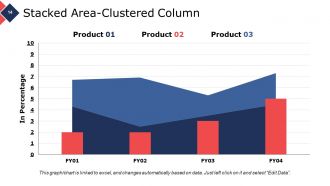
Slide 14: This is a Stacked-Area Clustered Column slide. State specifications, comparison of products/entities here.
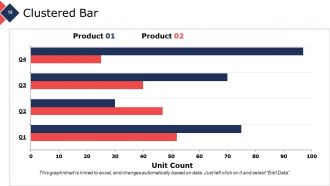
Slide 15: This is a Clustered Bar graph slide. State specifications, comparison of products/entities here.
Slide 16: This slide is titled Additional Slides to move forward. You can alter the slide content as per need.
Slide 17: This is Our Mission slide. State mission aspects here.
Slide 18: This is Our Awesome Team slide to state team specifications, information, structure etc.
Slide 19: This is an About Us slide. State company specifications here.
Slide 20: This is a Thank You slide with Address# street number, city, state, Contact Number, Email Address.
Transformation plan powerpoint presentation slides with all 20 slides:
Accentuate aspects with our Transformation Plan Powerpoint Presentation Slides. Go further into the depths of it.







FAQs for Transformation plan
Okay so first things first - you absolutely need clear goals, leadership backing, and timelines that aren't complete fantasy. Map out what resources you'll actually need and spot the roadblocks before they bite you. Check in constantly (like, annoyingly often) because communication saves everything. Don't be that person who tries changing the entire company overnight though - I've seen that crash and burn so many times. Quick wins first to get people excited, then go for the big scary stuff. Oh and have some way to measure if it's actually working or you're just throwing money around.
Start with baseline metrics before anything else - otherwise you're flying blind. Track engagement scores, customer satisfaction, operational stuff, plus financials (though those always lag behind by months, which is annoying). Mix hard numbers with actual conversations. Surveys are fine, but interviews tell you what's really happening. Monthly dashboards work great for quick checks. I'd do deeper quarterly reviews to catch trends early. Oh, and measure at different levels - individual projects, departments, whole org. You need that full picture or you'll miss important connections between what's working and what isn't.
Honestly, this is where most transformation plans die. You can't just create some brilliant strategy in isolation and expect people to magically follow it. Get your stakeholders involved early - like, right now early. Executives, frontline staff, everyone who'll actually live with these changes. They'll spot problems you'd never think of and (this part's crucial) they'll actually want to make it work because they helped build it. I've watched so many "perfect" plans crash and burn because leadership thought they could skip the messy people part. Don't present a done deal - collaborate from day one.
Dude, technology is seriously a game-changer for this stuff. Project management tools track everything while analytics catch problems before they blow up. Map out what you're doing now first - then figure out which tools kill the manual BS and give you real-time updates. Cloud solutions are perfect because they grow with you without crazy upfront costs. Collaboration platforms break down department walls too, which honestly saves so much headache. The right setup can literally cut your timeline in half. Oh, and anything that eliminates handoffs between teams? Pure gold.
Honestly, most people try changing everything at once and it's a disaster. Get your team on board first - like actually on board, not just nodding in meetings. Don't promise the impossible either. I swear, half these initiatives die because someone promised results in two weeks. Communication is huge too. People aren't mind readers, so explain why you're doing this stuff. Oh, and figure out how you'll measure success before you start. Small wins first, then build from there. Way easier than trying to boil the ocean right away.
Honestly, culture is what makes or breaks these things. I've watched brilliant strategies completely crash because nobody thought about whether people would actually buy in. You know that "we've always done it this way" mentality? Total transformation killer. But flip side - when teams are genuinely open to learning new stuff, everything just clicks better. Here's what actually works: loop people into the planning from day one instead of dropping changes on them later. Assess where your culture stands right now, then figure out what needs tweaking. Sounds obvious but you'd be shocked how many leaders skip this step entirely.
Hit them with multiple channels - town halls first so leadership can actually face people's concerns, then follow up with emails and team meetings. People absolutely hate being in the dark about changes, it just creates drama and pushback. Tell stories about the future, not boring process lists. Oh and make sure your managers know their stuff - nothing worse than inconsistent answers floating around. Set up ways for feedback too so you can adjust your messaging. Honestly, the "why" behind everything matters way more than people think it does.
Here's the thing - every single transformation move has to tie back to what your business actually needs. Figure out if you're chasing revenue growth, cutting costs, or expanding into new markets first. Then build everything around those goals instead of just implementing shiny new tech because it looks impressive. Your metrics should track real business wins, not just whether you hit project deadlines on time. I've seen too many companies treat transformation like this separate thing when it should really be driving your core strategy forward. Don't make it complicated - just connect the dots between what you're changing and what actually moves the needle.
Track both leading and lagging indicators - you need the full picture. Leading stuff shows if you're doing the right activities (training completion, process adoption, stakeholder buy-in). Lagging tells you if it's actually working - revenue, customer satisfaction, retention rates. Most transformations tank because they only watch the soft metrics or just focus on hard numbers. Pick maybe 3-5 max so you don't drown in data. We learned this the hard way on our last project. Review weekly with your team to pivot fast when things go sideways.
Look, people need to understand *why* you're changing things or they'll just resist everything. Do regular town halls and actually listen when they give feedback - don't just pretend to care. Quick wins help too, but honestly? The biggest screw-up I see is when leaders vanish right when things get hard. That's when your team needs you most. Connect the changes to stuff employees actually give a damn about - will this help their career? Make their job less annoying? Oh, and find those natural advocates in each department. They'll sell the change way better than you will from the top.
Don't wait for some big end-of-project survey - that's useless. Quick pulse checks every few weeks work way better, even just 10 minutes in your regular meetings. Different people need different feedback channels too. Leadership wants the big picture stuff, but your frontline team has actual operational complaints they need to vent about. Honestly, anonymous suggestion boxes are gold because people love griping without getting in trouble! Make it routine, not some special occasion thing. Seriously though, schedule those pulse checks right now or you'll hit month three realizing you've collected zero feedback.
So change management is basically getting people to actually *do* the stuff you're planning. Your transformation plan says what changes and when. But change management? That's the messy human part - like how you'll communicate, train people, deal with the inevitable pushback. I've seen so many good plans fail because they just assumed people would automatically adapt. Start with figuring out who's gonna be most impacted. Then build your approach around what they actually need. The two have to go hand in hand from the start, honestly.
Dude, Microsoft under Nadella is probably your best bet - they completely flipped from selling software licenses to the whole cloud thing. Target's another good one after Amazon basically destroyed them in retail. GE tried pivoting to digital industrial stuff but honestly that was kind of a mess. Still worth looking at though. The thing is, none of these companies just made small changes. They rebuilt everything from scratch, which is terrifying but apparently necessary? I'd start with Microsoft since there's tons of case studies on it. Way more documented than the others.
Honestly, you've got to bake this stuff right into how people actually work every day. Update job descriptions and performance reviews so the new way becomes the only way. Find 2-3 people who are already bought in and let them be your cheerleaders - they'll do half the work for you. Training helps, but I've seen so many companies waste money on fancy workshops that everyone forgets about in a week. Track what matters and don't be shy about celebrating small wins. The culture shift is what really makes it stick, not some big announcement from the top.
Start with Kotter's 8-step process or ADKAR - both give you solid structure. Stakeholder mapping is where I'd begin though, since you need to know who you're dealing with first. Current state mapping helps too, and honestly those stakeholder analysis matrices are clutch for seeing the big picture. For workshops, Miro or Mural work great when you need visual roadmaps. Oh, and don't forget the boring stuff like RACI charts and communication plans - they actually save your butt later. The tools don't matter as much as getting your team to use them consistently.
-
Visually stunning presentation, love the content.
-
Design layout is very impressive.