

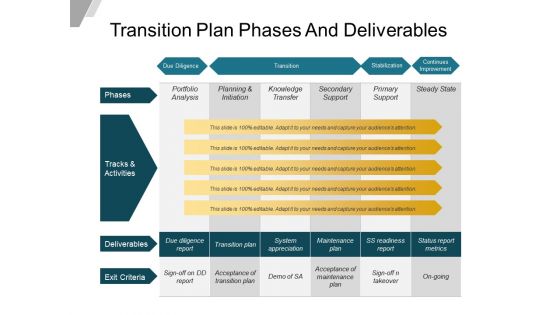
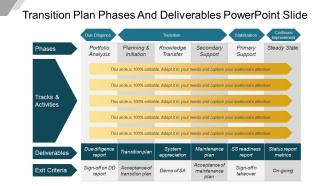
Transition plan phases and deliverables powerpoint slide





Try Before you Buy Download Free Sample Product
 Impress Your
 Audience
 100%
100% Editable
 Save Hours
 of Time


Our Transition Plan Phases And Deliverables Powerpoint Slide glance at it from every angle. Every facet gets exposed.
People who downloaded this PowerPoint presentation also viewed the following :
Transition plan phases and deliverables powerpoint slide with all 5 slides:
Encourage folks to come up with clever ideas with our Transition Plan Phases And Deliverables Powerpoint Slide. Advise folks to display ingenuity.



FAQs for Transition plan phases and
So basically you need five things sorted: timelines with actual dates, who's doing what when you leave, getting all your knowledge out of your head (docs, contacts, project status), telling everyone what's happening, and training your replacement. Communication is honestly where this stuff usually goes to hell. People think others are mind readers or something. Just over-communicate everything. I'd start with your most critical stuff first, then count backwards from when you're out to make sure the timeline actually makes sense. Oh, and document way more than you think you need to - future you will thank you.
Dude, clear communication from day one is everything. Map out who's doing what and when deadlines actually hit. The biggest screwup I've seen? Leadership thinks everyone magically understands the plan without explaining it properly. Over-communicate rather than leaving people guessing. Regular check-ins help you catch problems before they blow up. Always have backup plans for the critical stuff too - trust me on this one. Oh, and pick champions in each department who can field questions when things inevitably get messy.
Honestly, good communication is what saves your ass during transitions. Map out who needs what info and when - some people want the full email breakdown, others just need a quick call. I've watched projects crash and burn because someone forgot to loop in the right people. Set up regular check-ins and make sure there's a way for people to actually give you feedback when things go sideways. The key is identifying your main stakeholders early. Don't let issues sit there and get worse. Trust me, a solid communication plan prevents so much drama later.
Honestly, think of it as your insurance policy against everything going sideways. Map out who's affected, what processes change, which systems need updates - then brainstorm what could break at each step. I've watched so many "simple" changes turn into total chaos because people didn't think about the domino effect. Build your backup plans now, not when you're already in crisis mode. Don't try changing everything at once either - that's just asking for trouble. Sequence it logically. Oh, and communicate early with everyone involved. Start with your biggest risks and work backwards from there.
Honestly, the worst part is always people fighting the changes - nobody wants to leave their comfort zone. Communication gets messy fast too, like who's doing what and when. Resources disappear right when you need them most, which is so annoying. Oh and scope creep is brutal - everyone suddenly has "quick additions" that aren't quick at all. Technical stuff creates these weird bottlenecks between teams that you didn't see coming. Build buffer time into literally everything. Over-explain why you're making changes so people actually buy in. And definitely assign clear owners for each part or things just fall through the cracks.
Honestly, the right tech makes transitions way less painful. Start with tools your team already knows - maybe Slack for communication or whatever project management thing they don't hate. Real-time tracking cuts down on all that "wait, what's happening?" confusion. Digital docs mean everyone's looking at the same version (game changer). Training platforms help people learn new skills during the switch, which is pretty clutch. Video calls keep remote people in the loop too. Don't go crazy though - pick one or two things first, then add more later. Otherwise you'll just create more chaos.
Track the obvious stuff first - timelines, budget, system uptime, error rates during handoffs. But honestly? The people metrics matter way more. Employee satisfaction, retention, productivity levels. I've seen transitions nail every technical milestone then completely fall apart because everyone hated the process. Also grab stakeholder feedback and check knowledge transfer rates. Pick maybe 4-5 metrics max that actually matter for your specific goals, then do regular check-ins. You don't want to get buried in spreadsheets analyzing every tiny thing when half of it won't even impact the outcome.
Honestly, training can make or break your whole transition. People need to actually understand the new processes and their changing roles - otherwise your perfect plan just crashes and burns. I've watched so many companies assume everyone will just figure it out (they won't). Start early with hands-on stuff, not boring slide decks. When people feel prepared, they're way less likely to resist the changes. It sounds obvious but you'd be shocked how many leaders skip this step. Training isn't just nice to have - it's what turns your paper plan into something that actually works in real life.
You've gotta match your plan to what's actually happening. Mergers? Focus on culture stuff and communication - people freak out about losing their jobs. Acquisitions need more system integration work since you're smashing two totally different operations together. Leadership changes are all about relationships and getting everyone aligned on the new vision. I swear, most generic plans bomb because they ignore what people are actually scared of. Figure out their biggest worries first, then build your timeline around fixing those concerns. Oh, and don't underestimate how much extra communication you'll need - it's always more than you think.
Honestly, most resistance just comes from people being scared of what they don't know. Start by getting all your leaders on the same page first - don't even think about rolling it out until they're aligned. Then hit everyone with town halls, team meetings, whatever it takes. Be super transparent about why this is happening and what's actually in it for them. Your managers are gonna get bombarded with questions, so make sure they're ready. Oh, and definitely create ways for people to give feedback - nobody likes feeling ignored. Celebrate small wins too, it really helps with momentum.
Look, I'd check in on that plan every 3-6 months or so. But honestly? Don't wait if something big shifts - new job offer, unexpected setbacks, whatever. Life moves fast and your plan needs to keep up. The main thing is making sure your timeline and goals still make sense with where you actually are. I learned this the hard way when I stuck to an outdated plan way too long. Major waste of time. Set a phone reminder now before you forget. Trust me on this one - a plan that's gathering dust isn't helping anyone.
Honestly? Most transitions fail because nobody talks to each other. Leadership assumes everyone's cool with the changes while half the team is freaking out in silence. Classic mistake is rushing everything - like yeah, I get wanting to rip the bandaid off, but people need time to adjust. Also teams always underestimate what they'll actually need. Time, resources, dealing with random problems that pop up. My advice? Plan twice as many check-ins as feels necessary. Someone's going to push back hard, and you want to catch that early before it derails everything.
Build feedback loops right into each phase from day one. Weekly pulse surveys, monthly check-ins with stakeholders, anonymous feedback channels - make it automatic. Don't wait until everything's falling apart to ask how it's going (learned that one the hard way). Schedule milestone reviews where you actually change the plan based on what people tell you. Honestly, most transitions crash because teams think they can wing the feedback part. Set clear metrics upfront so you're tracking real progress, not just hoping things work out.
Look, you're basically the GPS and therapist rolled into one during big changes. People panic when they don't know what's happening - totally get it, honestly. Your job is painting the picture of where you're headed and why this chaos actually makes sense. Be everywhere, communicate constantly. I mean over-communicate to the point where you feel annoying. Spot trouble before it spreads and jump on resistance early. Don't forget to celebrate the small stuff too. Here's what I've learned: it's like 70% calming people down and explaining things, 30% actual problem-solving. Way more hand-holding than you'd expect.
First thing - dig up their latest strategic plan (good luck if it's lost in SharePoint hell). Map what you're trying to do directly to whatever they actually care about. Growth mode? Focus on stuff that'll boost revenue. Work backwards from the business outcomes they need. Honestly, half the battle is just speaking their language - use the same metrics leadership obsesses over. Don't get caught up proving operational wins if the C-suite only cares about bottom line impact. Show them how your transition moves their needle, not yours.
-
Illustrative design with editable content. Exceptional value for money. Highly pleased with the product.
-
Use of different colors is good. It's simple and attractive.