


Digital transformation scorecard powerpoint presentation slides





Try Before you Buy Download Free Sample Product
 Impress Your
 Audience
 100%
100% Editable
 Save Hours
 of Time


A digital transformation scorecard can help you assess your organization's progress in making the shift to a digital business. It can also help you identify areas where further improvement is needed. The scorecard should include metrics that measure various aspects of your digital transformation. Are you looking for a comprehensive set of digital transformation ppt templates to help get your business started? Look no further than SlideTeam. Our team has put together an extensive library of slides that can help you assess where your company is in terms of digital transformation, identify areas for improvement, and track your progress over time. Simply download our templates now and get started on creating a transformative roadmap for your business.
People who downloaded this PowerPoint presentation also viewed the following :
Content of this Powerpoint Presentation
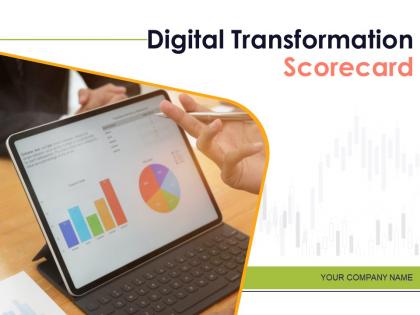
Slide 1: This slide introduces Digital Transformation Scorecard. State your Company name and begin.
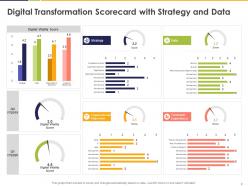
Slide 2: This slide showcases Digital Transformation Scorecard with Strategy and Data
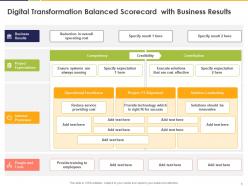
Slide 3: This slide showcases Digital Transformation Balanced Scorecard with Business Results
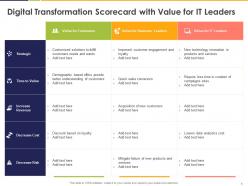
Slide 4: This slide depicts Digital Transformation Scorecard with Value for IT Leaders.
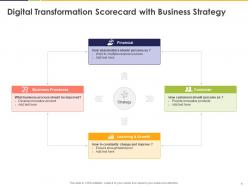
Slide 5: This slide showcases Digital Transformation Scorecard with Business Strategy.
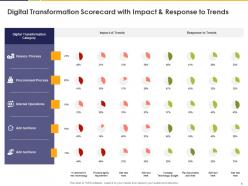
Slide 6: This slide depicts Digital Transformation Scorecard with Impact & Response to Trends.
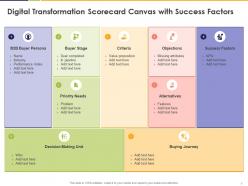
Slide 7: This slide presents Digital Transformation Scorecard Canvas with Success Factors.
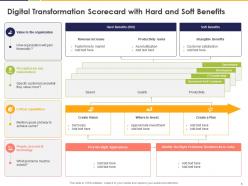
Slide 8: This slide showcases Digital Transformation Scorecard with Hard and Soft Benefits.
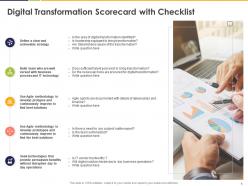
Slide 9: This slide presents Digital Transformation Scorecard with Checklist
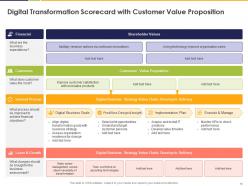
Slide 10: This slide showcases Digital Transformation Scorecard with Customer Value Proposition
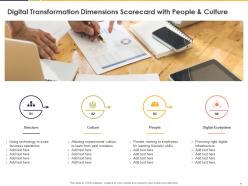
Slide 11: This slide presents Digital Transformation Dimensions Scorecard with People & Culture.
Slide 12: This is Icons Slide for Digital Transformation Scorecard
Slide 13: This slide is titled as Additional Slides for moving forward.
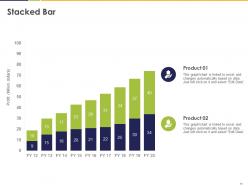
Slide 14: This slide showcases Stacked Bar chart with product comparison.
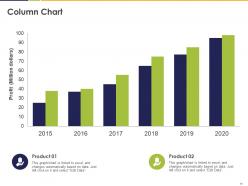
Slide 15: This slide showcaes Column Chart with Product Comparison.
Slide 16: This is Our Team slide with Names and Designations.
Slide 17: This is About us slide to showcase Company specifications.
Slide 18: This slide displays Timeline process.
Slide 19: This slide displays Our Mission with Vision, Mission and Goal.
Slide 20: This slide showcases Our Target.
Slide 21: This is Financial slide. Showcase finance related stuff here.
Slide 22: This is Idea Generation slide to highlight important ideas and beliefs.
Slide 23: This is Thank You slide with Email address, Contact number, Address.
Digital transformation scorecard powerpoint presentation slides with all 23 slides:
Use our Digital Transformation Scorecard Powerpoint Presentation Slides to effectively help you save your valuable time. They are readymade to fit into any presentation structure.


FAQs for Digital transformation scorecard
So honestly, I'd focus on four main buckets: customer stuff (satisfaction scores, how much people actually use your digital tools), operational efficiency (automation rates, cost savings), employee engagement (training completion, productivity), and revenue impact (new digital streams, faster time-to-market). Here's the thing though - most companies totally mess this up by tracking vanity metrics that sound impressive but don't actually mean anything. Keep it simple with like 8-10 key metrics max. Review quarterly and be ruthless about cutting ones that aren't driving real behavior change. Focus on outcomes, not just pretty numbers that make executives feel good.
Honestly, you've got to build digital stuff right into your main strategy planning - can't be an afterthought. Map every digital project to actual business results like revenue or cost cuts. I've watched way too many companies treat this like some side hobby that'll somehow connect to real goals later (spoiler: total disaster). Kill projects fast when they start wandering off track - do regular check-ins for this. Oh and make sure whatever metrics you're tracking for digital transformation are the same ones your executives actually care about. Otherwise you're just playing in a sandbox while they're focused on completely different numbers.
Honestly, start with Google Analytics or Adobe Analytics to track user behavior and conversions. Then grab a BI tool like Tableau or Power BI for dashboards that show KPIs across teams. Project management stuff like Monday.com helps track progress too. But here's the thing - the actual tool doesn't matter if your data's messy. Pick whatever your team will consistently use, not the shiniest option. I'd start with one simple dashboard showing your top 5-7 metrics. Once that becomes routine, you can build out from there. Way easier than trying to track everything at once.
Quarterly is the sweet spot, though monthly works if you're moving fast. Three months max though - any longer and you're basically looking at ancient history. I've watched companies do yearly updates and it's just painful. Like checking your bank account once a year, you know? Your scorecard has to keep up with what's actually happening - new tech, customer shifts, all that stuff changing constantly. Monthly makes sense if your industry's crazy volatile or you're in the middle of big changes. Otherwise quarterly keeps you honest without being annoying about it. Just set the calendar reminder now before you forget.
Dude, you can't skip the people part - I've watched so many expensive projects crash because nobody cared about getting employees on board. Your team will either make or break this whole thing. Without buy-in, they'll just find workarounds or fake their way through new systems. But when people are actually engaged? They become your biggest advocates, give you honest feedback, and help train everyone else. Plus they catch issues before they blow up. Honestly, some of the best insights come from the people doing the actual work day-to-day. Track how engaged they are throughout the process, not just after.
So you wanna measure digital transformation ROI? Start with the basics - revenue growth, cost savings, productivity bumps. Customer satisfaction scores matter too, obviously. But here's what people miss: track the boring stuff like how much manual work you're cutting out and time-to-market improvements. That stuff actually adds up crazy fast. Employee retention is huge too since training new people costs a fortune. Oh, and set your baseline measurements before you change anything - can't prove impact without knowing where you started. Just pick 3-5 metrics that actually align with what your business cares about and stick with them.
Don't try tracking everything at once - you'll just get overwhelmed by all the numbers. I learned this the hard way tbh. Focus on maybe 5-7 metrics that actually connect to your big picture goals. Mix it up too - not just the tech stuff like uptime and deployments (though those matter). You need business metrics: customer happiness, revenue, how many people are actually using the new processes. The scorecard isn't something you create once and ignore either. Review it quarterly and adjust as things change. Start simple with what matters most right now.
Honestly, those generic scorecards online are pretty much worthless for real situations. You need to customize based on what actually matters in your industry. Healthcare companies obsess over patient data security and compliance stuff. Retail focuses more on customer experience and omnichannel things. Manufacturing cares about IoT integration and supply chain visibility - totally different priorities. Figure out your industry's biggest pain points first, then build KPIs around those. Also talk to your customers and frontline people. They'll tell you which digital improvements would actually make a difference for your specific business.
Pick 3-5 metrics that actually matter to your bottom line first. Revenue per employee and customer acquisition costs are solid starting points for most businesses. Then get sector-specific - retail needs online sales percentage, healthcare should watch telehealth adoption, manufacturing can track IoT stuff (honestly those are the coolest because you see real improvements fast). Financial services focus on digital transactions. Don't go crazy with too many at once though. I'd benchmark quarterly and see what's moving the needle. The key is connecting whatever you're measuring back to actual business results, not just vanity metrics.
Dude, you absolutely need customer feedback for this. Without it, you're just guessing at what matters instead of knowing what actually helps people. Your customers will straight up tell you if your shiny new digital stuff is helping or just annoying them more. I've watched companies get super pumped about their internal improvements while totally screwing up the customer experience - it's painful to see. Collect feedback regularly and let it guide which metrics you track. Don't just use it to make yourself feel better about choices you already made.
Look at employee adoption rates and how much pushback you're getting from different departments - that tells you if people are actually buying into this stuff. Customer feedback matters too since it shows whether your digital changes are helping or just annoying people. Here's what I always watch: are teams truly collaborating differently or just slapping new software on old processes? Track innovation metrics like idea submissions and how fast decisions get made. Oh, and cross-functional projects are huge indicators. Balance these softer signals with your ROI numbers for the real picture.
Honestly, ditch the quarterly surveys and start pulling real data from your systems instead. Customer usage patterns, employee training completion rates, revenue from digital stuff - that's where the gold is. Way more reliable than gut feelings, you know? I've seen companies miss obvious connections, like how training actually bumps up customer satisfaction scores. Pretty cool when you spot those correlations. Set up dashboards for maybe 3-5 metrics that actually matter for your transformation. Real-time tracking beats guessing every time.
Honestly, leadership makes or breaks this whole thing. If they're not actually using the data to make decisions, everyone else will just ignore it too. Your leaders need to show up - like actually reviewing results monthly and taking action when problems pop up. They've got to be transparent about failures and celebrate the wins that come from following the data. The resource piece is huge too - when your scorecard shows issues, leaders need to remove roadblocks and give teams what they need to fix things. Start by getting them to commit to monthly reviews. Without buy-in from the top, you're basically just creating another ignored dashboard.
Here's what I'd do - pick 3-4 big transformation themes that everyone shares. Then let each department customize their own metrics underneath. HR can track digital skills training while IT measures system upgrades, but they're both feeding into the same overall goals. The key is making sure departments feel ownership over their specific KPIs. Otherwise you get that weird disconnect where everyone's hitting their numbers but nothing actually improves (been there!). Just map it all back to your main transformation pillars so leadership can connect the dots. Honestly, this approach works way better than forcing identical scorecards on everyone.
Make those metrics visible to everyone who needs them. Create dashboards people can actually find and use - I swear, half the scorecards I've seen just disappear into PowerPoint hell. Get someone to own each metric so there's accountability. Regular review meetings work best when teams present their numbers and explain what went wrong (or right). Define what each metric actually means upfront. Nobody wants to argue about calculations later. Oh, and tie everything back to business results people genuinely care about. Tech vanity metrics don't move the needle.
-
Nice and innovative design.
-
Illustrative design with editable content. Exceptional value for money. Highly pleased with the product.
-
Thanks for all your great templates they have saved me lots of time and accelerate my presentations. Great product, keep them up!
-
Presentation Design is very nice, good work with the content as well.