


Performance improvement plan powerpoint presentation slides





Try Before you Buy Download Free Sample Product
 Impress Your
 Audience
 100%
100% Editable
 Save Hours
 of Time


Experience great calmness with our Performance Improvement Plan Powerpoint Presentation Slides. All your thoughts will be in harmony.
People who downloaded this PowerPoint presentation also viewed the following :
Content of this Powerpoint Presentation
Slide 1: This slide introduces Performance Improvement Plan. State Your Company Name and begin.
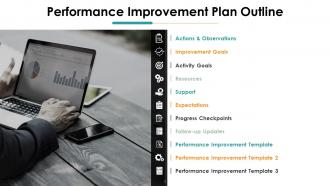
Slide 2: This slide shows Performance Improvement Plan Outline describing- Actions & Observations, Improvement Goals, Activity Goals, Resources, Support, Expectations, Progress Checkpoints, Follow-up Updates, Performance Improvement Template.
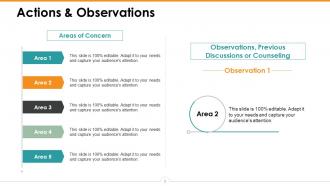
Slide 3: This slide presents Actions & Observations with text boxes to show information.
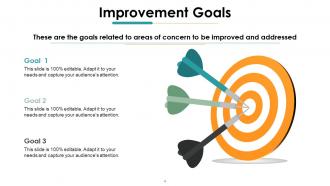
Slide 4: This slide displays Improvement Goals with related imagery and text boxes.
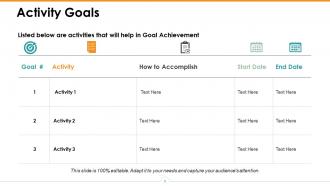
Slide 5: This slide represents Activity Goals in tabular form with categoriews as- Goal, activity, start and end date etc.
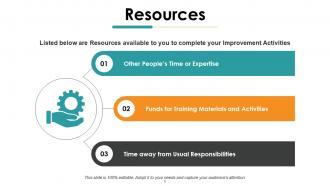
Slide 6: This slide showcases Resources describing- Other People’s Time Or Expertise, Funds For Training Materials And Activities, Time Away From Usual Responsibilities.
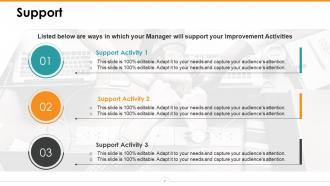
Slide 7: This slide shows Support with related imagery, diagram and additional text boxes.
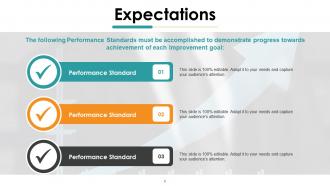
Slide 8: This slide presents Expectations with related diagram and text boxes to show information.
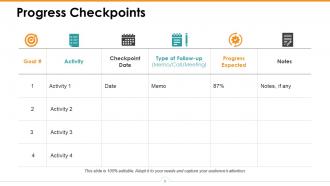
Slide 9: This slide displays Progress Checkpoints with Goal, activity, progress expected, notes etc.
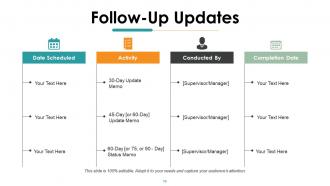
Slide 10: This slide represents Follow-Up Updates describing- Date Scheduled, Activity, Conducted By, Completion Date.
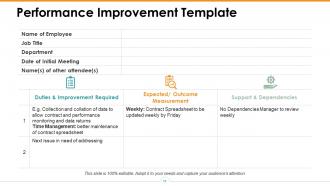
Slide 11: This slide showcases Performance Improvement Template describing- Duties and improvements required, expected outcome and support and dependencies.
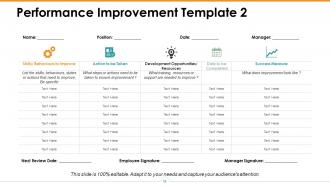
Slide 12: This slide shows Performance Improvement Template 2 with- Next review date, Employee Signature, Manager Signature, Name, Position, Date etc.
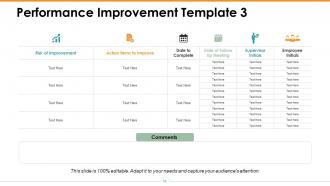
Slide 13: This slide presents Performance Improvement Template 3 with- risk of improvement, action items to improve, date to complete etc.
Slide 14: This slide shows Performance Improvement Plan icons.
Slide 15: This slide is titled as Additional slide for moving forward.
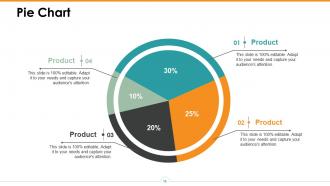
Slide 16: This slide shows Pie Chart with four products comparison.
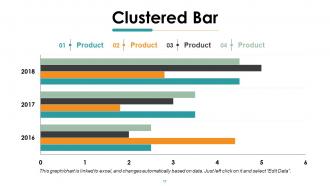
Slide 17: This slide displays Clustered bar Chart with four products comparison.
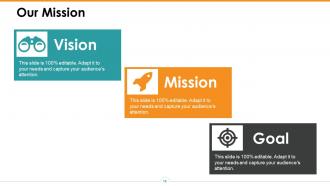
Slide 18: This slide shows Our Mission with related imagery and text.
Slide 19: This is Our Team slide with names and designation.
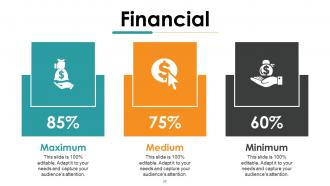
Slide 20: This is a Financial slide. Show your finance related stuff here.
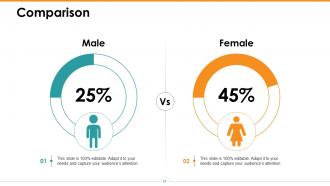
Slide 21: This is a Comparison slide to state comparison between commodities, entities etc.
Slide 22: This is Our Goal slide. Show your important goals here.
Slide 23: This is a Puzzle slide with text boxes to show information.
Slide 24: This is a Lego slide with text boxes. Show relevant information here.
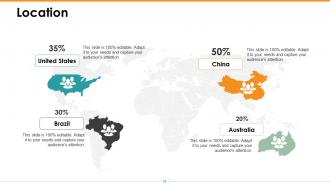
Slide 25: This is a Location slide with maps to show data related with different locations.
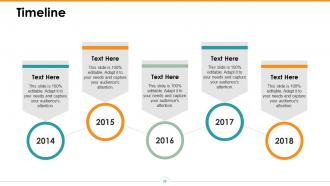
Slide 26: This is a Timeline slide. Show information related with time period here.
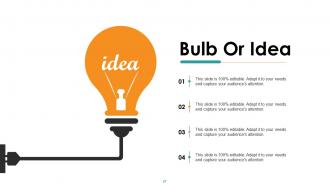
Slide 27: This is a Bulb Or Idea slide to state a new idea or highlight specifications, information etc.
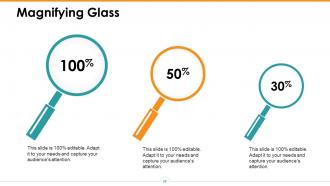
Slide 28: This slide displays Magnifying Glass with text boxes.
Slide 29: This is a Thank you slide with address, contact numbers and email address.
Performance improvement plan powerpoint presentation slides with all 29 slides:
Our Performance Improvement Plan Powerpoint Presentation Slides will boost your esteem. Crowds will drawn in by your brilliance.

FAQs for Performance improvement plan
Honestly, you'll want to nail down four things for a solid PIP. First, spell out exactly what needs fixing - no wishy-washy "improve communication" nonsense. Set measurable goals with real deadlines. Schedule those check-ins frequently (like weekly at first) so you can adjust if things go sideways. Document what support you're giving them too - training, resources, whatever. The tricky part? Goals need to be tough but doable. Focus on stuff you can actually measure instead of vague personality things. Oh, and seriously - put those check-in meetings in your calendar right now or you'll totally space on them later.
Honestly, if you're asking yourself whether it's time for a PIP, you're probably already there. Look for the obvious stuff - they keep missing deadlines, work quality is still off, or the same behavioral issues pop up even after you've talked to them multiple times. The dead giveaway is when you've already had several coaching conversations but nothing's sticking. Document everything though! That paper trail is gonna save you later. Oh, and make sure they actually know what they need to fix - can't put someone on a PIP if they think everything's fine. It's honestly one of those "you'll know it when you see it" situations.
Dude, you absolutely need their input when writing a PIP. Don't just tell them what's wrong - ask what's blocking them and what help they actually need. Half the time they'll mention stuff you had no clue about. When employees help create their own plan, they're way more invested in making it work. I learned this the hard way once. Listen during those first conversations, not just nod along. Their perspective makes goals realistic instead of just... mean, I guess? Plus you want achievable targets, not something designed to fail.
Honestly, PIPs work way better when you frame them as actual help instead of a countdown to firing. Get the employee involved in making the plan - what do they think they need? Maybe it's training, maybe their workload is insane. I've watched so many managers use PIPs as just paperwork before they boot someone, which is such BS. Check in regularly and actually problem-solve together. Give them real resources, not just vague feedback. Look, if you're not genuinely trying to help them succeed, skip the whole charade and just be honest about it.
Definitely stick to the SMART framework - you know, specific, measurable, all that stuff. Pick maybe 2-3 areas tops because I've watched so many PIPs crash and burn when managers just dump everything on someone at once. Break the big stuff into weekly check-ins so they actually see progress happening. Here's the thing though - you've gotta involve them in setting these goals. If they think it's just a fancy firing process, you're screwed. Give them real training and resources too. The goals need to connect directly to what's actually going wrong with their work, not some random wishlist.
Pick 2-3 specific things they can actually measure - don't dump a whole list on them. Something like "respond to client emails within 4 hours" works way better than fuzzy goals like "communicate better." Numbers or clear behaviors they can track. Sit down and walk through each one together so there's no confusion about what you're looking for. I learned this the hard way - assumptions kill these conversations. Schedule regular check-ins to see how it's going. Oh, and document everything. Seriously. You'll thank yourself later when review time comes around.
Schedule weekly or bi-weekly check-ins to go over their goals - honestly, consistency is everything here. Write down what happens in each meeting because you'll forget the details later. Be really specific with feedback instead of saying generic stuff like "needs improvement." Track the measurable stuff (deadlines, quality metrics) but also note softer skills like how they communicate with the team. Fix problems as they come up rather than waiting. Most importantly, they should always know exactly where they stand. Nobody wants to be blindsided at the end of a PIP - that's just brutal for everyone involved.
Schedule weekly check-ins for sure - don't just hand over the PIP and vanish like so many managers do. Get them actual training or mentoring they need. Be super transparent about what you expect and document everything (trust me on this). Give feedback regularly, both good and bad. Oh, and maybe loop in HR or employee assistance if there's deeper stuff going on. The whole thing only works if you actually want them to succeed. Otherwise you're just going through the motions before firing them, which honestly sucks for everyone involved.
Don't be vague about what you want - spell out exactly what success looks like with real numbers or examples. Skip the "improve communication skills" nonsense. Biggest mistake? Making unrealistic timelines that set people up to fail. Oh, and employees can totally tell when you're just building a case to fire them, so don't do that. Give them actual support and resources. Let them help create the plan so they're invested in it. Short version: treat it like you genuinely want them to succeed, not like paperwork before you boot them.
Look, you've gotta figure out what's actually causing their performance issues first. Someone can't manage time? Focus your PIP on scheduling tools and how to prioritize better. Skills are lacking? Get them proper training or pair them with a mentor. Communication's the problem? Those role-playing exercises actually work pretty well. Don't just copy-paste some generic plan - that's basically setting everyone up to fail. Consider how they learn best and what's going on in their life outside work too. Oh, and definitely get their input when you're building the plan. People won't commit to something they had zero say in creating.
Honestly, your company culture is everything here. Supportive places where people feel safe to mess up and grow? PIPs actually help employees improve instead of just being a step before getting fired. Toxic workplaces though - yeah, they're basically just legal cover for termination. Leadership matters too, obviously. When managers treat PIPs like coaching instead of "gotcha" moments, things go way better. I've seen it happen both ways at my old job. You really need that growth mindset baked into your culture first, or the whole PIP thing just becomes performative nonsense that stresses everyone out.
Get everything in writing - seriously, no verbal stuff. Draft a formal PIP with the performance problems, what they need to fix, deadlines, and what happens if they don't improve. Meet face-to-face to go through it and have them sign it. I know it's uncomfortable but you'll thank yourself later. File copies in their personnel record and follow up via email after check-ins. Oh, and be super specific about what you expect - nobody likes getting blindsided. The whole point is protecting both of you if things go sideways.
Document absolutely everything - this will probably end up in court honestly. Set measurable goals, not vague crap like "better attitude." Timeline should be 30-90 days max. Here's the thing though - you can't apply different standards to protected classes vs everyone else. Same expectations across the board. Check if they're union or need accommodations first. Most employment lawyers I've talked to say PIPs are basically just evidence for wrongful termination cases anyway. So write everything like a judge will read it later. Be objective and specific about what needs to change.
Yeah, if they don't improve after the PIP wraps up, you're basically at termination time. Make sure you document all their specific failures against those goals you set. Loop in HR before doing anything - trust me on that one. The good news? You already gave them the roadmap, so you're covered legally. Those feedback sessions during the PIP matter too, so note those down. I mean, nobody enjoys firing people, but that's literally what PIPs are for. Clear expectations, clear consequences. If they couldn't meet them, well... that's on them at this point.
SMART goals are probably your best bet - you know, Specific, Measurable, Achievable, all that stuff. Makes everything crystal clear. GROW model's solid too if you want it to feel less like punishment and more collaborative (Goal, Reality, Options, Way forward). Oh, and SBI helps when you're explaining what went wrong - Situation, Behavior, Impact. Way better than those useless "needs improvement" PIPs that don't actually tell anyone anything. Pick whichever one clicks for you, but stick with it. Your employee needs to know exactly what hitting the mark looks like.
-
great and professional presentation