


Continuous Improvement Powerpoint Presentation Slides





Try Before you Buy Download Free Sample Product
 Impress Your
 Audience
 100%
100% Editable
 Save Hours
 of Time


Achieve operational excellence with our creatively designed Continuous Improvement PowerPoint Presentation Slides. This business operational excellence framework presentation deck includes a set of professionally designed PowerPoint templates such as company history of operational excellence capabilities, evaluate the existing operational gaps, design an evaluation process, ensure continuous improvement, implementing regional operations, analytics of achieving operational excellence, monitor performance, etc. Not only this, to cover all the important concepts our designers have included additional templates e.g. our target, mission and vision, timeline, target, thank you, financial charts, etc. Outline the factors that make continuous improvement successful. The process improvement methodology PPT slideshow have all visually appealing graphics with in-depth researched content. Furthermore, with the support of our evaluation process presentation design, you can portray various concepts like strategy deployment, performance management, continuous improvement, organizational excellence, process excellence, leading people and culture, etc. Download the business improvement process presentation deck for evaluation and improving business processes. Increase the inflow with our Continuous Improvement Powerpoint Presentation Slides. Ensure good ideas continue to be generated.
People who downloaded this PowerPoint presentation also viewed the following :
Content of this Powerpoint Presentation
Slide 1: This slide introduces Continuous Improvement. State Your Company Name and begin.
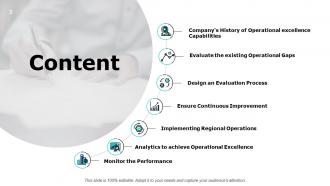
Slide 2: This slide shows Content of the presentation.
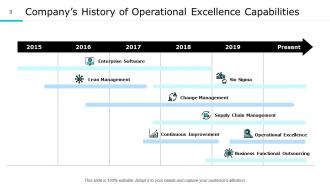
Slide 3: This slide presents Company’s History of Operational Excellence Capabilities.
Slide 4: This slide displays Evaluate the existing Operational Gaps describing- Unnecessary Dependencies, Bottlenecks, Sequential Processes, Automation, Authority.
Slide 5: This slide represents Design an Evaluation Process describing- Focus on Systems, Incorporate Flexibility, Identify Betterments.
Slide 6: This slide showcases Ensure Continuous Improvement describing- Deliver Training, Create a Framework, Raise the Bar, Conduct Evaluations.
Slide 7: This slide shows Implementing Regional Operations describing- 24/7 Support, Local Expertise, Synchronous Operations.
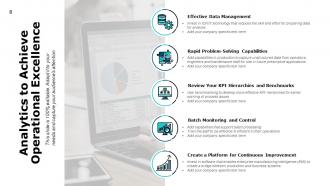
Slide 8: This slide presents Analytics to Achieve Operational Excellence describing- Effective Data Management, Rapid Problem-Solving Capabilities, Review Your KPI Hierarchies and Benchmarks, Batch Monitoring and Control, Create a Platform for Continuous Improvement.
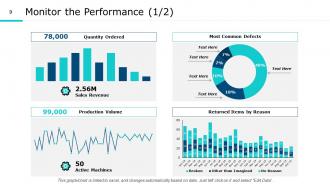
Slide 9: This slide displays Monitor the Performance with the help of graphs describing- Production Volume, Quantity Ordered, Returned Items by Reason, Most Common Defects.
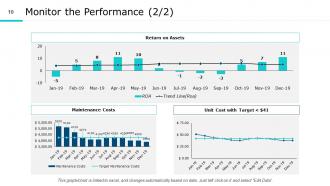
Slide 10: This is another slide on Monitor the Performance showing- Unit Cost with Target, Maintenance Costs, Return on Assets.
Slide 11: This slide showcases Operational Excellence for Icons.
Slide 12: This slide is titled as Additional Slides for moving forward.
Slide 13: This is Our Mission slide with related imagery and text.
Slide 14: This is Our Target slide. State your targets here.
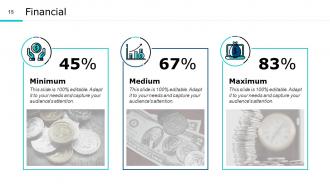
Slide 15: This is a Financial slide. Show your finance related stuff here.
Slide 16: This is a Bulb or Idea slide to state a new idea or highlight information, specifications etc.
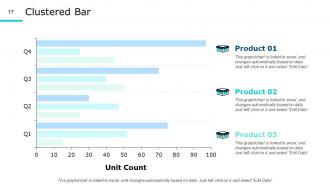
Slide 17: This slide shows Clustered Bar chart with three products comparison.
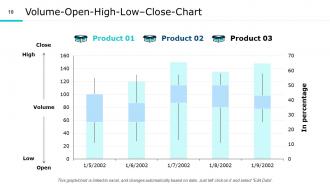
Slide 18: This slide presents Volume-Open-High-Low–Close-Chart.
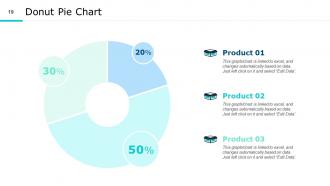
Slide 19: This slide displays Donut Pie Chart with three products comparison.
Slide 20: This is a Thank you slide with address, contact numbers and email address.
Continuous Improvement Powerpoint Presentation Slides with all 20 slides:
Applause is never grudging with our Continuous Improvement Powerpoint Presentation Slides. Folks will eagerly appreciate your brilliance.
-
Continuous Improvement
-
Content
-
Company s History of Operational Excellence Capabilities
-
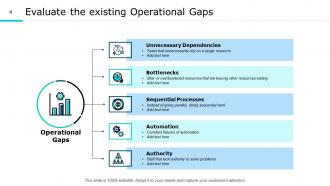
Evaluate the existing Operational Gaps
-
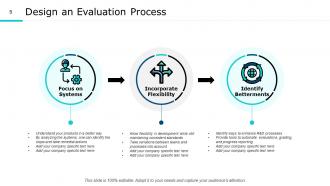
Design an Evaluation Process
-
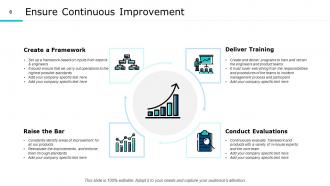
Ensure Continuous Improvement
-
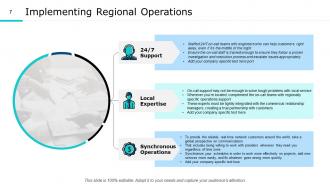
Implementing Regional Operations
-
Analytics to Achieve Operational Excellence
-
Monitor the Performance 1 2
-
Monitor the Performance 2 2
-
Operational Excellence for Icon Slide
-
Additional Slides
-
Our Mission
-
Our Target
-
Financial
-
Bulb or Idea
-
Clustered Bar
-
Volume Open High Low Close Chart
-
Donut Pie Chart
-
Thank You
FAQs for Continuous Improvement
Honestly? Start small - don't try to revolutionize everything at once. Look for the obvious waste first, then get your team involved since they actually know where the pain points are. I'm big on tracking numbers because you can't fix what you can't measure, you know? Create an environment where people aren't scared to speak up about problems. Data should drive your decisions whenever you can swing it. The whole thing needs to be continuous though, not some one-off initiative that dies after a month. Maybe just pick one tiny thing to test this week and see what happens.
Honestly, you've gotta track the numbers AND how people feel about it. Start with basics - defect rates, how long stuff takes, cost savings, customer happiness scores. But here's the thing - employee surveys matter way more than most people think. If your team hates the changes, you're screwed regardless of what the data says. Pick maybe 3 metrics max to start (I learned this the hard way trying to measure everything). Get your baseline first, then check in monthly or quarterly. The qualitative feedback is just as crucial as the hard numbers, trust me.
Honestly, employee feedback is like having a crystal ball for your business. People doing the actual work? They see problems way before management does. Plus they've got brilliant ideas you'd never think of sitting in your office. The trick is making sure they actually feel safe speaking up. Nobody wants to be the person who gets blamed for pointing out issues. When someone gives you feedback, show them it matters - make actual changes based on what they tell you. Start small though. Maybe just ask your team one specific question about improving a process that's been bugging everyone.
Honestly, Lean and Six Sigma are game-changers for actually fixing stuff instead of just complaining about problems. Six Sigma is all about using data to cut down defects and inconsistencies. Lean strips out the waste and makes your processes way smoother. They work ridiculously well together - like you'll use DMAIC from Six Sigma to dig into what's broken, then throw in Lean tools like value stream mapping to clean up the whole workflow. I learned this the hard way, but don't try cramming every problem into the same approach. Pick what fits your specific mess and you're golden.
Honestly? Your biggest headache will be people hating change - and I get it, nobody wants their routine messed with. Leadership not backing you is another killer. Don't try fixing everything at once either, that's a recipe for burnout. Most teams are already swamped, so good luck getting resources. Communication usually sucks too - people need to actually understand WHY you're doing this stuff. Oh, and track your wins! Seriously, celebrate the small stuff or everyone gives up. Pick one thing, nail it, then move on.
Honestly, tech makes continuous improvement so much easier than it used to be. Real-time dashboards show you problems instantly instead of waiting forever for those manual reports nobody wants to do anyway. AI can actually predict issues before they blow up - which still feels like magic to me sometimes. Your team gets freed up from all the boring repetitive stuff thanks to automation, so they can tackle real problem-solving. Collaboration tools help everyone share what's working across departments without those endless email chains. I'd start small though - pick somewhere you're already tracking data and just add some basic analytics to see what happens.
Focus on the basics first - cost savings, time cuts, error rates, customer satisfaction. Quality stuff like defect rates are honestly where you'll see the biggest wins. Employee engagement matters too (sometimes more than the hard numbers, honestly). Track process cycle times if you can. Here's the thing though - don't go crazy measuring everything. Pick maybe 3-5 metrics that actually connect to what you're trying to achieve. I'd set up something simple, maybe just a basic dashboard you check monthly. Way easier than drowning in data you'll never look at.
Look, when you're always fixing the stuff that bugs customers, they actually notice. They feel heard when you act on their feedback - that's where real loyalty comes from. You'll stay ahead of what they want instead of scrambling to catch up later (which honestly just looks bad). Happy customers don't leave, simple as that. They'll even cut you slack when things go wrong if they know you're genuinely trying to improve. Here's what I'd do: pick one customer metric that matters and focus on improving it every month. Don't overcomplicate it.
Toyota basically created the whole continuous improvement thing with their kaizen approach - everyone copies them now. Amazon's always tweaking their warehouses (hence why your stuff arrives so damn fast). McDonald's perfected their processes so well that a Big Mac tastes identical everywhere, which is honestly kind of impressive. Even tech companies do this now with sprint reviews and constant updates. My advice? Don't try to fix everything at once. Pick something small with your team, track what actually works, then build from there. Baby steps beat grand overhauls every time.
Stop treating continuous improvement like some big corporate initiative - just weave it into how things normally work. Put it in job descriptions and reviews so people actually care about it. Your leadership team has to stay interested too, otherwise everyone will smell the BS and give up. Monthly meetings for sharing ideas work pretty well, or even just a simple suggestion box (though those can be hit or miss honestly). The trick is making small tweaks feel routine and worth doing. Pick one process this quarter and set up a basic feedback system around it. Start small and build from there.
Start with one solid methodology like Lean or Six Sigma - don't try to teach everything at once. Your people need basic data analysis skills so they can actually measure what's working. But honestly? The soft skills matter way more than the technical stuff. Create a culture where folks feel safe pointing out problems without getting thrown under the bus. Regular workshops help tons - let teams practice on real issues they're dealing with. Oh, and change management training is huge because people hate change even when it helps them. Set up some kind of mentorship thing too. I've seen companies fail at this because they overwhelmed everyone from day one.
Show them what's in it for them first - less annoying rework, smoother days, actually leaving on time. Wild concept, right? Then back it up with real examples from other teams who've seen wins. Don't just preach it though. Ask for feedback on your own stuff and actually use their suggestions. People need to feel safe trying things that might not work. The trick is making it feel like you're all figuring this out together instead of some corporate thing getting shoved at them from upstairs.
So here's the thing - when your team gets into that habit of constantly asking "how can we make this better?" it actually breeds innovation. You're already analyzing stuff and getting feedback, which naturally shows you where the gaps are. That's where creative solutions come from. The whole iterative approach makes people way more comfortable with experimenting, and honestly that's like 80% of the innovation battle right there. I've noticed small tweaks often snowball into major breakthroughs because everyone's already thinking in problem-solving mode. Track what your team suggests - you'll be shocked how many "little improvements" turn into legit innovations.
Definitely doable! Remote teams just need to get creative with their tools. Try Miro for brainstorming sessions - it's honestly pretty intuitive once you mess around with it. Video retrospectives work great too, especially if you use breakout rooms so people actually talk. Here's the thing though - you'll need to document way more than before. No more popping over to ask quick questions. Set up a dedicated Slack channel where people can throw out random improvement ideas whenever they hit them. I'd suggest doing mini "improvement sprints" where everyone tackles one annoying workflow together. Start stupid small - like that one process that makes everyone groan. Fix that first.
Honestly, the key is getting the right people there - you need folks who actually do the work day-to-day, plus someone who can make decisions happen. I'd cap it at 2-3 hours because after that everyone's brain is fried. Use your real data and processes, not made-up examples that don't mean anything. Sticky notes are your friend for capturing everything (trust me on this). The biggest mistake? Not assigning owners to next steps at the end. Without that, you'll just have another useless meeting where people nod along and nothing changes.
No Reviews