

Performance Management Powerpoint Presentation Slides





Try Before you Buy Download Free Sample Product
 Impress Your
 Audience
 100%
100% Editable
 Save Hours
 of Time


Introducing Performance Management PowerPoint Presentation Slides showcasing the activities which help an organization to reach its goals. Each slide focuses on the strategies which are helpful in increasing the effectiveness of companies. Highlight the outcomes of productivity and profitability using our PPT slides. Also take into consideration factors such as job analysis, performance appraisal, professional development, staff ability, performance measurement, and behavior management. The presentation also helps you to examine employee interference, business statistics, organizational development, tracking performance expectations in order to attain your target. Describe your business mission and vision, objectives, planning, tasks, and more with ready made designs. Most importantly, let the employees be aware of the actions, policies, schemes and methods and how they can be appraised from that. Optimize your budget and collect a thorough understanding economics portal using these presentation templates. Demonstrate the working of integrated business planning with this ready to use Performance Management PPT. Our PT&s have a convincing effect. Designed to help your team believe n their goals.
People who downloaded this PowerPoint presentation also viewed the following :
Content of this Powerpoint Presentation
How can Performance Management foster the growth of the Company and its Employees? Performance management is one of the most efficient ways to analyze the performance of the organization's employees. It assists in creating an environment where employees can give their best output, improve productivity, and achieve the goals and objectives efficiently.
Want to track an organization's performance? Then, check out our PowerPoint Presentation slides on business performance management.
The Performance Management PowerPoint Presentation from SlideTeam helps optimize, manage, measure, and improve the company's and its employees' performance. This PPT will help design and implement a performance management system aligning with your organization's values and objectives. Unlock employees' full potential through the system by providing them with training. These templates are 100% editable, customizable, and content-ready and will help you tailor your presentation according to specific audience profiles.
Find the Performance Management PowerPoint PPT Template here and learn how well the employees contribute to organizational success.
Performance Management Template
The Performance Management template will assist companies in monitoring the performance of the employees and the growth of the company. It will facilitate improved communication in all company departments and ensure increased productivity. It will be a great tool to identify work quality, quantity, and efficiency. Know the underperformers and best employees, paint a picture of how the company functions, and prepare plans for future growth.
Template 1: Performance Management Program
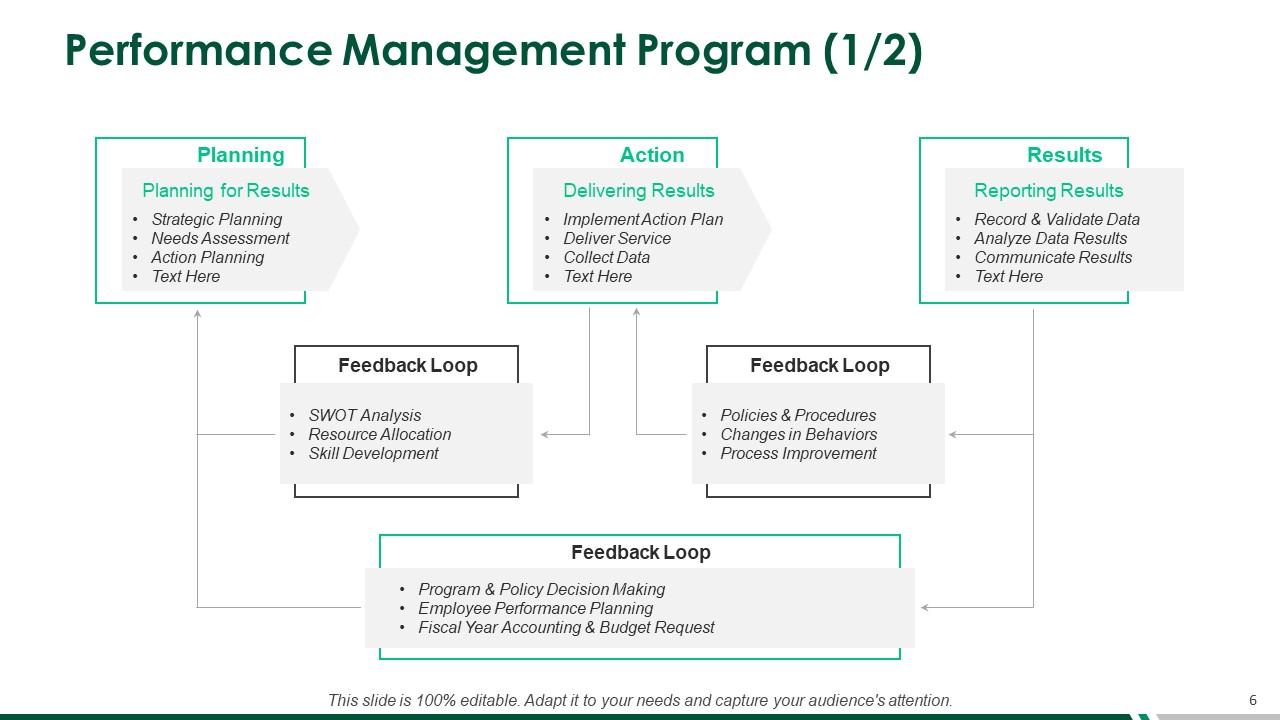
This PPT Template is about Performance Management and its importance. The program has four stages: Planning, Action, Results, and Feedback Loop. Planning focuses on setting objectives and taking appropriate actions to achieve the objectives. Action focuses on delivering results by implementing actions. Result on analyzing and communicating results, and Feedback aims at providing the details of the results achieved. The presentation will help you to maximize performance and achieve organizational excellence.
Template 2: Core Performance Criteria
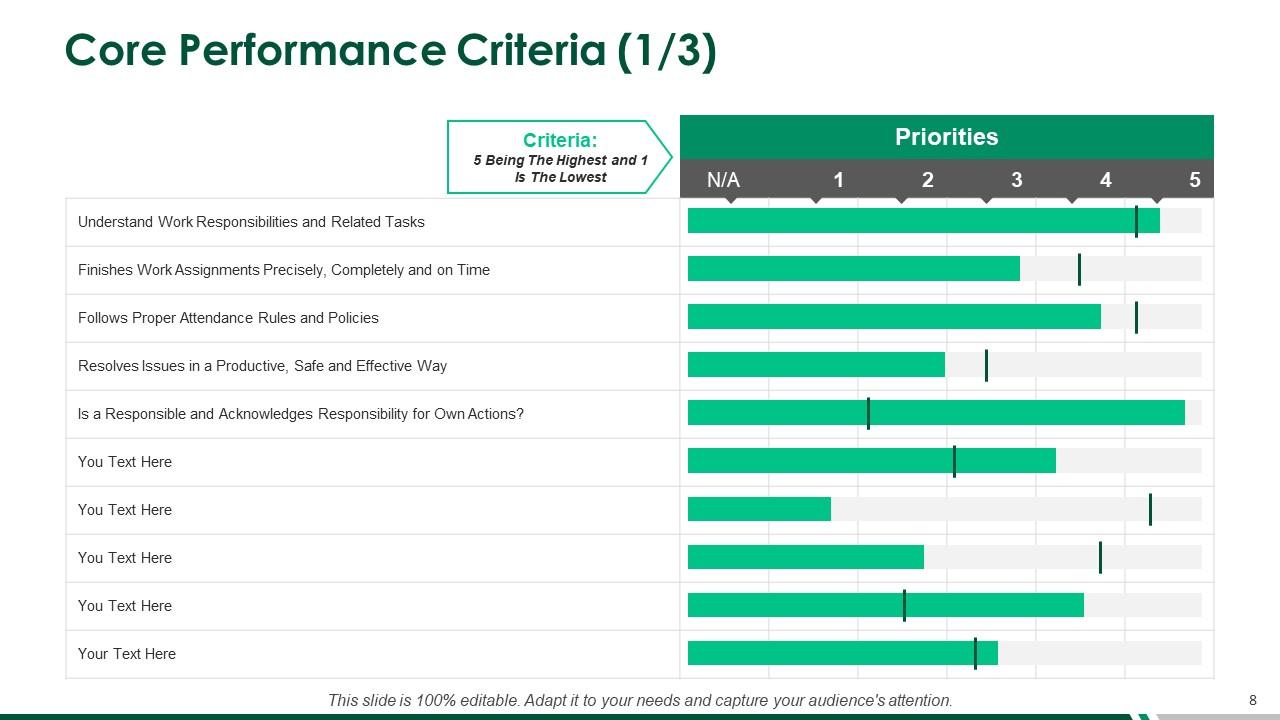
This PowerPoint Slide focuses on the organization's core performance to achieve success. To achieve performance excellence, focus on customer satisfaction and employee engagement to deliver quality products/services. This helps bring innovation and adaptability to survive in the dynamic market. Divide the work and tasks among employees to finish the assignments precisely on time. Resolve issues productively and safely to meet the performance standards and to achieve the goals set.
Template 3: Performance Guidelines
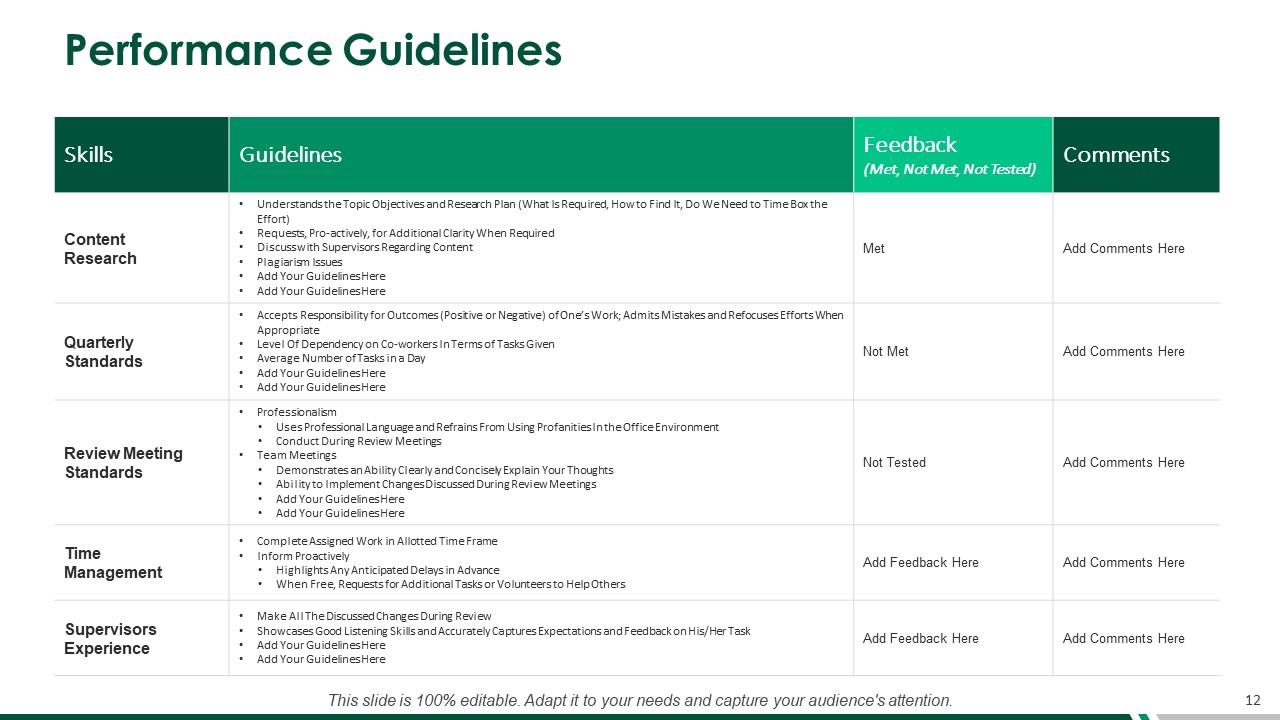
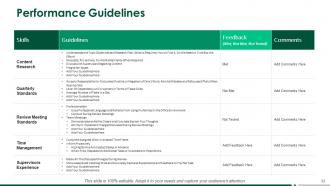
This PowerPoint Presentation aims to achieve the desired performance by setting guidelines. The slide lists four important elements: skills, guidelines, feedback, and comments to improve performance and achieve results. Focus on factors such as proper content research, meeting quarterly standards, reviewing meeting standards, and time management to achieve the goals effectively and efficiently. Discuss the quality of content to maintain standards and take responsibility for the outcomes achieved. Implement changes, give feedback during the review meetings, and ensure the work is completed on time.
Template 4: Goals Setting Template
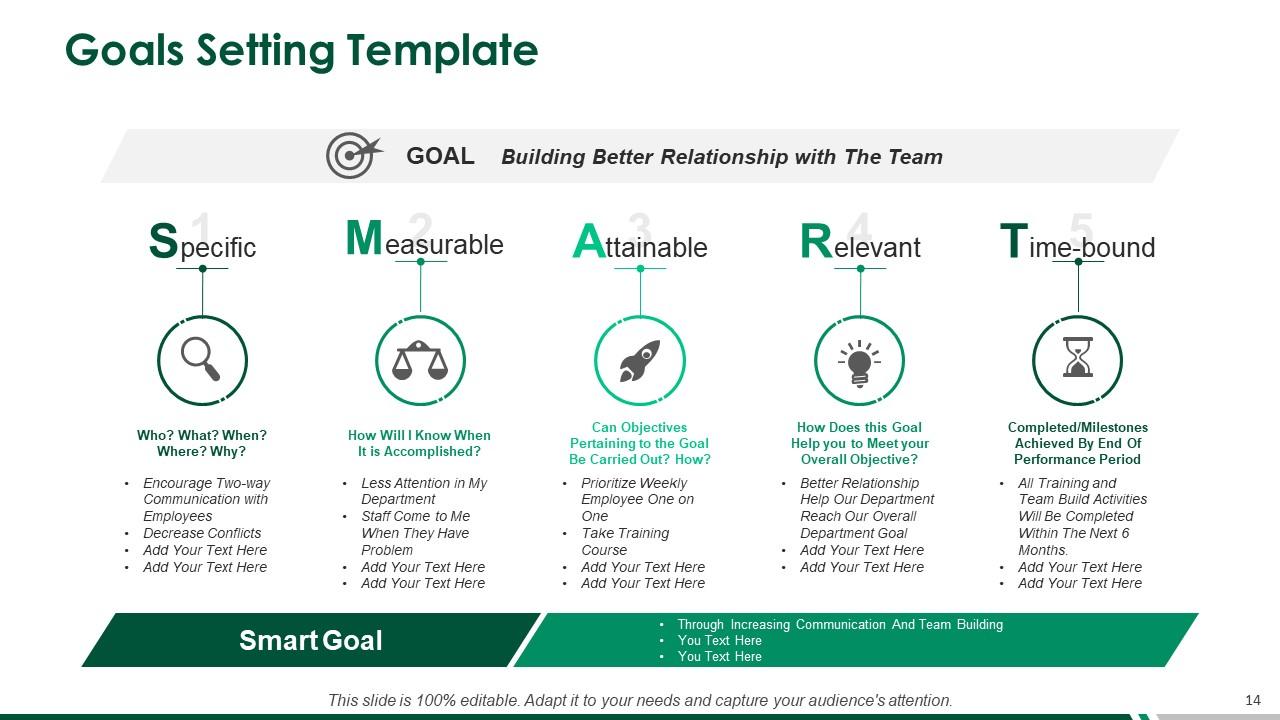
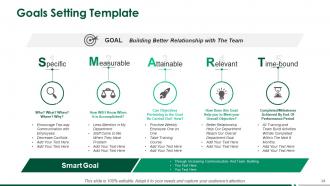
Use this PPT Template to set the company's goals by following the SMART criteria: specific, Measurable, Attainable, Relevant, and Time-Bound. This will help encourage communication, assess the project's progress, and ensure proper employee training and goal achievement to ensure productivity and success.
Template 5: Types Of Goals/Priorities
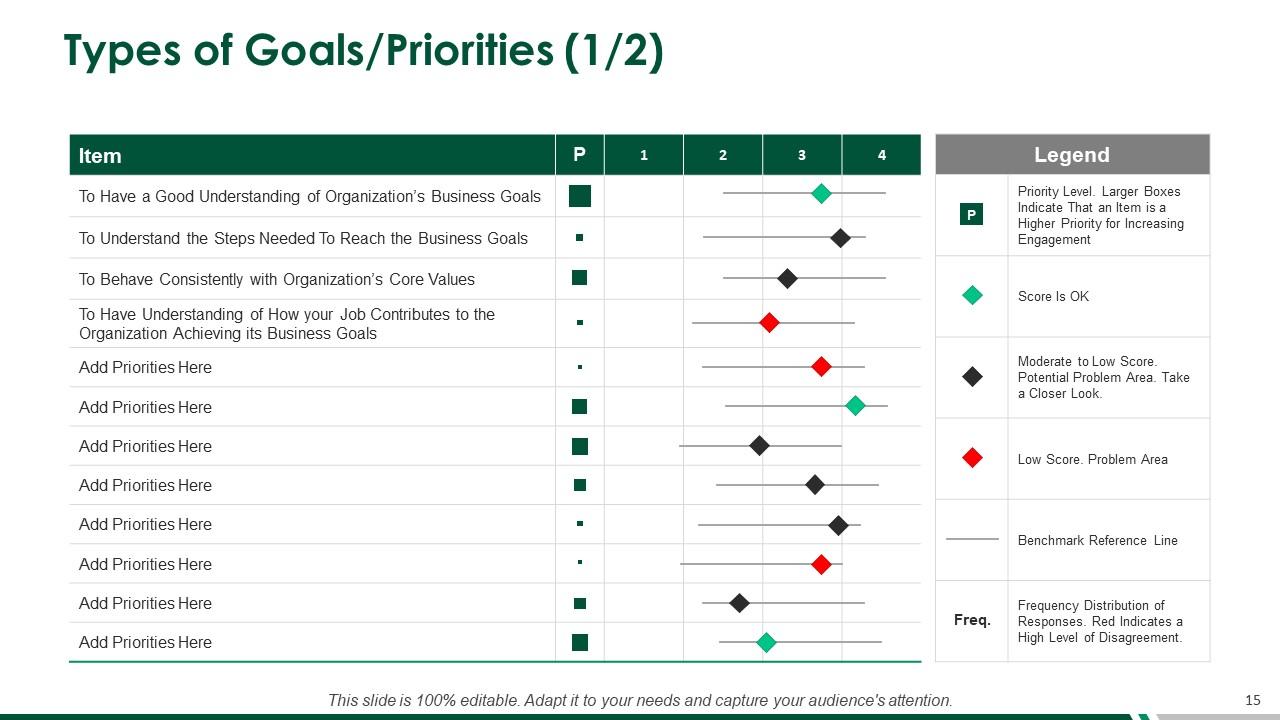
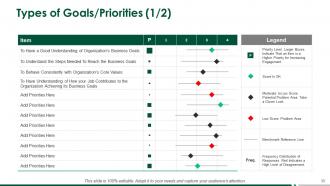
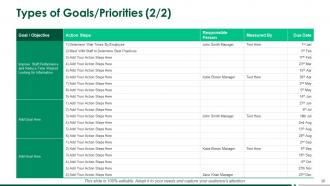
This PPT Layout helps a company to analyze its goals and priorities. It demonstrates the appropriate steps to reach the goals and understand the company's core values. Know how your work can contribute to achieving the objectives and increase productivity. Bring innovation to develop new products and services, adopt new technologies, enter new markets, and stay competitive.
Template 6: Employees Responsibilities

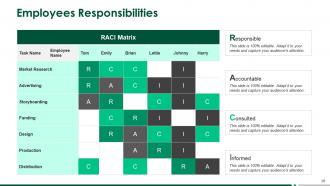
This PowerPoint Presentation focuses on employees' responsibilities towards the company. The slide shows a RACI matrix format for Responsible, Accountable, Consulted, and Informed. This implies that every employee needs to be assigned proper responsibilities to accomplish the goals and that the employees need to be accountable for the tasks assigned. It will increase transparency in the work and improve decision-making.
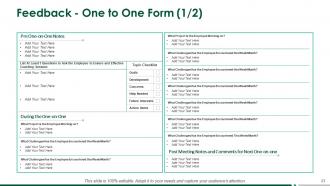
Template 7: Feedback-One to One Form
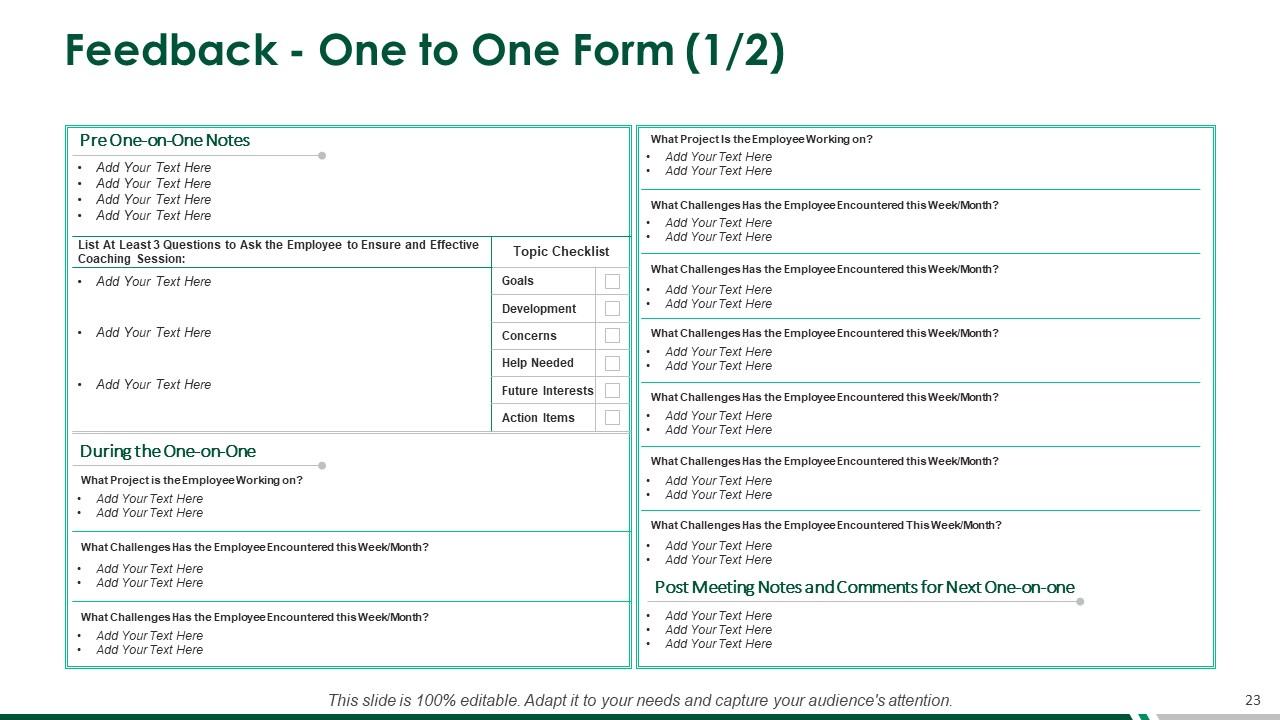
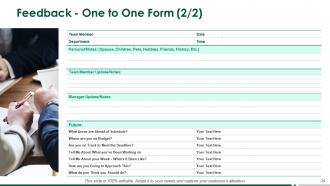
This PPT features a Feedback - One to One Form to facilitate easy and clear communication between managers and employees. The slide presents a form where both parties can give feedback, resulting in a better understanding. It can include questions for employees such as the projects they are working on, the challenges faced, the areas to be focused on for improvement, the actions to be taken, etc. The form is one of the ways for the company to achieve its objectives efficiently and effectively and to have constant growth and development.
Template 8: Performance Review Form
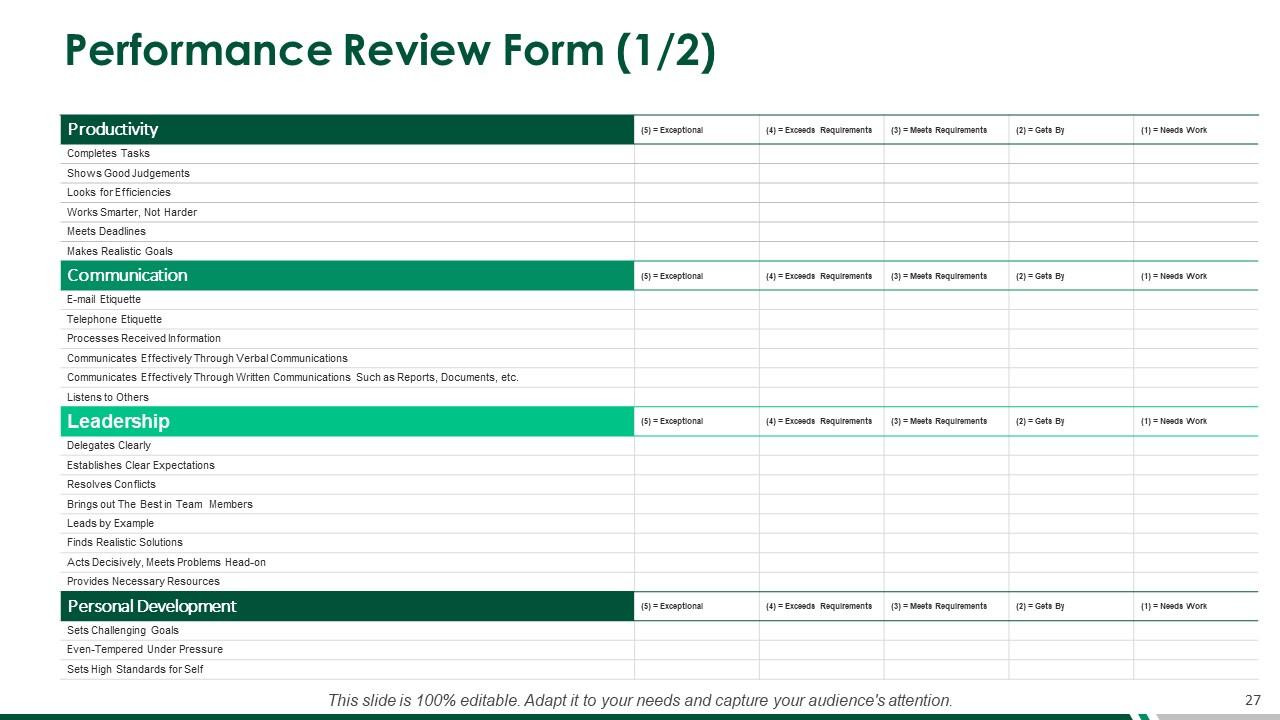
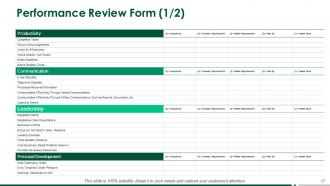
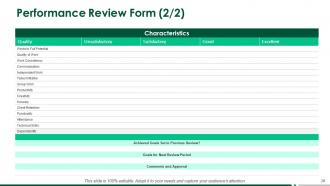
Use this PowerPoint Presentation to review employee performance through four main categories: Productivity, Communication, Leadership, and Personal Development. Under the category Productivity, know how productive the employee has been for the company. Assess the quality of work and check the outcomes. Under the category Communication, know how well the employees communicate through various platforms such as Email and telephone and assess their verbal and written communication. With Leadership, know how well employees have taken charge of the task assigned, provided realistic solutions, acted decisively, resolved conflicts, etc. Employees can learn how to complete their tasks under pressure through personal development.
Template 9: Performance Rating
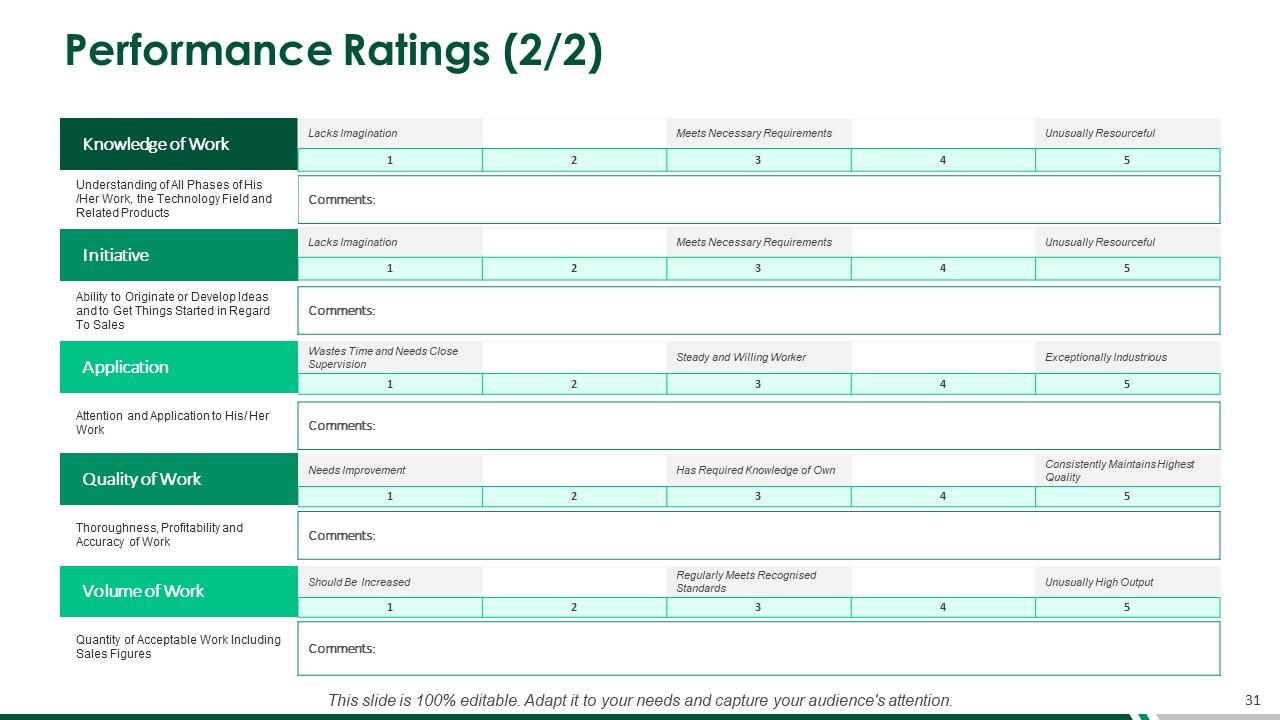
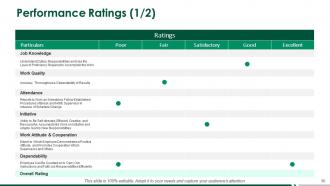
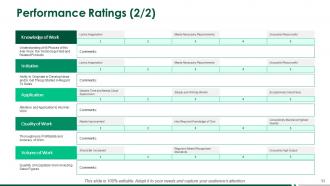
This PPT Template helps present the Performance Ratings in table format, scaling from Poor to Excellent. Showcase the employees' performance by detailing their quality and volume of work. This will give clear descriptions for each rating level to evaluate the objectives. Use it to make easy comparisons of different performances and interpret the ratings. Take actionable feedback and make decisions for performance improvement and recognition.
Template 10: Performance Management Dashboard
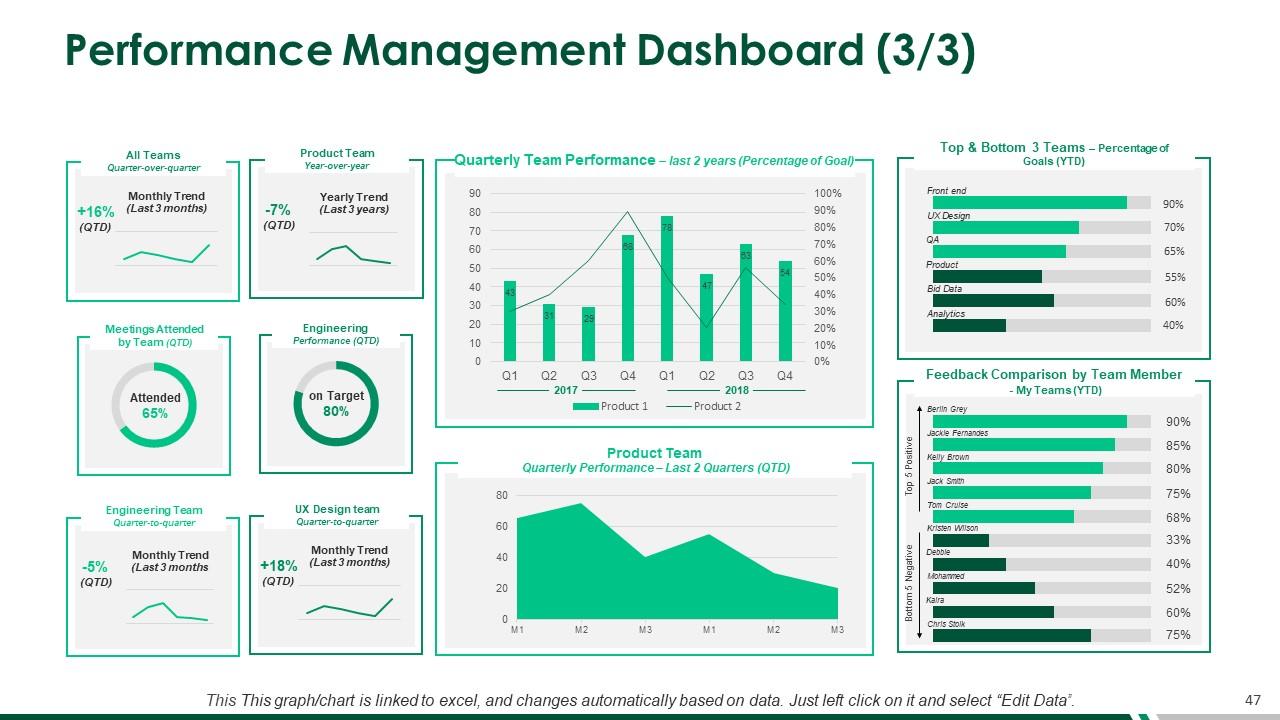
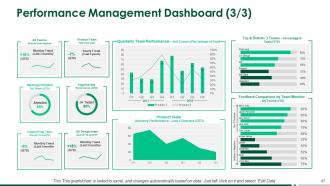
This presentation slide covers the Performance Management Dashboard through graphs and charts. It covers details such as the teams' performance, meetings attended by the teams, and the performance of the product team. Graphs such as pie charts, line graphs, and bar charts can represent data based on productivity, goal attainment, and efficiency. This visual representation helps ensure clear communication between the company and the employees. It is an excellent way to gauge the performance of the employees and guide them in performing the tasks accurately.
IMPACT OF PERFORMANCE MANAGEMENT
Performance management is important for the growth of individuals in a company as it focuses on improving performance, attaining results, and identifying goals. It helps to define employee expectations and how they contribute to the company's success.
Assess employee performance using unique ways such as the Performance Ratings tabular form, Feedback One-to-One Form, Performance Management Dashboard, and Goals Setting Template. Improve transparency in communication between employees and management.
Performance Management Powerpoint Presentation Slides with all 60 slides:
Use our Performance Management Powerpoint Presentation Slides to effectively help you save your valuable time. They are readymade to fit into any presentation structure.
-
Performance Management
-
Content
-
Introduction
-
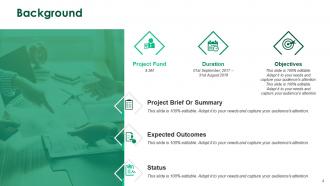
Background
-
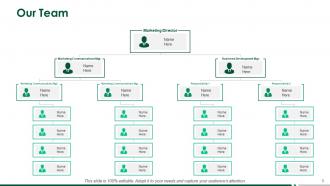
Our Team
-
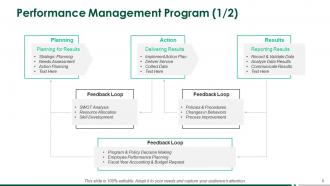
Performance Management Program 1 2
-
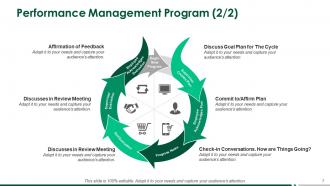
Performance Management Program 2 2
-
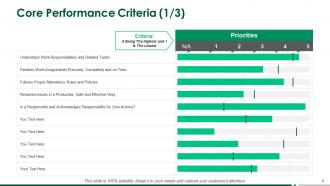
Core Performance Criteria 1 3
-
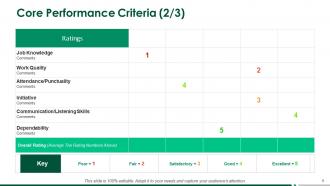
Core Performance Criteria 2 3
-
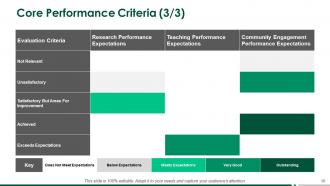
Core Performance Criteria 3 3
-
Performance Planning
-
Performance Guidelines
-
Goals Setting Process
-
Goals Setting Template
-
Types of Goals Priorities 1 2
-
Types of Goals Priorities 2 2
-
Performance Coaching
-
Employees Responsibilities
-
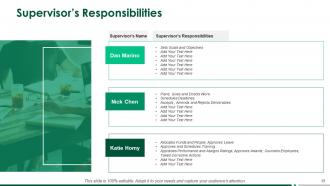
Supervisor s Responsibilities
-
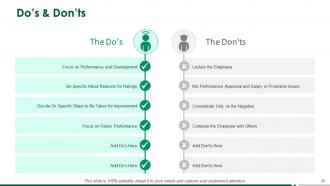
Do s Don ts
-
Performance Feedback
-
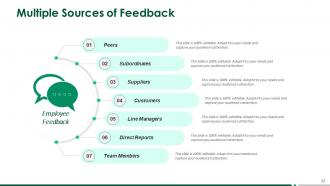
Multiple Sources of Feedback
-
Feedback One to One Form 1 2
-
Feedback One to One Form 2 2
-
Feedback Self Evaluation Form
-
Performance Review Development
-
Performance Review Form 1 2
-
Performance Review Form 2 2
-
Performance Assessment
-
Performance Ratings 1 2
-
Performance Ratings 2 2
-
Performance Improvement Plan 1 3
-
Performance Improvement Plan 2 3
-
Performance Improvement Plan 3 3
-
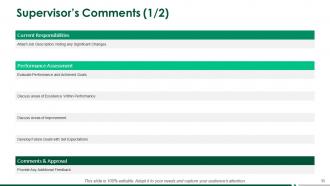
Supervisor s Comments 1 2
-
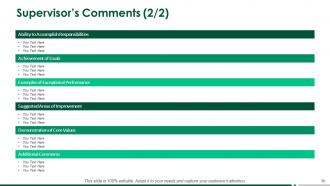
Supervisor s Comments 2 2
-
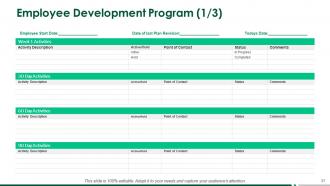
Employee Development Program 1 3
-
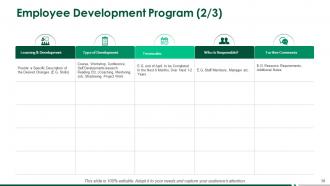
Employee Development Program 2 3
-
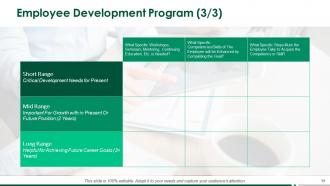
Employee Development Program 3 3
-
Performance Management KPIs Dashboard
-
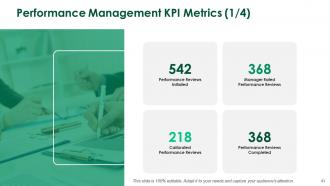
Performance Management KPI Metrics 1 4
-
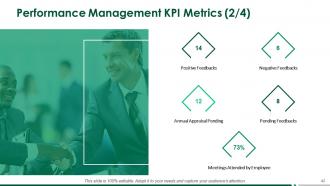
Performance Management KPI Metrics 2 4
-
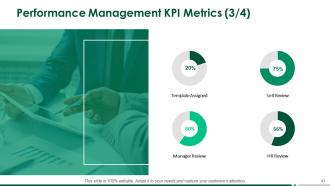
Performance Management KPI Metrics 3 4
-
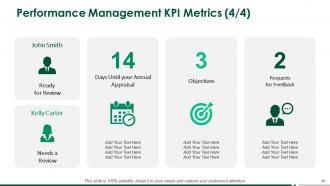
Performance Management KPI Metrics 4 4
-
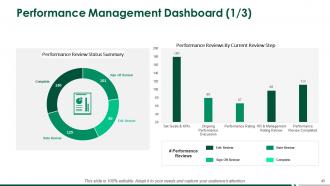
Performance Management Dashboard 1 3
-
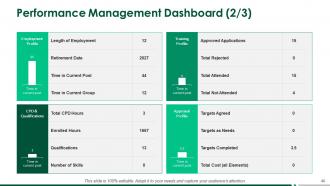
Performance Management Dashboard 2 3
-
Performance Management Dashboard 3 3
-
Performance Management Icon Slides
-

Coffee Break
-
Clustered Bar
-
Pie Chart
-

Additional Slides
-
Our Mission
-
About Us
-
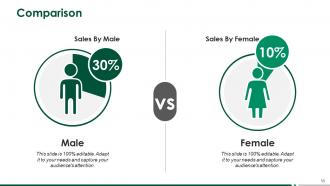
Comparison
-
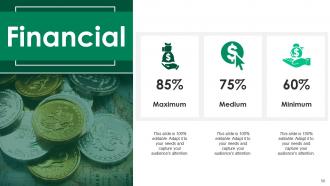
Financial
-

Quotes
-
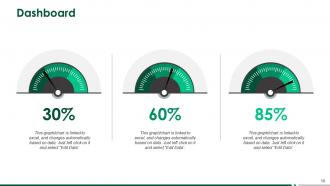
Dashboard
-
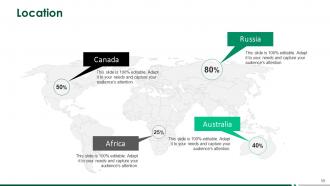
Location
-
Thank You Slide
FAQs for Performance Management
So basically you want goal setting, feedback, reviews, and development planning. Clear objectives that actually tie to company stuff - none of that vague nonsense. Skip the annual review trap though, those are dead. Regular check-ins work way better for catching problems early and celebrating wins. Document everything in formal evaluations, and don't forget career development talks or people get restless. The real trick? Connect individual performance to team success. Honestly, just start with consistent feedback rhythms instead of waiting for some formal cycle. Makes everything else easier.
Ok so basically take your company's top priorities - maybe 3-5 big ones - and work backwards from there. Department goals should clearly tie to those, then team goals, then what each person actually does day-to-day. The key is being super specific though. Like "boost customer retention 5%" instead of some fluffy "make customers happy" nonsense. I've watched so many companies mess this up with vague goals that sound impressive but don't actually change anything. Oh, and don't set it once and forget it - you'll need regular check-ins since priorities always shift mid-year anyway.
Honestly, continuous feedback is so much better than those dreaded annual reviews. Your people can actually fix things as they go instead of finding out months later they were doing something wrong. Weekly 10-minute check-ins work great - I've seen it make a huge difference. People feel way less anxious when they know where they stand. You'll catch problems early before they blow up. Plus you get to celebrate the good stuff right when it happens, which everyone loves. It's like having GPS for your team instead of wandering around lost until someone finally tells you you're going the wrong way.
Honestly, it just makes those terrible annual reviews way less awkward by spreading feedback throughout the year. You get shared dashboards where everyone can track goals and leave comments in real-time - no more "wait, what did we even discuss last quarter?" moments. Your team actually knows what's expected instead of guessing. I'd start with the goal-setting stuff first since that's where you'll notice the biggest difference right away. Plus everything gets saved automatically, which is clutch when people start claiming they never agreed to something.
So SMART goals are your friend here - specific, measurable, achievable, relevant, time-bound. Focus on outcomes over busy work, like deals closed instead of just calls made (though calls obviously matter too). Don't overwhelm people with a million metrics - stick to 3-5 max or they'll lose focus. Your team needs to get how each number's calculated and why it actually matters. Here's the thing though - involve them in setting targets. People hate having goals shoved down their throats, but they'll work way harder for something they helped create.
Honestly, you've got to have clear criteria that everyone knows upfront - none of that vague "exceeds expectations" nonsense. Get multiple people reviewing instead of just one manager making calls. Train everyone on unconscious bias because we all have it, even when we think we don't. Document stuff all year long, not just scrambling during review season. 360 feedback helps too since you get different angles on performance. Oh, and definitely audit your ratings afterward to catch any weird patterns. Basically you want data driving decisions, not someone's gut feeling about who they like grabbing coffee with.
Have that awkward conversation first - figure out what's actually going wrong. Could be they don't know what you want, need training, or have stuff going on at home. Then set up a proper improvement plan with deadlines and weekly check-ins. Most managers I know avoid this way too long, which just makes it worse. Give them extra training if it's skills, maybe shift some tasks around to play to their strengths. Document everything though - you'll need it later. If they still aren't improving after a few months of genuinely trying to help them? Time to cut ties.
Honestly, your leadership style completely changes how you handle performance stuff. Collaborative types usually do more back-and-forth feedback instead of those dreaded yearly reviews. Authoritative leaders? They're all about setting clear goals upfront and tracking specific numbers - which actually isn't terrible if that's what your team responds to. Coaching leaders are constantly checking in and helping people work through problems. I've noticed the best managers figure out what their specific team needs first. Quick test: are you doing performance management TO your people or WITH them? That usually tells you everything.
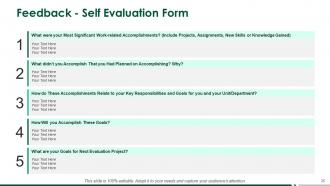
I swear by having people assess themselves first before reviews. Most of the time they'll spot the same problems you did, which makes everything less weird and defensive. You get to see how they're thinking about stuff too - like what's actually tripping them up that you might miss. The whole conversation becomes more of a discussion instead of you just telling them what went wrong. Oh, and definitely send them the self-assessment form a few days early so you can prep better questions based on what they write.
Honestly, most managers are just too wishy-washy about setting clear standards from the start. You've got to spell out exactly what you expect and then actually follow through - reward good work, address the bad stuff. Regular check-ins help way more than those yearly reviews everyone dreads. People need to know how they're being measured and what winning looks like. Once your team sees you're consistent about recognizing solid performance AND dealing with slackers, they'll start policing themselves. Document everything though, and have those awkward conversations you keep putting off.
Honestly, most managers fail at this because they've never learned how to have those awkward conversations without everyone wanting to hide under their desk. Your team needs the basics: active listening, giving feedback that doesn't suck, and frameworks like SMART goals. Also throw in some legal compliance training so they know what they can actually document. Role-playing helps tons - makes the real conversations way less scary. Oh, and conversation skills are huge. Start with a solid performance management course that hits all these areas. Trust me, the practice makes all the difference.
Look, external stuff is constantly messing with how you manage performance. Remote work goes mainstream, AI starts taking over - suddenly you're scrambling to rewrite job expectations and figure out new metrics. Super draining, honestly. Your performance standards have to match what's actually happening now, not whatever worked before the world changed again. I'd say build flexibility into your whole framework upfront. That way when the next curveball hits (and it will), you can shift priorities without starting from scratch. Makes pivoting way less painful when your team needs totally different skills overnight.
Dude, engaged employees are literally the secret sauce for better performance. When people actually give a shit about their work, they hit targets way more consistently. Makes total sense, right? They take ownership instead of just going through the motions. Plus they don't bail on you every six months - and honestly, constant turnover is such a nightmare for getting anything done. I read somewhere that companies with engaged teams see like 23% higher profits, which is pretty wild. My advice? Figure out how engaged your people really are first, then work on improving that before stressing about performance metrics.
Stop obsessing over hours and track what actually gets done instead. Set clear goals with real deadlines - that's your new best friend. Weekly video calls beat endless email chains every time, trust me on this one. Since you can't just walk over and give feedback anymore, you've got to be way more deliberate about it. Document everything and celebrate wins in your team chat so everyone sees. Oh, and give people flexibility on HOW they work. The structure comes from better communication, not micromanaging when they're online.
Honestly, the whole annual review thing is pretty much dead at this point. Most places are doing continuous feedback now - way better than waiting a whole year to tell someone they screwed up, right? OKRs are everywhere for connecting individual goals to company stuff, and real-time dashboards show performance data instantly. Monthly one-on-ones work great if you want to start somewhere small. AI analytics help predict trends and spot coaching moments too. That old "rate and rank" system? Yeah, nobody misses that nightmare. Frequent check-ins and peer feedback systems are taking over instead.
-
Innovative and attractive designs.
-
Excellent work done on template design and graphics.
-
Great quality product.