


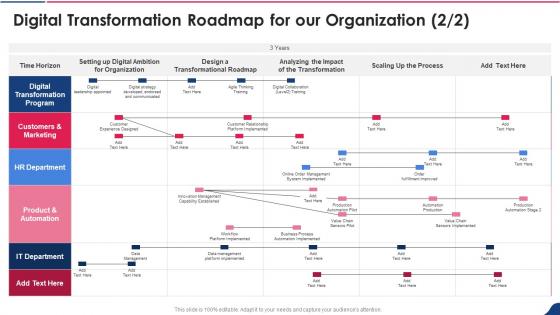
Digital Playbook Digital Transformation Roadmap For Our Organization Design




Try Before you Buy Download Free Sample Product
 Impress Your
 Audience
 100%
100% Editable
 Save Hours
 of Time


Our Digital Playbook Digital Transformation Roadmap For Our Organization Design are topically designed to provide an attractive backdrop to any subject. Use them to look like a presentation pro.
People who downloaded this PowerPoint presentation also viewed the following :
Digital Playbook Digital Transformation Roadmap For Our Organization Design with all 6 slides:
Use our Digital Playbook Digital Transformation Roadmap For Our Organization Design to effectively help you save your valuable time. They are readymade to fit into any presentation structure.





FAQs for Digital Playbook Digital Transformation Roadmap For
Get leadership on board first - without that you're dead in the water. Focus on one clear vision and train your people properly. I can't tell you how many companies I've watched blow their budget on fancy tech that nobody actually uses. Pick your worst pain point and start there, don't try fixing everything at once. Work backwards from real problems to figure out what tools you actually need. Change management is huge too, and obviously customer experience has to improve or what's the point? Data strategy matters but honestly, nail one area first then expand from there.
Start with the obvious numbers - ROI, cost savings, productivity boosts, customer satisfaction. But honestly? Those don't tell the whole story. Employee adoption rates matter just as much - if your team isn't using the new tools, you're screwed. Also track how fast you can roll out features and whether processes actually feel smoother. Set your baseline measurements before changing anything, then check quarterly. I'd pick maybe 3-5 metrics that align with your specific goals and stick to those religiously. Don't try tracking everything or you'll go crazy.
Dude, training is literally everything. I can't stress this enough - you'll watch millions go down the drain if people don't know how to actually use the new systems. Best software in the world means nothing when your team's terrified to touch it. Start the training way before launch, not after. Make it hands-on too, none of that boring lecture stuff. Give people real time to mess around and practice. Oh and definitely don't do some rushed one-day thing and expect miracles. I've watched that disaster play out so many times it's not even funny.
Okay so digital transformation and customer experience are totally connected - can't really nail one without the other. When you're transforming digitally, you're basically redesigning how customers interact with your business at every step. Mobile apps, chatbots, personalized stuff, quicker checkouts - all that good stuff. The goal is making everything smoother for them. But honestly? If you just throw tech at problems without understanding the actual customer journey, you'll end up with expensive tools nobody uses. I'd say start by figuring out where customers are getting frustrated first, then find digital solutions that actually fix those specific issues.
So cloud computing and AI/ML are the heavy hitters right now. IoT sensors everywhere, data analytics tools - the usual suspects. RPA is automating everything (honestly gets a little scary sometimes). Mobile apps let people work from literally anywhere now. Blockchain's doing cool stuff in supply chains and finance too. The magic happens when they all connect though - IoT grabs data, AI crunches it in the cloud, boom. If you're thinking about this for work, start simple. Cloud migration first, then basic automation. Don't jump straight into the AI rabbit hole until you've got the foundation sorted.
Honestly, get people involved from day one and make it crystal clear what's in it for them. Fear drives most resistance - nobody wants change happening TO them instead of WITH them, you know? I've watched so many projects crash because leaders just announced stuff without explaining why. Find your excited people first. Let them spread the enthusiasm naturally. Training matters, celebrate those small wins, and actually listen when people complain instead of brushing them off. Oh, and be real about timelines - nobody likes being blindsided.
Oh man, where do I start? First off, you absolutely need your leadership on board from the beginning - without that you're basically screwed. Also don't try to change everything at once, that's a recipe for disaster. People hate being ignored during these changes, so actually listen to them. Here's the thing though - everyone gets distracted by fancy new tech when they should focus on fixing real problems first. Honestly, I've watched companies blow tons of money on shiny tools that don't solve anything. Change management is brutal too. Start small with pilot projects to show it actually works before committing fully.
Just tackle your biggest headache first - whatever's eating up the most time. Maybe it's tracking customers or sending invoices, idk what yours is. Don't try to automate everything at once though, that's how people burn out and waste money. Cloud stuff is usually pretty cheap to start with. I'd probably go with something that helps you actually know your customers better since that's where the money is. Get decent with one tool before adding more. Most small business owners I know tried to do too much too fast and it was a mess.
Honestly, AI is like putting your digital transformation on steroids. It speeds up everything you're already doing while opening doors you didn't even know were there. Think automating boring repetitive stuff, getting instant insights from all your data, creating personalized customer experiences without hiring 50 more people. But here's the thing - it doesn't just digitize your current processes. You can totally rethink how your business actually works. Projects that used to take years? Now we're talking months. My advice? Pick one annoying repetitive task at your company and see how AI could tackle it. That's usually where most people start anyway.
Honestly, data analytics just shows you what's actually happening instead of you making stuff up. Like, you can see exactly where people bail on your app or which teams are totally lost with new software. Way better than the whole "I think customers probably want this" approach. Once you start looking at real numbers, it's kind of addictive - you realize how much you were just winging it before. Pick something you're currently guessing about and find the data. You'll make decisions way faster when you're not second-guessing yourself constantly.
Dude, three big things to watch out for. Data privacy is massive - you're collecting so much personal info now that consent and security become nightmare territory. Job displacement is the other big one, and honestly some of the leadership conversations I've heard about this get pretty intense. Algorithmic bias sneaks up on you too - your AI might be discriminating and you won't even know it. Build this stuff into your plan from the start though. Don't wait until something breaks and then scramble to fix it later.
Look, don't treat security like an afterthought - weave it in from the start. Risk assessments should happen before you implement anything new. Encrypt your data, set up proper access controls, and for the love of all that's holy, keep everything updated. I've seen too many companies get burned by the "we'll patch it later" approach. Your team needs training on new protocols as things roll out - people mess up way more than systems do. Oh, and loop in your IT security folks from day one instead of dumping surprise systems on them.
So digital transformation is actually huge for sustainability - way bigger than most people realize. Real-time energy tracking lets you spot waste instantly. Supply chains get way more efficient when you can see everything digitally. Plus ditching paper processes saves tons of resources (and honestly makes life easier). Cloud computing shrinks your physical footprint, and AI can predict problems before they waste energy or materials. Remote work cuts commuting emissions too, which is nice. I'd start with whatever processes eat up the most resources and digitize those first. Track the impact as you go - the environmental benefits pile up faster than you'd expect.
So digital transformation basically gives you real-time visibility into everything - inventory, shipments, demand patterns. IoT sensors and AI analytics handle the heavy lifting there. The cool part? You can automate all those tedious tasks like reordering and quality checks. Your team gets freed up for bigger picture stuff instead. Predictive insights are probably the biggest game-changer though - you'll spot disruptions coming before they hit. My advice? Don't try to overhaul everything at once. Pick your worst supply chain headaches first and find digital tools that tackle those specific problems. Way less overwhelming that way.
Dude, leadership makes or breaks this stuff. I've watched so many digital transformations crash because the executives hyped it up but then wouldn't even use the new systems themselves - like, come on. Your leaders need to paint a clear picture of where you're going and actually secure the budget. Getting buy-in is huge too. When resistance pops up (and it will), they've got to tackle it head-on instead of hoping it goes away. The momentum thing is real - transformations get messy and discouraging, so you need champions who'll stick with it. Don't even bother starting unless leadership is genuinely all-in.
-
They saved me a lot of time because they had exactly what I was looking for. Couldn’t be happier!
-
Like always a great experience with you guys. Always there on the drop of hat to help.