


Defining A Framework For Digital Transformation Organization It Transformation Roadmap




Try Before you Buy Download Free Sample Product
 Impress Your
 Audience
 100%
100% Editable
 Save Hours
 of Time


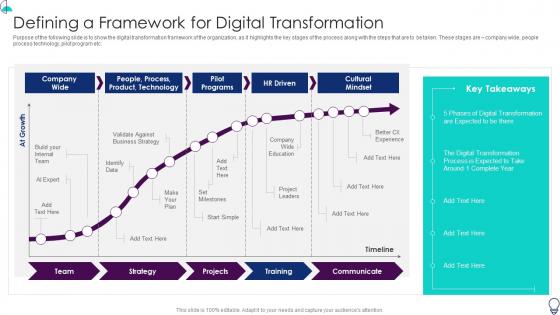
Purpose of the following slide is to show the digital transformation framework of the organization, as it highlights the key stages of the process along with the steps that are to be taken. These stages are company wide, people process technology, pilot program etc.
People who downloaded this PowerPoint presentation also viewed the following :
Defining A Framework For Digital Transformation Organization It Transformation Roadmap with all 6 slides:
Use our Defining A Framework For Digital Transformation Organization It Transformation Roadmap to effectively help you save your valuable time. They are readymade to fit into any presentation structure.






FAQs for Defining A Framework For Digital Transformation Organization
Honestly, focus on four main things: strategy alignment, tech infrastructure, change management, and data governance. Your strategy has to tie directly to business results - otherwise you're just throwing money at fancy tools (trust me on this one). Infrastructure is massive because it literally determines what you can pull off. Getting people to actually adopt changes? That needs its own plan. Clear data policies are non-negotiable too. Oh, and don't forget performance metrics to track how you're doing. I'd start by figuring out where you currently stand in each area, then tackle whatever gaps hurt your business goals the most first.
So first thing - do a digital maturity assessment to see where you actually stand right now. Look at your tech infrastructure, data management, employee skills, customer experience stuff. There are these frameworks that usually have like 4-5 levels from "we still use fax machines" to "fully digital." Honestly, a spreadsheet works fine if you're detailed about it - don't overthink the tool. Compare where you are vs where your industry's headed. The trick is being super honest about your gaps (even the embarrassing ones) so you know what to fix first.
Honestly, leadership makes or breaks these things. Your C-suite has to actually champion the changes, not just throw money at them and hope for the best. People hate change naturally, so if leaders aren't modeling the new behaviors and explaining why you're doing this stuff, you'll hit walls everywhere. I've watched so many projects crash because executives treated digital transformation like swapping out old computers or something. It's really more about shifting how people work. Leaders need to invest in training their teams and - this sounds obvious but - actually participate in the transformation themselves instead of just writing checks.
Dude, culture can totally make or break your digital transformation. I've watched so many good initiatives crash and burn because nobody thought about the people side first. Your biggest enemy? That "we've always done it this way" mentality. Get your influential team members on board early - they'll do half the work for you. Also, don't just tell people what's changing, explain why it matters. Oh, and map out your cultural roadblocks before you even start rolling anything out. Sounds obvious but you'd be shocked how many skip this step.
Honestly, I'd focus on just a few key things or you'll drive yourself crazy with data. Customer satisfaction scores are obvious must-haves. Check how many people actually use your new digital stuff - adoption rates tell you if you built something people want or just expensive digital paperweights. Revenue from digital channels matters tons too. Process efficiency is big - are things actually getting done faster now? Oh, and don't skip employee engagement scores because if your team hates the new systems, good luck making anything work long-term. Maybe add time-to-market for launching new features. But seriously, pick like 4-5 max and stick to those.
Honestly, don't just throw tech at everything hoping it sticks. Map each digital project back to what you're actually trying to achieve - more sales, happier customers, lower costs, whatever. I've watched companies blow ridiculous amounts of money chasing the latest tech trend without any real plan. Your strategy and IT people need to talk regularly, not just once a quarter in some awkward meeting. Set up KPIs that track both the tech stuff AND business results. Otherwise you'll never know if you're making progress or just creating an expensive mess that looks impressive in PowerPoint.
Honestly, start with mobile-first design - people will roast you if your app sucks on phones. Cloud architecture and AI/ML integration should be your backbone, plus API-driven everything for flexibility. If you're handling real-time stuff, edge computing is clutch. IoT platforms matter if you've got connected devices, and cybersecurity mesh is huge right now because hackers are relentless. Low-code tools can speed things up too, though some developers hate admitting that. Here's the thing - don't chase every trend. Pick 2-3 that actually fix your problems. Audit what you have first and find the biggest pain points.
So your customers' feedback is basically your GPS for digital transformation - without it, you're just guessing what'll work. Look at their biggest headaches first, that's where you digitize. Plus their behavior tells you everything about what tech they'll actually use. Like, why build some elaborate web platform if everyone's glued to their phones? I always think it's weird when companies skip this step. Map out their current experience and spot where digital fixes could solve real problems. Oh, and don't just ask once - keep that feedback coming throughout the whole process.
Oh man, the classic mistake is trying to overhaul everything at once - total disaster waiting to happen. Companies blow their budget on fancy tech but never figure out what they're actually trying to fix first. Leadership loves to surprise everyone with new systems instead of asking what people actually need, then acts shocked when nobody uses it properly. Honestly, skipping the pilot phase is just asking for trouble. Test it with one team first, see what breaks, then roll it out. And for the love of god, train people before you expect them to magically know how to use it.
Dude, Agile is perfect for digital transformation because you're not betting everything on one massive plan. Break stuff into 2-week sprints instead. Test things, see what works, pivot when it doesn't. Digital projects usually go sideways anyway, so this way you catch problems early before burning all your cash. Your team stays way more engaged too - they're actually shipping stuff regularly instead of working on some endless project that might never see daylight. Plus stakeholders love seeing progress happen fast. Honestly? Pick one initiative and just try it as a pilot first.
Honestly, start with cloud stuff like AWS or Azure - that's your backbone. Then grab some business intelligence tools for all your data. Cybersecurity is huge though, like seriously don't skip that part because I've watched companies totally mess this up. You'll want automation tools, CRM platforms, project management software... the usual suspects. Oh and make sure everything actually integrates - nobody wants a bunch of random tools that can't talk to each other. My advice? Pick maybe two solid platforms first and build out from there instead of going crazy with everything at once.
Honestly, you've gotta bake training right into your whole strategy from the start. Map out what skills people actually have vs what you need for going digital - trust me, the gaps are usually bigger than you think. Then build learning paths that match your rollout timeline. I've watched so many companies treat this like an afterthought and then act shocked when nobody adopts the new tools. Budget for it upfront and get champions in each department who can help people along the way. Oh, and don't do some one-and-done workshop thing. Keep checking in as you roll out new stuff because people need ongoing support, not just a single training session.
So data analytics is basically your GPS for transformation decisions - shows you what's actually working vs. what's a total mess. You can track how users behave, measure if your processes are efficient, find those annoying bottlenecks you never noticed. The cool part? Predictive stuff lets you see problems coming before they smack you in the face. Like knowing which systems are about to crap out or which customers might bail. I'd start simple though - pick your top 3 goals and figure out what numbers would tell you if you're winning at each one.
Honestly, forget trying to copy what big corporations do - you don't have their budgets or patience for endless rollouts. Pick one thing that's making your team miserable and fix that first. Maybe it's your ancient accounting system or the fact that you're tracking customers in spreadsheets (been there). Cloud tools are your friend here since they're usually cheap to try. The upside? You can actually move fast unlike those massive companies that take forever to change anything. Build on what works, ditch what doesn't. Your sanity depends on keeping it simple at first.
Data privacy should be your first concern - how you're collecting and storing customer info. Your workforce will get hit hard by automation, so think about retraining programs early. AI bias is a massive issue if you're letting algorithms make decisions about people. Accessibility matters too - your digital stuff needs to work for everyone, including folks with disabilities. Honestly, most companies totally botch this part. Build ethics reviews right into your transformation plan from the start. Don't just tack it on later when problems emerge.
-
I loved the hassle-free signup process. A few minutes and, I had this giant collection of beautiful designs.
-
I can always count on your designs for my professional needs. I believe I found a one-stop-shop for PPTs.