


Property Comparison Powerpoint Ppt Template Bundles





Try Before you Buy Download Free Sample Product
 Impress Your
 Audience
 100%
100% Editable
 Save Hours
 of Time


Our Property Comparison Powerpoint Ppt Template Bundles are topically designed to provide an attractive backdrop to any subject. Use them to look like a presentation pro.
People who downloaded this PowerPoint presentation also viewed the following :
Property Comparison Powerpoint Ppt Template Bundles with all 19 slides:
Use our Property Comparison Powerpoint Ppt Template Bundles to effectively help you save your valuable time. They are readymade to fit into any presentation structure.



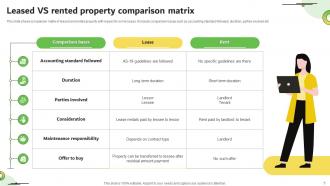







FAQs for Property Comparison Powerpoint
Honestly, commute times matter way more than you think - test the drive during rush hour, not just weekends. School ratings are key if you've got kids. I always dig into actual crime data myself instead of trusting what realtors say. Property taxes can be brutal and they're different everywhere, so factor that in. Check recent home sales in the area to make sure you're not overpaying. Also look up any big development projects planned nearby since those can mess with traffic or boost your home value. Spend a whole weekend in each neighborhood if you can - different times of day give you the real vibe.
Market demand controls everything when it comes to pricing. More buyers than available homes? Prices shoot up. I've seen identical houses sell for completely different amounts just because one neighborhood was trending. Think concert tickets - same seats cost more for popular artists. High demand means even crappy properties sell for ridiculous money, while low demand leaves perfect houses sitting forever with price cuts. Oh, and always look at recent sales volume plus days on market first. That'll tell you if you're walking into a bidding war or not.
Property size matters a ton for comparing values, but bigger isn't always better - trust me on that one. Location and condition can totally trump square footage. Like, a small downtown condo might be worth way more per square foot than some huge suburban place. Start with price per square foot as your baseline. Then figure out what's actually livable space versus just... space. You know those houses that are technically 3,000 sq ft but half is an unfinished basement? Yeah, don't fall for that. Compare similar properties in the same neighborhood for the real picture.
Look, it really depends on your neighborhood. Pools and gyms might add 5-10% in the city, but in fancy suburbs? We're talking 15-20% because people expect that stuff. Beach areas care way more about outdoor space and water access. City folks will pay extra for parking and security - which honestly makes total sense if you've ever tried finding street parking downtown. My advice? Check what similar houses sold for recently in your exact area. See which features actually got people to pay more, not just what looks good in listings.
Honestly, age and condition can make or break a deal financially. Older places usually need way more upkeep - though weirdly enough, sometimes the bones are way better than newer construction. You've gotta dig past those pretty listing photos and really look at inspection reports. What's it actually gonna cost you month to month? I learned this the hard way on my first place. Factor in immediate fixes plus ongoing stuff when you're making offers. The market appeal thing matters too - some buyers love character, others run from anything built before 1990.
So I'd start with a basic spreadsheet comparing cap rates and cash-on-cash returns - that's where the real money story shows up. Check price per square foot in similar neighborhoods too. Your rental income vs mortgage payments is obviously huge, but don't sleep on vacancy rates because honestly, empty units are brutal financially. Pull recent comparable sales and see what's happening development-wise in the area. Sometimes new construction can actually hurt your property values if you're not careful. The whole point is getting these numbers side-by-side so you can actually see which deals make sense instead of just guessing.
Schools make a massive difference when house hunting. Good districts can bump property values up 15-25% compared to average ones - I've literally watched people get into bidding wars over school zones. Even without kids, you want to think about this stuff because it protects your investment later. Check out teacher-to-student ratios and what kind of programs they offer, not just test scores. Oh, and don't forget about libraries and educational centers nearby. Parents will pay crazy money to get their kids into the right district, which honestly keeps your neighborhood desirable long-term.
Dude, property taxes are no joke - we're talking $500-2000+ extra per month depending where you look. Jersey and Texas? Beautiful houses but the tax bills will make you cry. It's like having two mortgages honestly. Alabama and Wyoming are way more chill about it though. I'd check the local rates before you get too attached to any area because these payments never go away and they creep up every year. Seriously, run those numbers first. You might end up loving a completely different neighborhood once you see what you'd actually be paying.
Honestly, start with cap rate and cash-on-cash return - those are your bread and butter. Cap rate tells you what you're making annually based on purchase price. Cash-on-cash is way more useful though since it shows returns on the actual cash you put down. There's also this old 1% rule where monthly rent should equal 1% of what you paid, but honestly finding those deals is getting harder these days. Don't forget to check local vacancy rates too. Property appreciation is nice but you can't really count on it. Run these numbers first and you'll weed out the garbage deals pretty quick.
Oh man, being near public transit is SUCH a game changer for property values. Like, we're talking 10-20% higher prices and way faster sales. Makes total sense though - who wants to deal with expensive parking and traffic nightmares? Younger buyers especially go crazy for it since they actually use trains and buses to get around. Even people who drive everywhere still want that option there, you know? It's smart for resale too. I always pull up those transit maps when I'm looking at places - honestly should be one of the first things you check.
Oh man, development plans totally mess with property values way before anything gets built. Like if they're planning a new subway stop, prices jump immediately - everyone wants in on that. Highway expansions though? Run. Nobody wants construction noise for three years straight. Check out the city's master plan first - I learned this the hard way when I almost bought near a planned industrial zone. Municipal planning docs show you what's really coming. Honestly, most people skip this research and regret it later. Zoning changes are your best friend when comparing different neighborhoods.
Dude, location stuff can totally tank or boost property values - we're talking 10-20% swings easily. Busy roads, flood zones, crappy air quality? All bad news. But waterfront or mountain views? That's where the money is. I'd definitely check out wildfire/hurricane risks too since insurance is insane right now. Oh and industrial sites nearby are usually a red flag. Parks and natural areas do the opposite though - they bump values up nice. Walk around the area at different times of day to really get a feel for it. Environmental reports are boring but worth pulling.
Dude, you really need that full market analysis - trust me on this one. Sure, everyone looks at bedrooms and square footage, but that's just scratching the surface. Pull at least 6 months of comparable sales and check what's actually selling in that neighborhood. I've watched friends get completely screwed by skipping this step, then wondering why they overpaid by like 20k. Recent trends matter way more than people think. You'll spot the overpriced garbage listings right away and figure out what's genuinely worth your money. Oh, and don't forget seasonal stuff affects pricing too.
Dude, check the zoning first before you even look at anything else. Residential zones are pretty basic - houses, maybe some duplexes or whatever. But commercial? Way more options for different businesses, though honestly the rules can be a pain. They're super strict about parking requirements, what signs you can put up, when you can operate. I learned this the hard way when my cousin wanted to open a late-night food truck spot. The zoning tells you what's actually possible with a property, not just what it looks like right now.
Look, checking historical data is honestly a game-changer for figuring out if a place is priced right. I usually dig back 3-5 years to see the real patterns - are prices going up, staying flat, or tanking? That tells you way more than just looking at recent sales. Some neighborhoods are clearly on fire while others have already peaked (learned that the hard way once). Pull comps from the last 6 months but don't ignore the longer trends. It's wild how much this stuff helps you avoid overpaying or missing a good deal.
-
The team is highly dedicated and professional. They deliver their work on time and with perfection.
-
Wow! The design and quality of templates on SlideTeam are simply the best.