


Property Management Company Business Plan Powerpoint Presentation Slides




Try Before you Buy Download Free Sample Product
 Impress Your
 Audience
 100%
100% Editable
 Save Hours
 of Time


Delve into our meticulously crafted Property Management Company Business Plan a comprehensive Property Agency PPT specifically designed to empower entrepreneurs in the diverse realms of property agencies, real estate companies, and brokerages. Commencing with a comprehensive executive summary, the Real Estate Agency Presentation unfolds with a thorough market analysis and a meticulous breakdown of key success factors. The template includes essential components that form the foundation of a robust business strategy. The Real Estate Company Template takes your planning a step further by incorporating a SWOT analysis and the application of Porters Five Forces analysis model. Moving forward, the Real Estate Brokerage PowerPoint offers in depth customer analysis and market sizing, facilitating the identification of target demographics and the evaluation of market opportunities. In the Property Management Company Deck, you will find a scenario analysis, profit and loss statement, cash flow statement, balance sheet, and a Discounted Cash Flow DCF valuation model projecting the businesss worth over the next five years. Download the Real Estate Agent Business Plan Presentation today and set the stage for success in the dynamic world of real estate.
People who downloaded this PowerPoint presentation also viewed the following :
Content of this Powerpoint Presentation
Slide 1: This slide displays the title Property Management Company Business Plan. Put your Company name and begin.
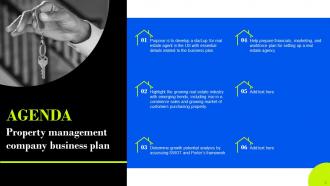
Slide 2: This slide displays the title Agenda.
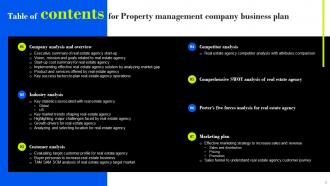
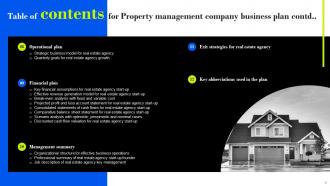
Slide 3: This slide exhibit table of content.
Slide 4: This slide exhibit table of content.
Slide 5: This slide exhibit table of content that is to be discuss further.
Slide 6: This slide provides the key highlights of the real estate agency business including a quick pitch that describes the current market status of the industry.
Slide 7: This slide covers the real estate agency industry's vision, mission, and goals to ensure that it will deliver an excellent client experience.
Slide 8: This slide provides the details related to the start-up expenditures that incur during the process of establishing a real estate agency business.
Slide 9: This slide covers the problem associated with the buying and selling of property in the real estate industry.
Slide 10: The purpose of this slide is to provide information related to the wide range of products and services offered by the real estate agency.
Slide 11: This slide covers the important points to be considered while dealing with different real estate agency products and services in the market.
Slide 12: This slide exhibit table of content that is to be discuss further.
Slide 13: The purpose of this slide is to highlight the facts representing contribution of real estate agency globally.
Slide 14: The purpose of this slide is to highlight the facts representing contribution of real estate agency globally.
Slide 15: This slide highlights the detailed assessment of a real estate agency within the United States market.
Slide 16: This slide highlights the detailed assessment of a real estate agency within the United States market.
Slide 17: This slide highlights the detailed assessment of a real estate agency within the United States market.
Slide 18: This slide highlights the market trends that can change the current market scenario, as well as ways that the company can stay ahead of its competitors.
Slide 19: This slide depicts details about various challenges catered by the real estate agency in the changing market conditions.
Slide 20: This slide provide the details about various growth drivers resulting in real estate agency progress.
Slide 21: This slide depicts an ideal business location for a real estate agency that minimizes the risk of failure.
Slide 22: This slide exhibit table of content that is to be discuss further.
Slide 23: This slide covers an assessment of how the company's products will fit into a particular market and where they will acquire the most traction with customers.
Slide 24: This slide provides an overview of how to better understand the target audience, to fine-tune marketing campaigns, and increase real estate business.
Slide 25: This slide is to depict the market potential of real estate agencies in terms of TAM, SAM, and SOM to assist startups and enterprise firms.
Slide 26: This slide exhibit table of content that is to be discuss further.
Slide 27: This slide is to provide details related to the major participants and key competitors to gain insight into their products, sales, and marketing tactic.
Slide 28: This slide exhibit table of content that is to be discuss further.
Slide 29: This slide is to identify the industry' strengths, weaknesses, opportunities, and threats related to the business.
Slide 30: This slide exhibit table of content that is to be discuss further.
Slide 31: The slide highlights porter’s five forces model and its implications in the US real estate industry.
Slide 32: This slide exhibit table of content that is to be discuss further.
Slide 33: This slide is to implement an effective go-to-market strategy for bringing the company's products or services to an end customer.
Slide 34: This slide is to implement an effective go-to-market strategy for bringing the company's products or services to an end customer.
Slide 35: This slide is to implement an effective go-to-market strategy for bringing the company's products or services to an end customer.
Slide 36: This slide provides information regarding the customer journey mapping to track users' actions and key touch points across levels.
Slide 37: This slide exhibit table of content that is to be discuss further.
Slide 38: The purpose of this slide is to highlight the real estate agency business model used to understand the operational details of the company.
Slide 39: The slide covers particular objectives or goals that the organization intends to attain as part of its business plan.
Slide 40: This slide exhibit table of content that is to be discuss further.
Slide 41: This slide depicts the important financial assumptions that are to be made while setting real estate agency business in terms of income, expense, and balance sheet.
Slide 42: The slide shows the effective revenue model of the real estate agency in the real estate industry, which displays the cost incurred and the various sources of income.
Slide 43: The slides highlight the break-even analysis of the firm.
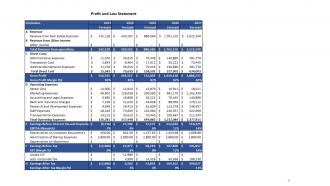
Slide 44: The slides provide a overview of the projected profit and loss statement to visualize the financial performance of real estate agency for the next five years.
Slide 45: The slides provide a overview of the projected profit and loss statement to visualize the financial performance of real estate agency for the next five years.
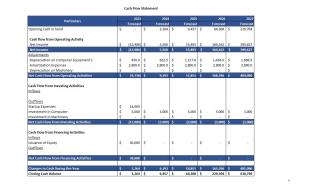
Slide 46: The slides highlight the company's cash flow statement to provide a detailed picture of what happened to a business's cash during a specified period.
Slide 47: The slides highlight the company's cash flow statement to provide a detailed picture of what happened to a business's cash during a specified period.
Slide 48: The slides cover the information related to the company's financial position at a specific time by showing the details of the assets of the company.
Slide 49: The slides cover the information related to the company's financial position showing the details of the assets of the company along with its liabilities.
Slide 50: This slide is to examine the effects of potential future events on the company’s performance by considering different outcomes.
Slide 51: This slide is to examine the effects of potential future events on the company’s performance by considering different outcomes.
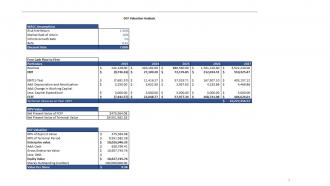
Slide 52: This slide is to calculate the amount of money an investor would get from an investment after adjusting for the time value of money.
Slide 53: This slide exhibit table of content that is to be discuss further.
Slide 54: The slide highlights the organizational hierarchy in the company used to define the staff structure.
Slide 55: This slide highlights the founder’s biggest professional achievements and most valuable skills and the proven ways in which she will use those skills.
Slide 56: This slide highlights the job roles and responsibilities of real estate agency key management people to determine what kind of job has to be done.
Slide 57: This slide highlights the job roles and responsibilities of real estate agency key management people to determine what kind of job has to be done.
Slide 58: This slide highlights the job roles and responsibilities of real estate agency key management people to determine what kind of job has to be done.
Slide 59: This slide exhibit table of content that is to be discuss further.
Slide 60: This slide represents exit strategies such as sell-offs, IPOs, mergers, and acquisitions that enable the entrepreneur to liquidate their position in a financial asset.
Slide 61: This slide exhibit table of content that is to be discuss further.
Slide 62: The purpose of this slide is to highlight the shorter version of existing words to save time and take up less space.
Slide 63: This is the icons slide.
Slide 64: This slide presents title for additional slides.
Slide 65: This slide depicts 30-60-90 days plan for projects.
Slide 66: This slide shows about your company, target audience and its client's values.
Slide 67: This slide presents your company's vision, mission and goals.
Slide 68: This slide showcase about Quotes.
Slide 69: This slide shows puzzle for displaying elements of company.
Slide 70: This slide exhibit Timeline.
Slide 71: This is thank you slide & contains contact details of company like office address, phone no., etc.
Property Management Company Business Plan Powerpoint Presentation Slides with all 79 slides:
Use our Property Management Company Business Plan Powerpoint Presentation Slides to effectively help you save your valuable time. They are readymade to fit into any presentation structure.








































































FAQs for Property Management Company Business Plan
You'll need a solid market analysis first - what's the rental demand like in your area? Figure out which property types you want to focus on and map out your territory. Financial projections are huge too (startup costs, revenue streams, all that fun stuff). Don't skip the tedious licensing and insurance requirements - learned that one the hard way! Your operational game plan should cover tenant screening, maintenance, rent collection. Marketing strategy for finding both owners and renters, plus how you'll price your services compared to competitors. Start with an executive summary that hits these points. Keeps you organized when you're neck-deep in the details later.
Look, market analysis is basically your reality check before diving in. You'll see what rents people actually pay (not what you hope they'll pay), scope out the competition, and figure out what tenants want most. Honestly, this stuff saves you from making expensive mistakes later. Check rental comps in your target areas first - that's where the real money info lives. Then peek at what other property managers offer for services. Maybe you'll find a sweet spot everyone's missing, like there's zero decent student housing around. Use all that to nail down realistic pricing instead of just crossing your fingers and guessing.
Okay so you'll need revenue projections - monthly management fees, leasing commissions, that kind of stuff. Operating expenses too, like salaries and office costs. Honestly, startup costs always end up being way more than you expect, so pad those numbers. Do cash flow forecasts for 3-5 years and figure out your break-even point based on how many properties you'll manage. Building a client base takes forever though - I'd start with really conservative growth estimates. Create three scenarios: conservative, realistic, and optimistic. Trust me, when you're sitting across from investors later, you'll be glad you didn't go crazy with the projections upfront.
Honestly, just start by figuring out what type of property owners actually need help in your area. First-time landlords who are totally lost? Or maybe seasoned investors with huge portfolios? I'd definitely go local first since this business is super location-dependent. Check out what rental issues keep popping up - maybe browse competitor reviews or just ask around. The demographics matter too: what properties they own, experience level, all that stuff. Oh and don't assume anything - survey some potential clients before you commit. You'll save yourself a headache later.
Honestly, I'd go after a specific niche first - like luxury properties or maybe just condos. Most property management companies are still stuck in 2015 with their tech, so there's your opening right there. Get a decent tenant app going, virtual tours, that kind of stuff. Response times are huge too - having solid contractors you can actually call makes you look like a hero when something breaks. Oh, and ditch the corporate robot voice when you talk to people. Just be real with them. Don't try to do everything though. Pick like 2 things and nail those first.
Don't just dump marketing into one section of your business plan - spread it everywhere. Put target market stuff in your research section, then budget for digital marketing in the financials. Customer acquisition costs? Those go in revenue projections. Oh, and retention marketing is clutch since it's way cheaper than hunting for new clients all the time. Be specific about your channels too - SEO, social media, referrals, whatever works. Track your ROI religiously. Marketing isn't just another expense, it's the engine that powers everything else in your business.
Dude, definitely put a whole section on tech in your plan. Property management software is huge - tenant screening, rent collection, maintenance requests, all that. Smart home features and virtual tours are pretty much expected now. I'd say automated communication is a game-changer too, though don't go overboard with it. These tools cut your costs and keep tenants happy. List specific platforms you'll use and budget for everything. Your investors need to see you're modern. Nobody wants to deal with paper applications anymore - that's like business suicide.
Look, I'd start with your past numbers - what you actually made from rent, how often units sat empty, regular stuff like maintenance costs. Excel honestly works fine if you're not huge yet, but property software is a game changer once you get there. Update your projections monthly using a 12-month rolling forecast. Winter always kills me with repair calls, so factor in those seasonal patterns. Don't forget planned upgrades and buffer some cash for surprise vacancies. Be pessimistic about income, realistic about what things actually cost. Monthly check-ins comparing real vs projected numbers let you pivot fast when needed.
First thing - check your state's licensing rules because they're all over the place. Liability insurance is obvious but don't skip the trust account stuff, that's where people get burned since you're handling other people's rent money. Fair housing and tenant laws are non-negotiable obviously. If you hire anyone, employment law kicks in too. Oh and data privacy for all that tenant info you'll have. Your contracts with property owners need to be bulletproof. Honestly? Get a lawyer to look this over because missing one regulation can torpedo everything. I know it sounds like overkill but trust me.
Dude, definitely put a compliance section in your business plan. Map out all the regulations you're dealing with - fair housing laws, tenant rights, safety codes, licensing stuff. Budget for legal consultations and compliance software because trust me, you'll need both. Set up regular audits and training schedules for your team. The regulatory landscape is honestly a nightmare and changes constantly, which is why documenting everything matters. Oh, and assign someone to track regulation updates - you need a system to roll out changes fast when new rules hit. Otherwise you're screwed.
Definitely track your occupancy rates and rent collection first - those are make or break. Tenant turnover matters too, plus how long units sit empty between renters. Profit margins and operating expense ratios will show you the money picture. Oh, and response times for maintenance requests - trust me, quick fixes keep tenants way happier and they'll actually renew leases. Satisfaction scores are worth tracking for the same reason. If you're planning to grow, monitor your portfolio expansion rate. Honestly though, start simple with these basics. You can always get more detailed once you figure out what actually moves the needle for your properties.
Start documenting every way you currently talk to tenants and owners - texts, calls, emails, whatever. Then figure out what's missing. Promise 24-hour response times for non-emergencies and actually stick to it. Monthly reports for owners are huge (so many companies suck at this). Set up quarterly check-ins too. Map out how your team communicates internally - trust me, staff turnover will happen and you don't want things getting lost. Emergency procedures are non-negotiable. Honestly, most PM companies fail because they wing the communication part instead of building real systems from the start.
Start with property managers for tenant stuff and maintenance coordination, then grab leasing agents to keep units filled. Once you're growing, get a maintenance supervisor - seriously, this person will save your life. You'll also want someone handling accounting and rent collection. Regional managers come later when you've got multiple properties. Build clear reporting from day one, even if it's just you running things initially. Oh, and don't hire too quickly - each new role needs to actually make you money or make life way easier. Otherwise you're just bleeding cash for no reason.
For your risk section, cover the big threats first - insurance requirements, tenant screening (seriously, this saves you so much headache later), and emergency protocols for when stuff breaks. Set up financial safeguards like deposits and reserve funds. Fair housing laws are no joke, so stay compliant there. Plan for disasters, major tenant drama, and economic hits. Oh, and assign specific people to handle each risk type. You don't want everyone assuming someone else has it covered when things go sideways.
Honestly, you've got three groups to keep happy here - tenants, property owners, and vendors. Tenants just want their stuff fixed fast (trust me, nobody's patient about broken AC). Property owners need constant updates since it's their money at risk. Don't sleep on vendor relationships either - they make or break your operations. Set up 24/7 communication somehow. Commit to actual response times instead of being vague about it. Oh, and create feedback systems for each group so you know if you're screwing up. It's way more juggling than people think.
-
“Slides are formally built and the color theme is also very exciting. This went perfectly with my needs and saved a good amount of time.”
-
SlideTeam never fails to surprise me with its amazing PPT designs. Thanks team for providing me with your constant support!