


Purchasing Analytics Tools And Techniques Powerpoint Presentation Slides




Try Before you Buy Download Free Sample Product
 Impress Your
 Audience
 100%
100% Editable
 Save Hours
 of Time


This PowerPoint presentation depicts that Procurement analysis is an assessment of what happens in purchasing department, including whether or not they are adhering to the purchase strategy and managing stocks at optimal levels. Procurement analysts, agents, and managers may use this ppt to select which wholesale distributors or manufacturers will obtain their business. Check out our competently designed Purchasing Analytics Tools and Techniques PPT that includes templates for collecting data from various source systems such as ERPs, categorizing data into standard or use-case-specific categories, and displaying data in a visualization dashboard or within business intelligence tools. This presentation also covers analytics in category management, strategic sourcing, contract lifecycle management, procure-to-pay, sustainability, and CSR. Download our 100 percent editable and customizable template, which is also compatible with google slides.
People who downloaded this PowerPoint presentation also viewed the following :
Content of this Powerpoint Presentation
Slide 1: This slide introduces Purchasing Analytics Tools and Techniques. State Your Company Name and begin.
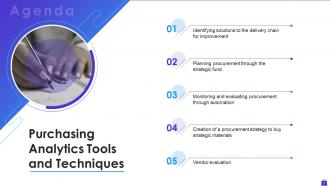
Slide 2: This slide states Agenda of the presentation.
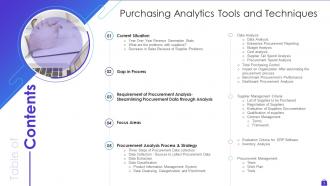
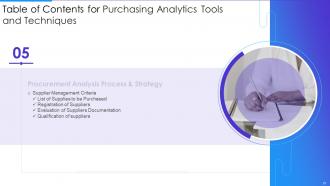
Slide 3: This slide presents Table of Content for the presentation.
Slide 4: This slide highlights title for topics that are to be covered next in the template.
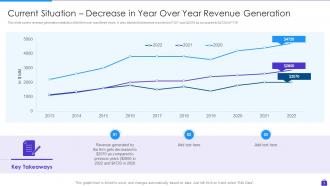
Slide 5: This slide covers revenue generation statistics of the firm over past three years.
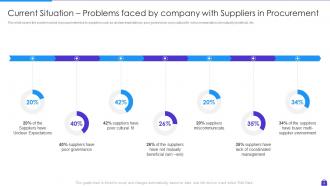
Slide 6: This slide displays the problem areas in procurement due to suppliers.
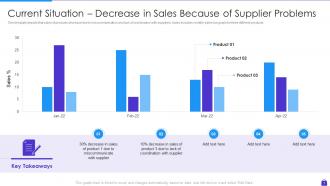
Slide 7: This template depicts that sales of products decrease due to miscommunication and lack of coordination.
Slide 8: This slide highlights title for topics that are to be covered next in the template.
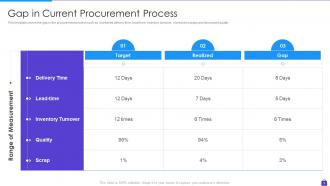
Slide 9: This slide represents Gap in Current Procurement Process.
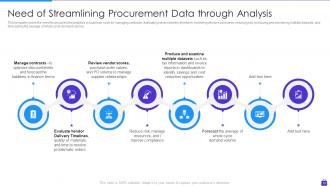
Slide 10: This slide showcases Need of Streamlining Procurement Data through Analysis.
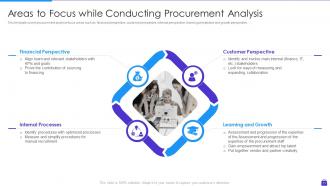
Slide 11: This slide shows Areas to Focus while Conducting Procurement Analysis.
Slide 12: This slide highlights title for topics that are to be covered next in the template.
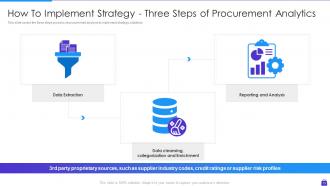
Slide 13: This slide covers the three steps process of procurement analysis to implement strategic solutions.
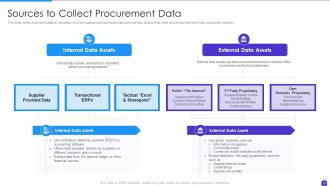
Slide 14: This slide showcases sources of data for extraction such as suppliers provided data, transactional data, tactical data, etc.
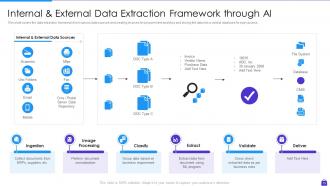
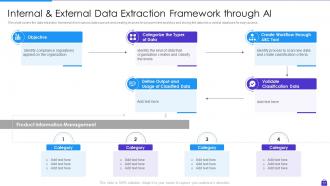
Slide 15: This slide shows Internal & External Data Extraction Framework through AI.
Slide 16: This slide highlights title for topics that are to be covered next in the template.
Slide 17: This slide presents Data Classification Process to form Product Information Management System.
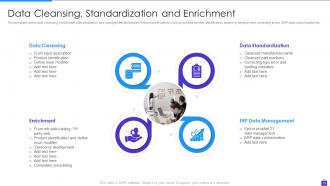
Slide 18: This slide displays Data Cleansing, Standardization and Enrichment.
Slide 19: This slide highlights title for topics that are to be covered next in the template.
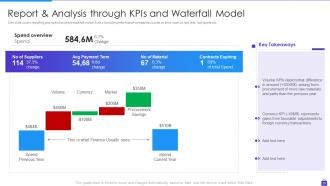
Slide 20: This slide represents Report & Analysis through KPIs and Waterfall Model.
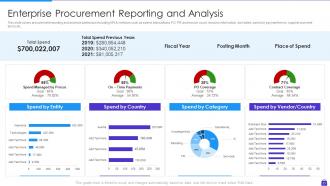
Slide 21: This slide showcases Enterprise Procurement Reporting and Analysis.
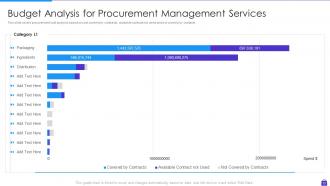
Slide 22: This slide presents Budget Analysis for Procurement Management Services.
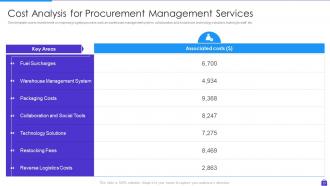
Slide 23: This slide displays Cost Analysis for Procurement Management Services.
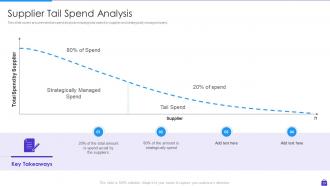
Slide 24: This slide covers procurement tail spend analysis including total spend by supplier and strategically managed spend.
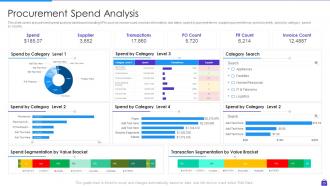
Slide 25: This slide displays procurement spend analysis dashboard including KPIs such as invoice count, invoices information, due dates, etc.
Slide 26: This slide highlights title for topics that are to be covered next in the template.
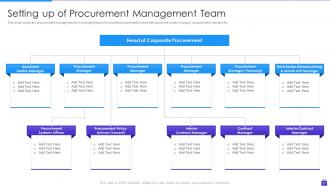
Slide 27: This slide represents Setting up of Procurement Management Team.
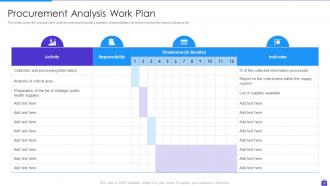
Slide 28: This slide covers the procurement analysis work plan including activities, responsibilities, time frame and performance indicators.
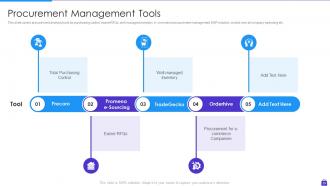
Slide 29: This slide showcases procurement analysis tools for purchasing control, easier RFQs, well managed inventory, etc.
Slide 30: This slide highlights title for topics that are to be covered next in the template.
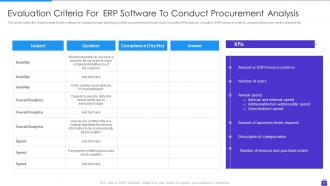
Slide 31: This slide shows Evaluation Criteria For ERP Software To Conduct Procurement Analysis.
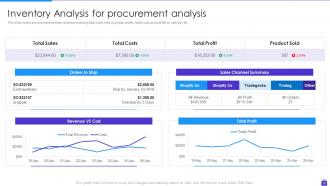
Slide 32: This slide presents Inventory Analysis for Procurement Analysis.
Slide 33: This slide highlights title for topics that are to be covered next in the template.
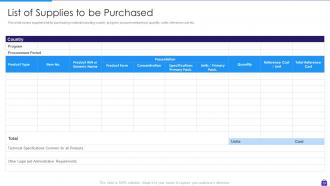
Slide 34: This slide covers suppliers list for purchasing material including country, program, procurement period, etc.
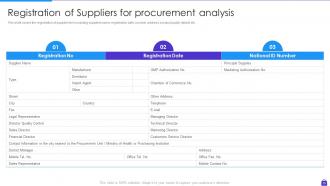
Slide 35: This slide displays Registration of Suppliers for Procurement Analysis.
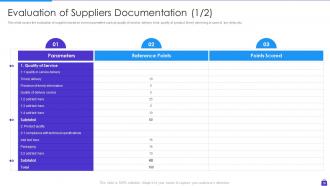
Slide 36: This slide covers the evaluation of supplier based on some parameters.
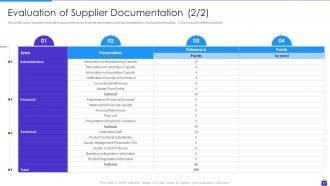
Slide 37: This is another slide continuing Evaluation of Supplier Documentation.
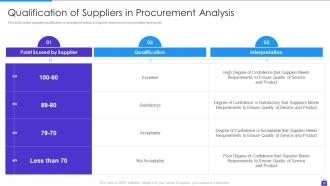
Slide 38: This slide represents Qualification of Suppliers in Procurement Analysis.
Slide 39: This slide highlights title for topics that are to be covered next in the template.
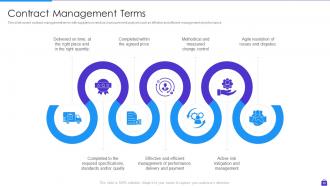
Slide 40: This slide covers contract management terms with suppliers or vendors in procurement analysis.
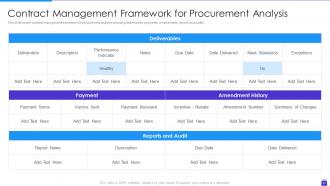
Slide 41: This slide showcases Contract Management Framework for Procurement Analysis.
Slide 42: This slide highlights title for topics that are to be covered next in the template.
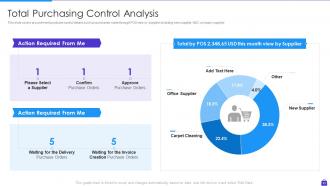
Slide 43: This slide covers procurement purchase control details such as purchases made through POS.
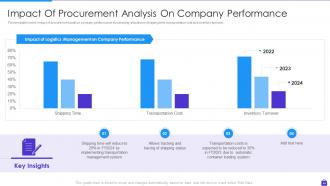
Slide 44: This slide shows Impact of Procurement Analysis on Company Performance.
Slide 45: This slide highlights title for topics that are to be covered next in the template.
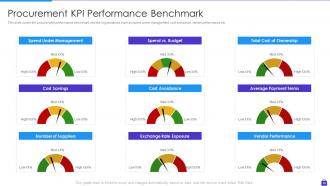
Slide 46: This slide presents Procurement KPI Performance Benchmark.
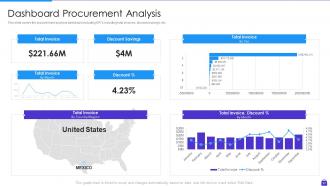
Slide 47: This slide covers the procurement analysis dashboard including KPI’s including total invoices, discount savings, etc.
Slide 48: This slide displays Icons for Purchasing Analytics Tools and Techniques.
Slide 49: This slide is titled as Additional Slides for moving forward.
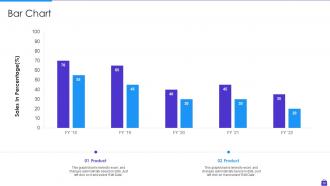
Slide 50: This slide presents Bar chart with two products comparison.
Slide 51: This is Our Team slide with names and designation.
Slide 52: This slide shows Post It Notes. Post your important notes here.
Slide 53: This slide provides 30 60 90 Days Plan with text boxes.
Slide 54: This slide showcases Magnifying Glass to highlight information, specifications, etc.
Slide 55: This is a Timeline slide. Show data related to time intervals here.
Slide 56: This slide contains Puzzle with related icons and text.
Slide 57: This is Our Goal slide. State your firm's goals here.
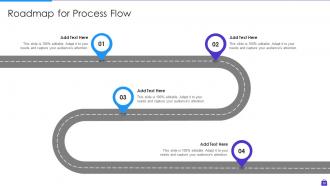
Slide 58: This slide showcases Roadmap for Process Flow.
Slide 59: This is a Thank You slide with address, contact numbers and email address.
Purchasing Analytics Tools And Techniques Powerpoint Presentation Slides with all 64 slides:
Use our Purchasing Analytics Tools And Techniques Powerpoint Presentation Slides to effectively help you save your valuable time. They are readymade to fit into any presentation structure.







FAQs for Purchasing Analytics Tools And Techniques
Effective purchasing analytics strategies include spend analysis, supplier performance monitoring, contract compliance tracking, demand forecasting, and risk assessment capabilities. These components work together by identifying cost reduction opportunities, optimizing supplier relationships, and enhancing procurement decision-making, with many organizations finding that strategic integration ultimately delivers 15-20% procurement savings and improved operational efficiency.
Businesses leverage purchasing analytics by analyzing supplier performance data, identifying cost reduction opportunities, and predicting demand patterns to streamline procurement processes. Through advanced analytics tools, organizations enhance vendor relationships, minimize inventory costs, and improve delivery timelines, with many manufacturing and retail companies finding that data-driven purchasing decisions ultimately deliver significant operational efficiency and competitive advantage.
Data visualization transforms complex purchasing analytics into intuitive dashboards, interactive charts, and real-time reports that non-technical stakeholders can easily interpret and act upon. Through visual tools, procurement teams streamline vendor performance tracking, spending pattern analysis, and contract compliance monitoring, while enabling faster decision-making and enhanced cross-departmental collaboration, ultimately delivering strategic purchasing advantages.
Purchasing analytics identifies cost-saving opportunities by analyzing spend patterns, supplier performance, contract compliance, and market trends to reveal inefficiencies and optimization potential. Through advanced data mining and predictive modeling, organizations can negotiate better contracts, consolidate suppliers, eliminate maverick spending, and optimize inventory levels, with many companies achieving 10-15% procurement cost reductions.
Organizations should track spend visibility, supplier performance ratings, contract compliance rates, procurement cycle times, and cost savings achieved against baseline budgets. These metrics enable procurement teams to identify bottlenecks, negotiate better terms, and optimize vendor relationships, with many companies finding that comprehensive tracking delivers 15-20% cost reductions while streamlining operational efficiency.
Purchasing analytics enhances vendor selection and management by analyzing performance metrics, cost patterns, delivery reliability, quality scores, and risk factors across suppliers. Through predictive modeling and spend analysis, organizations can identify optimal vendors, negotiate better contracts, and proactively manage relationships, ultimately reducing procurement costs while improving service quality and supply chain resilience.
AI and machine learning algorithms, robotic process automation, predictive analytics platforms, cloud-based procurement software, and advanced data visualization tools are revolutionizing purchasing analytics capabilities. These technologies streamline vendor evaluation, automate spend analysis, and enhance contract management by delivering real-time insights, reducing manual processing, and optimizing supplier relationships, with many organizations finding significantly improved cost control and strategic sourcing decisions.
Predictive analytics enhances purchasing decision-making by forecasting demand patterns, identifying optimal supplier relationships, anticipating price fluctuations, and predicting potential supply chain disruptions. Through machine learning algorithms, organizations streamline procurement processes, reduce inventory costs, and minimize stockouts, with many retail and manufacturing companies finding that data-driven purchasing delivers significant competitive advantages.
Small businesses can utilize purchasing analytics through affordable cloud-based tools, free software trials, and automated expense tracking systems that require minimal IT infrastructure. These solutions enable cost monitoring, supplier performance analysis, and spending pattern identification, with many small retailers and service providers finding that even basic analytics deliver 10-15% cost reductions and improved vendor negotiations.
Companies should prioritize data privacy, vendor confidentiality, algorithmic transparency, and fair supplier treatment when implementing purchasing analytics. These ethical frameworks help organizations balance competitive advantage with responsible practices, ensuring compliance with regulations while maintaining trust with suppliers, ultimately delivering sustainable procurement strategies and stronger business relationships in an increasingly data-driven marketplace.
Purchasing analytics assists inventory management by analyzing demand patterns, supplier performance, seasonal trends, and lead times to optimize stock levels and reduce carrying costs. Through predictive modeling and real-time data integration, organizations streamline procurement cycles, minimize stockouts and overstock situations, while enhancing forecast accuracy, ultimately delivering improved cash flow and operational efficiency.
**INPUT**: What are the common challenges organizations face when implementing purchasing analytics? **OUTPUT**: Common challenges include data quality issues, system integration complexities, lack of skilled personnel, resistance to change, and insufficient executive support. These obstacles can significantly impact implementation timelines and effectiveness, with many organizations finding that addressing data standardization and employee training early streamlines adoption, ultimately delivering enhanced procurement efficiency and strategic cost management. **Word count: 54 words**
Cross-departmental collaboration enhances purchasing analytics by integrating diverse data sources, aligning procurement strategies with operational needs, and leveraging insights from finance, operations, and supply chain teams. This strategic combination enables organizations to identify cost-saving opportunities, optimize supplier relationships, and streamline decision-making processes, ultimately delivering improved operational efficiency and competitive advantage across the enterprise.
Machine learning enhances purchasing analytics by automating pattern recognition, predicting demand fluctuations, optimizing supplier selection, and identifying cost-saving opportunities through intelligent data analysis. These algorithms enable procurement teams to streamline vendor negotiations, minimize supply chain risks, and accelerate decision-making processes, with many organizations finding significantly improved operational efficiency and strategic sourcing outcomes.
Businesses ensure purchasing analytics accuracy through data validation protocols, automated cleansing systems, regular audits, standardized data entry processes, and integration quality checks across procurement platforms. These methods streamline data integrity by eliminating duplicates, correcting inconsistencies, and maintaining real-time synchronization, with many organizations finding that robust data governance ultimately delivers more reliable supplier insights and strategic procurement decisions.
-
Enough space for editing and adding your own content.
-
Great designs, really helpful.