


Quality Management System Measure Requirements Leadership Engagement Process Improvement Gear




Try Before you Buy Download Free Sample Product
 Impress Your
 Audience
 100%
100% Editable
 Save Hours
 of Time


Our Quality Management System Measure Requirements Leadership Engagement Process Improvement Gear are topically designed to provide an attractive backdrop to any subject. Use them to look like a presentation pro.
People who downloaded this PowerPoint presentation also viewed the following :
Quality Management System Measure Requirements Leadership Engagement Process Improvement Gear with all 12 slides:
Use our Quality Management System Measure Requirements Leadership Engagement Process Improvement Gear to effectively help you save your valuable time. They are readymade to fit into any presentation structure.
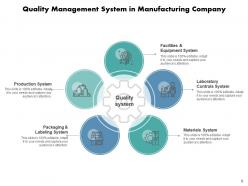
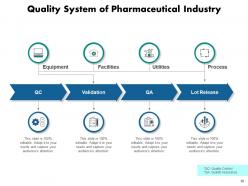
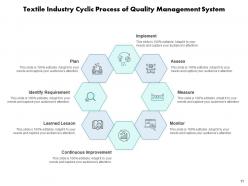

FAQs for Quality Management System Measure Requirements Leadership Engagement
Key elements of a Quality Management System include customer focus, leadership commitment, process approach, risk-based thinking, continuous improvement, and documented procedures. These components work together by establishing clear quality objectives, standardizing workflows, and enabling systematic monitoring, with many organizations finding that integrated QMS frameworks ultimately deliver enhanced operational efficiency and sustained competitive advantage.
A QMS improves operational efficiency by standardizing processes, reducing waste, automating workflows, and establishing clear performance metrics across departments. Through systematic documentation and continuous monitoring, organizations streamline resource allocation, minimize errors, and accelerate decision-making, with many manufacturing and healthcare institutions finding that structured quality frameworks ultimately deliver faster service delivery and significant cost reductions.
Leadership drives QMS effectiveness by establishing quality vision, allocating necessary resources, and fostering a culture of continuous improvement throughout the organization. Effective leaders ensure employee engagement, accountability, and strategic alignment between quality objectives and business goals, with many organizations finding that strong leadership commitment ultimately delivers enhanced operational efficiency and sustainable competitive advantage.
Quality policies and objectives align with organizational goals by establishing measurable standards that directly support business strategy, customer satisfaction targets, and operational efficiency metrics. Through strategic integration, companies in manufacturing, healthcare, and financial services streamline compliance processes, reduce operational costs, and enhance competitive positioning, with many organizations finding that aligned quality frameworks ultimately deliver improved market reputation and sustainable growth advantages.
**INPUT**: What are the most common standards for implementing a QMS, such as ISO 9001? **OUTPUT**: Common QMS standards include ISO 9001, ISO 13485 for medical devices, AS9100 for aerospace, ISO/TS 16949 for automotive, and ISO 14001 for environmental management. These frameworks streamline compliance, enhance operational efficiency, and deliver consistent quality outcomes, with many organizations finding that strategic implementation ultimately provides competitive advantage and improved customer satisfaction across industries. **Word count: 54 words**
Customer feedback integrates into a QMS through systematic collection channels, structured analysis processes, root cause identification, corrective action implementation, and performance monitoring loops. Manufacturing companies and service providers leverage feedback management software, regular surveys, and complaint tracking systems to identify improvement opportunities, enhance product quality, and streamline operations, ultimately delivering superior customer experiences.
Effective QMS quality control tools include statistical process control, Six Sigma methodologies, control charts, inspection checklists, and root cause analysis techniques. These approaches streamline quality monitoring by identifying variations early, reducing defects systematically, and enabling continuous improvement, with many manufacturing and service organizations finding that integrated quality tools ultimately deliver enhanced customer satisfaction and operational efficiency.
Employee training significantly impacts QMS success by ensuring consistent process execution, enhancing quality awareness, and reducing errors through standardized procedures and competency development. Well-trained employees become quality advocates who identify improvement opportunities, maintain compliance standards, and deliver superior customer experiences, with many organizations finding that comprehensive training programs ultimately reduce costs while strengthening their competitive market position.
Quality management system effectiveness metrics include customer satisfaction scores, defect rates, process cycle times, audit findings, employee training completion rates, and regulatory compliance percentages. These measurements enable organizations to track operational efficiency, identify improvement opportunities, and demonstrate ROI, with many manufacturing and healthcare institutions finding that comprehensive metric dashboards ultimately deliver enhanced product quality and competitive advantage.
A QMS enhances customer satisfaction and loyalty by ensuring consistent product quality, reducing defects, and streamlining complaint resolution processes. Through systematic quality controls and continuous improvement practices, organizations deliver more reliable products and services while responding faster to customer feedback, ultimately building trust and encouraging repeat business in competitive markets.
Organizations face challenges including employee resistance to change, inadequate training and resources, poor leadership commitment, complex documentation requirements, and integration difficulties with existing systems. While these obstacles can initially slow implementation, companies across manufacturing, healthcare, and financial services find that strategic planning, comprehensive staff education, and phased rollouts ultimately deliver improved operational efficiency, regulatory compliance, and competitive advantage.
Technology streamlines quality management through automation software, real-time monitoring systems, data analytics platforms, mobile inspection tools, and cloud-based documentation systems. These solutions enhance efficiency by reducing manual errors, accelerating audit processes, and enabling predictive quality control, with manufacturing and healthcare organizations finding that automated workflows ultimately deliver faster compliance reporting and improved product consistency.
A QMS integrates risk management as a fundamental component, with risk-based thinking embedded throughout processes like planning, resource allocation, performance evaluation, and continual improvement. This strategic combination enables organizations to proactively identify potential quality failures, streamline compliance requirements, and enhance decision-making capabilities, ultimately delivering more resilient operations and competitive advantage.
A QMS should undergo formal management reviews at least annually, with continuous monitoring throughout the year to address operational changes, regulatory updates, customer feedback, and performance metrics. Many organizations find that quarterly reviews enhance responsiveness, while industries like pharmaceuticals and aerospace often require more frequent assessments, ultimately ensuring sustained compliance and competitive advantage.
Documentation serves as the foundation of QMS maintenance by establishing standardized procedures, tracking compliance activities, recording audit findings, and ensuring consistent process execution across all organizational levels. Through comprehensive documentation systems, organizations streamline quality control processes, enhance regulatory compliance, and maintain operational transparency, with many manufacturing and healthcare institutions finding that well-maintained documentation ultimately delivers faster audits and improved quality outcomes.
-
Nice and innovative design.
-
Nice and innovative design.