


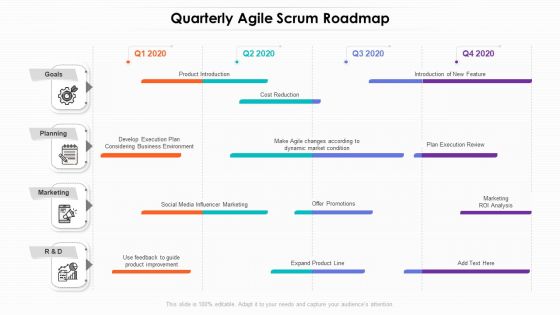
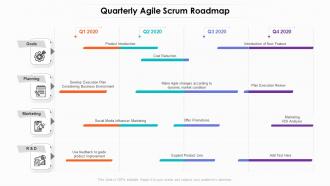
Quarterly agile scrum roadmap





Try Before you Buy Download Free Sample Product
 Impress Your
 Audience
 100%
100% Editable
 Save Hours
 of Time


Visualize your work plan and communicate your ideas impactfully with our pre designed Quarterly Agile Scrum Roadmap. Showcase the detailed overview of the project, the key deliverables, and the milestones to be achieved with the help of our fully customizable PowerPoint layout. You can easily emphasize on the project goals and discuss all the activities involved in an easy to comprehend manner by utilizing our professionally designed PPT theme. This roadmap PowerPoint layout is a perfect strategic planning tool that can help in keeping the project on track. With our attractive PowerPoint theme, you can articulate the workflow, track the work progress, and have a clear vision of the goal to be achieved. Download this versatile Quarterly Agile Scrum Roadmap and save your hours of work.
People who downloaded this PowerPoint presentation also viewed the following :
Quarterly agile scrum roadmap with all 2 slides:
Give your audience a fulfilling experience. They will find our Quarterly Agile Scrum Roadmap elevating.
FAQs for Quarterly
So Scrum's basically about short sprints (2-4 weeks), letting teams organize themselves, and getting constant feedback. Daily standups feel annoying at first - I won't lie - but they actually work for keeping everyone on the same page. You want transparency so nobody's confused about what's happening. The whole point is embracing changes instead of sticking to some rigid plan. Customer collaboration beats following a script every time. Retrospectives help you improve as you go. Honestly? Just start with daily standups and watch how much clearer your priorities get. Everything else builds from there.
So instead of planning everything upfront like traditional PM, Scrum breaks work into 2-4 week sprints with tons of feedback. Think blueprints vs. cooking - you're constantly tasting and tweaking. Daily standups replace those endless status meetings (thank god). Your team basically runs itself rather than waiting for orders from above. Sprint reviews and retrospectives keep everyone aligned. Honestly, the best part? You can actually pivot when things change instead of being stuck with some plan from six months ago. Just try one sprint first to get the feel for it.
So there's basically three main roles in Scrum. Your Product Owner handles the backlog and decides what gets built first - they're all about business priorities. Then there's the Scrum Master who's like the team coach (not boss though). They remove roadblocks and make sure everyone's actually doing Scrum right. The Development Team does the actual building - coding, testing, whatever needs doing. They're supposed to be self-managing which honestly works better than you'd think. Each role has pretty clear boundaries so there's no stepping on toes. Figure out which one matches what you're already doing and start there!
Okay so first thing - get your backlog sorted before you even walk into that room. Nobody wants to waste time figuring out priorities on the spot. Two main things to nail down: what you're actually committing to this sprint, and how you'll pull it off. Get everyone involved in the estimating - seriously, don't let that one guy steamroll the whole conversation (you know the type). Break those user stories into real tasks and call out any blockers early. Oh, and stick to your timebox or you'll be there forever arguing about edge cases. You want to leave with a sprint goal that's actually doable and a team that isn't secretly rolling their eyes.
Honestly, daily standups help but only if people actually talk to each other instead of just rattling off status updates. Get your team doing pair programming - rotating pairs every few days really helps everyone bond. Sprint retros are where the magic happens though, you need people to feel safe calling out what's broken. Planning poker sessions are solid for getting everyone's take on story sizing. Oh and mob programming! Do it weekly for gnarly problems. Sounds weird but watching a whole team tackle something together is pretty amazing. Makes such a difference.
Track your velocity and sprint completion rates, but honestly those numbers don't tell you everything. The good stuff is whether your team actually feels better about their work and if stakeholders aren't constantly asking "when will it be done?" Survey people about collaboration - that's where you'll spot real improvements. Also watch your defect rates and how fast you're getting customer feedback. Don't go crazy measuring everything at once though. Pick 2-3 things that actually matter for your situation and see how it goes from there.
Honestly, resistance to change is gonna be your biggest headache. People want those detailed upfront plans they're used to, and team members constantly mix up Scrum Master vs Product Owner stuff. Sprint planning usually sucks at first too. Get everyone trained, not just devs. Be super clear about who does what from the start. Don't skip retros - that's where you actually figure out what's broken. Oh, and let your team mess up early instead of expecting them to nail everything immediately. Trust me on that one.
Honestly, Scrum's flexibility is what makes it work so well. You can totally tweak ceremonies and communication to fit your company's style. Traditional places usually need more structured reporting - they're not ready to throw hierarchy out the window overnight. Startups dig the fast iterations but man, they hate documentation (trust me on this one). Conservative teams do better with longer sprints at first. The trick is keeping Scrum's core intact while adjusting how you deliver it. Figure out where standard Scrum clashes most with your culture, then try small tweaks each sprint.
Think of your Product Backlog as the master list of everything that needs doing - features, bugs, fixes, you name it. Your Product Owner should handle prioritization (that's their job, not yours). Keep grooming it regularly because honestly? It grows like weeds if you don't stay on top of it. Make sure the stuff at the top is detailed enough for your upcoming sprints. Oh, and those backlog grooming sessions aren't optional - they're where the magic happens. Don't let it turn into some dusty wishlist nobody looks at. Keep it visible and treat it like it's alive.
Yeah, so Scrum's pretty strict about not changing scope mid-Sprint - it's basically the main rule. Urgent stuff should just go in the product backlog for next time. I mean, unless it's something crazy like a security breach, then you might actually kill the Sprint early and start over. But honestly? Most scope changes happen because planning sucked in the first place. The Product Owner's job is keeping these interruptions away from the team. Just document whatever they're asking for, figure out how important it really is, then slot it into the next Sprint properly.
Jira's probably your best bet - most teams swear by it for sprint planning and burndown charts. Azure DevOps works great too, especially if you're already using Microsoft stuff. But honestly? Don't overthink this. I've seen teams waste weeks debating tools when a basic Trello board would've done the job perfectly fine. Pick whatever your team will actually stick with - that matters way more than having every bell and whistle. You can always upgrade later when things get more complex. Your retros will make it pretty obvious when it's time to switch.
Oh totally! Just ignore all the techy parts and focus on the basic idea. Break everything into 2-week chunks where you actually finish something real. Daily check-ins keep everyone on track - sounds annoying but it's actually pretty helpful. I've watched teams use it for wedding planning (weird but it worked), marketing stuff, even home renovations. The trick is figuring out what "finished" looks like for each chunk. Don't overthink it though. Pick something you can wrap up in two weeks and just start there.
Dude, Sprint Reviews are all about showing actual working software - not just talking through slides or whatever. Get your Product Owner to lead since they understand the business side way better than anyone else. Honestly, pick your attendees carefully because these things turn into total time-wasters if you invite everyone and their mom. Write up a quick demo script so you don't look like an idiot clicking around randomly. Oh, and capture feedback right away while it's fresh - then figure out how it changes your backlog. Stick to your timeframe or you'll be there forever.
Your Scrum Master is like the team's communication glue. They run standups, retros, and sprint planning to keep everyone on the same page. Good ones actually make sure quiet people speak up and remove those annoying blockers that kill productivity. They're also great translators when developers need to explain technical stuff to stakeholders - honestly, this alone saves so much headache. Most importantly, they should create that safe space where people can admit when they're stuck or confused without feeling judged. If yours isn't doing this stuff, definitely bring it up with them.
Stakeholders are your external voices - they're not on the core team but can totally make or break your product. During sprint planning, they help you figure out what to build next. Sprint reviews are where they really shine though, giving feedback on what you've done and whether you're headed in the right direction. Honestly, some stakeholders are way better at this than others. The trick is keeping them involved without letting them mess up your sprint momentum. Set boundaries around when they can give input - trust me on this one. They need requirements and priorities, you need their business perspective.
No Reviews