


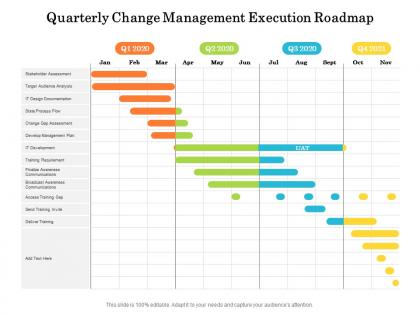
Quarterly change management execution roadmap




Try Before you Buy Download Free Sample Product
 Impress Your
 Audience
 100%
100% Editable
 Save Hours
 of Time


Visualize your work plan and communicate your ideas impactfully with our pre designed Quarterly Change Management Execution Roadmap. Showcase the detailed overview of the project, the key deliverables, and the milestones to be achieved with the help of our fully customizable PowerPoint layout. You can easily emphasize on the project goals and discuss all the activities involved in an easy to comprehend manner by utilizing our professionally designed PPT theme. This roadmap PowerPoint layout is a perfect strategic planning tool that can help in keeping the project on track. With our attractive PowerPoint theme, you can articulate the workflow, track the work progress, and have a clear vision of the goal to be achieved. Download this versatile Quarterly Change Management Execution Roadmap and save your hours of work.
People who downloaded this PowerPoint presentation also viewed the following :
Quarterly change management execution roadmap with all 2 slides:
Use our Quarterly Change Management Execution Roadmap to effectively help you save your valuable time. They are readymade to fit into any presentation structure.
FAQs for Quarterly change
Honestly, start with the "why" - that's where most people screw up. Map out where you are now vs where you're going, then figure out who gets affected. Get those people involved early or they'll fight you later. Don't just dump change on people without proper training though, that's brutal. Oh and build in ways to get feedback because stuff will definitely go wrong at some point. Communication needs to be super clear about timelines too. I've seen so many leaders assume everyone just "gets it" when they really don't.
Start with your people - survey employees to see who's actually on board and who'll push back. Most companies are shocked by what they discover here. Check if you're already drowning in other projects because change fatigue is real. Leadership buy-in matters more than you think, plus you need solid communication channels. Don't forget timeline and budget constraints (obviously). Honestly, I'd run a quick workshop with your key players to score these areas first. Better to find the gaps now than get blindsided later when you're knee-deep in the transformation.
Oh man, communication is EVERYTHING with change stuff. Seriously, I've seen so many projects crash because nobody explained the "why" properly. People get weird when they're left guessing what's happening to them. You gotta be upfront about the messy parts too - don't just sugarcoat everything or they'll smell the BS from a mile away. Hit them early and often through whatever channels actually work (email, meetings, carrier pigeon, whatever). Honestly, figure out your communication game plan before you even touch the actual change implementation. Trust me on this one.
Look, culture is huge when it comes to change management. Some teams love jumping into new stuff, others hate it. You've got to figure out if your people are comfortable with risk, how they handle uncertainty, and whether they prefer direct communication or beating around the bush. Decision-making varies too - some cultures want everyone's input, others just want the boss to decide. I've watched projects crash and burn because nobody bothered understanding the team first. My advice? Map out how your group normally deals with transitions before you try changing anything.
Communication is everything here. Hold regular team meetings where you explain WHY things are changing - people absolutely hate being blindsided. Get them involved through feedback sessions or pilot programs so they can actually influence the process. One-on-ones are clutch too since some people won't speak up in groups. Celebrate small wins along the way and call out people who are crushing the adaptation (honestly, recognition goes so much further than most managers realize). The whole point is making people feel heard, not just dumping information on them.
Honestly, you've got to figure out what's making people push back first. Fear of change? Feeling excluded from decisions? Get the resistors involved early in planning - way more effective than arguing later. Share WHY you're making changes, not just what's happening. Actually listen when they complain too, because sometimes they catch stuff you totally missed. Don't rush people into it either. Here's the thing though - most "difficult" people just want to be heard. Treat their pushback like useful feedback instead of rebellion, and you'll probably win them over eventually.
You need both the hard numbers and the touchy-feely stuff, honestly. Track adoption rates, how fast people get up to speed, productivity changes - that kind of thing. But don't sleep on employee satisfaction and how much pushback you're getting. That tells you if they actually care or they're just pretending to play along. Communication effectiveness matters too, plus training completion rates. Oh, and measure this stuff before you even start so you have something to compare against. Just don't go overboard - maybe 4-6 metrics tops or you'll drown yourself in spreadsheets.
Ugh, the communication thing is HUGE - I've seen so many projects fail just because people weren't talking to each other. Don't rush it either, that's like organizational suicide. The worst part? Leaders always forget to actually ask the people doing the work what they think. Everyone assumes folks will just roll with changes, but honestly, people hate change way more than you'd expect. Oh and don't celebrate too early - that stuff takes forever to actually stick. Map out who matters first, set up ways to get feedback constantly, and double your timeline because something will definitely go sideways.
Look, your leadership approach basically makes or breaks any change you're trying to roll out. Push too hard and people dig their heels in - even if you get quick results upfront. But when you actually involve your team in the process? Way better adoption, though yeah, it'll take more time initially. I've watched some leaders absolutely crush this by getting everyone genuinely excited about where they're headed instead of panicking about it. Honestly depends on how urgent things are and whether your team's ready for it. Just figure out what style actually fits this particular situation first.
Tech is honestly a lifesaver when you're dealing with big changes at work. Slack or Teams keeps everyone updated without those awkward "wait, what?" moments. Digital training is clutch because people can go at their own speed - some folks need time to process, you know? Project management tools help you catch problems before they blow up. Shared docs are way better than drowning in emails (ugh). Analytics dashboards show you what's actually working versus what people just say is working. My advice? Start with whatever's causing you the biggest headache communication-wise right now.
Dude, stakeholder analysis is everything - seriously the make-or-break foundation for any change project. First thing you gotta do is map out who gets affected and who actually has power. I've watched so many initiatives crash because someone missed a key group or totally misread what they cared about. The whole point is figuring out your communication game plan and spotting resistance before it hits you. Build your supporter base early. Start by listing everyone who could impact or get impacted by the change, then sort them by how much influence and interest they have. Sounds boring but it's honestly crucial.
Honestly, hands-on stuff works way better than boring presentations - workshops, role-playing, peer mentoring. Communication is everything though. Do regular check-ins and make sure people can actually speak up about concerns. I've watched so many changes crash and burn because leadership thought everyone was cool with it when they absolutely were not! Oh, and get some "change champions" in each department to help out ongoing. Interactive training beats info-dumping every time. Maybe start with a small pilot group first? That way you can tweak things before rolling it out wider.
Honestly, psychological safety is huge - people won't try new things if they're scared of getting burned. Start celebrating the smart failures, not just wins. Your leaders need to actually walk the walk too, which... easier said than done sometimes. Regular retrospectives help teams bounce back way faster. Cross-training is clutch since it stops people from being stuck in their little boxes. Oh, and don't go crazy trying to change everything at once. Pick one small area where you can let people take some calculated risks and see what happens. Baby steps work better than dramatic overhauls.
People switch off fast if they can't see what's in it for them personally, so hit that first. Tell the story - where you are now, why things need to change, what's coming next. Honestly, skip the text-heavy slides because nobody reads those anyway. Go visual instead. You'll want to prep for the tough questions rather than crossing your fingers they won't ask. When people push back, respond with empathy rather than drowning them in numbers. Oh, and actually leave room for discussion - real change happens when people can talk, not just listen. Wrap up with concrete next steps so they know exactly what to do.
Honestly, remote change management is all about overdoing the communication part. You can't just assume people get it since there's no water cooler chat to fill gaps. I'd set up way more check-ins than feels normal - video calls, async updates, maybe a dedicated Slack channel. The annoying thing is you won't see confusion on faces, so actively hunt for feedback instead of waiting. People process stuff differently when they're home, so build in extra time. Oh and do virtual office hours! Takes the pressure off people who don't want to seem needy but have questions.
-
Perfect template with attractive color combination.
-
Great product with highly impressive and engaging designs.
-
Awesome use of colors and designs in product templates.