


Racial Diversity Training Program For Workplace Powerpoint Presentation Slides DTE CD




Try Before you Buy Download Free Sample Product
 Impress Your
 Audience
 100%
100% Editable
 Save Hours
 of Time


Introducing our comprehensive presentation on Racial Diversity Training Program for Workplace. This PPT highlights the critical need for fostering inclusivity and equity within organizational environments. This presentation includes a tailored approach to uncovering and addressing racial disparities. It delves into challenges surrounding bias and discrimination through comprehensive training modules, presenting viable solutions. This presentation showcases racial biases and discrimination issues, so gap analysis is conducted through surveys, demographics, unconscious bias assessments, and cultural evaluations. It also includes activities like the Circle of Trust and the innovative Complete the Wheel exercise to engage participants in open dialogue, fostering a deeper understanding of personal experiences and perceptions. This PPT represents the proposed solution, the Racial Diversity Training Program, which includes interactive workshops, focus groups, group exercises, lived experience learning sessions, quizzes, and open safe space discussions. Lastly, it showcases the training budget, potential impacts on business operations, and employee well-being illustrated through a thorough Return on Investment ROI analysis. Get access to this PPT.
People who downloaded this PowerPoint presentation also viewed the following :
Content of this Powerpoint Presentation
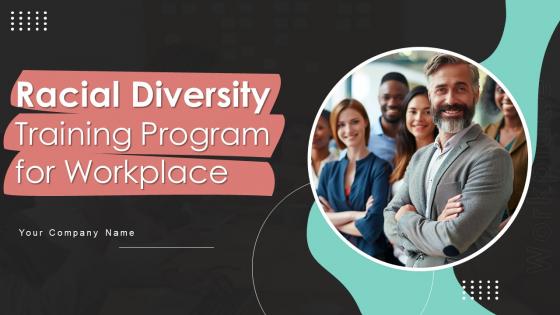
Slide 1: This slide showcase title Racial Diversity Training Program for Workplace. State Your Company Name
Slide 2: This slide showcase Agenda for racial diversity training program for workplace.
Slide 3: This slide exhibit Table of content.
Slide 4: This slide shows title for topics that are to be covered next in the template.
Slide 5: This slide represents challenges an organization faces regarding racial diversity.
Slide 6: This slide shows title for topics that are to be covered next in the template.
Slide 7: This slide represents a demographic information sample survey form to gather employee information regarding racial identity, work information, and current job position.
Slide 8: This slide represents a sample employee subconscious bias assessment questionnaire assessing the level of biases faced by employees in the workplace.
Slide 9: This slide represents a sample survey form for a racial diversity training program that covers the segment organizational culture and awareness.
Slide 10: This slide represents a personal experience and perception sample survey form for gap analysis in an organization that helps gather employees' experience with diversity in the workplace.
Slide 11: This slide represents a personal experience and perception sample survey form for gap analysis in an organization that helps gather employees' experience with diversity in the workplace.
Slide 12: This slide represents a personal experience and perception sample survey form for gap analysis in organization that helps gathering employees experience with diversity in workplace.
Slide 13: This slide represents a sample open feedback survey form for assessing organizational gaps, as it helps gather detailed insights, perspectives, and suggestions from employees.
Slide 14: This slide shows title for topics that are to be covered next in the template.
Slide 15: This slide represents activity – circle of trust to assess unconscious bias and gap in the workplace highlighting elements.
Slide 16: This slide represents activity – complete the wheel that can be organized in organization to assess unconscious bias within the employees in workplace.
Slide 17: This slide shows title for topics that are to be covered next in the template.
Slide 18: This slide represents key results from a trainer from the diversity survey form and activities highlighting microaggression, group underrepresentation, etc.
Slide 19: This slide shows title for topics that are to be covered next in the template.
Slide 20: This slide represents problems faced by employees in workplace due to biases in workplace.
Slide 21: This slide shows title for topics that are to be covered next in the template.
Slide 22: This slide represents an overview and steps of the racial diversity training program in the workplace highlighting trainer type, experience, etc.
Slide 23: This slide shows title for topics that are to be covered next in the template.
Slide 24: This slide represents training program activity in workplace – an interactive workshop highlighting role-playing scenarios.
Slide 25: This slide represents training program activity in the workplace – a focus group with key topics for discussion, such as promotion perception, microaggression, etc.
Slide 26: This slide represents training program activity in workplace – group exercise to foster diversity scenarios in organization.
Slide 27: This slide represents training program activity in workplace – group exercise to foster diversity scenarios in organization.
Slide 28: This slide represents training program activity in workplace – live experience learning in which employees share their experience on particular topics.
Slide 29: This slide represents training program activity in the workplace – a competition quiz in which employees are provided with situational questions.
Slide 30: This slide represents training program activity in the workplace – a competition quiz in which employees are provided with situational questions with the aim of enhancing learning engagement.
Slide 31: This slide represents training program activity in the workplace – a competition quiz in which employees are provided with situational questions with the aim of enhancing learning engagement.
Slide 32: This slide represents training program activity in the workplace – open safe space discussion to help employees open up and share their diversity-related concerns.
Slide 33: This slide shows title for topics that are to be covered next in the template.
Slide 34: This slide represents the budget plan for the racial diversity training program, highlighting expense areas such as training activities and guest speakers.
Slide 35: This slide shows title for topics that are to be covered next in the template.
Slide 36: This slide represents the potential benefits of racial diversity training programs on company, such as eliminating discrimination, enhancing innovation, etc.
Slide 37: This slide represents the potential benefits of racial diversity training programs on employees and organizations.
Slide 38: This slide represents a return on investment of racial diversity training in the workplace that helps measure success over time and determine profitability of an expenditure.
Slide 39: This slide shows title for topics that are to be covered next in the template.
Slide 40: This slide represents case study related to racial diversity for ABC company highlighting elements – objective, challenges and outcome.
Slide 41: This slide shows all the icons included in the presentation.
Slide 42: This slide is titled as Additional Slides for moving forward.
Slide 43: This slide showcase Equal opportunity is offered to both the candidate despite -
Slide 44: This slide represents an overview of different types of racial bias faced by employees, such as microaggression, stereotype, tokenism, etc.
Slide 45: This is an Idea Generation slide to state a new idea or highlight information, specifications etc.
Slide 46: This is a financial slide. Show your finance related stuff here.
Slide 47: This is a Timeline slide. Show data related to time intervals here.
Slide 48: This is a Thank You slide with address, contact numbers and email address.
Racial Diversity Training Program For Workplace Powerpoint Presentation Slides DTE CD with all 56 slides:
Use our Racial Diversity Training Program For Workplace Powerpoint Presentation Slides DTE CD to effectively help you save your valuable time. They are readymade to fit into any presentation structure.










FAQs for Racial Diversity Training Program For Workplace Powerpoint Presentation
So basically they want you to spot your own unconscious biases and get better at seeing things from other people's perspectives. The whole point is making everyone feel valued so they can actually do good work - doesn't matter what their background is. You'll learn some practical stuff about communicating across cultures and how to prevent discrimination. Some of the sessions are honestly pretty generic, but whatever. The best part? You get tools to actually speak up when you see bias happening. Oh and pay attention to their scenario examples - those are way more helpful than the theory stuff. It builds psychological safety for diverse teams too.
Honestly, you've gotta measure both the immediate stuff and the long game. Quick surveys right after training sessions are fine, but the real data comes from watching retention and promotion patterns across racial groups over like 6-12 months. Also track your hiring pipeline diversity and - this part's crucial - whether people actually feel safe calling out racial issues when they happen. Anonymous surveys work well for that. Oh, and definitely get your baseline numbers first before you start any training, otherwise you're basically flying blind. Employee engagement scores broken down by demographics tell you a lot too.
Honestly, it's mostly fear and awkwardness. People clam up because they don't want to say something stupid or offensive - like they're tiptoeing through a minefield. Then you get the defensive types who shut down the second anyone mentions privilege or systemic stuff. Plus most folks hate being vulnerable at work anyway, which makes sense I guess. A lot of employees also treat these conversations like just another boring mandatory training to sit through. The trick is actually making people feel safe enough to ask dumb questions and learn from their mistakes without getting crucified for it.
Start by digging into what matters culturally in each place you're launching - laws, history, local workplace issues, that whole thing. US training materials will bomb in Singapore or Brazil, trust me. Get some local HR people or consultants involved who actually know the region. They can help tweak your examples and messaging so it doesn't feel like generic corporate stuff parachuted in from HQ. Really focus on case studies that'll click with each culture's values. Short version? Make it relevant to their world, not yours.
Oh man, unconscious bias is such a sneaky thing - it's all those hidden assumptions floating around in your brain that mess with your decisions without you even knowing. Picture this: you're hiring someone and automatically favor certain names or backgrounds. That's why diversity training hammers on it so much. Most programs use those implicit bias tests (kind of eye-opening honestly) plus scenarios to help you spot your blind spots. They'll teach you "bias interrupts" too - basically pausing before big decisions or getting input from different people. The whole point? Making your brain's sneaky stuff visible so you can actually catch yourself doing it.
Honestly? The whole "once a year" thing is pretty useless - it's just box-checking at that point. Your team will forget everything within a month. Quarterly sessions work way better, or you could do shorter check-ins throughout the year. I'd mix formal training with casual stuff too, like discussion groups or mentorship programs. The trick is keeping it consistent rather than cramming it all into one day. Oh, and definitely figure out where everyone's at first before you start planning anything. That way you're not wasting time on stuff they already know.
Okay so Intel's probably your best example - they hit full representation by 2018 after rolling out bias training. Pretty impressive honestly. Starbucks did theirs after that whole incident and customer satisfaction bounced right back. Google's been open about their results too, showing better psychological safety scores on trained teams. The thing is, all these were ongoing programs, not just random workshops. Oh and focus on retention numbers when you're pitching this - executives love that stuff way more than the touchy-feely metrics.
Honestly, it all comes down to whether leadership actually gives a damn. If your executives just phone it in, everyone else will too - can't really blame them for that. The good leaders? They show up, share their own mistakes, and actually hold people accountable afterward. Short sentences work. But you also need leaders willing to put their money where their mouth is by tying diversity stuff to real performance reviews and budgets. Oh, and get your C-suite to commit publicly to specific numbers. Makes it way harder for them to backtrack later when things get uncomfortable.
Honestly, ground rules are everything - tell people upfront that disagreeing respectfully is totally fine. I'd start with small groups before going big since people clam up less when it's just a few others. Ask questions without obvious "right" answers. Don't panic during awkward silences either - that's usually when the good stuff comes out. You should be facilitating, not lecturing the whole time. Call out vulnerability when someone shares something real. Oh, and share your own screwups first! People follow your lead way more than you'd think.
Oh totally, age makes a huge difference here. Younger folks usually think diversity training is way overdue and want real conversations, not just boring presentations. Baby Boomers prefer the structured, by-the-book stuff. Gen X is kinda caught in between - honestly they're always stuck in the middle of everything. Older employees sometimes get defensive or treat it like another box to check. My advice? Offer different formats since everyone's coming from totally different places. It cuts down on pushback and actually gets people engaged. The one-size-fits-all approach never works.
Skip the lecture format - nobody learns from that anymore. Mix real case studies with role-playing and videos where people share actual experiences. Books like "White Fragility" are solid for prep reading. But here's the thing: you've got to build trust in the room first or people just shut down. Check out materials from places like the National Museum of African American History. Interactive stuff works way better than theory. Oh, and definitely test your content with different people beforehand - you'll catch things you totally missed. Small group discussions beat presentations every time.
Don't just tack on a standalone racial diversity training and call it good - that's what half the companies I know did and wondered why nothing changed. Instead, look at what you're already doing with D&I and figure out where race-specific stuff fits in. Audit your current programs first. Then weave it into the real day-to-day operations: hiring processes, leadership development, even performance reviews. Track actual racial representation numbers, not just generic diversity stats. The whole point is making it systemic so it sticks around, not something you do once and forget about.
Monthly lunch-and-learns are honestly your best bet for keeping conversations alive after training. Book clubs work great too if your team's into reading. I'd pair people up as accountability partners – sounds cheesy but it actually helps. Employee resource groups are clutch if you don't have them yet. Oh, and don't forget regular check-ins where folks can just talk through what they learned. The worst thing is doing one session and calling it done. Pick whatever feels right for your workplace culture, but make it stick around, you know?
Ugh, the emotional stuff is brutal - people get SO defensive or just completely freeze up when you bring up race. Sometimes they're straight-up hostile. You're constantly switching tactics mid-conversation because everyone walks in with totally different comfort levels. Like, one person's never thought about privilege while another's ready to debate systemic racism. It's honestly draining! The tricky part? Being real about hard truths without losing people completely. They'll just check out if you push too hard. Have backup plans ready though - trust me on that one. And don't take the pushback personally, it's their baggage showing.
Honestly, ditch those boring video sessions - nobody learns from those anyway. Try interactive simulations where people can practice tough conversations without the real-world awkwardness. VR's pretty cool for this stuff too since it actually puts you in different perspectives. Mobile apps work well for quick learning bits your team can do whenever. Oh, and AI platforms can customize content based on how each person learns best. You'll want analytics to see what's actually sticking. I'd probably start small - maybe scenario modules where people make choices and see what happens. Then just build on whatever your team responds to most.
-
They guys always go the extra mile to meet the expectations of their customers. Almost a year has been associated with them.
-
SlideTeam is the best in the business. Their templates are engaging and customizable. You can rely on them.