


Real Estate Branding Strategies To Attract Potential Buyers Powerpoint Presentation Slides MKT CD V





Try Before you Buy Download Free Sample Product
 Impress Your
 Audience
 100%
100% Editable
 Save Hours
 of Time


Real estate marketing refers to advertising properties, communities, and real estate agencies to potential buyers. Grab our professionally designed Real Estate Branding Strategies to Attract Potential Buyers template. It can increase visibility, attract qualified clients, and generate leads. Our Commercial real estate marketing begins with sections such as real estate marketing overview latest trends and statistics and target audience identification. It then caters to a competitive analysis section through which agents can find the most successful competitor in the industry and marketing strategies implemented to gain a competitive edge. Additionally, our Real estate digital marketing PPT includes Instagram marketing, Email marketing, Video marketing, and Website marketing through which brokers can increase reach, customer engagement, and brand awareness. Further, it covers offline marketing strategies, like open house events, SMS marketing, and agent referral programs, to build a real estate community and strengthen customer relationships. Our Real estate marketing agency module also includes a budget section through which real estate companies can successfully allocate expenses and forecast revenue. Lastly, it includes key performance indicator KPI dashboards to evaluate the effectiveness of real estate marketing strategies and make data driven decisions. Get access now.
People who downloaded this PowerPoint presentation also viewed the following :
Content of this Powerpoint Presentation
Slide 1: This slide introduces Real Estate Branding Strategies to Attract Potential Buyers. Commence by stating Your Company Name.
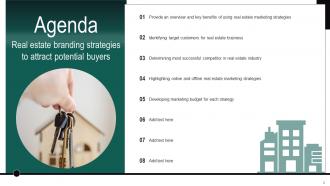
Slide 2: This slide depicts the Agenda of the presentation.
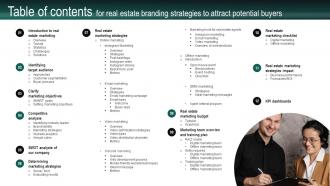
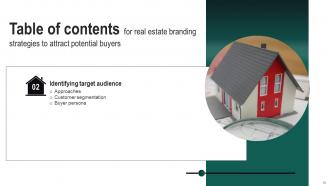
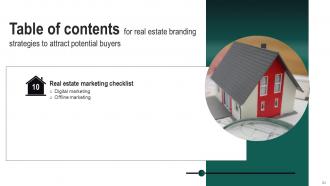
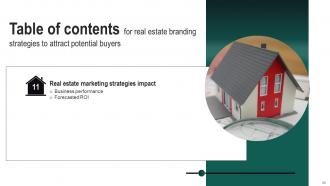
Slide 3: This slide includes the Table of contents.
Slide 4: This is yet another slide continuing the Table of contents.
Slide 5: This slide highlights the Title for the Topics to be covered further.
Slide 6: The following slide outlines introduction to real estate marketing.
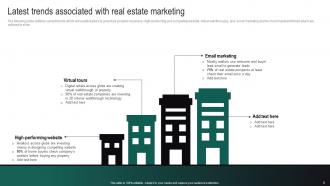
Slide 7: This slide exhibits the current trends which will assist realtors to grow their property business.
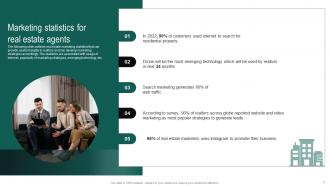
Slide 8: This slide portrays the Marketing statistics for real estate agents.
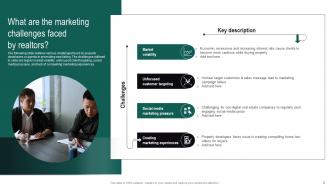
Slide 9: This slide reveals the various challenges faced by property developers or agents in promoting new listing.
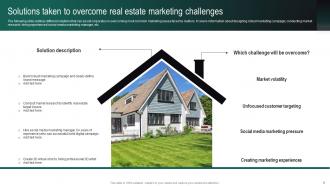
Slide 10: This slide portrays the Solutions taken to overcome real estate marketing challenges.
Slide 11: This slide indicates the Heading for the Contents to be discussed further.
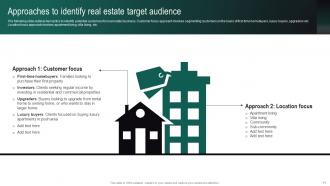
Slide 12: This slide displays the Approaches to identify real estate target audience.
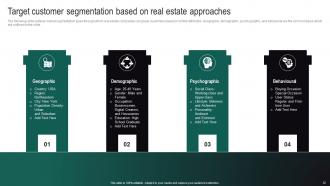
Slide 13: This slide mentions about the Target customer segmentation based on real estate approaches.
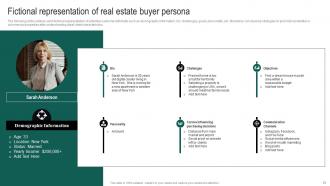
Slide 14: This slide depicts the Fictional representation of real estate buyer persona.
Slide 15: This slide includes the Title for the Ideas to be covered next.
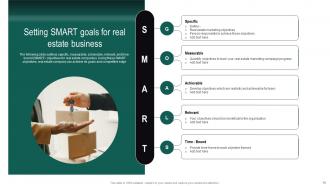
Slide 16: This slide deals with Setting SMART goals for real estate business.
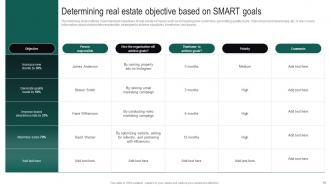
Slide 17: This slide focuses on Determining real estate objective based on SMART goals.
Slide 18: This slide contains the Heading for the Ideas to be discussed further.
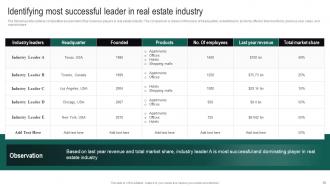
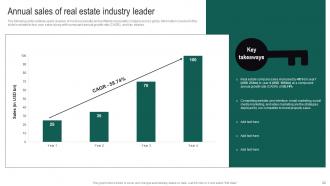
Slide 19: This slide emphasizes on Identifying most successful leader in real estate industry.
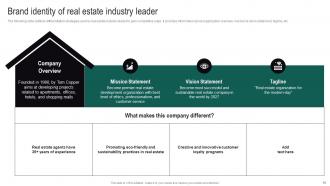
Slide 20: This slide presents the Brand identity of real estate industry leader.
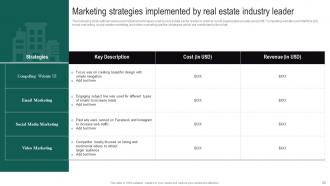
Slide 21: This slide exhibits the Marketing strategies implemented by real estate industry leader.
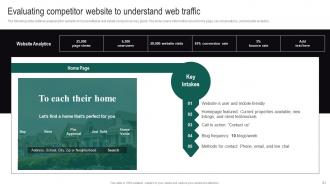
Slide 22: This slide portrays Evaluating competitor website to understand web traffic.
Slide 23: This slide outlines yearly revenue of most successful and profitable real estate company across globe.
Slide 24: This slide indicates the Title for the Contents to be coveerd in the upcoming template.
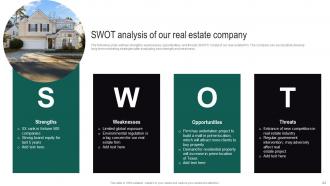
Slide 25: This slide highlights the SWOT analysis of the real estate company.
Slide 26: This slide includes the Heading for the Topics to be discussed in the following template.
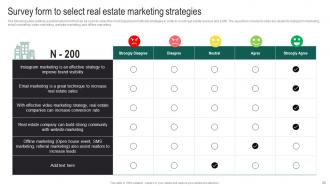
Slide 27: This slide displays the Survey form to select real estate marketing strategies.
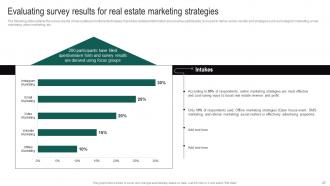
Slide 28: This slide deals with Evaluating survey results for real estate marketing strategies.
Slide 29: This slide contains the Title for the Topics to be covered further.
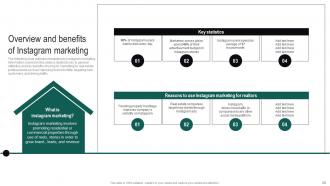
Slide 30: This slide shows the Overview and benefits of Instagram marketing.
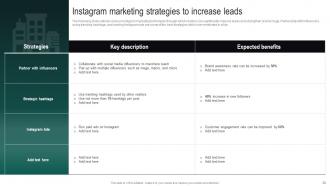
Slide 31: This slide reveals the Instagram marketing strategies to increase leads.
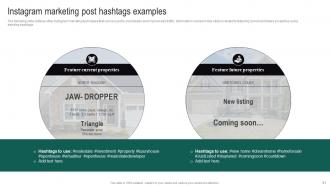
Slide 32: This slide emphasizes on the Instagram marketing post hashtags examples.
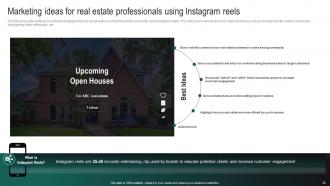
Slide 33: This slide depicts the Marketing ideas for real estate professionals using Instagram reels.
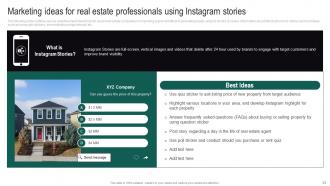
Slide 34: This slide reveals the Marketing ideas for real estate professionals using Instagram stories.
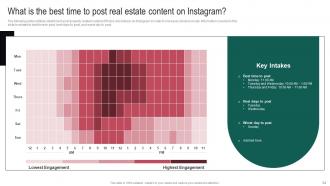
Slide 35: This slide shows the best time to post real estate content on Instagram.
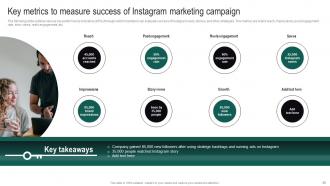
Slide 36: This slide states the Key metrics to measure success of Instagram marketing campaign.
Slide 37: This slide covers the Heading for the Contents to be discussed next.
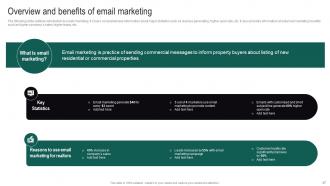
Slide 38: This slide portrays the Overview and benefits of email marketing.
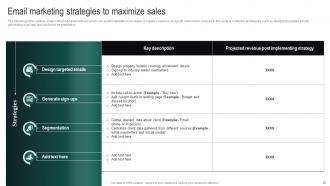
Slide 39: This slide exhibits the Email marketing strategies to maximize sales.
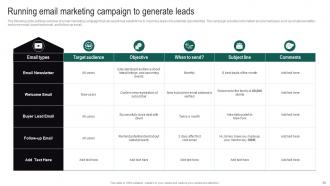
Slide 40: This slide focuses on Running email marketing campaign to generate leads.
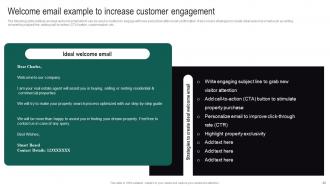
Slide 41: This slide outlines the Welcome email example to increase customer engagement.
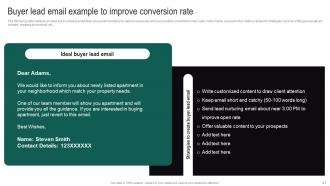
Slide 42: This slide illustrates the Buyer lead email example to improve conversion rate.
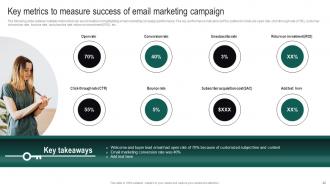
Slide 43: This slide highlights the Key metrics to measure success of email marketing campaign.
Slide 44: This slide indicates the Title for the Ideas to be covered further.
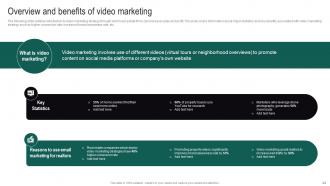
Slide 45: This slide presents the Overview and benefits of video marketing.
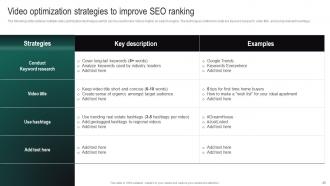
Slide 46: This slide talks about the Video optimization strategies to improve SEO ranking.
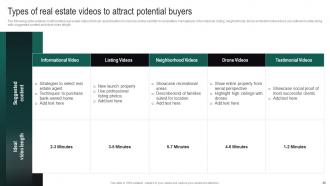
Slide 47: This slide states the Types of real estate videos to attract potential buyers.
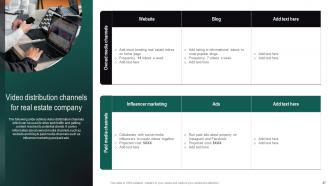
Slide 48: This slide displays the Video distribution channels for real estate company.
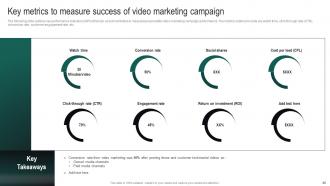
Slide 49: This slide portrays the Key metrics to measure success of video marketing campaign.
Slide 50: This slide includes the Heading for the Ideas to be discussed next.
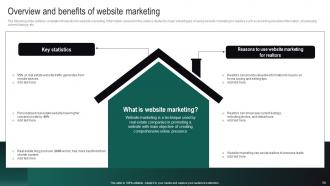
Slide 51: This slide outlines the Overview and benefits of website marketing.
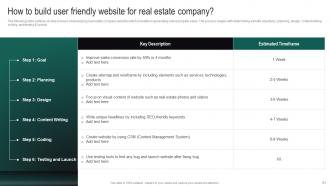
Slide 52: This slide shows How to build user friendly website for real estate company.
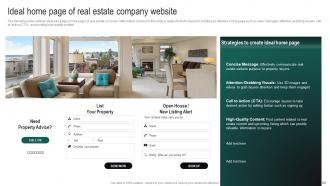
Slide 53: The following slide outlines ideal web page (Home page) of real estate company.
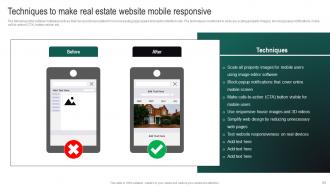
Slide 54: This slide exhibits the Techniques to make real estate website mobile responsive.
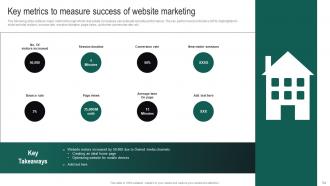
Slide 55: This slide indicates the Key metrics to measure success of website marketing.
Slide 56: This slide represents the Title for the Contents to be covered further.
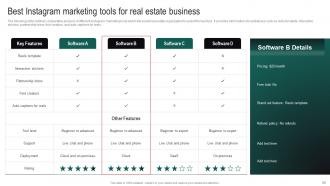
Slide 57: This slide highlights the Best Instagram marketing tools for real estate business.
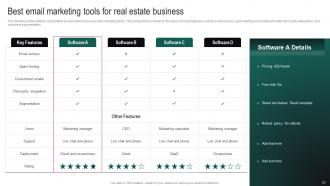
Slide 58: This slide shows the Best email marketing tools for real estate business.
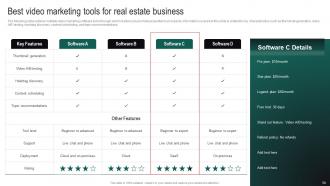
Slide 59: This slide portrays the Best video marketing tools for real estate business.
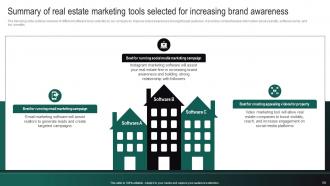
Slide 60: This slide reveals the Summary of real estate marketing tools selected for increasing brand awareness.
Slide 61: This slide incorporates the Heading for the Topics to be discussed next.
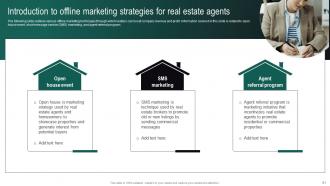
Slide 62: This slide outlines various offline marketing techniques.
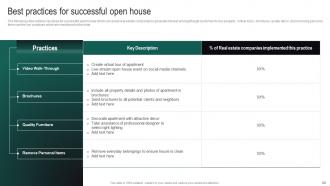
Slide 63: This slide presents the Best practices for successful open house.
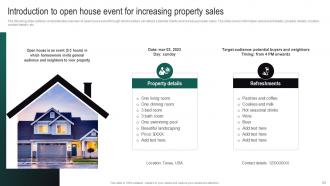
Slide 64: This slide mentions about the Introduction to open house event for increasing property sales.
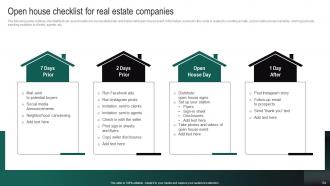
Slide 65: This slide reveals the Open house checklist for real estate companies.
Slide 66: This slide contains the Title for the Topics to be covered further.
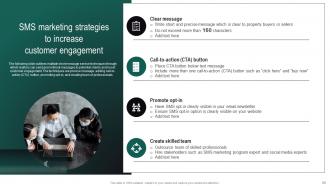
Slide 67: This slide represents the SMS marketing strategies to increase customer engagement.
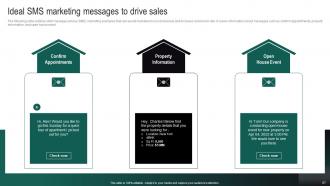
Slide 68: This slide talks about the Ideal SMS marketing messages to drive sales.
Slide 69: This slide depicts the Heading for the Contents to be discussed in the following template.
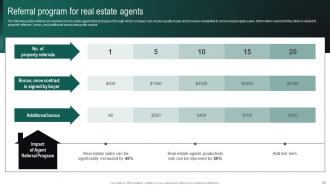
Slide 70: This slide exhibits the Referral program for real estate agents.
Slide 71: This slide includes the Title for the Ideas to be covered next.
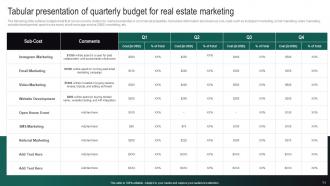
Slide 72: This slide outlines budget sheet that can be used by realtors to market residential or commercial properties.
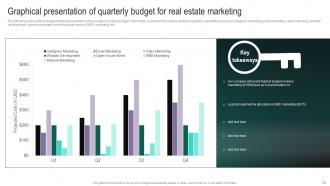
Slide 73: This slide portrays the Graphical presentation of quarterly budget for real estate marketing.
Slide 74: This slide displays the Heading for the Ideas to be discussed further.
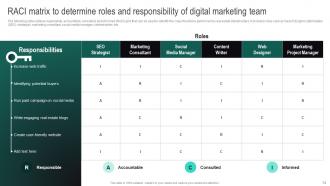
Slide 75: This slide illustrates the RACI matrix to determine roles and responsibility of digital marketing team.
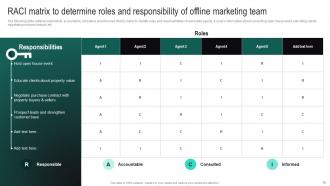
Slide 76: This slide depicts the RACI matrix to determine roles and responsibility of offline marketing team.
Slide 77: This slide includes the Title for the Contents to be covered further.
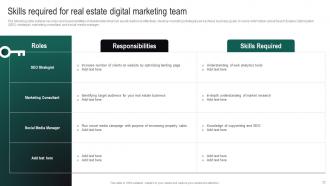
Slide 78: This slide exhibits the Skills required for real estate digital marketing team.
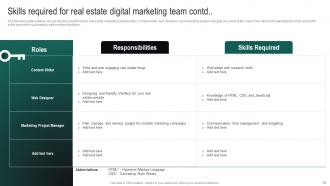
Slide 79: This slide continues the Skills required for real estate digital marketing team.
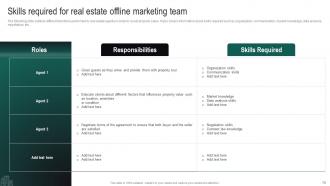
Slide 80: This slide displays the Skills required for real estate offline marketing team.
Slide 81: This slide highlights the Heading for the Topics to be discussed in the upcoming template.
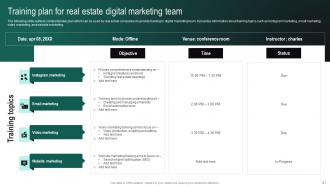
Slide 82: This slide reveals the Training plan for real estate digital marketing team.
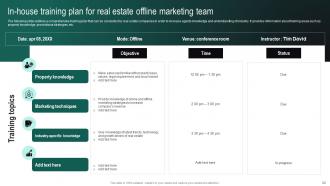
Slide 83: This slide displays the In-house training plan for real estate offline marketing team.
Slide 84: This slide includes the Title for the Topics to be discussed next.
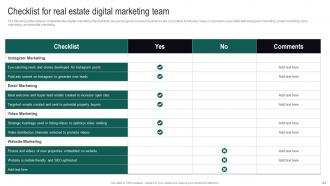
Slide 85: This slide reveals the Checklist for real estate digital marketing team.
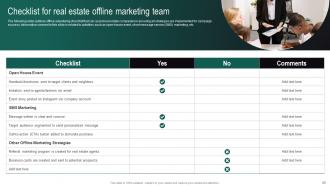
Slide 86: This slide presents the Checklist for real estate offline marketing team.
Slide 87: This slide displays the Heading for the Contents to be covered further.
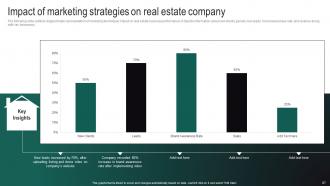
Slide 88: This slide exhibits the Impact of marketing strategies on real estate company.
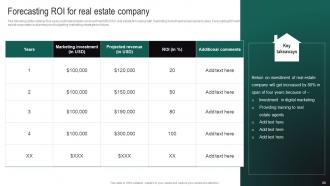
Slide 89: This slide deals with Forecasting ROI for real estate company.
Slide 90: This slide contains the Title for the Ideas to be discussed next.
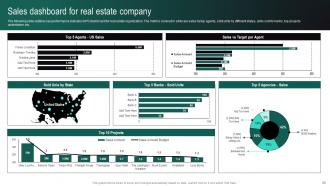
Slide 91: This slide displays the Sales dashboard for real estate company.
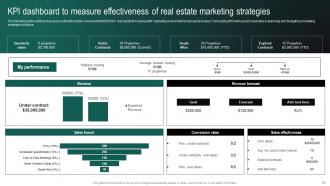
Slide 92: This slide portrays the KPI dashboard to measure effectiveness of real estate marketing strategies.
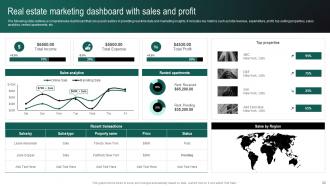
Slide 93: This slide illustrates the Real estate marketing dashboard with sales and profit.
Slide 94: This is the Icons slide slide containing all the Icons used in the plan.
Slide 95: This slide is used for depicting some Additional information.
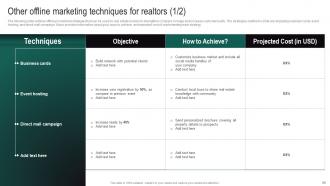
Slide 96: This slide reveals the Other offline marketing techniques for realtors.
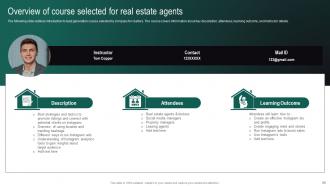
Slide 97: This slide exhibits the Overview of course selected for real estate agents.
Slide 98: This is the About us slide for stating the company-related information.
Slide 99: This slide showcases the organization's Vision, Mission, and Goal.
Slide 100: This is Meet our team slide. State your team-related information here.
Slide 101: This is the 30 60 90 days plan slide for effcetive planning.
Slide 102: This slide presents the company Roadmap.
Slide 103: This slide contains the Post it notes for reminders and deadlines.
Slide 104: This is the Magnifying glass slide for minute details.
Slide 105: This is our Target slide for stating the firm's targets.
Slide 106: This slide eucidates information related to the Financial topic.
Slide 107: This is the Venn diagram slide with related imagery.
Slide 108: This is the Thank You slide for acknowledgement.
Real Estate Branding Strategies To Attract Potential Buyers Powerpoint Presentation Slides MKT CD V with all 110 slides:
Use our Real Estate Branding Strategies To Attract Potential Buyers Powerpoint Presentation Slides MKT CD V to effectively help you save your valuable time. They are readymade to fit into any presentation structure.











FAQs for Real Estate Branding Strategies To Attract Potential Buyers Powerpoint Presentation Slides
Key elements of effective real estate branding include consistent visual identity, compelling value proposition, targeted messaging, professional photography, and strategic digital presence across multiple platforms. These components work together by building trust, differentiating services, and enhancing client recognition, with many real estate professionals finding that cohesive branding ultimately delivers stronger market positioning and increased referral rates.
Real estate agencies can differentiate themselves through specialized market expertise, innovative digital marketing approaches, personalized client service models, strategic community partnerships, and distinctive visual branding. By focusing on specific property types, leveraging virtual reality tours, offering comprehensive client support services, and building strong local connections, agencies create competitive advantages that attract clients, enhance market positioning, and ultimately deliver superior customer experiences while establishing lasting brand recognition.
Storytelling enables real estate brands to create emotional connections with clients by sharing neighborhood histories, transformation stories, and client success journeys, making properties more memorable and relatable. Through compelling narratives about community development, architectural heritage, and lifestyle aspirations, real estate professionals differentiate themselves in competitive markets, ultimately building trust and driving stronger client engagement.
Visual identity is crucial in real estate branding strategies, serving as the foundation for market recognition, client trust, and competitive differentiation through consistent logos, color schemes, typography, and design elements. A strong visual identity enhances credibility and memorability, with successful agencies finding that cohesive branding across marketing materials, signage, and digital platforms ultimately delivers improved client acquisition and premium positioning in competitive markets.
Digital marketing tactics for real estate brands include search engine optimization, social media advertising, virtual property tours, content marketing, and email campaigns. These strategies enhance visibility by showcasing properties through immersive experiences, targeting specific buyer demographics, and building trust through educational content, with many agencies finding that integrated campaigns ultimately deliver higher lead conversion rates and stronger market positioning.
Social media strengthens real estate brands by showcasing property listings with high-quality visuals, sharing market insights and neighborhood expertise, and building authentic relationships through consistent engagement with potential clients. Platforms like Instagram and LinkedIn enable agents to demonstrate local knowledge, highlight successful transactions, and create trust-based connections, ultimately delivering enhanced visibility and competitive advantage in increasingly digital markets.
Successful real estate branding case studies include Keller Williams' agent-centric culture building, Compass's technology-forward luxury positioning, Century 21's iconic gold jacket recognition system, RE/MAX's hot air balloon differentiation, and Zillow's consumer-first digital transformation. These brands achieved market leadership by creating distinctive identities, consistent messaging, and memorable visual elements that resonate with their target audiences, ultimately delivering increased market share and customer loyalty.
Real estate brands maintain consistency by establishing unified visual guidelines, standardized messaging frameworks, and coordinated content calendars across all digital and traditional channels. Through centralized brand management systems, agencies streamline their social media presence, website design, and marketing materials, while ensuring consistent client experiences, ultimately delivering stronger market recognition and competitive advantage in increasingly crowded real estate markets.
Customer experience significantly impacts real estate branding by building trust, generating referrals, and differentiating agents in competitive markets through personalized service, seamless communication, and transparent processes. Exceptional experiences create lasting brand loyalty, with many agencies finding that satisfied clients become powerful advocates, ultimately driving repeat business and premium positioning while reducing marketing costs through organic word-of-mouth promotion.
Real estate brands should approach rebranding by conducting comprehensive market analysis, evaluating current brand perception, defining new positioning strategies, and updating visual identity elements across all touchpoints. This strategic process enables firms to better align with evolving market demands, attract new client segments, and differentiate from competitors, with many agencies finding that thoughtful rebranding ultimately delivers enhanced market visibility and increased transaction volumes.
Common real estate branding mistakes include inconsistent messaging across platforms, generic marketing materials, neglecting online reputation management, poor website design, and failing to define target demographics clearly. These missteps significantly undermine market positioning, with many agencies finding that inconsistent branding reduces client trust by up to forty percent, ultimately weakening competitive advantage and limiting business growth potential.
Community involvement enhances real estate brand reputation by building trust, demonstrating local expertise, and creating authentic relationships with potential clients. Through sponsoring local events, supporting charitable causes, and participating in neighborhood development initiatives, real estate professionals establish themselves as invested community partners, ultimately generating referrals and positioning their brand as genuinely committed to local growth.
Tools to measure real estate branding effectiveness include brand awareness surveys, social media analytics, website traffic analysis, lead attribution tracking, and customer sentiment monitoring. These measurement approaches enable agencies to assess market recognition, digital engagement rates, and conversion patterns across platforms, while many real estate firms find that combining quantitative metrics with qualitative feedback delivers comprehensive insights for optimizing their competitive positioning.
Personal branding helps real estate agents build trust and recognition by establishing expertise, showcasing successful transactions, and creating memorable client experiences through consistent messaging across digital platforms. This strategic approach enables agents to differentiate themselves in competitive markets, attract higher-quality leads, and command premium commissions, with many finding that strong personal brands ultimately deliver sustained referrals and accelerated business growth.
Key trends include hyper-local community storytelling, sustainability-focused messaging, virtual experience integration, personal brand development, and data-driven personalization strategies. These approaches streamline client engagement by emphasizing authentic neighborhood expertise, environmental responsibility, and seamless digital interactions, with many agencies finding that combining traditional relationship-building with innovative technology platforms ultimately delivers stronger market differentiation and enhanced customer experiences.
-
I can say with full confidence that all your business, academic, or professional work requirements will be sufficed with SlideTeam. Their gallery is as rich as 2Million+!!
-
The quality of the templates is as fine as it could get. It was a purchase well made!