


Real World Case Study Of Walmart Training Ppt




Try Before you Buy Download Free Sample Product
 Impress Your
 Audience
 100%
100% Editable
 Save Hours
 of Time


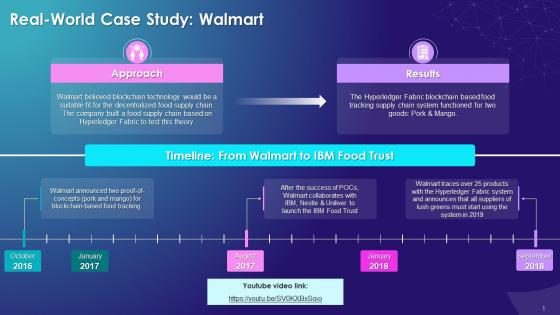
This slide illustrates how Walmart recognized its need to make the companys food supply chain blockchain based. The slide talks about the approach of the organization towards the new technology and the two cases of pork and mangoes to test the theory based on Hyperledger Fabric. It also depicts how the concept of IBM food trust in collaboration with Walmart came into being.
People who downloaded this PowerPoint presentation also viewed the following :
Real World Case Study Of Walmart Training Ppt with all 16 slides:
Use our Real World Case Study Of Walmart Training Ppt to effectively help you save your valuable time. They are readymade to fit into any presentation structure.











FAQs for Real World Case Study Of
Okay so Walmart basically nails retention with three things. First, they actually pair new people with mentors who've been there forever - not just random coworkers. Smart move honestly. They're also huge on promoting from within, like their management programs give you real advancement paths. Cross-training is another big one - you can rotate through departments so you don't get bored doing inventory forever. Oh and the career pathing thing is structured but doesn't feel rigid. Bottom line? They make training feel like you're investing in an actual future, not just learning how to stock shelves.
Oh dude, Walmart's actually doing some pretty wild stuff with training! They're using VR headsets so employees can practice dealing with angry customers without getting yelled at for real. Smart, right? Plus they've got mobile apps where you can knock out training modules on your break - though honestly, who wants to do more work during break time? The AI thing is kinda neat too. It figures out what you suck at and creates personalized training for your specific job. They even added game elements with points and badges to make it less boring. If you're looking into corporate training ideas, they're definitely worth studying.
So Walmart basically built their whole training around that "Save Money, Live Better" thing. They skip expensive outside programs and just use digital stuff plus having employees teach each other - pretty smart actually. Customer service gets tons of focus because duh, customers matter. Their leadership training is all about managers helping out the front-line workers instead of being jerks about it. Everything's super standardized too, which makes sense when you've got thousands of stores. Honestly, if you're doing retail training, just copy what they do - keep it simple and tie everything back to what people actually need for their jobs.
So Walmart's pretty smart about this - they don't just check if people finished the training. They actually test knowledge retention and track how it affects real performance metrics. Sales numbers, customer satisfaction, employee engagement surveys, that whole thing. Oh and they compare promotion rates between trained vs untrained employees, which is clever honestly. The key part? They tie everything back to actual business results instead of just asking "did you like the training?" (because who cares if someone enjoyed it but can't do the job better). Worth copying that approach if you're setting something up.
So Walmart managers are basically like player-coaches, you know? They're constantly looking for skill gaps and doing daily coaching with their teams. Each person gets their own development plan based on where they want their career to go. They mix hands-on mentoring with formal stuff like their Walmart Academy program. Progress gets tracked through regular check-ins and performance reviews - way more involved than most retail places I've worked at. The whole thing works because managers act like actual coaches instead of just being bosses who bark orders. Pretty solid approach if you ask me.
So Walmart's got this thing called Walmart Academy - basically their main training hub. They push out the same digital modules to every store globally, covering customer service, safety stuff, all the basics. Pretty crazy scale honestly. Local coordinators handle the day-to-day training after getting certified through the main program. The smart part? They keep core training identical everywhere but tweak things for different markets. Like, a store in Japan won't train exactly like one in Texas, but the fundamentals stay the same. That balance between global standards and local tweaks is probably what you want to focus on for your analysis.
So Walmart's actually pretty smart about this - they don't dump everything on you day one. Instead they spread orientation and training over a few weeks, mixing online modules with real floor time. You get paired with a mentor too, which is clutch. They're big on the culture thing (makes sense when you have that many employees, I guess). Regular supervisor check-ins keep you on track. Honestly, if you're building your own process, that's the move - break it into chunks instead of overwhelming people right away.
So Walmart's actually pretty smart about this - they get their floor employees directly involved in creating training content. Subject matter experts from different departments help design the programs, plus they run focus groups and surveys for feedback. Before rolling anything out company-wide, they test it in a few stores first to see what actually works. Honestly, it's genius because who knows the job better than people doing it every day? Way better than having some corporate team guess what frontline workers need. You should totally try this approach - make your people co-creators instead of just forcing them to sit through whatever training you think they need.
So Walmart's pretty smart about this - they mix up their training formats big time. Interactive online stuff and infographics work for visual people. Then there's hands-on simulations and real job training for people who need to actually do things to learn. Mobile microlearning is clutch too, especially with crazy retail schedules (seriously, who has time for long training sessions?). Audio learners get podcasts and coaching talks. Bottom line? Don't stick to just one method. Mix it up so your whole team can actually pick up what they need to know.
So Walmart looks at employee retention, customer satisfaction scores, and whether sales actually go up after training. Smart move honestly - they don't just measure if people finished the courses. Internal promotions are huge for them too since they love promoting from within. Oh and they do knowledge assessments to see if stuff actually stuck, not just completion rates. The whole thing ties back to real business results instead of just... did someone click through all the slides? If you're building training programs, totally copy that approach of linking learning directly to performance metrics.
Dude, Walmart's actually crazy smart about this stuff. They don't wait around for annual reviews - everything's based on real-time feedback. Customer complaints about slow checkout? New cashier training gets rolled out immediately. Mystery shoppers say employees don't know the products? Updated modules hit store tablets within weeks. When e-commerce blew up (which honestly caught everyone off guard), they instantly created training for curbside and online orders. The whole system runs on actual customer surveys and sales data. If you're building training programs, totally steal this approach - make your content respond to real user problems instead of guessing what people need.
Dude, it's wild how much continuous training actually matters at places like Walmart. When employees get ongoing development, customers can totally tell the difference. Performance shoots up, they solve problems faster, know products better - just way more confident overall. I read somewhere that trained staff handle customer stuff 30% better, which obviously makes people happier. Companies skip this all the time though, which is crazy to me. If you're gonna try it, definitely start with front-line people first. That's where you'll actually see the customer experience improve right away.
Walmart's pretty clever about this - they spot promising employees early and put them through programs like Emerging Leaders. The training mixes classroom stuff with actual mentoring on the job, which honestly makes way more sense than just throwing people into management roles. Their people learn real leadership skills by managing teams and tackling problems firsthand. What I think works best is how they don't just do theory - employees get structured paths to move up while practicing what they're learning. If you're stealing ideas for your company, that combo of formal training plus hands-on experience is gold.
So Walmart actually embeds soft skills into their regular training instead of making it separate classes. They do role-playing and customer scenarios to practice communication and teamwork stuff. The de-escalation training is huge since retail customers can be... a lot sometimes lol. For managers, they focus on cultural sensitivity and inclusive leadership. What's cool is they connect these skills to actual performance numbers so people see why it matters for business. If you're studying their approach, look at how they make people skills measurable and tied to real job situations rather than just theory.
Walmart actually does training way better than most people think. They've got these digital platforms plus hands-on stuff at their academies - covers everything from basic retail to leadership development. Target's more focused on customer service, Amazon pushes tech skills hard, but Walmart casts a wider net. Their size definitely helps here. They even use VR for complicated scenarios, which is honestly pretty cool. Way more promotion opportunities than other retailers too. Oh, and they're smart about mixing online modules with actual practice - that combo works really well if you're trying to figure out what they do differently.
-
SlideTeam’s pool of 2Million+ PPTs has really benefited my team, everyone from the IT department to HR. We are lucky to have crossed ways with them.
-
The PPT layout is great and it has an effective design that helps in presenting corporate presentations. It's easy to edit and the stunning visuals make it an absolute steal!