


Recruitment process ppt slides





Try Before you Buy Download Free Sample Product
 Impress Your
 Audience
 100%
100% Editable
 Save Hours
 of Time


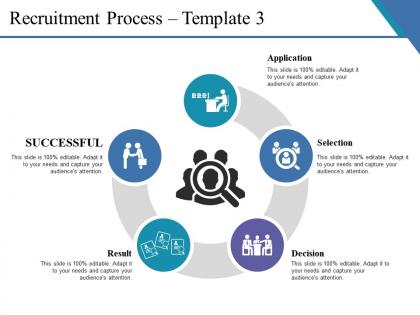
Figure out how to improve future attempts with our Recruitment Process Ppt Slides. It helps analyze demanding instances.
People who downloaded this PowerPoint presentation also viewed the following :
Recruitment process ppt slides with all 5 slides:
Our Recruitment Process Ppt Slides are capable of bearing the brunt. It becomes easier to absorb the burden.
FAQs for Recruitment
Okay so basically you've got job analysis/posting, then screening applications, interviews (usually a few rounds), reference checks, and the offer. First figure out what you actually need - this part always takes forever, don't ask me why. Screen resumes, do phone or video calls, then final interviews. Check references after that. Some places throw in tests or panel interviews too depending on the job. Honestly, map out your timeline upfront because if this drags on candidates will just disappear on you. Trust me on that one.
Think of job descriptions as your filter for getting decent candidates instead of random people who clearly didn't read anything. Write them clearly and you'll actually get applicants who make sense for the role. Be honest about what the job really involves - not the fantasy version. Separate must-haves from nice-to-haves too, because nobody's perfect. This gives you solid criteria for interviews instead of just winging it. Honestly, most job descriptions I see are pretty terrible and way too vague. Take a look at yours - are they actually helping you find good people? If not, time to rewrite them.
Honestly, employer branding is just how people see your company as a place to work. Good candidates will actually come to you instead of the other way around - which saves so much hassle. Think about it: everyone wants a job they can brag about at parties, right? Your brand shows up in job posts, Glassdoor reviews, social media. Even what your current team says matters. Get this right and you'll see better applicants who say yes faster. I'd start by just asking your employees what they genuinely love about the gig. Sometimes the obvious stuff isn't what actually matters to people.
Dude, get yourself an ATS first - it'll filter resumes by keywords so you're not drowning in applications. Chatbots are actually clutch for answering basic candidate questions (way better than playing phone tag). For interviews, those video platforms are a game changer since you can skip the whole "when works for you" email chain. Oh and automated reference checks - total lifesaver for speeding up background stuff. Honestly though, don't go crazy buying every tool out there. Pick maybe 2-3 that work well together or you'll just create more chaos.
Honestly, just communicate better - that's like 80% of it. Tell candidates what's happening even if it's "still looking at resumes, you'll hear from us Friday." Radio silence is the absolute worst. Also fix your application process because making people upload a resume AND type everything out again is infuriating. Give realistic timelines and actually hit them. Train whoever's doing interviews so they don't seem rushed or unprepared - that's such a bad look. Oh, and send brief feedback with rejections when you can. Start with response times though, that'll make the biggest difference right away.
Honestly, you can't ignore diversity in hiring anymore - candidates expect it and your business will actually perform better. Look at your job posts first, they're probably full of biased language you don't even realize. Then figure out where you're finding people because if it's the same places every time, you'll keep getting similar candidates. Your interview panels matter too - mix up who's in the room. I know it sounds like extra work, but diverse teams legitimately make better decisions and come up with more creative solutions. Start by just reviewing your current process and spotting where bias sneaks in.
Definitely start with the big three: time-to-hire, cost-per-hire, and quality of hire. The first two are pretty straightforward to track. Quality's where it gets interesting though - you'll want to look at performance reviews, how many people stick around after 90 days and a year, plus what their managers actually think of them. Oh, and don't sleep on candidate experience scores. People talk, especially in smaller industries. Honestly, these basics will keep you busy for a while. You can always get fancier with the metrics once you've nailed these down.
Honestly, LinkedIn's your best bet for most professional stuff, but Twitter's surprisingly good for tech people. Instagram works great if you're hiring creatives too. Post your openings there, but also show off what it's actually like to work at your place - people want to see the real vibe, not just corporate fluff. Get your current team to share job posts with their friends; those referrals are seriously the best hires. Oh, and start connecting with potential candidates before you actually need them. Way easier than scrambling when someone quits unexpectedly.
Honestly, it depends on what you're dealing with. Agencies are great when you need someone fast or you're hiring for super specific roles - they've got the networks and do all that tedious screening stuff. But they're pricey. Your internal team gets your culture way better and builds actual relationships with people, though let's be real, they're probably drowning in other tasks already. I'd go with agencies when you're in a rush or need specialized talent. Keep the important strategic hires in-house though - you'll want more control over those.
So cultural fit is basically seeing if someone will vibe with your team's style and company values. Most people use behavioral interviews or have candidates meet the team - maybe throw in some scenario questions. Here's the thing though, it gets super subjective and you don't want bias creeping in. Focus on work stuff like how they collaborate, communicate, take feedback - not whether they're into the same Netflix shows as everyone else lol. You need clear criteria that actually relate to the job. Otherwise your hiring decisions could get messy real quick.
Oh man, there are so many ways your brain can mess with you during interviews! Confirmation bias is huge - you'll basically hunt for evidence that supports whatever gut reaction you had in the first 30 seconds. Then there's the halo effect where one impressive thing makes you ignore red flags. I'm totally guilty of recency bias too, like I'll remember yesterday's candidate way better than someone from last week. Affinity bias is when you pick people who remind you of yourself (which feels weird but happens). Attribution bias assumes past experience guarantees future success. Honestly, structured questions and getting other people involved helps tons.
Dude, AI is a game-changer for recruiting. You can set it up to scan resumes for keywords way faster than doing it manually - honestly saves hours. Chatbots handle those initial screening calls too, asking basic questions and gauging how candidates communicate. There's also some predictive stuff that supposedly tells you who'll succeed based on hiring patterns, but I'm kinda skeptical about how well that actually works. I'd start with resume parsing first. Once you see how much time it gives you back for the real conversations, you'll be hooked.
Okay so definitely can't ask about age, race, religion, gender, disabilities, pregnancy, marital status - that's the big stuff that'll get you in trouble. Job descriptions need neutral language too. Stick to questions that actually relate to the job during interviews. Oh and check if your state has those ban-the-box laws about asking criminal history upfront. Social media screening is tricky since you might see protected info accidentally. The documentation part is boring but super important - you'll want consistent notes on all candidates. Honestly the whole process feels like walking through a minefield sometimes, but better safe than sued.
Honestly, onboarding makes or breaks retention - like we're talking 50% difference in turnover. Those first 90 days? Critical. When people feel connected to the team and actually understand what they're supposed to be doing, they stay. But mess it up and they're basically job hunting before their second week ends (seen this way too often). You need regular check-ins, clear expectations, proper intros to the important people. Oh, and give them real work - not just busy tasks. Create a decent checklist and actually stick to it. Trust me, you'll be so glad when people aren't constantly leaving.
Honestly, feedback is a game-changer for recruitment. Get it from everyone - candidates, hiring managers, interviewers. The rejected candidates? They'll give you the most brutal honest takes (which hurts but helps). Application process feedback shows you where people are dropping off. Hiring managers tell you if you're even finding the right people. I always forget to do this consistently, but when I actually track it and review quarterly, patterns jump out. You'll catch bias and bottlenecks you never saw before. It's basically your reality check.
-
Innovative and attractive designs.
-
Easily Editable.