


Renewable energy offshore wind power project ppt template




Try Before you Buy Download Free Sample Product
 Impress Your
 Audience
 100%
100% Editable
 Save Hours
 of Time


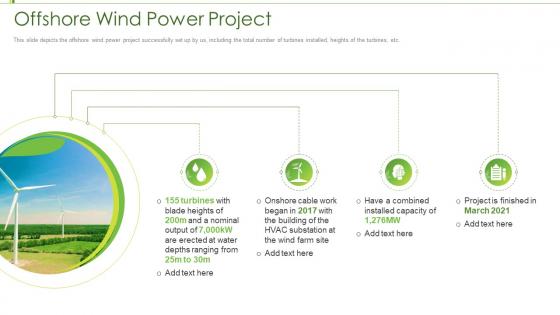
This slide depicts the offshore wind power project successfully set up by us, including the total number of turbines installed, heights of the turbines, etc.
People who downloaded this PowerPoint presentation also viewed the following :
Renewable energy offshore wind power project ppt template with all 6 slides:
Use our Renewable Energy Offshore Wind Power Project Ppt Template to effectively help you save your valuable time. They are readymade to fit into any presentation structure.






FAQs for Renewable energy offshore wind power
The primary types of renewable energy sources include solar, wind, hydroelectric, geothermal, and biomass technologies. These sources revolutionize energy production by reducing carbon emissions, lowering operational costs, and enhancing energy independence, with many utilities and corporations finding that strategic combinations of these technologies deliver competitive advantages and sustainable growth in an increasingly environmentally-conscious market.
Solar energy conversion works through photovoltaic cells that transform sunlight into electricity via semiconductor materials, while thermal systems capture heat for power generation. Latest advancements include perovskite tandem cells, bifacial panels, and floating solar farms, with many utilities and manufacturers finding that these innovations deliver significantly higher efficiency rates, reduced costs, and enhanced energy storage capabilities.
Renewable energy significantly reduces greenhouse gas emissions, air pollution, water consumption, and habitat destruction compared to fossil fuels. Through solar, wind, and hydroelectric technologies, organizations minimize carbon footprints, eliminate toxic emissions, and preserve natural resources, with many industries finding that sustainable energy strategies deliver both environmental stewardship and long-term operational cost advantages.
Wind turbines convert kinetic energy through aerodynamic rotor blades that capture wind flow, spinning a shaft connected to a gearbox that increases rotation speed, ultimately driving a generator that produces electrical energy. Efficiency factors include wind speed consistency, turbine placement and height, blade design optimization, and maintenance protocols, with many energy companies finding that strategic positioning in high-wind corridors delivers significantly enhanced power generation and operational returns.
Government policies and incentives significantly accelerate renewable energy adoption through tax credits, subsidies, renewable portfolio standards, feed-in tariffs, and regulatory frameworks that favor clean energy investments. These mechanisms enable businesses and utilities to reduce implementation costs, enhance project financing viability, and achieve competitive energy pricing, with many organizations finding that supportive policies ultimately deliver faster market penetration and sustainable energy transitions.
**INPUT**: What are the challenges associated with integrating renewable energy into existing power grids? **OUTPUT**: Renewable energy integration challenges include grid stability management, intermittency issues, storage infrastructure requirements, transmission capacity limitations, and regulatory coordination complexities. These obstacles present both technical and economic considerations, with many utility companies finding that strategic investments in smart grid technologies, battery storage systems, and demand response programs ultimately deliver enhanced operational efficiency and competitive positioning in an increasingly sustainable energy landscape. [Word count: 60]
Geothermal energy production harnesses underground heat through wells that access hot water or steam reservoirs, which then drive turbines to generate electricity. Regions with high geothermal potential include Iceland, New Zealand, Philippines, and western United States, where volcanic activity and tectonic plate boundaries create ideal conditions, ultimately delivering consistent baseload power with minimal environmental impact.
Emerging energy storage innovations include advanced lithium-ion batteries, flow batteries, compressed air systems, hydrogen storage, and thermal storage technologies. These solutions enhance renewable energy reliability by storing excess power during peak generation, smoothing grid fluctuations, and enabling 24/7 clean energy delivery, with many utilities finding that strategic storage combinations significantly reduce costs while accelerating renewable adoption.
Renewable energy enhances national energy independence by reducing reliance on fossil fuel imports, diversifying energy portfolios, and utilizing domestic resources like solar, wind, and hydroelectric power. Countries like Denmark and Germany have significantly decreased energy imports while strengthening grid resilience, ultimately delivering greater economic stability and strategic autonomy in an increasingly volatile global energy landscape.
Renewable energy significantly boosts job creation across manufacturing, installation, maintenance, and research sectors, with solar and wind industries generating millions of positions globally. These sectors deliver employment opportunities in rural communities, urban manufacturing hubs, and technical services, while traditional energy workers increasingly transition to renewable roles, ultimately creating sustainable economic growth and competitive workforce advantages.
Hydropower systems generate energy by channeling flowing water through turbines connected to generators, converting kinetic energy into electricity through dam construction, river diversion, and reservoir management. While these projects deliver clean, renewable power and flood control, they present ecological challenges including fish migration disruption and habitat alteration, with many utilities finding that modern fish ladders and environmental mitigation strategies help balance energy production with ecosystem preservation.
Decentralized renewable energy systems feature distributed generation at local levels through rooftop solar, small wind turbines, and community microgrids, while centralized systems rely on large-scale installations like utility solar farms and offshore wind facilities. These approaches deliver different advantages, with decentralized systems enhancing energy independence and grid resilience, while centralized systems achieve greater operational efficiency and cost-effectiveness through economies of scale.
Individuals and businesses can reduce their carbon footprint by installing solar panels, utilizing wind power systems, adopting geothermal heating, purchasing renewable energy credits, and switching to green utility programs. These approaches streamline energy costs while enhancing sustainability, with many organizations finding that strategic renewable investments deliver operational efficiency, regulatory compliance, and competitive advantage in an increasingly environmentally-conscious marketplace.
Key trends shaping renewable energy market growth include declining solar and wind costs, advanced energy storage solutions, smart grid integration, green hydrogen development, and supportive government policies. These innovations streamline energy transitions by enhancing grid reliability, reducing operational costs, and enabling 24/7 renewable power, with many countries finding that strategic investments ultimately deliver energy independence and competitive advantages.
Community-based renewable energy projects empower local economies by creating jobs, generating revenue streams, reducing energy costs, and keeping investment capital within communities. These initiatives, from solar cooperatives in rural areas to wind farms owned by municipalities, enable local ownership of energy assets, foster energy independence, and deliver both economic resilience and environmental benefits while strengthening community engagement.
-
Unique and attractive product design.
-
Great quality slides in rapid time.