


Revenue generation model powerpoint templates




Try Before you Buy Download Free Sample Product
 Impress Your
 Audience
 100%
100% Editable
 Save Hours
 of Time


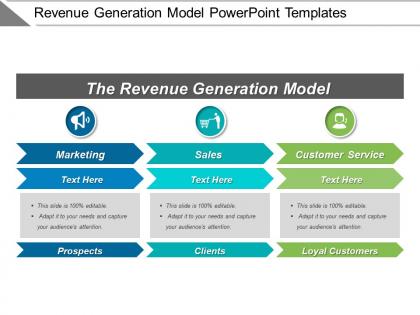
Boost the revenue generation for your company by presenting the Revenue Generation Model Powerpoint Templates. Using this revenue generation template will help you provide a clear idea to your team about the ways to increase the profit and revenue for your organization. This PPT slide includes a three-stage process depicting three moves that lead to profit generation. The first step includes marketing followed by sales and customer services. Explain your team how revenues, costs and profits are the basic financial components of operating a business and the need to induce them. The flow diagram in the template portrays the journey taken to ultimately increase the income of your business. Just add the required texts in the arrows and rectangular blank and deliver an interesting presentation while saving a great amount of time. Download this ready to use PPT template to help your company earn a profit to stay viable in the long run.
People who downloaded this PowerPoint presentation also viewed the following :
Revenue generation model powerpoint templates with all 5 slides:
Exercise effective control via our Revenue Generation Model Powerpoint Templates. Demonstrate ability to handle events.

FAQs for Revenue generation
Look, you need three main things: know what makes you special, figure out who actually wants to pay for it, and have a way to make money that makes sense. Don't get stuck trying to build the perfect business model - I've seen way too many founders do that instead of just testing something. Price based on the value you're giving people. Find customer acquisition channels that won't drain your bank account. Unit economics matter early on, so track how much it costs to get a customer vs what they're worth long-term. Start with one revenue stream, see if it works, then add more.
So basically, subscription models give you steady monthly cash instead of those unpredictable one-time sales. Customers get more attached to your service too since they're paying regularly - they actually want you to succeed. The cool part? Happy subscribers hang around longer, upgrade their plans, and tell their friends about you. Oh, and I learned this the hard way - you can't just collect payments and coast. You've gotta keep adding real value or people bail fast. I'd start by figuring out what parts of your current business could work as a monthly service, then test it with like 20-50 customers first.
Look, pricing is honestly make-or-break for your whole business model. Too cheap and you'll never have money to reinvest or grow, even with tons of customers. Go too expensive and nobody buys your stuff - pretty obvious problem there. You've gotta hit that middle ground where people actually see the value but you're still making decent margins. I'd start by figuring out your real costs first, then think about what you're actually giving customers. Test a few different price points and see what happens. Customer feedback is huge here - like, actually listen to what they're saying about your pricing. It's kinda like dating... you need to find someone who thinks you're worth it.
So basically, dig into your customer data to find patterns - like who's about to bail or upgrade. Usage data and purchase history tell you SO much about what's actually working. Track stuff like lifetime value and conversion rates at different price tiers. Which features keep people hooked? Focus on dashboards that help you decide things, not just look pretty (I've seen way too many useless ones). Pick maybe 3-4 metrics that actually move the revenue needle first. Then expand once you've got those dialed in.
Freemium's great for getting lots of people to try your thing without the sales pressure. You'll convert maybe 2-5% to paid, but that's normal. The tricky part? Finding the sweet spot with your free version. Too much free stuff and nobody pays. Too little and they just leave right away. I've seen so many startups mess this up - they either give away everything or make the free tier basically useless. You're basically subsidizing a bunch of free users hoping a few will pay. But hey, it beats trying to convince people to pay upfront. Figure out what premium features actually solve their real problems first.
Okay so definitely spread out your income - like 3-4 different sources that don't all tank at once. We had this nightmare where one client was basically 70% of our money and then just... disappeared. Brutal lesson learned there! Mix it up with subscriptions, one-off products, consulting, licensing deals. Just make sure they actually work together instead of fighting each other for attention. Start with something that builds on what you already know how to do, then add more slowly. That way when something inevitably goes sideways, you're not panicking about rent.
Dude, affiliate stuff is honestly a game-changer for revenue. You only pay when people actually buy something, so there's barely any risk involved. Plus you're tapping into audiences you'd never reach otherwise - they handle the promotion while you stick to what you do best. Honestly, I wish I'd started doing this sooner. It's perfect when your main income streams are being weird or unpredictable. The key is not going crazy right away though. Pick maybe 2-3 partners who actually make sense for your business and see how it goes first. You can always expand later once you figure out what actually works.
Your customer personas are literally your money roadmap. Tech-savvy B2B folks? They'll happily sign up for self-service subscriptions all day. But enterprise clients want the whole white-glove treatment with custom contracts and dedicated reps. Each persona shows you their budget limits, how long they take to buy, and what actually matters to them. That's how you figure out if freemium makes sense or if you should go premium/usage-based. Honestly, I'd just map each persona to how they prefer buying, then build your revenue model around that. Way easier than guessing what'll stick.
Don't blow up what's already making you money - that's like quitting your day job before your side hustle takes off. Run digital stuff parallel to your current operations first. Your customer data is probably a mess right now, so fix that before anything else because digital relies heavily on actually knowing your audience. Get your team used to new tools and different ways of measuring success. That part takes longer than people think, honestly. Build up your tech infrastructure and train everyone properly, then slowly move resources over as digital proves it works. Oh and test everything small first - way easier to pivot when you're not betting the farm.
Honestly, a solid value prop is like having a sales superpower. Your prospects get it immediately - they see exactly what problem you're fixing and why you're different from everyone else. Sales cycles speed up because there's no confusion about what they're buying. And here's the thing - when people clearly see your value, they'll pay more for it. Nobody argues about price when they know you're solving their exact headache. Skip the boring feature lists though. Instead, call up your favorite customers and ask why they really chose you. That's pure gold for your messaging right there.
Honestly, don't rely just on selling products - that's risky as hell. Mix it up with subscriptions, maybe some affiliate stuff, even let other brands advertise on your site. Dynamic pricing is huge right now too, like adjusting prices based on how much people actually want something. Your conversion funnel probably needs work - most do. Personalized recommendations are basically money printers if you set them up right. Retargeting campaigns for repeat buyers work crazy well too. Start by figuring out where your money's actually coming from now, then see what obvious gaps you're missing. Sometimes the biggest wins are sitting right there.
Dude, segmentation is a game changer - way better than trying to sell the same way to everyone. Look at your customer data and find 3-4 different groups based on what they buy or how they act. Rich customers? Hit them with premium pricing. Budget shoppers want bulk discounts, obviously. Each group needs totally different tactics - different products, channels, the whole thing. Honestly, you'll be shocked when you see which segments actually make you money vs. the ones that don't. Just don't overthink it at first.
Dude, everyone's doing performance-based stuff now. SaaS companies ditched flat fees for usage pricing. Marketing agencies? They're chasing commissions instead of those safe monthly retainers. Healthcare's wild - doctors actually get paid for keeping you healthy, not just running tests. Even manufacturers are trying "pay for uptime" models instead of selling equipment outright. Honestly, it makes sense. Why pay for promises when you can pay for results? If you're thinking about it, just test something small first. See what metrics actually matter before going all-in.
So there's a few ways to make money off user content. Ad revenue sharing works well - just look at how TikTok does it. You could also do premium subscriptions or take marketplace cuts like Etsy. Honestly, the hardest part is balancing free creation with actually making money from it. Maybe try licensing popular content to brands? Or keep basic sharing free but charge for fancy features. I'd start by figuring out why people even create content on your platform first. Then build monetization that doesn't kill their vibe - otherwise you'll lose creators fast.
Honestly, the companies that nail pivots are just really good at listening to what people actually want instead of being stubborn about their original idea. Look at Netflix - they killed their DVD thing for streaming. Adobe went from selling software once to that subscription model everyone uses now. Twitter tried a bunch of stuff before figuring out ads were the answer. They all just followed where users were going instead of fighting it. The smart move is testing small changes, tracking what works, and being willing to mess with your current money-maker if something better shows up. I'd start by figuring out what annoys your customers most - that's probably where you should pivot.
-
Awesomely designed templates, Easy to understand.
-
Best way of representation of the topic.