

Rippling Investor Funding Elevator Pitch Deck Ppt Template




Try Before you Buy Download Free Sample Product
 Impress Your
 Audience
 100%
100% Editable
 Save Hours
 of Time


Grab our insightfully designed template on the Rippling Investor Funding Elevator Pitch Deck. This Workforce Platform Investor Presentation involves a problem statement and critical solutions offered by the company to address the customers security concerns. Also, Startup Presentation involves products and services, key facts, unique selling points, significant milestones achieved, client testimonials, business model, revenue streams, competitive analysis, financial performance, and investment ask for investor funding pitch deck. Lastly, Fundraising Deck involves an exit strategy, a team involved in managing the company, organizational structure, and shareholding pattern of the company after obtaining funding from potential investors. Download our 100 percent editable and customizable deck to know more in detail.
People who downloaded this PowerPoint presentation also viewed the following :
Content of this Powerpoint Presentation
Slide 1: The slide represents Rippling Investor Funding Elevator Pitch Deck.
Slide 2: The slide displays Table of contents for presentation.
Slide 3: This slide highlights the problems faced by organizations in managing their workforce requirements.
Slide 4: This slide renders the solutions provided by the company to organizations looking for a complete HR management platform.
Slide 5: This slide provides an overview of company and its key facts.
Slide 6: This slide mentions the key facts highlighting the progress and success of the business.
Slide 7: This slide demonstrates various services offered by the company to its users.
Slide 8: This slide shows value proposition offered by the company to businesses looking to manage HR and IT needs .
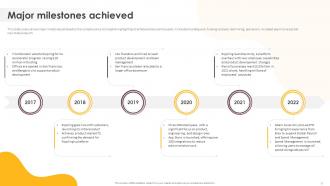
Slide 9: This slide describes various major milestones achieved by the company since its inception highlighting its achievements over the years.
Slide 10: This slide covers various testimonials from customers that use company’s workforce management software.
Slide 11: This slide contains various existing customers that use the services offered by the company.
Slide 12: This slide showcases market analysis of workforce management platform within which the company operates.
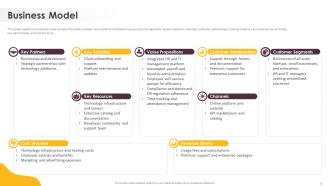
Slide 13: This slide presents the business model canvas of the SaaS company.
Slide 14: This slide presents various avenues through which company plans on earning revenue.
Slide 15: This slide showcases comparative analysis of various competitors that operate within the same industry as that of competitor.
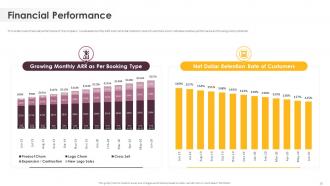
Slide 16: This slide covers financial performance of the company.
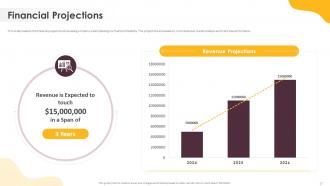
Slide 17: This slide presents the financial projections showcasing company's anticipated growth and profitability.
Slide 18: This slide mentions the various reasons why potential investors should be investing with the company.
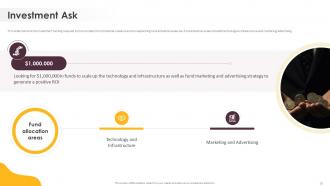
Slide 19: This slide highlights the investment funding required by the company from potential investors and corresponding fund allocation areas.
Slide 20: This slide shows how the investment capital will be utilized across key areas to maximize the company's potential.
Slide 21: This slide covers the company’s previous investor funding round details.
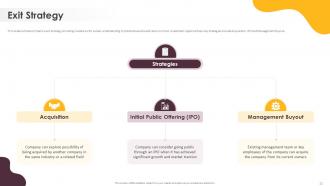
Slide 22: This slide outlines company’s exit strategy providing investors.
Slide 23: This slide covers various members that constitute a part of core team of the company.
Slide 24: This slide covers organizational structure of the company to understand authority-responsibility flow.
Slide 25: This slide provides an overview of the shareholding pattern of the company showcasing ownership structure and distribution of equity.
Slide 26: This is a Thank You slide with address, contact numbers and email address.
Slide 27: This slide shows all the icons included in the presentation.
Slide 28: This slide is titled as Additional Slides for moving forward.
Slide 29: This is Our Mission slide with related imagery and text.
Slide 30: This slide presents Roadmap with additional textboxes.
Slide 31: This is a Timeline slide. Show data related to time intervals here.
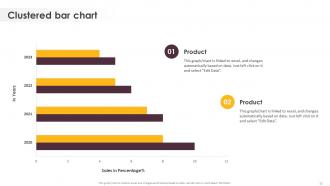
Slide 32: This slide provides Clustered Bar chart with two products comparison.
Slide 33: This slide describes Line chart with two products comparison.
Slide 34: This is a Financial slide. Show your finance related stuff here.
Slide 35: This is Our Target slide. State your targets here.
Slide 36: This slide shows Post It Notes. Post your important notes here.
Rippling Investor Funding Elevator Pitch Deck Ppt Template with all 44 slides:
Use our Rippling Investor Funding Elevator Pitch Deck Ppt Template to effectively help you save your valuable time. They are readymade to fit into any presentation structure.

























FAQs for Rippling Investor Funding Elevator Pitch
So there's a few main routes you can go. Angel investors are usually your starting point - they're just wealthy people investing their own cash and way easier to approach than the big VC firms. Seed funds are solid too. VCs manage other people's money so they're pickier, honestly. You could try crowdfunding like Kickstarter but that's more for actual products, not equity deals. Oh and obviously friends/family rounds or just bootstrapping it yourself first. I'd probably hit up angels or seed funds initially since they actually talk to new founders.
So basically, angels are individuals putting in their own cash - usually $25K-$500K range. VCs? They're managing other people's money and cutting much bigger checks, like $1M+. Angels will jump in super early when you've got nothing but an idea, honestly. They move fast since it's just them deciding. VCs are way more buttoned-up with committees and processes - they usually wait until Series A when you've got some traction. Oh, and angels are definitely more relationship-focused since it's personal. Start with angels if you're early stage - they'll actually take risks on crazy ideas.
Dude, it's mostly about four things: your team, how big the market is, your business model, and whether you've got any traction yet. The team thing is honestly massive - investors would way rather bet on solid founders in a meh market than amazing opportunity with weak people. They'll definitely want to see your numbers, who you're competing against, growth stuff like that. But here's what really matters: can you explain why RIGHT NOW is the perfect time for what you're building? And be super specific about how their cash will help you hit actual milestones. That's what gets them excited.
Honestly, it's all about telling a story that hooks them from the start. Make the problem feel real and urgent - something they can't ignore. Your solution comes next, but don't dive into every technical detail (trust me, their eyes will glaze over). Traction and market size matter way more than your fancy algorithms. Practice that pitch until you can crush it in 10 minutes flat. Time yourself - I'm serious about this. Oh, and prep for the brutal questions about competitors and money stuff. Know your numbers cold, but if you don't know something yet? Just say so. Being honest beats bullshitting every time.
Look, your business model is basically what makes or breaks your pitch. Investors need to see how you'll actually make money - not just some vague idea. Show them clear revenue streams and realistic numbers that lead to profit. I've seen so many pitches fail because they couldn't explain their model simply (seriously, if you can't explain it to your mom, it's too complicated). Back everything up with real data or at least solid assumptions. Demonstrate why people want your product and how you'll beat competitors. Growth potential matters too, but don't just throw around crazy projections without proof.
Dude, biggest thing I see is founders totally overvaluing their company - like, by a lot. Get your financials actually organized first. Then there's the whole targeting thing - people pitch VCs when they need angels, or go after investors who literally never touch their industry. Makes no sense. Due diligence prep is usually a disaster too. Oh and timelines? Most founders think they'll close in like 2 months when it's more like 6-8. Use warm intros instead of spamming cold emails - that network stuff actually works. Basically just research the hell out of both your numbers and who you're approaching before jumping in.
Dude, the whole funding game has changed so much lately. Series A rounds that were like $5M a few years ago? Now they're hitting $15-20M easily. VCs are basically writing fewer checks but way bigger ones. What's crazy is all these random investors jumping in - corporate VCs, family offices, even celebrities (which honestly feels weird to me). Getting early-stage funding is brutal now too. You need actual traction and revenue numbers before anyone will even take a meeting. My advice? Show real growth metrics when you pitch, and maybe look into revenue-based financing alongside the traditional VC stuff. It's not just about VCs anymore.
Honestly, churn rate is probably the most important one - if people aren't sticking around, nothing else matters. But investors definitely want to see your MRR, customer acquisition cost, and lifetime value. That LTV/CAC ratio needs to be above 3:1 or they'll get weird about it. Monthly active users are big too, plus retention rates with cohort analysis if you can swing it. Growth rate is obvious but still critical - shoot for 15-20% month-over-month. Oh and set up a simple dashboard now so you're not frantically pulling numbers together when meetings start happening. Trust me on that one.
Look, diverse teams actually have a real advantage with funding. Studies back this up - you're more likely to get investment and better valuations. VCs are finally catching on that different perspectives mean better problem-solving and market insights. A lot of them have diversity goals now (though honestly, progress is still pretty slow). But here's the thing - your team shows investors you can tap into way more customer segments. That's huge market potential right there. I'd definitely play up this angle in your pitch. Make it clear you get markets that homogeneous teams might totally miss.
Market conditions are huge for fundraising, honestly. When the economy's hot, investors basically throw cash at everything. But the second things get shaky? They clam up and only back their current companies. You'll notice deal volumes drop, valuations get slashed, and terms get way harsher. VCs start demanding actual revenue and solid metrics instead of just growth stories. Timing really is everything here - I've seen great startups fail to raise simply because they hit the market at the wrong moment. If you're thinking about fundraising, watch the news closely and maybe move faster if things look dicey.
Honestly, crowdfunding's way more accessible and you keep control of your company. But the catch? You're looking at smaller amounts and basically have to become a marketing machine overnight. Traditional investors write bigger checks and actually know stuff that helps - though they'll want equity and input on big moves. The crowdfunding route is kinda exhausting tbh, like running a whole campaign while trying to build your actual product. Speed-wise, investors can move fast if they're into you, maybe weeks. Crowdfunding takes 30-60 days and might flop anyway. I'd go crowdfunding first if you need under 100K, plus it proves people actually want what you're making.
Dude, you've gotta watch the dilution percentages and liquidation preferences like a hawk. Anti-dilution clauses will screw you over in down rounds - learned that one the hard way watching other founders. Board control is huge too. Oh, and those drag-along rights? They can literally force you to sell when you're not ready. Honestly the liquidation preference thing is probably the nastiest surprise - investors get their money first, so you could walk away with zilch even if the company sells. Don't even think about doing this without a solid startup lawyer. Trust me on that one.
Dude, you absolutely need an exit strategy or investors won't even look at you. They want to know how they're getting their money back - acquisition, IPO, buyback, whatever. Honestly, most of them aren't planning to hold your stock forever. Even if you end up doing something totally different later, showing you've thought about realistic exit multiples and timelines proves you get how this whole thing works. It's basically showing you understand they need liquidity eventually. Do some homework on what's normal in your industry before you pitch though.
Dude, everything's gotta have AI slapped on it now - kinda annoying tbh. Beyond that circus, sustainability and ESG stuff is huge, especially energy/manufacturing. Healthcare's crushing it with personalized medicine and digital platforms. The real shift though? Investors want to see actual money coming in way faster than before. That whole "burn cash for growth" thing is toast. Oh, and if you're pitching anything, better show how you'll hit revenue in under 18 months or they'll tune out fast.
Start with people you already know - way better than random cold emails. Map out your connections: old coworkers, mentors, even customers from funded startups. Most people actually enjoy making intros when they believe in your idea (weird but true). Ask for warm introductions, not money directly. Investors trust people they know way more than strangers. Don't forget your co-founder's network too - they might know someone perfect you've never thought of. Oh, and write the intro email yourself to make it super easy for them.
-
I am not the best at presentations but using SlideTeam’s PPT template made it easier for me. Thank you SlideTeam!
-
Well-designed and informative templates. Absolutely brilliant!