


Roadmap for process flow for business concept proposal ppt styles deck
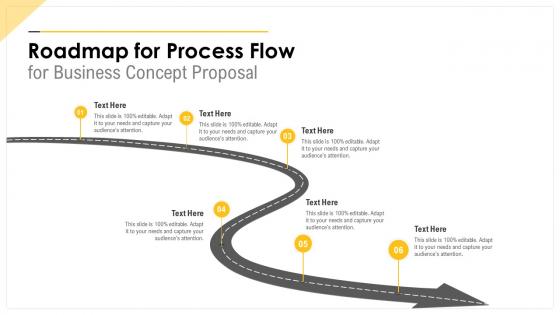




Try Before you Buy Download Free Sample Product
 Impress Your
 Audience
 100%
100% Editable
 Save Hours
 of Time


Our Roadmap For Process Flow For Business Concept Proposal Ppt Styles Deck are topically designed to provide an attractive backdrop to any subject. Use them to look like a presentation pro.
People who downloaded this PowerPoint presentation also viewed the following :
Roadmap for process flow for business concept proposal ppt styles deck with all 9 slides:
Use our Roadmap For Process Flow For Business Concept Proposal Ppt Styles Deck to effectively help you save your valuable time. They are readymade to fit into any presentation structure.








FAQs for Roadmap for process flow for business concept proposal
You'll want to map out what you're doing now first - even the messy stuff, because pretending problems don't exist won't help anyone. Then sketch your dream process. Gap analysis comes next to see what's broken or missing between the two. Create a timeline with actual milestones, not just "we'll figure it out." Oh, and get people on board early - change management is huge. My advice? Pick your most annoying process to start with. Quick wins there will give you momentum when you tackle the bigger headaches later. Don't try to boil the ocean on day one.
Honestly, good process flows are total game-changers for avoiding those awkward "uh... now what?" moments that destroy momentum. Everyone knows exactly what their next step is and who they're handing things off to. New hires don't have to play detective trying to figure out how stuff actually gets done around here. You'll catch bottlenecks way faster too. My old boss used to say processes living in people's heads are basically useless - he wasn't wrong. Start with whatever process drives the most revenue. I bet you'll find at least three steps that make zero sense.
Honestly, Lucidchart is my go-to for business process stuff. Super clean interface and the team collaboration actually works well. Visio's solid too if you're already stuck in the Microsoft ecosystem. For free options - draw.io is decent but feels kinda dated. Miro's amazing though, especially when you're in those messy workshop sessions trying to map everything out with a bunch of people talking over each other. I'd just grab Lucidchart's free trial first. Most people pick it up pretty quick and don't look back.
Dude, it's basically like giving everyone the same map so nobody gets lost. You know how departments always blame each other when stuff goes sideways? This fixes that. Everyone can see exactly where work gets passed around and who owns what piece. No more "wait, I thought you were doing that" disasters. Bottlenecks become super obvious before they blow up. The coordination thing becomes way smoother too. Honestly, just pick one process that touches multiple teams and map it out first. You'll probably find gaps you didn't even know existed - it's kind of wild.
Dude, you absolutely have to get stakeholders involved - they're doing the actual work every day while you're just guessing from the sidelines. They'll spot stuff you'd totally miss and point out where things get messy. Plus, people are way more willing to go along with changes when they helped build the plan, you know? Different people see different pieces of the puzzle too. Oh, and don't just talk to the managers - get input from everyone actually in the weeds doing the day-to-day stuff. Those are the people who really know where things break down.
Start by mapping your whole process - seriously, every single step. Then dig into the data to see where tasks are dragging or piling up. Your team will be brutally honest about where things get stuck (they've probably been complaining about it for months anyway). Handoffs between departments are usually disaster zones. Same with approval processes and anything waiting on outside vendors. Once you find these mess-ups, measure the actual time lost. That way you can fix the worst ones first instead of guessing.
Focus on cycle time first - how long each stage actually takes. Then look at conversion rates between stages and where stuff gets stuck. Customer satisfaction is pretty critical too since smoother processes usually make people happier. Honestly, don't go overboard with metrics or you'll drown in data instead of fixing anything. Employee adoption rates matter a lot - if your team isn't using the new process, it's pointless. Error reduction's good to track too. My advice? Pick 3-4 metrics that actually connect to what you're trying to achieve business-wise. Get those working well first, then you can always add more later.
Look, quarterly reviews are the bare minimum - but monthly check-ins work way better. Trust me on this one. When big stuff happens (new tech, priorities shifting, whatever), update it right away instead of waiting around. Your roadmap should actually help you make decisions, not just sit there looking pretty in some folder nobody opens. Schedule those meetings with your team now and bring real numbers - what's crushing it, what's totally bombing. Oh, and make sure people actually show up. Nothing worse than prepping for a roadmap review and having half your stakeholders bail.
Don't try mapping every tiny detail from day one - you'll never finish. Hit the big process steps first, then get granular later. Make sure you're talking to the people actually doing this stuff daily, not just managers. They know where things really break down. I see people skip this all the time and wonder why their roadmap doesn't work. Build in checkpoints to adjust as things shift (and they will). Oh, and stop trying to make it look Instagram-perfect before testing it. Rough draft first, get your team's input, then polish. Real feedback beats theoretical perfection every time.
Honestly, visual workflows are game-changers. Your team can actually *see* who's doing what instead of slogging through boring documentation. Flowcharts and process maps make bottlenecks super obvious - like, you'll wonder how you missed them before. They're also great for catching those annoying handoff points where stuff always gets dropped. I'd start simple with Lucidchart or even sticky notes (old school but it works). The difference is pretty wild once you see everything laid out visually instead of buried in text.
You've gotta get your team involved in designing the actual process, not just dump changes on them later. Nobody wants to feel like stuff is happening TO them, you know? Run workshops where they can map out what's currently driving them crazy and brainstorm fixes together. Be super honest about WHY you're making changes - people aren't stupid, they can handle the real reasons. Oh, and definitely address their concerns head-on. Don't BS about potential problems either. Start with whoever's actually excited about it first. Those early wins will help convince the skeptics way better than any PowerPoint ever could.
Honestly, automation is like having a really good assistant that never gets tired. It takes care of all the boring, repetitive stuff so your team can focus on the actual important work. Most companies use it for everything - collecting data, sending notifications, making basic decisions based on rules you set up. The smart ones create workflows that can handle different scenarios automatically, which is pretty neat. My advice? Look at what's eating up the most time right now and start there. Don't try to automate everything at once - that's a recipe for headaches.
Honestly, get your stakeholders on board first - fighting pushback later is such a nightmare. Map everything out before you touch anything, then test with just a few people to work out the kinks. Keep everyone in the loop about what's happening and when. Document as you go (boring but you'll thank yourself later), make sure your team actually knows what they're doing, and have a backup plan ready. Oh, and don't do it all at once - that's just asking for chaos. Roll it out bit by bit instead.
Map out your customer journey first - figure out where people actually have opinions worth sharing. Then drop in feedback points that make sense, like surveys after big moments or quick ratings when they finish something. Don't be annoying about it though, nobody wants to rate their experience every two seconds. I'd start with maybe one or two spots and see how it goes. Use what people tell you to fix the stuff that keeps breaking their flow. Oh, and those regular check-ins during onboarding? Those actually work pretty well if you're not being weird about it.
Look, if your business processes aren't actually pushing you toward your main goals, you're just doing busy work really efficiently. Not great. You want workflows that directly support what you're trying to achieve - better resource allocation, teams know what actually matters, and you can track real progress. Stakeholders get it too when they see how daily stuff connects to the big wins. Honestly, most companies skip this step and wonder why they're working so hard but not getting anywhere. Start simple: grab your top 3 goals and map your current processes against them. You'll spot the gaps pretty quick.
-
Unique research projects to present in meeting.
-
Unique research projects to present in meeting.
-
Unique design & color.
-
Qualitative and comprehensive slides.
-
Excellent template with unique design.