


Sales and logistics order process flow




Try Before you Buy Download Free Sample Product
 Impress Your
 Audience
 100%
100% Editable
 Save Hours
 of Time


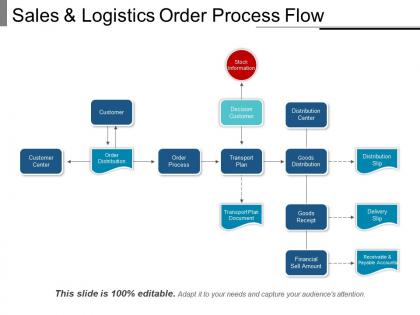
Move the finished product from the point of manufacture to the point of consumption by using Sales And Logistics Order Process Flow. With the help of this supply chain optimization PPT presentation template, you can determine the functional areas of SCM such as purchasing, manufacturing, inventory management, warehousing, demand planning, customer service, and transportation. Use the supply chain management PowerPoint graphic to design, plan, execute, control, and monitor the activities and production of the supply chain. Take the assistance of the professionally designed inventory control management PPT slideshow to depict the cycle of supply chain optimization starting from raw material, demand signal, transport plan document, delivery slip, order distribution, customer engagement, and then product flow. Included here are various high-grade icons with which you can make your presentation precise and knowledgable. Hence, calculate the overall revenue of your organization and forecast the future activities by downloading our ready-to-use demand chain management PowerPoint theme.
People who downloaded this PowerPoint presentation also viewed the following :
Sales and logistics order process flow with all 5 slides:
Create conditions for ending discord with our Sales And Logistics Order Process Flow. Identify factors causing bitterness.




FAQs for Sales and logistics
You'll want to nail four main things: inventory management, order processing, picking/packing, and shipping coordination. Honestly, accurate inventory is huge - customers will never forgive you for selling stuff you don't have. Order processing should automatically send orders to the right warehouse. Here's where most places screw up though - the picking and packing stage. Seriously invest in training there, it's worth it. For shipping, get multiple carrier options and tracking that actually works. Oh, and don't try fixing everything at once. Just start with whatever's giving you the biggest headache right now.
Look, fulfillment is basically where you either win or lose customers. Fast, accurate shipping builds trust - people come back when they know you won't screw up their order. But one wrong item or crazy delay? You're done. I've seen too many businesses tank because they couldn't get basics right. Customers judge your entire company based on how smooth delivery goes. The retention numbers prove it too - companies that nail this stuff keep way more customers long-term. Get your fulfillment process solid and loyalty follows.
Honestly, AI and machine learning are crushing it right now - they'll optimize your picking routes and predict demand before you even know you need it. Those warehouse robots are pretty wild too, like smart Roombas but actually useful. IoT sensors give you real-time data on everything, which is clutch. Cloud-based WMS systems tie into your whole setup seamlessly. The crazy part? This stuff isn't some far-off fantasy anymore. Companies are rolling it out today and actually making money from it. My advice? Pick one thing and start there - don't try to do everything at once.
Dude, most businesses totally bomb at demand forecasting and safety stock - that's your starting point. Look at your actual sales history instead of just winging it. ABC analysis is clutch for figuring out which products deserve your attention (hint: the expensive, fast-moving ones). Spreadsheets are honestly fine when you're small, but you'll want real inventory software eventually. Auto reorder points will save your sanity - no more scrambling when stuff runs out. The whole game is balancing quick order fulfillment without drowning in cash tied up in products that just sit there collecting dust.
Honestly, the big three are gonna be inventory miscounts, super slow picking, and shipping that just drags on forever. They're all linked too - one screws up and suddenly everything's a mess. Real-time tracking helps with the inventory stuff, plus doing regular cycle counts. Zone picking is pretty solid for speeding things up, or you can batch orders together. Shipping delays? Usually it's because you're stuck with crappy carriers or don't have backups. I'd get a few different shipping partners lined up and try to negotiate better deals. Oh, and figure out where your biggest bottleneck actually is first - no point fixing the wrong thing.
Honestly, B2B fulfillment is a whole different beast. You're juggling bulk orders, custom pricing deals, and these endless approval chains - nothing like the one-click stuff consumers expect. Business customers need specific delivery windows, detailed invoicing, sometimes even that fancy white-glove treatment. Speed matters way less than getting everything exactly right. Amazon trained B2C shoppers to want instant gratification, but B2B clients? They care more about reliability and accuracy. Plus there's so much more paperwork - purchase orders, credit terms, all that fun stuff. It's really about relationship management versus just moving products quickly.
So basically, you'll want to start tracking your current metrics first - that's your foundation. Analytics helps you catch bottlenecks and actually predict issues before they blow up. Track inventory, shipping times, all that stuff. You'll start seeing patterns emerge - like certain products that always get stuck or specific warehouse areas that are just... slow. The predictive side is where things get interesting though. You can spot demand spikes coming and adjust your staffing ahead of time instead of scrambling. Honestly, once you dig into the data, you'd be surprised how much insight is just sitting there waiting.
Dude, automation seriously changes the game for order fulfillment. Robots and automated storage grab stuff way faster than people can - it's honestly pretty wild to watch. Real-time inventory tracking means no more awkward "sorry, we're actually sold out" calls to customers. Automated packing cuts down on shipping the wrong items, which saves you so much headache later. The whole shipping label thing happens automatically too, which is clutch when you're swamped. My advice? Figure out what's slowing you down most first, then tackle that specific problem. Don't try to automate everything at once or you'll go crazy.
Honestly, your shipping choices are what make or break delivery speed. Standard ground? You're stuck at 3-7 days no matter how fast your warehouse moves. But location is huge too - I've seen companies offer next-day shipping then wonder why orders still take forever because their fulfillment center is in the middle of nowhere. Carrier pickup schedules matter more than people think. The real trick is picking shipping options that actually match what you can deliver, not just what looks impressive to customers.
Honestly, start with your packaging - that's where you'll see the biggest wins. Customers hate getting tiny items in massive boxes (and it's costing you a fortune). Most companies can cut packaging waste by like 20-30% just by using the right box sizes and ditching unnecessary plastic padding. Shipping's another big one. Ground instead of air whenever you can swing it, and try bundling orders together. Your warehouse setup matters too - better pick routes save energy, and renewable power helps if you're thinking long-term. The packaging audit is probably your easiest starting point though.
Honestly, get your inventory tracking automated first - manually doing that stuff is pure hell once orders pick up. A 3PL might be worth looking into if you're hitting steady volume, they handle the warehouse headaches for you. Shipping rates are usually negotiable with carriers too, which helps. Oh, and regional fulfillment centers can cut down delivery times if that matters for your customers. The tricky part is timing all this before you're completely swamped. I'd start researching now even if you don't need it immediately - way easier than scrambling later when you're buried.
Track your order accuracy first - that's make or break honestly. One wrong item and customers lose their minds. Also watch fulfillment cycle time (order to shipment), on-time delivery rates, and shipping costs per order. Inventory turnover matters too, plus customer satisfaction scores. Returns rate is sneaky important since it usually means something's broken earlier in the process. Oh, and measure pick-and-pack errors like crazy - they'll kill you. Time everything from placement to delivery. Start there and you'll catch problems before they snowball.
Honestly, good order fulfillment is like a domino effect for cutting costs. Start by looking at your warehouse setup - better picking routes and some automation can seriously slash labor expenses. Your shipping costs will drop too when you nail the packaging sizes and pick smarter carriers. Here's the thing though: accurate demand forecasting is where you'll see the biggest wins because you're not stuck with dead inventory eating up space. Returns are expensive as hell, so focus on getting orders right the first time. Speed matters, but don't sacrifice accuracy for it. I'd audit your whole process first to see where you're bleeding money, then fix the worst offenders.
So order fulfillment is basically the final step in your supply chain - you know, the picking, packing, shipping stuff that happens after someone hits "buy now." Supply chain management is way broader though. It's everything from getting raw materials to delivering finished products. But here's where it gets tricky - they're totally linked. Your fulfillment can't run smoothly if there are problems earlier in the chain. Like if you're dealing with inventory shortages or delayed shipments, your whole fulfillment process falls apart. That's why you can't really optimize one without thinking about the other parts of the flow.
Dude, e-commerce is making everyone scramble to keep up. Customers want Amazon-speed shipping from literally every business now, which honestly sucks for smaller companies. You've got to nail faster delivery, handle way more returns, and somehow make your inventory visible across all channels. People will order online then return stuff in-store - it's a mess to manage. The smart move? Automate what you can afford to and find a decent 3PL partner for the rest. Don't try to build everything yourself unless you're already pretty big.
-
Great product with highly impressive and engaging designs.
-
Much better than the original! Thanks for the quick turnaround.