


Sales target achievement arrows flat powerpoint design




Try Before you Buy Download Free Sample Product
 Impress Your
 Audience
 100%
100% Editable
 Save Hours
 of Time


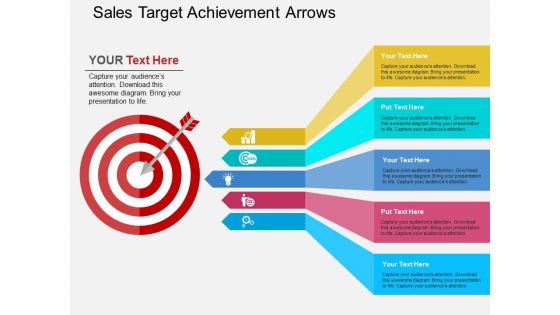
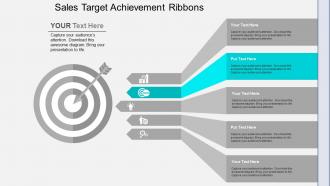
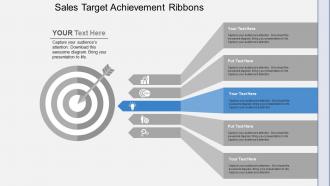
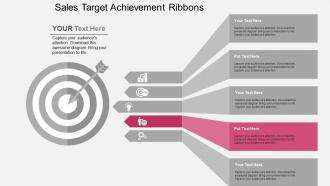
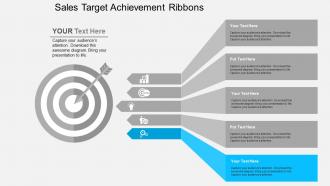
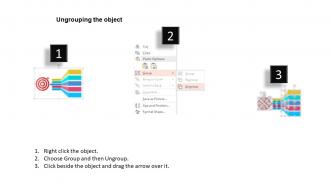
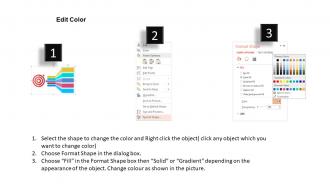
Cut short your presentation creation time and provide a whole new makeover to your presentation with our sales target achievement arrows flat PowerPoint design. Our sales strategy PPT presentation emphasizes on how you can hit the right points to attain the sale goals. The use of dart board with an arrow hitting the centre along with multiple unidirectional multi-color text filled arrows make the sales slide design background both attractive and informational. The action plan to achieve sales target is crucial for the success of any business model. Sales people and sales managers can make use of this sales strategy plan activity PPT PowerPoint presentation to communicate and marshal the team efforts towards the attainment of corporate goals. Through this sales target bases analysis PPT model you can decipher knowledge about new product introduction, marketing, sales resource capability, group leadership, supply chain and finance as the factors which have an impact on the overall performance. Therefore for clear and effective communication download this target specific sales PPT and manage the performance of yours as well as your organization. Cover for any delays with our Sales Target Achievement Arrows Flat Powerpoint Design. Generate action to counter it's effect.
People who downloaded this PowerPoint presentation also viewed the following :
Sales target achievement arrows flat powerpoint design with all 10 slides:
Conscientious minds are behind our Sales Target Achievement Arrows Flat Powerpoint Design. They will live up to their promise to benefit you.

FAQs for Sales target achievement arrows
Honestly, it comes down to really knowing your customers inside and out. What keeps them up at night? How do they actually make buying decisions? Your competitors probably don't dig this deep. Pipeline management is critical too - can't emphasize that enough. Make sure your value prop stands out from all the noise out there. Oh, and relationships beat pushy sales tactics every single time. I've seen too many reps focus on features instead of connection. Start by looking at your best customers and figure out what they have in common. That's your goldmine right there.
Honestly, good teamwork just makes everyone better at what they do. You cover each other's weak spots while your strengths get amplified. Knowledge sharing is huge - when someone finds a technique that works, everyone benefits. Those rough sales days hit different when you've got people to vent to or brainstorm with. Oh, and tag-teaming big accounts? That's where you really see results. Multiple relationships and perspectives close deals that would've been impossible solo. I'd say start with weekly team sessions where people actually share what's working for them.
Dude, feedback is literally your cheat code for sales. You'll see exactly which objections keep popping up and why deals are dying. People buying your stuff know it better than you do half the time - sounds obvious but we forget that. Ask prospects straight up what they think, then actually listen. Short surveys work great too. Use what they tell you to fix your pitch and focus on features they actually want. I started doing this last year and it's crazy how much clearer everything becomes. Simple feedback loop = better qualifying and way more closed deals.
Dude, the difference is night and day. Real-time dashboards show you exactly where every deal sits instead of guessing from outdated spreadsheets. Analytics can actually predict which opportunities will close - sounds fancy but it works. You'll catch problems way earlier and pivot mid-quarter instead of scrambling at the end. Automated reporting saves so much time too, honestly wish I'd set it up sooner. The CRM tracks daily progress against targets automatically. No more manual number crunching every week. Start with the basics and you'll see why everyone's obsessed with having instant visibility into what's moving the needle.
Honestly, three things make or break it: keep your pipeline fat (like 3x your quota because most deals die), actually connect with people instead of just selling at them, and obsess over your numbers. I used to suck at the relationship part - learned that lesson the expensive way! Your metrics will tell you everything though. Email opens tanking? Switch up those subject lines. Demos falling flat? Time to rework your pitch. Don't wait till month-end to figure out what's broken - check your progress every week and pivot fast. The data doesn't lie.
Honestly, good incentives can totally change your sales game. People are naturally competitive, so give them something specific to aim for instead of vague "do better" goals. Just don't go crazy with it - I've watched teams completely manipulate systems when rewards are too intense. Money's great, but throw in some other perks too. Short contests, recognition, whatever keeps it fresh. The real trick? Make sure you're rewarding exactly what you want more of. Sounds obvious but you'd be surprised how many companies mess this up and wonder why their numbers don't improve.
Start with last year's numbers and bump them up 10-15%. That's your baseline. But don't just slap percentages on everything - I made that mistake once and my team was miserable. Check what's actually happening in the market and if you're adding new people or losing territory. Seasonal stuff matters too, obviously. Here's the thing though - your reps need to feel like it's tough but doable. Nobody wants to chase impossible numbers for months. Get them involved in setting these targets if you can. They'll work way harder when they helped create the goals instead of having some random number dropped on them.
So buyer behavior is basically figuring out when and why people actually buy stuff - saves you from chasing dead-end leads forever. Track your current deals first. What made those prospects urgent? Who's really calling the shots? Once you nail down their pain points and timeline, you can hit them with the right message at the perfect moment instead of some cookie-cutter pitch. Honestly learned this lesson the hard way last quarter when I kept pushing prospects who weren't even close to ready. Now I just focus on the patterns - way less frustrating.
Honestly, the worst thing is chasing phantom deals that were never real to begin with. Poor pipeline management will destroy your quarter faster than anything else. You'll waste weeks on "prospects" who can't even buy your stuff if you don't qualify them properly - learned that one the hard way! Weekly conversion tracking beats monthly every time. Oh, and here's what's crazy: most reps obsess over new leads while ignoring their existing accounts. Those current customers? Way easier to upsell than starting from scratch. Get yourself a solid qualification system like BANT and actually stick to regular pipeline reviews. Trust me on this.
Honestly, I'd check those targets every quarter using real market data - not just hunches. We made that mistake during a downturn and kept pushing unrealistic numbers. Team morale was absolutely brutal. Check what competitors are doing, how customer demand is shifting, any industry factors. If you're consistently seeing market headwinds, drop targets maybe 10-20% but throw in stretch goals for when things bounce back. The trick is being proactive instead of scrambling later. Document why you're making changes so leadership gets it. Oh, and start tracking those early warning indicators now - you'll spot trends way before they wreck your numbers.
Honestly, the key is chopping those massive goals into tiny daily wins. I use a basic spreadsheet to track everything - sounds boring but seeing those checkmarks pile up is surprisingly addictive. Don't wait until you're 100% done to celebrate either. That's torture. Buy yourself coffee when you hit week one, whatever keeps you going. Oh, and grab someone from your team to bug you about progress regularly. Accountability partners are clutch. Maybe start mapping out what your next month looks like in smaller chunks?
Honestly, training is huge for hitting sales numbers. Your reps need to know their stuff inside and out. I've watched people go from barely making quota to absolutely killing it just because they finally understood the product and could handle objections properly. Don't waste time on those generic sales courses though - they're pretty useless. Focus on the real deal: what your customers actually struggle with, how your product fixes those problems, and practice the scenarios your team deals with every day. It's crazy how much this stuff matters.
Honestly, people just buy from whoever they trust most. Listen to what your customers are actually saying - like really listen, don't just wait for your turn to talk. When you understand their problems first, it's way easier to show how your product fixes things. Good communication prevents those annoying misunderstandings that blow up deals later too. Oh and here's the thing - customers can tell when you genuinely care versus when you're just trying to hit your quota. Ask better questions upfront instead of jumping straight into your pitch. Trust me, they'll feel heard and you'll close way more deals.
Track the obvious stuff first - sales vs targets, conversion rates, deal size. But here's what most people miss: you need the activity metrics too. Calls made, meetings booked, how fast deals move through your pipeline. These show if your goals are even realistic or if everyone's just busy being busy, you know? Revenue per rep is huge. So is seeing quota attainment across your whole team - patterns jump out fast. I always tell people to watch leading indicators with the lagging ones. That way you can fix things mid-quarter instead of just figuring out what went wrong after.
Honestly, you've gotta make this stuff happen weekly, not just during those dreaded quarterly reviews. Get your reps together for check-ins where they actually talk about their pipeline and roadblocks. Make the numbers visible to everyone - transparency works way better than keeping data locked away with management. I've watched teams crush it when they do peer accountability right. Instead of cutthroat competition, have people actually help each other hit goals. Celebrate wins loud and coach through the misses fast (without being a jerk about it). Start simple with one weekly huddle focused on progress.
-
Appreciate the research and its presentable format.
-
Out of the box and creative design.