


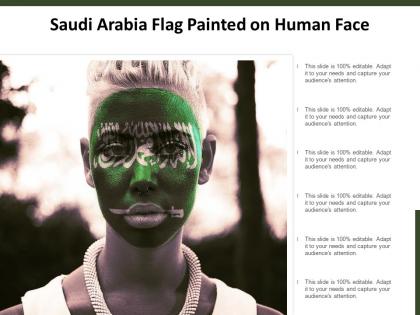
Saudi arabia flag painted on human face




Try Before you Buy Download Free Sample Product
 Impress Your
 Audience
 100%
100% Editable
 Save Hours
 of Time


Our Saudi Arabia Flag Painted On Human Face are topically designed to provide an attractive backdrop to any subject. Use them to look like a presentation pro.
People who downloaded this PowerPoint presentation also viewed the following :
Saudi arabia flag painted on human face with all 2 slides:
Use our Saudi Arabia Flag Painted On Human Face to effectively help you save your valuable time. They are readymade to fit into any presentation structure.

FAQs for Saudi arabia flag painted
Traditional Saudi Arabian face paint designs incorporate geometric patterns inspired by Islamic art, calligraphy motifs, henna-style florals, tribal symbols, and Arabian cultural elements like palm trees or crescents. These designs enable cultural expression at festivals, weddings, and national celebrations, with many artists finding that combining traditional motifs with modern techniques delivers authentic yet contemporary looks that honor heritage while appealing to diverse audiences.
Face painting in Saudi Arabia varies significantly by region, with the Eastern Province emphasizing pearl and ocean motifs, Najd featuring traditional geometric patterns, and Hejaz incorporating pilgrimage-inspired designs reflecting Mecca's cultural diversity. These regional variations enhance cultural festivals, wedding celebrations, and heritage events, with many communities finding that localized face painting traditions strengthen regional identity while attracting cultural tourism.
Colors in Saudi Arabian face paint carry deep cultural significance, representing tribal identity, social status, ceremonial purposes, spiritual protection, and regional heritage through traditional patterns and symbolic meanings. These artistic expressions connect communities to ancestral traditions while enhancing cultural celebrations, with many families finding that specific color combinations preserve historical narratives and strengthen cultural identity across generations.
Face paint in Saudi Arabian weddings and celebrations enhances traditional festivities through intricate henna designs on hands and feet, bold eye makeup with kohl, and decorative patterns that reflect regional heritage. These artistic applications enable families to honor cultural traditions while creating memorable experiences, with many finding that such personalized touches strengthen community bonds and deliver authentic celebration atmospheres that distinguish their special occasions.
Traditional Saudi Arabian face paint utilizes natural materials including kohl (antimony sulfide), henna for reddish-brown pigments, turmeric for golden yellows, indigo for deep blues, and various clay minerals for earth tones. These organic ingredients enable cultural expression while maintaining skin safety, with many communities finding that traditional preparation methods deliver authentic colors and symbolic significance for ceremonies, festivals, and cultural celebrations across the Kingdom.
Modern Saudi Arabia influences traditional face painting through cultural preservation initiatives, tourism promotion, and artistic modernization programs that blend heritage with contemporary expression. Government-supported cultural festivals, art institutions, and heritage centers are revitalizing these practices by incorporating modern materials, techniques, and platforms, while maintaining traditional significance, ultimately creating new opportunities for artisans and cultural practitioners.
Face paint in Saudi Arabian folklore serves ceremonial, narrative, and cultural preservation roles, marking character identity in traditional storytelling, enhancing ritual significance during cultural celebrations, and connecting performers to ancestral traditions. Through these artistic expressions, storytellers and performers convey moral lessons, historical tales, and cultural values, while audiences experience deeper engagement with their heritage, ultimately strengthening community bonds and cultural continuity.
Face painting in Saudi Arabian culture enables identity expression through traditional tribal markings, religious celebrations, and cultural festivities that connect individuals to their heritage and community belonging. These artistic practices allow Saudis to showcase regional origins, family lineages, and spiritual devotion during weddings, Eid celebrations, and national events, ultimately strengthening cultural continuity while fostering collective identity in an increasingly globalized society.
Saudi Arabia's National Day celebrations, Riyadh Season entertainment festival, and Formula 1 Saudi Arabian Grand Prix prominently feature face painting activities. These events showcase patriotic designs with green and white colors, cultural motifs, and sports team symbols, while entertainment districts and cultural festivals increasingly incorporate face painting as family-friendly attractions, ultimately enhancing visitor experiences and cultural engagement.
Face painting in Saudi Arabia reflects generational divides, with younger Saudis embracing it for festivals, sports events, and cultural celebrations, while older generations often view it through traditional cultural and religious perspectives. This generational shift demonstrates evolving cultural expressions within Saudi society, with many families finding that face painting during national celebrations and international sporting events bridges these perspectives, ultimately enhancing community participation and cultural pride.
Contemporary Saudi Arabian artists like Lojain Omran and beauty influencers such as Fouz Al Fahad have gained recognition for incorporating traditional and modern face painting techniques into their creative work. These artists blend cultural heritage with contemporary aesthetics, showcasing face paint in fashion shows, social media content, and artistic exhibitions, ultimately delivering enhanced cultural representation and creative innovation.
Ethical considerations include animal welfare concerns, cruelty-free sourcing practices, environmental sustainability, cultural sensitivity, and consumer transparency requirements. While many Saudi Arabian retailers and event organizers are increasingly adopting plant-based and synthetic alternatives, the shift presents both compliance challenges and competitive opportunities, with many businesses finding that ethical sourcing enhances brand reputation and customer loyalty.
Traditional Saudi Arabian face paint techniques serve as foundational elements for contemporary artists, influencing color palettes, geometric patterns, and cultural symbolism in modern artistic expressions. These ancestral methods enhance today's art by preserving cultural authenticity, inspiring innovative applications across galleries and cultural institutions, and ultimately delivering a strategic combination of heritage preservation and artistic evolution.
Face paint artists in Saudi Arabia encounter challenges including limited formal training programs, reduced intergenerational knowledge transfer, competition from modern cosmetic alternatives, sourcing traditional materials, and adapting ancient methods for contemporary events. These artists increasingly find that balancing cultural authenticity with modern client expectations, evolving safety standards, and commercial viability requires strategic adaptation, ultimately delivering enhanced cultural preservation while meeting today's artistic and business demands.
Societal perceptions of beauty in Saudi Arabia influence face paint through cultural modesty values, religious considerations, and evolving fashion trends that emphasize natural enhancement over dramatic transformation. With increasing cultural openness, many Saudi women find that subtle, sophisticated face paint applications align with contemporary beauty standards while respecting traditional values, ultimately delivering personal expression within culturally appropriate frameworks.
-
Excellent products for quick understanding.
-
Unique research projects to present in meeting.