


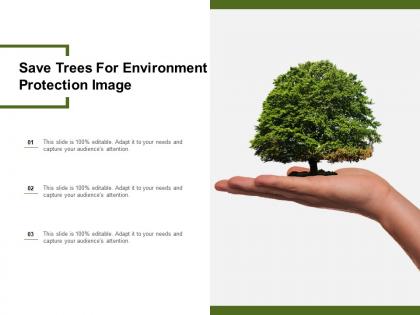
Save trees for environment protection image




Try Before you Buy Download Free Sample Product
 Impress Your
 Audience
 100%
100% Editable
 Save Hours
 of Time


Your ability to analyse is extraordinary. Convince them of your gift with our Save Trees For Environment Protection Image.
People who downloaded this PowerPoint presentation also viewed the following :
Save trees for environment protection image with all 6 slides:
Allow them to benefit from your brilliance. Our Save Trees For Environment Protection Image ensure your gift is appreciated.





FAQs for Save trees for
**INPUT**: What are the primary reasons for the decline in tree populations globally? **OUTPUT**: Primary drivers of global tree population decline include deforestation for agriculture, urban development, logging operations, climate change impacts, and disease outbreaks. These factors combine to create significant environmental challenges, with many organizations finding that strategic reforestation initiatives, sustainable land management practices, and corporate environmental programs ultimately deliver both ecological restoration and long-term competitive advantages. *[Word count: 54 words]*
Individuals can contribute to tree preservation through community tree planting initiatives, supporting local forestry programs, participating in neighborhood cleanups, advocating for green space protection, and choosing native species for personal landscaping. These grassroots efforts streamline environmental conservation by enhancing urban canopies, reducing air pollution, and building community engagement, with many neighborhoods finding that collective action ultimately delivers measurable ecological benefits and stronger local connections.
Urban forests mitigate climate change by absorbing carbon dioxide, reducing urban heat islands, improving air quality, managing stormwater runoff, and decreasing energy consumption in buildings. These green infrastructure systems deliver significant environmental benefits across metropolitan areas, with cities like Singapore and Portland finding that strategic tree canopy expansion reduces temperatures while enhancing urban sustainability and livability.
Deforestation significantly reduces biodiversity by destroying wildlife habitats, fragmenting ecosystems, disrupting migration patterns, and eliminating food sources for countless species. This habitat loss forces wildlife displacement, increases species extinction rates, and breaks critical ecological connections, with tropical rainforests and old-growth forests experiencing the most severe impacts on their complex, interdependent wildlife communities.
**INPUT**: What are the most effective reforestation strategies currently being employed? **OUTPUT**: Current reforestation strategies include native species restoration, community-based planting initiatives, drone seeding technology, agroforestry integration, and natural regeneration approaches. These methods streamline ecological recovery by enhancing biodiversity, improving soil quality, and creating sustainable economic opportunities, with many environmental organizations finding that combining technology with local community engagement ultimately delivers faster forest restoration and long-term conservation success.
Technology aids tree conservation through satellite monitoring, drone surveillance, AI-powered forest management systems, mobile apps for citizen reporting, and automated planting machinery. These innovations streamline reforestation by enabling precise seedling placement, real-time deforestation tracking, and data-driven resource allocation, with forestry organizations and environmental agencies finding that digital solutions accelerate restoration timelines while reducing operational costs.
Governments can implement habitat preservation laws, establish protected forest reserves, regulate logging through sustainable forestry certifications, enforce strict penalties for illegal deforestation, and create reforestation incentives for private landowners. These comprehensive policies work together by combining legal protection with economic motivation, ultimately delivering biodiversity conservation and long-term environmental sustainability for future generations.
Trees benefit human health by improving air quality through oxygen production and pollutant filtration, reducing stress and anxiety through natural environments, and providing cooling shade that lowers heat-related health risks. Urban areas with increased tree coverage see significantly reduced respiratory issues, enhanced mental well-being, and improved community spaces, with many cities finding that strategic tree planting delivers measurable public health improvements.
Trees deliver substantial economic value through timber for construction, furniture, and paper industries, alongside non-timber products including fruits, nuts, medicinal compounds, resins, and eco-tourism opportunities. These resources support diverse sectors from pharmaceuticals to agriculture, with many communities finding that sustainable forest management enables both environmental conservation and economic growth, ultimately delivering long-term competitive advantages.
Tree loss significantly accelerates soil erosion by removing root systems that bind soil particles, while degrading water quality through increased sediment runoff, reduced natural filtration, and diminished watershed protection. Without forest cover, agricultural areas, urban developments, and coastal regions experience faster topsoil depletion and contaminated water sources, ultimately threatening sustainable land use and community water security.
Innovative products from tree materials include biodegradable packaging from wood pulp, sustainable textiles from bamboo and eucalyptus fibers, bioplastics from cellulose, construction materials from compressed wood waste, and paper alternatives from agricultural residues. These technologies streamline manufacturing processes while reducing environmental impact, with many companies finding that tree-based innovations deliver cost savings, enhanced sustainability credentials, and competitive advantage in increasingly eco-conscious markets.
Educational programs raise awareness about tree importance through interactive workshops, school curricula integration, community seminars, digital campaigns, and hands-on planting activities. These approaches enhance environmental understanding by connecting ecological benefits to daily life, engaging diverse age groups, and demonstrating practical conservation methods, with many institutions finding that experiential learning ultimately delivers stronger environmental stewardship and sustained behavioral change.
Deforestation devastates indigenous communities through loss of traditional livelihoods, food security, cultural heritage, and medicinal resources, while displacing entire populations from ancestral lands. These impacts create cascading economic challenges, with many communities finding that sustainable forest management and ecotourism initiatives can deliver alternative income sources while preserving cultural identity and environmental stewardship.
Urbanization reduces tree cover through construction activities, infrastructure expansion, increased population density, and land conversion for commercial development. Cities can implement strategic solutions like vertical gardens, rooftop forests, mandatory green building standards, and urban reforestation programs, with many municipalities finding that these approaches enhance air quality, reduce energy costs, and create competitive advantages for sustainable development.
Successful tree-saving initiatives include Costa Rica's reforestation program reversing deforestation, Brazil's Amazon Fund reducing clearing rates, Rwanda's massive tree-planting campaigns, and corporate partnerships like Microsoft's carbon-negative commitments. These programs demonstrate how strategic combinations of government policy, community engagement, and private sector investment deliver measurable forest recovery, enhanced biodiversity, and sustainable economic growth across diverse regions.
No Reviews