

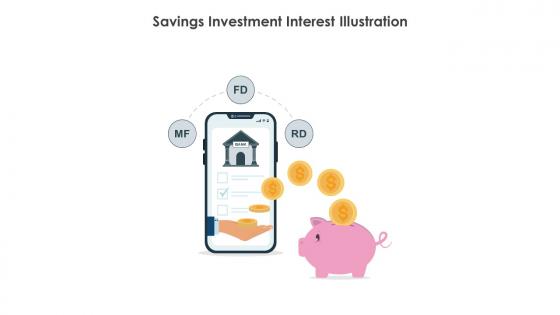
Savings Investment Interest Illustration




Try Before you Buy Download Free Sample Product
 Impress Your
 Audience
 100%
100% Editable
 Save Hours
 of Time


Use this Savings investment interest illustration and create amazing PowerPoint presentations or graphics with ease. This downloaded file is available in all the editable formats such as EPS, PNG and Powerpoint pptx.
People who downloaded this PowerPoint presentation also viewed the following :
Savings Investment Interest Illustration with all 6 slides:
Use our Savings Investment Interest Illustration to effectively help you save your valuable time. They are readymade to fit into any presentation structure.





FAQs for Savings
Honestly, the best thing I ever did was setting up automatic transfers right after payday - that way I can't even touch the money. Try for 50% needs, 30% wants, 20% savings, but don't stress if you start smaller. Student loans are brutal, I get it. Definitely grab your full 401k match first though - it's literally free cash. Then work on that emergency fund, maybe 3-6 months of expenses? Oh, and use a high-yield savings account because regular ones are basically useless right now. Even 10% savings feels impossible sometimes, but you'll be shocked how fast it adds up.
Honestly, budgeting apps are total lifesavers for finding extra money to save. They'll automatically sort your spending into categories so you can actually see where everything goes. Like, I had no clue I was dropping $200/month on random coffee runs until I started using one. The visual charts make it super obvious when you're blowing too much on subscriptions or whatever. Most of them can set up automatic transfers to savings when you hit certain spending goals too. I'd start with Mint or try YNAB's free trial - just connect your accounts and watch the patterns for a week before changing anything.
Honestly, learning about money stuff is what finally made saving click for me. Like, once you get why compound interest works or what inflation actually does, putting money away doesn't feel like you're just depriving yourself anymore. Most of us never got taught this in school anyway - I definitely didn't! Understanding the basics helps you pick better accounts and stick with goals instead of randomly spending everything. Maybe grab a finance podcast or book this month? Even learning small things can totally change how you think about money. It's wild how much difference it makes.
Honestly, it's mostly about wanting stuff RIGHT NOW instead of later. Your brain does this weird thing where $20 here and there doesn't feel like real money. Or you'll justify buying something because you had a crappy day and "deserve it" - been there lol. The worst part? Missing out on something feels way worse than actually spending the cash. Then when you start making more money, you just automatically spend more too. I'd say try to catch yourself doing this stuff, and maybe set up auto-transfers so you're saving before you even think about it.
Dude, just set up automatic transfers - it's like having a financial robot that actually helps you. I was absolutely horrible at remembering to move money manually, so this saved my ass. Pick like $25-50 per paycheck and have it transfer right after you get paid. That way you don't even notice it's gone, honestly. The whole point is removing yourself from the equation because willpower sucks for long-term stuff. Your money just quietly grows in the background without you having to think about it every month. Small amounts add up way faster than you'd expect.
Oh dude, yes! Acorns is pretty cool - it rounds up your purchases and invests the spare change. Qapital does the same thing but just saves it instead. If you want more control, YNAB is amazing for budgeting, though honestly it took me forever to figure out. Digit's smart too - it watches your spending and automatically saves little bits when you can afford it. I'd probably start with whichever one sounds less annoying to you, since you'll actually stick with it that way.
Honestly, emergency funds are all over the place depending on where you're from! Americans usually go with that whole "3-6 months of expenses" thing. But in a lot of Asian families? They'll save way more - like a full year or even beyond because they're super focused on long-term security. Europeans tend to land somewhere in the middle. Some cultures don't even worry about individual savings as much since they've got that whole extended family safety net thing going on. I'd say figure out what works for your situation, but also think about what your family expects - that cultural pressure is real.
So basically, higher interest rates = your money actually grows instead of just sitting there collecting dust. For years rates were trash, like 0.1% - might as well stuff cash under your mattress. But now? You can get around 4-4.5% APY if you look around. That's a massive difference when it compounds over time. I switched my savings account last month and honestly wish I'd done it sooner. Check what your bank's paying you right now. If it's under 4%, you're leaving money on the table for no reason.
Honestly, goal-setting is a game changer for saving money. Instead of that vague "I really need to save more" feeling, you get something concrete like "save $5,000 for vacation by December." Way easier to stay motivated when you can see actual progress, you know? I used to just randomly throw money into savings and wonder why I never got anywhere - learned that lesson the hard way lol. Having a clear target makes spending decisions so much simpler too. You'll know exactly what you're working toward. Break it into monthly chunks so you can celebrate the small wins!
Ok so basically savings accounts are like your safety net - FDIC insured, you can grab your money whenever, but the interest is kinda meh (maybe 0.5-5% tops). Investment accounts are where you buy stocks and stuff. Way higher potential returns but your money will bounce around and there's no insurance safety net. Honestly, I'd park your emergency fund in savings first - that's just smart. Then once you've got that buffer, start throwing money at investments for the long haul. Short-term stuff = savings, long-term wealth building = investments.
Dude, those tiny changes really do stack up over time - it's like compound interest but for your everyday spending. I started cooking more at home and ditching subscriptions I never used. Also biking short trips instead of driving everywhere (plus I actually feel better lol). The thing is, you're not just saving money once - you're basically rewiring how you spend money every week. Not gonna lie, it feels pointless at first because each change seems so small. But seriously, track what you spend for a month after changing just 2-3 habits. You'll actually see the difference in your account and it's pretty motivating.
Clear jars work great - kids love watching their money pile up (I still do tbh). Help them save for stuff they actually want, like that video game they've been bugging you about. Track the progress together so they stay motivated. Chores are perfect for teaching the work-money thing, just keep it age-appropriate. Here's the thing though - they're gonna copy whatever you do with money way more than they'll listen to lectures about it. Make it real for them, not some boring grown-up concept they can't relate to.
Honestly, just grab a spreadsheet or download something like Mint. I check mine every month and it's actually pretty satisfying watching the numbers climb - kinda weird how motivating that is lol. Break your big goals into smaller monthly chunks so you're not just randomly saving whatever. YNAB is solid too if you want something fancier, but Google Sheets does the trick. Oh and pick the same day each month to check in - I do mine on the 1st. If you're behind, just tweak your plan. Consistency beats perfection every time.
Dude, inflation is basically eating your money alive. If you've got cash sitting in some crappy savings account earning like 0.5% while everything costs 3-4% more each year, you're actually getting poorer. It's wild how that works. You gotta get that money working harder - high-yield savings accounts, index funds, I-bonds if you can deal with the restrictions. Even just moving your emergency fund to a better account helps. Then take whatever extra you've got and put it in diversified investments. The whole point is beating inflation, otherwise you're going backwards without realizing it.
Dude, your company match is literally free money - don't sleep on it! You put in $100, they match it, boom you've got $200 instantly. That's a 100% return before the stock market even gets involved. Over like 20-30 years, compound interest turns that extra cash into serious retirement money. I get it if money's tight right now, but try to hit at least the minimum to get their full match. My cousin ignored this advice for years and still kicks himself about it. Future you will be so grateful you didn't leave those dollars sitting there.
-
SlideTeam provides PPTs on every single topic. Their templates suit my job very well. I am very grateful!
-
I am really satisfied with their XYZ products. Used their slides for my business presentations and now I am taking their help for my son's high-school assignments. Super satisfied!!