


Science And Technology Engineering Illustrating Achievement Recombinant Astronomical





Try Before you Buy Download Free Sample Product
 Impress Your
 Audience
 100%
100% Editable
 Save Hours
 of Time


Our Science And Technology Engineering Illustrating Achievement Recombinant Astronomical are topically designed to provide an attractive backdrop to any subject. Use them to look like a presentation pro.
People who downloaded this PowerPoint presentation also viewed the following :
Science And Technology Engineering Illustrating Achievement Recombinant Astronomical with all 11 slides:
Use our Science And Technology Engineering Illustrating Achievement Recombinant Astronomical to effectively help you save your valuable time. They are readymade to fit into any presentation structure.


FAQs for Science And Technology Engineering Illustrating
Recombinant techniques in astronomical research involve combining multiple observational methods, data fusion from diverse telescopes, computational modeling integration, and cross-spectrum analysis to create comprehensive cosmic portraits. These approaches enhance discovery capabilities by merging optical, radio, and X-ray observations, ultimately delivering deeper insights into stellar formation, galactic evolution, and dark matter distribution than single-method studies alone.
Recombinant technology enhances cosmic data analysis by enabling advanced genetic algorithms, hybrid computational models, and bio-inspired processing systems that mimic natural evolutionary processes. These approaches streamline pattern recognition in vast datasets, accelerate signal processing from telescopes and satellites, and optimize predictive modeling of stellar phenomena, with many observatories finding that recombinant methodologies deliver faster discoveries and more accurate astronomical predictions.
**INPUT**: What specific recombinant methods are currently being applied in the study of exoplanets? **OUTPUT**: Recombinant methods in exoplanet research include genetic algorithms for signal processing, machine learning hybrid models, computational phylogenetics for atmospheric analysis, and combined spectroscopic techniques. These approaches streamline data interpretation by enhancing pattern recognition, accelerating discovery timelines, and improving detection accuracy, with astronomical institutions finding that integrated methodologies deliver significantly more precise planetary characterization and competitive research advantages.
Recombinant techniques enhance stellar research by combining spectroscopic data, computational models, gravitational wave detection, and multi-wavelength observations to track star formation processes. These integrated approaches enable astronomers to analyze stellar nurseries, evolutionary pathways, and chemical compositions with unprecedented precision, while correlations between observational datasets reveal formation mechanisms, ultimately delivering comprehensive insights into stellar lifecycles and galactic evolution patterns.
Biotechnology intersects with astronomy through recombinant practices by engineering extremophile organisms for space exploration, developing biosensors for detecting extraterrestrial life signatures, and creating synthetic biological systems that can survive harsh cosmic conditions. These approaches enable spacecraft to carry self-repairing biological components, enhance astrobiology research capabilities, and ultimately advance our understanding of life's potential beyond Earth, with space agencies increasingly recognizing biotechnology's strategic value for long-duration missions.
Ethical implications include data integrity concerns, potential misrepresentation of cosmic phenomena, informed consent in collaborative research, and responsible disclosure of artificially enhanced findings. While these recombinant approaches enable astronomers to synthesize observations across multiple telescopes and datasets, institutions must balance scientific advancement with transparency, ensuring that combined methodologies don't obscure natural astronomical processes or mislead public understanding.
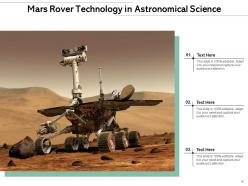
Recombinant DNA analysis enables astrobiologists to study extremophile microorganisms from Earth's harsh environments, engineer biosensors for detecting extraterrestrial life signatures, and develop synthetic biology tools for space exploration missions. Through these molecular techniques, researchers can identify potential biomarkers, create specialized detection systems for Mars rovers and space probes, and design resilient organisms for long-duration missions, ultimately advancing our understanding of life's possibilities beyond Earth.
Recombinant technology enables the development of enhanced biosensors, adaptive optical systems, and precision measurement instruments for telescopic observations through engineered proteins and biomolecular components. These biotechnological innovations streamline light detection, minimize atmospheric interference, and deliver superior imaging capabilities, with many observatories finding that recombinant-based detector systems ultimately enhance astronomical data collection and analysis precision.
Hybrid models combining datasets from radio telescopes, optical surveys, X-ray observatories, and gravitational wave detectors enhance predictive astrophysics by cross-validating observations, filling spectral gaps, and improving temporal resolution. These integrated approaches enable astronomers to predict stellar evolution, galaxy mergers, and black hole behavior with greater accuracy, while observatories like LIGO and Hubble find that multi-wavelength correlations ultimately deliver more reliable forecasting capabilities.
Researchers face challenges including computational complexity when processing vast datasets, equipment compatibility between traditional telescopes and modern analytical tools, standardization of data formats across institutions, and securing funding for interdisciplinary projects. However, many observatories find that strategic integration of these methodologies ultimately delivers enhanced discovery capabilities and competitive research advantages.
Recombinant methodologies could significantly enhance extraterrestrial life detection by combining spectroscopy, machine learning algorithms, genetic sequencing techniques, and biosignature analysis across multiple astronomical datasets. These integrated approaches enable researchers to identify complex molecular patterns, analyze atmospheric compositions more precisely, and detect biological indicators that traditional single-method searches might miss, ultimately accelerating discovery timelines.
Recombinant techniques revolutionize cosmic ray studies by combining multiple detection methods, cross-referencing satellite and ground-based data, and integrating particle physics with astronomical observations. These hybrid approaches enable researchers to trace cosmic ray origins more precisely, correlate high-energy events with specific celestial sources, and ultimately deliver comprehensive radiation mapping that enhances space mission safety and deepens our understanding of galactic phenomena.
Collaborations between biologists and astronomers in recombinant astronomy include astrobiology research partnerships, biosignature detection teams, extremophile studies for space environments, synthetic biology applications for space missions, and interdisciplinary data analysis groups. These strategic partnerships enhance space exploration capabilities by combining biological expertise with astronomical observations, enabling breakthrough discoveries in life detection, spacecraft biotechnology, and planetary habitability assessments, ultimately delivering competitive advantages in space research and exploration.
Recombinant technology applications to celestial bodies could enable discoveries of novel extremophile organisms, enhanced terraforming capabilities, bio-engineered atmospheric processors, and self-replicating mining systems that adapt to harsh space environments. These innovations would revolutionize space exploration by creating sustainable life support systems, accelerating planetary colonization timelines, and unlocking resource extraction possibilities, ultimately delivering competitive advantages for space agencies and private aerospace companies in the increasingly commercial space economy.
Recombinant astronomy expands our understanding of cosmic origins by combining observational data from multiple sources, theoretical models, and advanced computational simulations to create comprehensive pictures of early universal events. This integrated approach enables astronomers to trace cosmic evolution from the Big Bang through stellar formation, galaxy development, and elemental synthesis, ultimately delivering deeper insights into fundamental processes that shaped our universe's structure and composition.
-
Unique design & color.
-
Attractive design and informative presentation.
-
Visually stunning presentation, love the content.
-
Easily Understandable slides.
-
Presentation Design is very nice, good work with the content as well.
-
Awesome presentation, really professional and easy to edit.