


Scrum In SDLC Powerpoint Presentation Slides





Try Before you Buy Download Free Sample Product
 Impress Your
 Audience
 100%
100% Editable
 Save Hours
 of Time


Scrum enables an iterative and incremental process for development wherein each step is called a sprint. Scrum is required for the project which focuses on defining roles, procedures, tools, and processes for efficient and effective delivery of the project. In this deck, Scrum in SDLC we have focused on the scrum overview, the scope of lifecycles, and the phases of the scrum model. In the scrum overview, we have covered the scrum design and features, advantages and disadvantages of scrum software development methodology, Scrum roles, and benefits of implementing the model. In the scope of lifecycles, we have focused on scrum construction lifecycle, agile system development, disciplined agile delivery, continuous lifecycle, and agile software development lifecycle. Steps involved in scrum model software, scrum product backlog creation, sprint planning, the follow-up process, and retrospective, are covered in phases of the scrum model. This PowerPoint template ensures the possibility to continually increase the product value by maintaining flexibility in further iterations. Get access now.
People who downloaded this PowerPoint presentation also viewed the following :
Content of this Powerpoint Presentation
Slide 1: This slide display the title Scrum in SDLC.
Slide 2: This slide display Agenda.
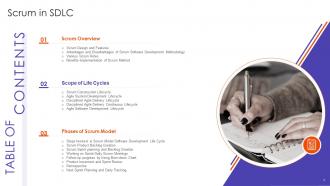
Slide 3: This slide exhibits Table of Contents.
Slide 4: This slide exhibits Table of Contents- Scrum Overview.
Slide 5: This slide provides the glimpse about the scrum design and features.
Slide 6: This slide provides the glimpse about the advantages and disadvantages about the scrum development methodology.
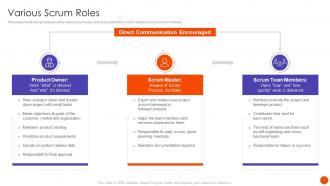
Slide 7: This slide provides the glimpse about the various scrum roles.
Slide 8: This slide provides the glimpse about the benefits which are implemented of scrum method.
Slide 9: This slide exhibits Table of Contents- Scope of Life Cycles.
Slide 10: This slide provides the glimpse about the scrum construction lifecycle.
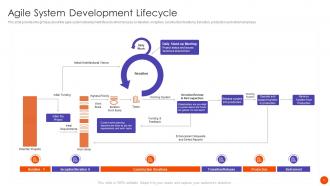
Slide 11: This slide provides the glimpse about the agile system development lifecycle.
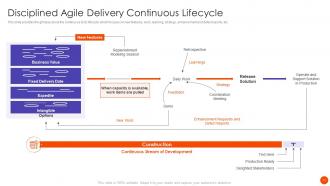
Slide 12: This slide provides the glimpse about the disciplined agile delivery lifecycle.
Slide 13: This slide provides the glimpse about the continuous DAD lifecycle.
Slide 14: This slide provides the glimpse about the agile software development lifecycle.
Slide 15: This slide exhibits Table of Contents- Phases of Scrum Model.
Slide 16: This slide provides the glimpse about the steps involved in scrum model SDLC.
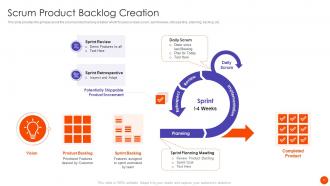
Slide 17: This slide provides the glimpse about the scrum product backlog creation.
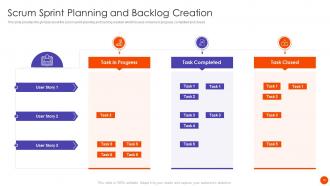
Slide 18: This slide provides the glimpse about the scrum sprint planning and backlog creation.
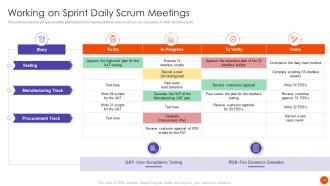
Slide 19: This slide provides the glimpse about the sprint daily scrum meeting.
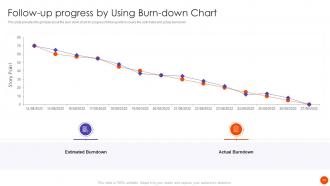
Slide 20: This slide provides the glimpse about the burn down chart for progress follow up.
Slide 21: This slide provides the glimpse about the product increment and sprint review flowchart.
Slide 22: This slide provides the glimpse about the sprint review, team retrospective and overall retrospective of the scrum team.
Slide 23: This slide provides the glimpse about the next sprint planning and tracking.
Slide 24: This is the icons slide.
Slide 25: This slide presents title for additional slides.
Slide 26: This slide shows Scrum Agile Software Development Software Development Process.
Slide 27: This slide shows details of team members like name, designation, etc.
Slide 28: This slide display RoadMap.
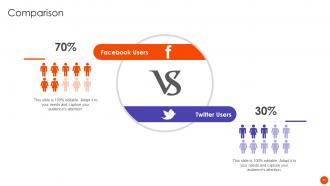
Slide 29: This slide dhowcase the Comparison between facebook user and twitter user.
Slide 30: This slide exhibits yearly profits stacked bar charts for different products.
Slide 31: This slide display Post it Notes.
Slide 32: This slide display Financial.
Slide 33: This is thank you slide & contains contact details of company like office address, phone no., etc.
Scrum In SDLC Powerpoint Presentation Slides with all 38 slides:
Use our Scrum In SDLC Powerpoint Presentation Slides to effectively help you save your valuable time. They are readymade to fit into any presentation structure.





















FAQs for Scrum In SDLC
The key roles in a Scrum team include the Product Owner, Scrum Master, and Development Team members, each with distinct responsibilities and collaborative interactions. The Product Owner defines requirements and prioritizes the backlog, the Scrum Master facilitates processes and removes impediments, while Development Team members deliver working increments, with all roles collaborating through daily standups, sprint planning, and retrospectives to ensure streamlined project delivery and enhanced team productivity.
Scrum facilitates adaptive planning through short sprints, regular retrospectives, and continuous stakeholder feedback, enabling teams to adjust priorities and requirements based on real-world insights. This iterative approach allows organizations to deliver working software incrementally, reducing project risks while responding to market changes, ultimately enhancing product quality and accelerating time-to-market for competitive advantage.
The main Scrum ceremonies include Sprint Planning, Daily Standups, Sprint Review, Sprint Retrospective, and Backlog Refinement sessions. These ceremonies streamline project delivery by establishing clear objectives, maintaining team alignment, and enabling continuous improvement, with many organizations finding that this structured approach enhances collaboration, accelerates product development, and ultimately delivers higher-quality outcomes.
Teams effectively estimate story points through collaborative techniques like Planning Poker, where members discuss requirements, consider complexity and effort, then vote anonymously to reach consensus. This approach leverages collective expertise while accounting for dependencies, risks, and technical debt, with many development teams finding that regular estimation sessions improve accuracy, enhance sprint planning, and ultimately deliver more predictable project timelines.
Common Scrum implementation challenges include resistance to change, inadequate training, poor stakeholder engagement, inconsistent sprint planning, and lack of executive support. These obstacles can be overcome by providing comprehensive team education, establishing clear communication channels, securing leadership buy-in, and gradually introducing Scrum practices, with many organizations finding that dedicated coaching and regular retrospectives ultimately deliver improved collaboration and faster product delivery.
The Scrum Master contributes to team success by facilitating collaboration, removing impediments, coaching team members on Agile practices, and ensuring adherence to Scrum frameworks. Essential skills include strong communication abilities, conflict resolution expertise, servant leadership qualities, and deep understanding of Agile methodologies, with many organizations finding that effective Scrum Masters ultimately enhance productivity and delivery timelines.
Key Scrum performance metrics include sprint velocity, burndown charts, cycle time, defect rates, and team satisfaction scores. These measurements enable organizations to track delivery predictability, identify bottlenecks, and enhance productivity, with many development teams finding that consistent monitoring of these indicators ultimately delivers faster releases and improved customer satisfaction.
Scrum promotes transparency through visible artifacts like sprint backlogs, burndown charts, and daily standups that make progress and obstacles clear to all team members. Regular sprint reviews, retrospectives, and defined roles create accountability mechanisms, with many organizations finding that this structured visibility enhances team collaboration, reduces miscommunication, and ultimately delivers faster project completion and improved product quality.
Scrum differs from traditional project management through iterative sprints versus linear phases, collaborative cross-functional teams instead of hierarchical structures, and adaptive planning rather than rigid upfront documentation. While traditional methodologies emphasize comprehensive planning and sequential execution, Scrum enables faster delivery cycles, enhanced stakeholder feedback, and improved responsiveness to changing requirements, with many organizations finding significantly reduced time-to-market.
A Product Backlog evolves through continuous refinement, stakeholder feedback, sprint reviews, market changes, and user insights, requiring regular prioritization updates and detailed requirement clarification. Through collaborative grooming sessions, product owners maintain clear user stories, acceptance criteria, and priority rankings, while development teams provide effort estimates, ultimately delivering iterative value and ensuring alignment with changing business objectives and customer needs.
Scrum can be scaled through frameworks like SAFe, LeSS, and Nexus, which coordinate multiple teams while maintaining core agile principles. These approaches enable large organizations across manufacturing, financial services, and technology sectors to streamline complex product development, enhance cross-team collaboration, and accelerate delivery timelines, ultimately delivering greater operational efficiency and competitive advantage.
The Minimum Viable Product concept aligns perfectly with Scrum's iterative approach, enabling teams to deliver functional product increments through sprints, gather user feedback early, and validate assumptions before major investments. This strategic combination streamlines product development by reducing waste, accelerating time-to-market, and ensuring customer-centric solutions, with many organizations finding that MVP-driven sprints ultimately deliver competitive advantage and higher success rates.
Effective Scrum communication strategies include establishing clear ceremony objectives, using visual aids like burndown charts, implementing structured speaking formats, encouraging active participation from all team members, and maintaining focused discussions. These approaches streamline collaboration by reducing misunderstandings, accelerating decision-making, and enhancing transparency, with many development teams finding that consistent facilitation techniques ultimately deliver faster sprint completions and improved project outcomes.
Teams ensure Scrum implementation aligns with stakeholder needs through regular sprint reviews, stakeholder feedback sessions, clear acceptance criteria, and consistent product backlog refinement with business representatives. By maintaining transparent communication channels, incorporating stakeholder input into sprint planning, and demonstrating working increments frequently, organizations create stronger alignment between development outcomes and business objectives, ultimately delivering higher value and reducing project risks.
Continuous improvement serves as Scrum's cornerstone through regular retrospectives, sprint reviews, and daily standups that identify inefficiencies, adapt processes, and refine team collaboration. These iterative feedback loops enable organizations to streamline workflows, enhance product quality, and accelerate delivery timelines, with many development teams finding that this systematic approach ultimately delivers faster time-to-market and improved customer satisfaction.
-
Definitely recommend SlideTeam to all who need help with PowerPoint presentations. Their design team can create anything you need.
-
The templates you provide are great! They have saved me tons of time and made my presentations come alive. Thank you for this awesome product. Keep up the good work!