


Scrum process powerpoint templates ppt presentation slides 0812





Try Before you Buy Download Free Sample Product
 Impress Your
 Audience
 100%
100% Editable
 Save Hours
 of Time


Carry it off with our Scrum Process Powerpoint templates ppt presentation slides 0812. Establish your image as a leader.
People who downloaded this PowerPoint presentation also viewed the following :
Scrum process powerpoint templates ppt presentation slides 0812 with all 5 slides:
Call our Scrum Process Powerpoint templates ppt presentation slides 0812 to account. They take their responsibility seriously.


FAQs for Scrum process powerpoint templates ppt
Scrum's core principles include empirical process control, self-organization, collaboration, value-based prioritization, and iterative development through defined sprints. These principles enhance team collaboration by fostering transparent communication, enabling rapid feedback cycles, and empowering cross-functional teams to adapt quickly, with many organizations finding that this framework ultimately delivers faster product development and improved stakeholder alignment.
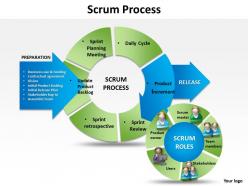
The Scrum Master facilitates team processes, removes impediments, and ensures adherence to Scrum practices, while the Product Owner defines product vision, manages the backlog, and prioritizes features based on business value. These complementary roles enable organizations to balance delivery efficiency with strategic direction, with many development teams finding that clear role separation accelerates project timelines and enhances product quality.
Key Scrum artifacts include the Product Backlog, Sprint Backlog, and Product Increment, which collectively enhance project visibility through clear prioritization, defined commitments, and tangible deliverables. These artifacts streamline communication by providing centralized documentation, enabling stakeholder alignment, and facilitating progress tracking, with many development teams finding that this structured approach ultimately delivers improved accountability and faster project outcomes.
Scrum helps teams manage changing requirements through iterative sprints, regular sprint reviews, daily standups, and continuous stakeholder feedback loops. This framework enables organizations to pivot quickly when market conditions shift, incorporate client feedback seamlessly, and deliver incremental value consistently, with many software development teams and product organizations finding significantly improved project adaptability and faster time-to-market.
The main Scrum ceremonies include Sprint Planning, Daily Standups, Sprint Review, Sprint Retrospective, and Backlog Refinement sessions. These ceremonies streamline team collaboration by establishing clear objectives, maintaining daily alignment, and enabling continuous improvement, with many development organizations finding that this structured approach ultimately delivers faster product iterations, enhanced transparency, and improved stakeholder engagement across projects.
The increment serves as Scrum's cornerstone for delivering tangible value, providing stakeholders with working software at each sprint's end while enabling continuous feedback and course correction. This approach allows teams to validate assumptions early, reduce project risks, and maintain momentum through regular demonstrations of progress, with many organizations finding that frequent increments accelerate time-to-market and enhance customer satisfaction significantly.
Common challenges when adopting Scrum include resistance to change, inadequate training, unclear roles, insufficient stakeholder engagement, and unrealistic sprint planning. These obstacles can be addressed by providing comprehensive Scrum education, establishing clear role definitions, fostering regular stakeholder communication, and implementing gradual transition phases, with many organizations finding that dedicated coaching and iterative improvements ultimately deliver enhanced team collaboration and faster product delivery.
A well-defined product backlog enhances Scrum efficiency by providing clear priorities, detailed user stories, acceptance criteria, and realistic effort estimates. This clarity streamlines sprint planning, reduces mid-sprint scope changes, and enables development teams to maintain consistent velocity, with many organizations finding that structured backlogs ultimately deliver faster product iterations and improved stakeholder alignment.
Scrum can be scaled through frameworks like SAFe, LeSS, and Scrum@Scale, which coordinate multiple teams via shared backlogs, synchronized sprints, and cross-team ceremonies. These approaches enable larger organizations to maintain agile principles while managing dependencies, aligning priorities, and streamlining communication, ultimately delivering faster product development and enhanced collaboration across enterprise-level projects.
Effective Sprint Retrospective techniques include Start-Stop-Continue frameworks, Root Cause Analysis, Silent Brainstorming, Dot Voting for prioritization, and Timeline Mapping to identify patterns. These approaches streamline feedback collection by encouraging honest participation, minimizing bias, and focusing discussions on actionable improvements, with many development teams finding that structured retrospectives enhance team collaboration, reduce recurring issues, and ultimately deliver faster product iterations.
Scrum integrates with other methodologies through hybrid approaches like Scrumban, which combines Scrum's structured sprints with Kanban's continuous flow visualization, or Water-Scrum-Fall frameworks that embed agile development within traditional project phases. These strategic combinations enable organizations to maintain necessary governance structures while enhancing team flexibility and delivery speed, with many enterprises finding improved stakeholder satisfaction and operational efficiency.
Scrum team effectiveness metrics include sprint burndown charts, velocity tracking, cycle time measurement, defect rates, and team satisfaction scores. These metrics enable organizations to monitor delivery predictability, identify bottlenecks, and enhance productivity, with many development teams finding that balanced scorecard approaches ultimately deliver faster releases and improved product quality.
The definition of "done" establishes clear quality standards and acceptance criteria that every deliverable must meet before being considered complete, ensuring consistency across all team members and stakeholders. This shared understanding eliminates ambiguity, reduces rework, and accelerates delivery timelines, with many development teams finding that well-defined criteria enhance product reliability while streamlining the review process.
Teams typically deviate from strict Scrum practices during organizational transitions, regulatory compliance requirements, integration with non-agile departments, or when managing distributed teams across time zones. These deviations should be documented, time-bound, and regularly reviewed through retrospectives, with teams establishing clear criteria for returning to standard practices while maintaining Scrum's core principles of transparency and continuous improvement.
Fostering accountability and ownership enhances Scrum by encouraging team members to take personal responsibility for sprint commitments, proactively identify impediments, and collaborate more effectively during ceremonies like daily standups and retrospectives. This cultural shift streamlines decision-making, reduces dependency bottlenecks, and ultimately delivers higher-quality products faster, with many organizations finding that empowered teams consistently exceed sprint goals and drive continuous improvement.
-
Top Quality presentations that are easily editable.
-
Visually stunning presentation, love the content.