


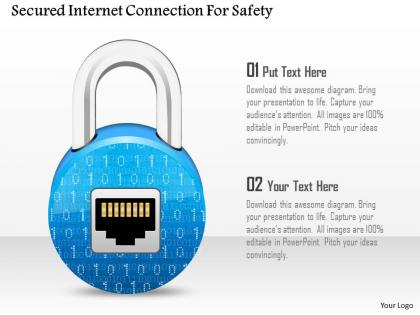
Secured internet connection for safety ppt slides




Try Before you Buy Download Free Sample Product
 Impress Your
 Audience
 100%
100% Editable
 Save Hours
 of Time


Exude equanimity with our Secured Internet Connection For Safety Ppt Slides. The audience will admire your calm approach.
People who downloaded this PowerPoint presentation also viewed the following :
Secured internet connection for safety ppt slides with all 5 slides:
Cover the court with our Secured Internet Connection For Safety Ppt Slides. Game,set and match will go in your favour.




FAQs for Secured internet connection for
Key components of a secured internet connection include encryption protocols, firewalls, VPNs, SSL/TLS certificates, and multi-factor authentication systems. These technologies work together by protecting data transmission, monitoring network traffic, and verifying user identities, with many organizations finding that this strategic combination ultimately delivers enhanced operational security and competitive advantage in increasingly digital business environments.
Encryption enhances internet connection security by converting data into unreadable code, authenticating communication parties, and preventing unauthorized access during transmission. Through advanced protocols like TLS and SSL, financial institutions, healthcare providers, and e-commerce platforms protect sensitive information while maintaining seamless user experiences, ultimately delivering customer trust and regulatory compliance in an increasingly connected business environment.
VPNs secure internet connections by creating encrypted tunnels between devices and servers, masking IP addresses, and routing traffic through secure networks. These technologies enable remote workers to access corporate systems safely, help financial institutions protect client data during transactions, and allow healthcare organizations to maintain HIPAA compliance, ultimately delivering enhanced privacy and reduced cybersecurity risks.
Public Wi-Fi networks can be made more secure through WPA3 encryption, network segmentation, captive portals with authentication, regular security updates, and VPN integration. Many businesses, hotels, and airports are implementing these layered security approaches to protect user data while maintaining seamless connectivity, ultimately delivering safer browsing experiences and reducing cybersecurity risks.
Common internet security threats include malware, phishing attacks, ransomware, man-in-the-middle attacks, and data breaches targeting personal information. These cyber threats increasingly impact organizations across sectors like banking, healthcare, and retail, with many institutions finding that comprehensive security measures streamline operations while protecting customer data and maintaining competitive advantage.
Two-factor authentication strengthens secured internet connections by requiring multiple verification methods, combining passwords with biometric data, SMS codes, or authentication apps. This layered approach significantly reduces unauthorized access risks, with banks and financial institutions finding that implementing 2FA decreases account breaches by over 90%, ultimately delivering enhanced user trust and operational security.
HTTP transmits data in plain text without encryption, making it vulnerable to interception and tampering, while HTTPS uses SSL/TLS encryption to secure data transmission between browsers and servers. HTTPS provides authentication, data integrity, and confidentiality that HTTP lacks, with many e-commerce platforms, banking institutions, and healthcare organizations finding that encrypted connections ultimately deliver customer trust and regulatory compliance.
Firewalls help secure internet connections by filtering incoming and outgoing traffic, blocking unauthorized access attempts, and monitoring suspicious activities in real-time. These security systems enable organizations to establish protective barriers between internal networks and external threats, with many financial institutions and healthcare providers finding that robust firewall configurations significantly reduce cyberattack risks while maintaining operational efficiency.
IoT devices significantly impact home internet security by creating multiple entry points for potential vulnerabilities, expanding attack surfaces, and increasing network complexity through connected appliances, smart home systems, and monitoring devices. While these technologies enhance convenience and automation, they require robust network segmentation, regular firmware updates, and comprehensive security protocols, with many households finding that strategic device management ultimately delivers improved connectivity control and enhanced digital protection.
**INPUT**: What are the best practices for setting up a secure home network? **OUTPUT**: Best practices for secure home networks include changing default router passwords, enabling WPA3 encryption, updating firmware regularly, disabling unnecessary services, and creating separate guest networks. These security measures streamline protection by isolating devices, minimizing vulnerabilities, and enhancing access control, with many households finding that layered approaches ultimately deliver robust defense against cyber threats while maintaining seamless connectivity. **Word count: 60 words**
Users can identify compromised internet connections through slow browsing speeds, unusual data usage spikes, unfamiliar network activities, frequent redirects to suspicious websites, and unexpected pop-ups or advertisements. These warning signs often indicate malware infections, man-in-the-middle attacks, or unauthorized network access, with many organizations implementing network monitoring tools and security protocols to detect anomalies early, ultimately protecting sensitive data and maintaining operational security.
Businesses should implement multi-layered security including firewalls, VPN encryption, regular software updates, employee cybersecurity training, and network monitoring systems. These protective measures work together by filtering malicious traffic, securing data transmission, and detecting threats early, with many organizations finding that this comprehensive approach significantly reduces breach risks while maintaining operational efficiency.
Network protocols significantly influence internet security by establishing authentication methods, encryption standards, data integrity checks, and access control mechanisms. Protocols like HTTPS, TLS, and IPSec enable organizations to safeguard sensitive communications, prevent unauthorized access, and ensure data transmission reliability, with many financial institutions and healthcare providers finding that robust protocol implementation delivers enhanced customer trust and regulatory compliance.
Recommended tools include VPNs, firewalls, antivirus software, DNS filtering services, and network monitoring systems. These technologies enhance security by encrypting data transmission, blocking malicious traffic, and detecting suspicious activities, with many organizations finding that strategic combinations deliver comprehensive protection, reduced breach risks, and ultimately stronger operational resilience in increasingly complex digital environments.
Users can educate themselves about phishing attacks through cybersecurity awareness training, recognizing suspicious email patterns, verifying sender authenticity, and understanding social engineering tactics. Organizations increasingly implement comprehensive security programs combining employee education with technical safeguards like VPNs and multi-factor authentication, ultimately delivering enhanced protection and reduced vulnerability to cyber threats.
-
Enough space for editing and adding your own content.
-
Nice and innovative design.