


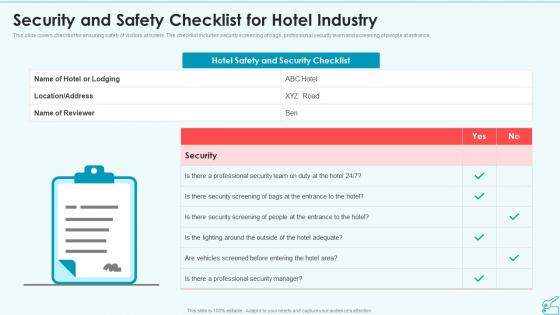
Security And Safety Checklist For Hotel Industry




Try Before you Buy Download Free Sample Product
 Impress Your
 Audience
 100%
100% Editable
 Save Hours
 of Time


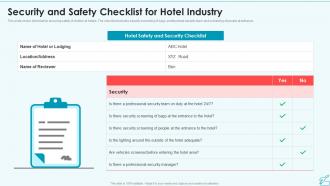
This slide covers checklist for ensuring safety of visitors at hotels. The checklist includes security screening of bags, professional security team and screening of people at entrance.
People who downloaded this PowerPoint presentation also viewed the following :
Security And Safety Checklist For Hotel Industry with all 6 slides:
Use our Security And Safety Checklist For Hotel Industry to effectively help you save your valuable time. They are readymade to fit into any presentation structure.





FAQs for Security And Safety Checklist
Essential hotel security checklist components include access control systems, surveillance cameras, emergency procedures, staff training protocols, and guest safety measures. These security elements work together by monitoring entry points, recording activities, and preparing personnel for incidents, with many hospitality organizations finding that comprehensive checklists significantly reduce liability risks while enhancing guest confidence and operational efficiency.
Hotels effectively train staff through comprehensive security awareness programs, behavioral recognition workshops, scenario-based simulations, regular refresher sessions, and clear reporting protocols. These programs enable front desk agents, housekeeping, and maintenance teams to identify unusual guest activities, unattended packages, or security breaches, ultimately delivering enhanced guest safety and operational security while minimizing potential incidents.
Hotel entrance and exit security measures include controlled access systems, surveillance cameras, metal detectors, security personnel stationed at key points, and visitor registration protocols. These technologies streamline guest verification while maintaining safety, with many luxury hotels finding that strategic combinations of biometric scanners, baggage screening, and trained staff ultimately deliver enhanced guest confidence and operational efficiency.
Hotel managers can ensure adequate guest room door security by installing electronic key card systems, reinforcing door frames with strike plates, using deadbolts with security chains, and conducting regular lock maintenance inspections. Through smart access controls and door sensors, hotels streamline security protocols while enhancing guest safety, with many hospitality organizations finding that automated monitoring systems reduce unauthorized access incidents and ultimately deliver improved guest confidence and operational efficiency.
Technology enhances hotel security through smart surveillance systems, digital access controls, automated monitoring platforms, guest verification technologies, and integrated alarm systems. These solutions streamline operations by providing real-time threat detection, contactless room access, and centralized security management, with many hotels finding that strategic technology adoption ultimately delivers faster response times, reduced operational costs, and enhanced guest experiences.
Hotel security checklists should be reviewed quarterly and updated immediately following security incidents, regulatory changes, or operational modifications. Many hospitality organizations find that regular quarterly assessments, combined with incident-triggered reviews, enable them to address emerging threats, incorporate new technologies, and maintain compliance standards, ultimately delivering enhanced guest safety and operational resilience.
Hotels should establish secure storage protocols, implement detailed logging systems, verify guest identity before returning items, set clear retention periods, and train staff on proper handling procedures. These practices streamline operations by reducing liability risks, enhancing guest trust, and ensuring valuable items remain protected, with many hospitality organizations finding that systematic lost-and-found management ultimately delivers improved guest satisfaction and operational efficiency.
Hotels can ensure electronic access control system safety through regular software updates, multi-factor authentication protocols, encrypted data transmission, network segmentation, and continuous monitoring for unauthorized access attempts. These security measures help prevent cyber breaches and unauthorized room entry, with many hospitality organizations finding that layered digital security approaches significantly reduce liability risks while enhancing guest confidence and operational integrity.
Essential emergency protocols include fire evacuation procedures, medical emergency response, natural disaster protocols, security threat management, and guest communication systems. These comprehensive measures streamline crisis response by establishing clear staff roles, automated alert systems, and coordination with local authorities, ultimately ensuring guest safety while minimizing operational disruption and liability risks.
Hotels can assess security effectiveness through comprehensive audits, vulnerability testing, incident analysis, staff feedback evaluations, and guest satisfaction surveys regarding safety perceptions. Through regular security assessments and penetration testing, hospitality organizations streamline threat identification, enhance response protocols, and strengthen operational efficiency, with many properties finding that systematic evaluations ultimately deliver improved guest confidence and competitive advantage.
Securing outdoor hotel areas involves adequate lighting systems, surveillance camera coverage, access control measures, emergency communication points, and regular security patrols. These elements work together by deterring criminal activity, enabling rapid incident response, and creating safe guest environments, with many hotels finding that well-lit parking areas and monitored pool zones significantly reduce liability while enhancing guest confidence and satisfaction.
Hotels should enhance security during high-occupancy events by implementing additional access controls, increasing surveillance monitoring, coordinating with event organizers on attendee verification, and deploying extra security personnel at key entry points. These measures enable streamlined crowd management, faster incident response, and enhanced guest safety, with many conference hotels finding that proactive security coordination ultimately delivers smoother operations and stronger client relationships.
Hotels can safeguard sensitive guest data through encrypted payment systems, secure Wi-Fi networks, access-controlled databases, staff training programs, and regular security audits. These comprehensive measures streamline data protection by minimizing breach risks, ensuring compliance standards, and maintaining guest trust, with many hospitality organizations finding that robust cybersecurity protocols ultimately deliver competitive advantage and enhanced customer loyalty.
Hotels balance guest privacy with security through transparent policies, selective monitoring of public areas, and guest-controlled room access systems. Many properties implement strategic combinations of CCTV in lobbies and corridors while respecting room privacy, biometric or keycard systems that limit unauthorized access, and clear communication about security measures, ultimately delivering enhanced safety without compromising the personal space guests expect during their stay.
Looking at this question, I need to provide specific anti-internal theft measures in the first sentence, then expand with examples and business outcomes in the second sentence. **Pattern**: List of measures → Application examples with business benefits Specific measures against internal theft include comprehensive background checks, dual authorization for cash handling, surveillance monitoring of employee areas, regular inventory audits, and restricted access controls for sensitive zones. These protocols significantly reduce shrinkage costs while enhancing operational transparency, with many hotels finding that systematic monitoring and clear accountability structures ultimately strengthen both security and employee trust. [Word count: 58 words]
-
SlideTeam, Please don’t stop sharing discount coupons! I love your occasional discounts and tend to buy your products around that corner.
-
Easily Understandable slides.