


Short term long term growth strategy ppt example file




Try Before you Buy Download Free Sample Product
 Impress Your
 Audience
 100%
100% Editable
 Save Hours
 of Time


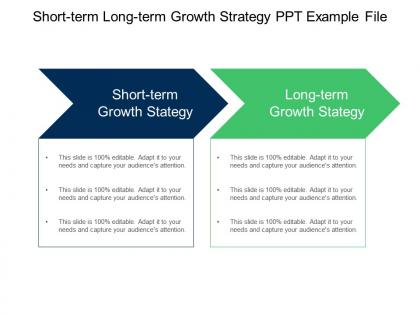
Give folks the incentive to dream big with our Short Term Long Term Growth Strategy Ppt Example File. It helps coach budding entrepreneurs.
People who downloaded this PowerPoint presentation also viewed the following :
Short term long term growth strategy ppt example file with all 5 slides:
Analyze each alternative in great detail with our Short Term Long Term Growth Strategy Ppt Example File. They allow for effective comparison.




FAQs for Short term long term growth strategy
Market analysis and customer segmentation are your foundation - figure out who you're actually targeting first. Most people completely skip competitive analysis, which is honestly insane because you're flying blind without it. Growth metrics matter too, but don't get lost in the weeds there. Pick specific channels like content marketing or partnerships, not everything at once. Resource allocation will make or break you since there's never enough time or money. My advice? Start with one customer segment and one channel. Test it, see what works, then expand from there. Way less overwhelming that way.
Ok so first thing - do a competitor analysis to see how you actually stack up. Check your market share, pricing, what customers say about you vs them. Customer feedback is brutal but super helpful tbh. Next, pull your financial numbers. Revenue growth, customer acquisition costs, retention rates - that's the real stuff that shows where you stand. Also figure out if your unique selling points still hit the same way they used to. Oh and do a quick SWOT analysis to tie it all together. Sounds boring but it works.
Honestly, competitive analysis is just stalking your rivals in the smartest way possible. You're digging into their pricing, product launches, whatever they're doing right or screwing up. The real gold is finding those gaps they missed - that's where you swoop in. I waste probably too many hours on competitor sites (my browser history is embarrassing), but you pick up so much. Their positioning tells you about market segments nobody's hitting yet. Don't just copy their playbook though - use what you learn to actually stand out differently. Way more valuable than guessing what might work.
Honestly, digital marketing is like having a cheat code for startups. You can hit huge audiences without blowing your budget on expensive ads. The targeting is insane - you'll find your exact customers instead of just hoping random people see your stuff. Social media and content actually let you build real connections too, which beats the hell out of old-school billboard nonsense. Oh, and you can test different messages super fast and see what's actually working. Don't try to be everywhere at once though. Pick one or two platforms where your people actually spend time and crush those first.
Start with revenue growth - that's what actually matters. Customer acquisition cost and lifetime value are huge too. If you're doing subscriptions, track monthly recurring revenue obviously. Churn is honestly more important than most people think - way easier to keep existing customers happy than chase new ones all the time. Conversion rates through your funnel will tell you where things are breaking down. Pick maybe 3-5 metrics max though, or you'll go crazy trying to track everything. I'd set up something simple you can check weekly without overthinking it.
Honestly, the biggest mistake is trying to tackle everything at once. Pick one thing and nail it first. Most companies also expect miracles in like 3 months when realistically you need a year+ to see real results. Don't forget to actually get your team on board from day one - I can't tell you how many strategies die because leadership forgot to bring everyone along. Also, always test small first! Sounds obvious but you'd be surprised how many places skip pilots and just go full throttle. Start focused, get people excited about it, then test before you scale.
Customer feedback is like a reality check for your growth strategy - shows you what's actually working vs what you think is working. Set up regular surveys, interviews, usage data collection. Then actually analyze it instead of just hoarding compliments (guilty as charged lol). Look for patterns and group feedback into themes. Map those insights to your growth levers and run experiments. I've watched companies completely pivot based on consistent feedback. You'll spot which features keep people around, find friction killing conversions, and sometimes discover weird use cases that become whole new market segments.
Honestly, culture can totally derail your growth plans if you're not careful. I've watched solid strategies crash because everyone was too scared to take risks when the company needed big moves. Your team has to actually want to experiment and be okay with screwing up sometimes. Without people who collaborate well and adapt quickly, those growth initiatives just feel awkward and forced - like wearing shoes that don't fit. Short version: check if your culture actually matches what your strategy demands, because misalignment kills momentum fast.
Honestly, you gotta spread out your income sources - don't put all your eggs in one basket. When money comes in, pump it back into developing better stuff and hiring good people instead of just pocketing everything. Build systems that won't fall apart when things get busy. Most of those trendy "growth hacks" are total BS anyway - slow and steady wins the race. Watch your numbers closely, especially how much each customer is actually worth to you. Short-term wins aren't worth screwing up your future. Start by figuring out where your money's really coming from, then brainstorm 2-3 new ways to make revenue this quarter.
Partnerships are honestly a game-changer for growth. You get instant access to their customers and distribution without building everything yourself. Find companies that aren't direct competitors but have what you need - maybe their audience, maybe their tech. Then figure out what you can offer them back. Could be cross-promotion, co-developing something together, or just sharing resources. I always tell people to map out what you're missing first, then hunt for partners who have those gaps covered. Way faster than doing it solo, and frankly, more fun too.
Honestly, diversification is just smart risk management - don't put everything in one basket. Amazon's the perfect example... started selling books online and now they're doing everything from cloud computing to grocery delivery. Pretty crazy when you think about it. If one income stream dies, you've got backups. Plus it opens doors to growth you hadn't thought of before. But here's what matters: be strategic about it. Don't just jump into random markets because they look profitable. Pick 2-3 things that actually fit with what you're already good at. Makes way more sense than starting from scratch.
Honestly, you've got to nail three things: systems, people, and money. Get your repetitive stuff automated now and build tech that won't crash when you suddenly have 3x the customers. Your team structure matters way more than people think - create solid management layers and document literally everything. Knowledge hoarding will absolutely destroy you during growth spurts. Cash flow is tricky because scaling burns through money insanely fast. Get funding lined up before you're desperate. But here's what I'd do first: figure out your biggest bottleneck today and crush that problem. Then just work through the rest systematically.
Here's what I'd do - organic growth means using what you've got already. Takes forever but you're in total control and it won't break the bank. Buying companies or doing partnerships? Way faster, sure, but good luck with all the integration nightmares. I've seen that go sideways so many times. Plus it gets expensive quick. The thing is, organic lets you keep your culture intact and figure things out as you go. Inorganic can mess up daily operations but you get instant access to new markets or talent pools. Most smart companies mix both approaches though. Figure out what you can build yourself vs. what you absolutely have to acquire.
Honestly, innovation is what separates companies that crush it from ones that just scrape by. You're basically creating new revenue streams and staying relevant - nobody wants to pull a Blockbuster, ya know? Whether it's fresh products, better processes, or totally new business models, you're building advantages competitors can't touch. Here's the thing though - don't leave it to chance. Set aside actual budget for experimenting and let your team fail quickly without freaking out. That's where the real learning happens. Make it systematic instead of hoping lightning strikes twice.
Honestly, tech integration is a game changer if you do it right. Start by automating whatever's sucking up your time - those boring manual tasks nobody wants to do anyway. You'll get way better customer data too, which means no more shooting in the dark about what people actually want. Like, imagine knowing what your customers will buy before they do. E-commerce opens up new money-making opportunities, especially for retail. The automation thing frees up your team for bigger picture stuff instead of mind-numbing busy work. My advice? Pick one pain point area and start there - don't try to overhaul everything at once.
-
Unique research projects to present in meeting.
-
Perfect template with attractive color combination.