


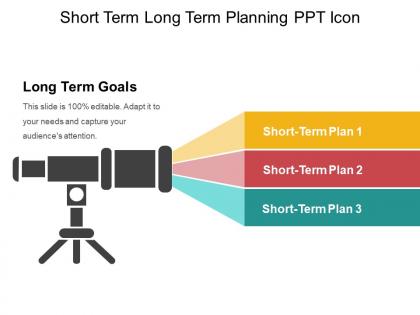
Short term long term planning ppt icon




Try Before you Buy Download Free Sample Product
 Impress Your
 Audience
 100%
100% Editable
 Save Hours
 of Time


Our Short Term Long Term Planning Ppt Icon are a handy aid. Always available and easy to employ.
People who downloaded this PowerPoint presentation also viewed the following :
Short term long term planning ppt icon with all 5 slides:
Figure out developments in the future with our Short Term Long Term Planning Ppt Icon. It helps decipher the indications.

FAQs for Short term long term
First thing - get crystal clear on what you're actually delivering, otherwise you'll get hit with scope creep later (trust me on this one). I like breaking everything into bite-sized tasks with realistic timelines, plus I always throw in buffer time because stuff inevitably takes longer. Figure out which tasks depend on others so you know what can happen at the same time. Spot your risks and resource needs early. Gantt charts or Kanban boards help visualize the whole mess. Oh, and definitely get your team involved in planning - they'll catch stuff you missed and won't push back on deadlines they helped create.
Honestly, visual aids are a game-changer for planning presentations. People's brains just process images way faster than words - like, you can explain a timeline for 10 minutes or show a simple Gantt chart that clicks instantly. Charts and flowcharts help stakeholders actually *see* where problems might pop up instead of trying to imagine everything in their heads. Plus we all know how easy it is to zone out during bullet-point heavy presentations. Even basic diagrams work better than fancy graphics sometimes. Your audience will remember visual stuff way longer than whatever you said, and they'll give you way more useful feedback when they can see dependencies and milestones laid out clearly.
Dude, stakeholder engagement can make or break your whole thing. Get key people involved early - they'll either support you or kill your plan later. I've watched "brilliant" strategies crash because someone important felt left out from day one. Map out who actually has power and who cares about your results first. Then set up regular check-ins to keep them in the loop. Honestly, it's annoying but worth it - you'll catch problems before they explode and get way better ideas. Plus you need allies when it's time to actually do the work.
Honestly, I just dump everything on paper first - gets it out of my head, you know? Then I use that impact vs effort thing where you prioritize high impact, low effort stuff. Works every time. Obviously deadlines matter too, plus if one task depends on another finishing first, that changes everything. I've learned to save the hard thinking stuff for when I'm actually awake (so not after lunch lol). Oh and definitely leave some wiggle room because something always comes up. These days I just pick my top 3 for each day instead of making those crazy long lists that stress me out.
Honestly depends on your team size and how complex things get. Trello's amazing if you want something dead simple - basically digital sticky notes but way better. Asana's also pretty straightforward for basic project tracking. Need more bells and whistles? Monday.com and ClickUp have all the fancy stuff like Gantt charts and time tracking. Microsoft Project is still king for enterprise-level chaos, though it might be total overkill for most people. Don't sleep on Google Sheets either - sounds boring but works great for quick planning sessions. My advice? Start simple with something everyone will actually use instead of going crazy with features nobody needs yet.
Honestly? Digital tools are your best friend here - Miro and Figma work great for brainstorming sessions. Make everything async since people are scattered across time zones anyway. Drop those marathon planning meetings and do shorter check-ins more often instead. The weird thing is, being forced to document everything actually improves the process sometimes. Oh, and be super clear about who's doing what by when - stuff that seems obvious when you're all in the same room gets confusing fast over Slack. Shared docs where people can jump in and add thoughts work way better than I expected.
Track both types of metrics - the ones that show progress happening now (like hitting milestones on time and staying on budget) plus the final results (ROI, whether you actually hit your goals). Don't go crazy measuring everything though. Pick maybe 3-5 things that really matter for your project. Honestly, I'm kind of obsessed with comparing what we planned vs what actually happened - that variance tells you so much. Set up something simple you can glance at weekly. Way easier to fix small stuff before it snowballs into a disaster.
Honestly, don't wait until the end to think about what could go wrong - weave it right into your planning from day one. When you're brainstorming, ask "what if this tanks?" Then as you're mapping timelines, figure out how likely each risk is and how bad it'd hurt. I keep this super basic doc (I call it a risk register but that sounds way more official than it is) where I just list potential disasters. Keep updating it because trust me, new ways for things to fail will pop up. Best trick? Make it a regular thing in your meetings. Once it becomes habit, you won't be scrambling later.
Honestly? Just write your project goals next to your company's main priorities and see if they actually connect. Get the important people on board early - I've watched so many projects crash because nobody cared about them at the top level, even when they worked perfectly. Your success metrics should match whatever your company's already tracking. Priorities change though, so check in regularly. Oh, and here's the test: if you can't explain in one sentence how your project helps the company, you're probably off track. It sounds obvious but you'd be surprised how often people miss this.
Oh man, buffer time is everything - I learned this the hard way lol. Never schedule stuff back-to-back because something will always run late. Figure out early which delays actually matter vs ones that are just irritating. I keep backup plans for major milestones too. Here's what really changed things for me though: don't plan at 100% capacity. Seriously, aim for like 80% and save that extra 20% for when life decides to mess with you. Because it will. Having that breathing room has saved my ass so many times.
Ugh, the worst thing people do is bite off way more than they can chew timeline-wise. Build in buffer time or you'll hate yourself later. Also don't plan stuff solo - I've seen projects crash because nobody talked to the right people upfront. Getting married to your original plan is dumb too since things always change. My approach? Figure out where you want to end up, then work backwards from there. Oh and whatever time estimate you have, add 20% because you're probably being overly optimistic. Write it all down or you'll forget half of it by Thursday.
Okay so feedback loops are basically your safety net - you're not just crossing your fingers and hoping the meeting doesn't crash and burn. Set up quick check-ins every 30 minutes or after big topics. Ask "how's this landing?" and actually wait for real answers. People will tell you if they're lost or if you've gone down some random rabbit hole (happens to the best of us, trust me). The trick is keeping it casual, not turning it into some formal performance review. Most planning sessions go sideways because nobody speaks up until it's already a disaster.
Oh this is something I actually struggle with too! What helps me is doing that "yes, and..." thing - basically don't shoot down any idea, even the ridiculous ones. I'll set a timer for like 10-15 minutes and just brain dump everything without judging it. Sometimes I'll grab coffee somewhere different or ask my friend who works in marketing to weigh in, since she thinks totally differently than I do. Mind maps are clutch for seeing how ideas connect. The trick is keeping the creative part separate from the "wait, is this actually doable?" part. Generate first, then filter later.
Oh man, cultural differences will mess with your project planning in ways you don't expect. Germans want every single detail nailed down before you even start. Meanwhile your Brazilian teammates are like "let's grab coffee first and talk through this." Timeline expectations? Completely different across cultures. Same with how people make decisions and communicate. I learned this the hard way on a project last year - total disaster until we figured out a middle ground. You've got to study each culture's planning style upfront, then create some hybrid approach that doesn't piss anyone off. It's honestly exhausting but worth it.
Honestly, templates are a lifesaver. You'll save so much time upfront instead of starting from scratch every single project. They're basically a proven roadmap that someone already figured out the hard way. When you're juggling multiple projects, having that consistency is clutch - especially with team stuff. I've watched people think they're being efficient by skipping templates, then later they're frantically trying to remember what step they missed (usually something important, obviously). My advice? Grab a basic template and tweak it as you go. You'll figure out what actually works for your specific stuff.
-
Illustrative design with editable content. Exceptional value for money. Highly pleased with the product.
-
Colors used are bright and distinctive.