


Six building blocks of digital evolution powerpoint presentation slides




Try Before you Buy Download Free Sample Product
 Impress Your
 Audience
 100%
100% Editable
 Save Hours
 of Time


Digital business is what combines traditional business models with the digital world. Use our six building blocks of digital evolution PPT slides and execute digital transformation in your business organization. Incorporating our six building blocks of digital evolution PowerPoint template will allow you to represent information related to your digital transformation business model, data and analytics, process automation, customer decision journey, strategy and innovation, etc. The digital future requires leadership skills related to digitization and not limited to operations and finance. Product digitization should be done using technology to enhance your offer or service. If your organization is not modernizing then you’ll be left behind, and the threat of disruption becomes very real. An efficient development and execution of digital strategies can be done with our digital evolution PPT slides. Download this six building blocks of digital evolution Presentation slideshow to explore the digital world and make amazing PowerPoint slides. Acquaint folks with the inherent difficulties through our Six Building Blocks Of Digital Evolution Powerpoint Presentation Slides. Bring out all the intricacies.
People who downloaded this PowerPoint presentation also viewed the following :
Content of this Powerpoint Presentation
Slide 1: This slide introduces Your Company Name. State Six Building Blocks of Digital Evolution and get started.
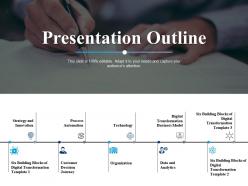
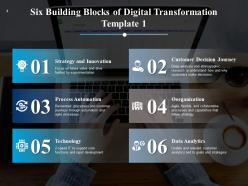
Slide 2: This slide shows Six Building Blocks of Digital Transformation Template 1 which further showcases- Customer Decision Journey, Organization, Data and Analytics, Strategy and Innovation, Process Automation, Technology, Digital Transformation Business Model, Presentation Outline.
Slide 3: This slide showcase Six Building Blocks of Digital Transformation Template Strategy and Innovation, Process Automation, Technology, Organization strategy, Data Analytics.
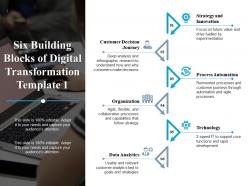
Slide 4: This slide presents Strategy and Innovation with these of the following Customer Decision Journey, Process Automation, agile processes, Oorganization strategy, Technology, Data Analytics, Usable and relevant customer analytics tied to goals and strategies Six Building Blocks of Digital Transformation Template 1
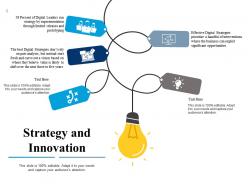
Slide 5: This slide showcases Strategy and Innovation.
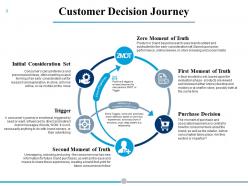
Slide 6: This slide shows Customer Decision Journey.
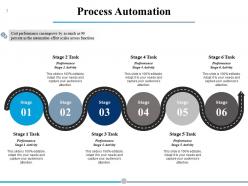
Slide 7: This slide showcases Process Automation. Cost performance can improve by as much as 90 percent as the automation effort scales across functions.
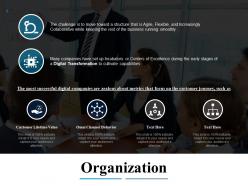
Slide 8: This slide presents Organization.
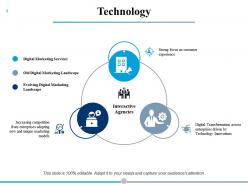
Slide 9: This slide showcases Technology which further presents Interactive Agencies, Strong focus on customer experience, Increasing competition from enterprises adopting new and unique marketing models, Digital Transformation across enterprises driven by Technology Innovations, Evolving Digital Marketing Landscape, Old Digital Marketing Landscape, Digital Marketing Services.
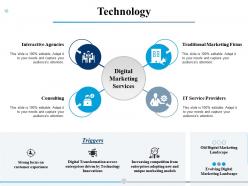
Slide 10: This slide showcases Digital Marketing Services which further can be used as- Innovations, Triggers, Evolving Digital Marketing Landscape, Old Digital Marketing Landscape, Technology, Traditional Marketing Firms, IT Service Providers, Consulting, Interactive Agencies.
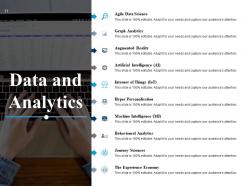
Slide 11: This slide showcases Data and Analytics with these of the following- Agile Data Science, Graph Analytics, Augmented Reality, Artificial Intelligence (AI), Hyper Personalisation, Machine Intelligence (MI), Behavioural Analytics, Journey Sciences, The Experience Economy.
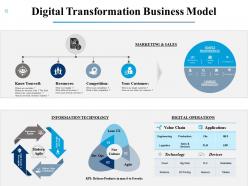
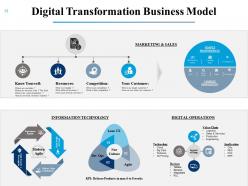
Slide 12: This slide showcases Digital Transformation Business Model
Slide 13: This slide presents Digital Transformation Business Model.
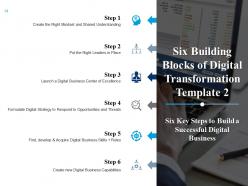
Slide 14: This slide presents Six Key Steps to Build a Successful Digital Business with these of the factors- Create the Right Mindset and Shared Understanding, Put the Right Leaders in Place, Launch a Digital Business Center of Excellence, Formulate Digital Strategy to Respond to Opportunities and Threats, Find, develop & Acquire Digital Business Skills + Roles, Create new Digital Business Capabilities, Six Building Blocks of Digital Transformation Template 2.
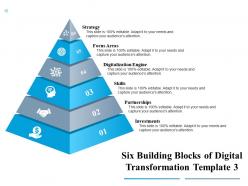
Slide 15: This slide shows Six Building Blocks of Digital Transformation Template- Digitalization Engine, Focus Areas, Strategy, Skills, Partnerships, Investments.
Slide 16: This slide Six Building Blocks of Digital Evolution Icons Slide.
Slide 17: This slide is titled Additional slides to proceed forward.
Slide 18: This is Our mission slide with imagery and text boxes to go with.
Slide 19: This is Our team slide with names and designation.
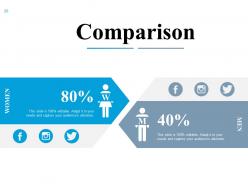
Slide 20: This slide shows Comparison of Positive Factors v/s Negative Factors with thumbs up and thumb down imagery.
Slide 21: This slide shows Our Goals for your company.
Slide 22: This slide displays a Bulb or idea image.
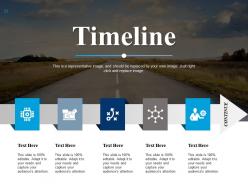
Slide 23: This is a Timelines slide to show- Plan, Budget, Schedule, Review.
Slide 24: This slide displays Financial Projections And Key Metrics for customers and employees.
Slide 25: This slide showcase Combo Chart.
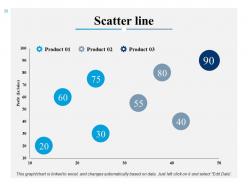
Slide 26: This slide showcases Scatter line.
Slide 27: This slide shows thanks.
Six building blocks of digital evolution powerpoint presentation slides with all 27 slides:
Have the gumption to take a chance with our Six Building Blocks Of Digital Evolution Powerpoint Presentation Slides. They are ever ready for any gamble.








FAQs for Six building blocks of digital evolution
Key milestones include the rise of social media platforms, widespread smartphone adoption, cloud computing infrastructure, artificial intelligence integration, and the Internet of Things expansion. These technological advances have revolutionized business operations by enabling remote collaboration, enhancing customer experiences, and streamlining data analytics, with many organizations finding that digital transformation ultimately delivers competitive advantage and operational efficiency.
Social media platforms have revolutionized digital communication strategies by enabling real-time engagement, targeted audience segmentation, personalized content delivery, and direct customer feedback loops. Organizations across retail, healthcare, and financial services leverage these platforms to enhance brand visibility, streamline customer interactions, and build community-driven marketing approaches, ultimately delivering improved customer experiences and competitive market positioning.
Artificial intelligence serves as the primary catalyst for digital evolution, driving automation, predictive analytics, personalized experiences, intelligent decision-making, and adaptive systems across industries. Through machine learning and neural networks, organizations in healthcare, finance, and retail streamline operations, reduce costs, and deliver superior customer experiences, while AI's continuous learning capabilities ensure businesses remain competitive in an increasingly data-driven landscape.
Businesses can leverage big data to enhance digital transformation by enabling data-driven decision making, personalizing customer experiences, optimizing operational processes, and predicting market trends through advanced analytics. Through strategic data integration, organizations streamline resource allocation, automate routine tasks, and deliver targeted services, with many companies finding that comprehensive data utilization accelerates competitive advantage and operational efficiency.
Mobile technology has fundamentally shifted user behavior toward instant accessibility, personalized experiences, and seamless multi-device integration, with users now expecting real-time responses and location-aware services. These changes have revolutionized sectors like retail, banking, and healthcare by enabling on-demand transactions, mobile-first customer interactions, and continuous connectivity, ultimately delivering enhanced convenience and competitive advantages for businesses adapting to increasingly mobile-centric consumer expectations.
Organizations face challenges including legacy system integration, employee resistance to change, budget constraints, cybersecurity risks, and skills gaps in digital technologies. While these obstacles can slow progress, many companies find that strategic planning, comprehensive training programs, and phased implementation approaches ultimately deliver improved operational efficiency, enhanced customer experiences, and significant competitive advantage in increasingly digital markets.
Digital evolution transforms customer engagement through personalized interactions, real-time communication channels, data-driven insights, and omnichannel experiences that meet customers where they are. These technologies enable businesses to deliver faster response times, customized offerings, and seamless service across platforms, with many retail and financial services organizations finding that strategic digital integration ultimately drives higher satisfaction and loyalty.
Cybersecurity implications include increased attack surfaces, evolving threat landscapes, compliance complexities, skills shortages, and infrastructure vulnerabilities as organizations digitize rapidly. While these challenges require strategic investment in advanced security frameworks, employee training, and continuous monitoring, they also drive competitive advantages through enhanced customer trust, operational resilience, and regulatory compliance in an increasingly digital marketplace.
E-commerce platforms have evolved by integrating AI-powered personalization, mobile-first designs, omnichannel experiences, social commerce features, and advanced analytics capabilities. These enhancements streamline shopping journeys, deliver targeted recommendations, and enable seamless cross-platform interactions, with retailers finding that such strategic combinations significantly boost customer engagement and conversion rates.
Emerging technologies driving digital evolution include quantum computing, advanced AI and machine learning, edge computing, 5G networks, and blockchain integration. These technologies streamline operations by enabling real-time processing, enhancing predictive analytics, and delivering seamless connectivity, with many organizations finding that strategic combinations ultimately provide competitive advantages and operational efficiency.
Organizations ensure inclusivity and accessibility by implementing universal design principles, conducting regular accessibility audits, providing multiple content formats, and incorporating assistive technologies throughout their digital platforms. These approaches streamline user experiences across diverse abilities and backgrounds, with many companies finding that accessible design ultimately delivers broader market reach, enhanced customer satisfaction, and stronger competitive advantage.
Digital evolution transforms traditional industries through automation, data analytics, artificial intelligence, and cloud technologies, while simultaneously displacing routine jobs and creating new roles requiring digital skills. Industries like banking, manufacturing, and retail experience streamlined operations and enhanced customer experiences, with many organizations finding that strategic digital adoption delivers competitive advantages, though workforce reskilling becomes increasingly critical for sustainable growth.
Digital literacy significantly enhances an individual's ability to adapt to digital changes by providing foundational skills in technology navigation, critical evaluation of digital information, and problem-solving across platforms. These competencies enable professionals to quickly learn new software, assess emerging tools effectively, and seamlessly transition between evolving systems, with many organizations finding that digitally literate employees demonstrate greater flexibility and innovation in increasingly dynamic work environments.
Educational institutions can prepare learners through digital literacy programs, coding curricula, data analysis training, collaborative online platforms, and adaptive learning technologies. These approaches enhance critical thinking, problem-solving abilities, and technical competencies by integrating real-world applications, cross-disciplinary projects, and industry partnerships, ultimately delivering workforce-ready graduates with competitive advantages in increasingly digital industries.
Companies can effectively measure digital transformation success through key performance indicators like operational efficiency gains, customer satisfaction scores, revenue growth metrics, employee productivity improvements, and technology adoption rates. These measurements enable organizations to track tangible outcomes such as reduced processing times, enhanced customer experiences, and streamlined workflows, with many enterprises finding that balanced scorecards combining financial and operational metrics ultimately deliver the most comprehensive insights into their transformation progress.
No Reviews