


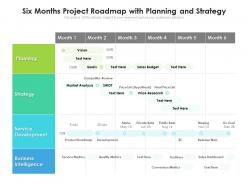
Six months project roadmap with planning and strategy





Try Before you Buy Download Free Sample Product
 Impress Your
 Audience
 100%
100% Editable
 Save Hours
 of Time


The success rate of business plans is hugely dependent on the plan of action, and this editable Six Months Project Roadmap With Planning And Strategy rightly serves the purpose. Encapsulate all the information related to the project in a well structured manner to obtain maximum efficiency by incorporating our stunning PowerPoint theme. State the critical deliverable, steps involved, time frame, workforce allocation, and lots more in an easy to understand manner by utilizing this pre designed roadmap PowerPoint layout. You can also prioritize your tasks and discuss the problem areas with your colleagues by incorporating this tailor made PPT layout. Empower your work plan by employing this professionally designed PPT theme. Entrepreneurs can download Six Months Project Roadmap With Planning And Strategy as a beneficial communication tool that facilitates in collaborating with different tasks and achieve targets.
People who downloaded this PowerPoint presentation also viewed the following :
Six months project roadmap with planning and strategy with all 2 slides:
Give your audience a fulfilling experience. They will find our Six Months Project Roadmap With Planning And Strategy elevating.
FAQs for Six months project roadmap with
A comprehensive project roadmap should include project objectives, key milestones, deliverables, timelines, resource allocation, dependencies, and risk mitigation strategies. These components work together by providing clear direction, enabling stakeholders to track progress, and facilitating resource planning, with many organizations finding that well-structured roadmaps ultimately deliver improved project visibility and enhanced team alignment.
A project roadmap helps align team objectives with business goals by providing visual clarity on strategic priorities, establishing clear milestone connections to company outcomes, and ensuring resource allocation supports overarching objectives. Through structured timeline mapping, teams can track progress against business targets, identify potential misalignments early, and adjust initiatives accordingly, ultimately delivering enhanced organizational focus and measurable strategic value.
Project roadmap creation typically requires 1-2 weeks for initial development, including stakeholder consultation, timeline mapping, milestone identification, and resource allocation planning. Updates should occur monthly or quarterly depending on project complexity, with many organizations finding that regular review cycles enable better risk management, timeline adjustments, and stakeholder alignment, ultimately delivering more predictable outcomes and competitive project execution.
Stakeholder inputs significantly shape project roadmaps by defining priorities, resource constraints, timeline expectations, and success criteria that guide strategic planning. Through interviews, surveys, and collaborative sessions, project managers integrate diverse perspectives from executives, team members, and clients, ensuring the roadmap addresses real business needs while balancing competing interests and ultimately delivering stakeholder value.
Best practices for visualizing project milestones include using clear timeline layouts, color-coding by priority or phase, incorporating progress indicators, maintaining consistent spacing, and highlighting critical path dependencies. These approaches streamline project communication by making key deadlines immediately visible, enabling stakeholder alignment, and facilitating resource planning, with many organizations finding that well-designed milestone visualization ultimately enhances project transparency and delivery success.
Project roadmaps evolve by adapting scope, timelines, and resource allocation as projects progress through initiation, planning, execution, and closure phases. During execution, teams frequently adjust milestones based on stakeholder feedback, technical discoveries, and market changes, with many organizations finding that flexible roadmaps enable faster pivots, better resource optimization, and ultimately deliver more successful project outcomes.
**INPUT**: What tools and software are recommended for creating effective project roadmaps? **OUTPUT**: Recommended project roadmap tools include Microsoft Project, Asana, Trello, Monday.com, and Smartsheet, each offering timeline visualization, resource allocation, and collaboration features. These platforms streamline project planning by enabling real-time updates, stakeholder communication, and progress tracking, with many organizations finding that integrated dashboards ultimately deliver enhanced transparency and improved project outcomes. **Word count: 54 words**
Task prioritization in project roadmaps involves evaluating impact, urgency, resource requirements, dependencies, and strategic alignment with business objectives. Successful organizations streamline this process by conducting stakeholder impact assessments, analyzing resource availability, and mapping critical path dependencies, ultimately delivering faster project outcomes and enhanced operational efficiency while maintaining strategic focus.
Key metrics include milestone completion rates, budget variance, timeline adherence, stakeholder satisfaction scores, and resource utilization efficiency. These indicators enable project managers to identify bottlenecks, optimize resource allocation, and maintain strategic alignment, with many organizations finding that regular metric tracking delivers improved project outcomes and enhanced stakeholder confidence.
Project roadmaps facilitate communication by providing a centralized visual reference that aligns all stakeholders on timelines, deliverables, and dependencies, eliminating confusion and miscommunication. These strategic tools streamline collaboration across departments like development, marketing, and operations, with many organizations finding that shared roadmaps reduce project delays by 30% and enhance transparency throughout execution phases.
Flexibility enables project roadmaps to adapt to changing requirements, market conditions, and stakeholder feedback while maintaining strategic direction and core objectives. Through iterative planning and built-in adjustment points, organizations can pivot resources, modify timelines, and incorporate new opportunities without derailing entire initiatives, ultimately delivering more responsive solutions and competitive advantage.
Risk management integrates into project roadmaps through regular assessments, contingency planning, milestone checkpoints, buffer allocation, and stakeholder communication protocols. Organizations across industries like construction, software development, and manufacturing embed these practices by identifying potential bottlenecks early, establishing alternative pathways, and maintaining flexible timelines, ultimately delivering more predictable outcomes and enhanced project success rates.
Common pitfalls include unrealistic timelines, insufficient stakeholder input, lack of flexibility for changes, inadequate resource planning, and poor risk assessment. These oversights can derail projects by creating unrealistic expectations, missing critical dependencies, and failing to account for market shifts, with many organizations finding that regular roadmap reviews and stakeholder alignment ultimately deliver more successful project outcomes.
Agile methodologies transform project roadmaps from rigid, sequential plans into flexible, iterative frameworks that emphasize adaptive planning, continuous feedback loops, and incremental delivery milestones. These approaches enable organizations to respond quickly to changing requirements, stakeholder input, and market conditions, with many teams finding that shorter sprint cycles and regular retrospectives ultimately deliver faster time-to-market and enhanced customer satisfaction.
Project roadmap effectiveness can be measured through milestone completion rates, timeline adherence, budget variance, stakeholder satisfaction scores, and strategic objective alignment. Organizations track these metrics quarterly, with many finding that successful roadmaps demonstrate 80-90% milestone achievement, maintain budget deviations under 10%, and ultimately deliver measurable business value while enhancing team productivity and stakeholder confidence.
No Reviews