


Smart Action Plan Powerpoint Ppt Template Bundles





Try Before you Buy Download Free Sample Product
 Impress Your
 Audience
 100%
100% Editable
 Save Hours
 of Time


Our Smart Action Plan Powerpoint Ppt Template Bundles are topically designed to provide an attractive backdrop to any subject. Use them to look like a presentation pro.
People who downloaded this PowerPoint presentation also viewed the following :
Smart Action Plan Powerpoint Ppt Template Bundles with all 17 slides:
Use our Smart Action Plan Powerpoint Ppt Template Bundles to effectively help you save your valuable time. They are readymade to fit into any presentation structure.

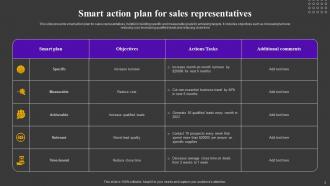
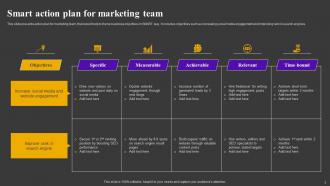
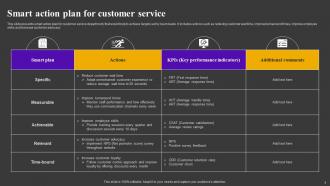
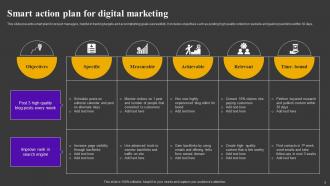





FAQs for Smart Action Plan Powerpoint
Start with concrete goals that have actual deadlines - none of that "we'll get to it eventually" stuff. Break everything down into bite-sized tasks someone can knock out in a day or two. Most plans crash because they're way too ambitious (guilty as charged on this one). Pick your top 3 priorities and assign each one to a specific person. Check in weekly to see what's working and what isn't. You'll need to pivot when things go sideways, which they always do. The real difference is having specific next steps instead of just hoping it'll work out somehow.
Dude, having a solid action plan is honestly a game changer. It stops projects from turning into total disasters because everyone knows their specific deadlines and what they're actually responsible for. No more of those panic moments where you realize everything's due tomorrow and nothing's done. Breaking things down into measurable goals helps you spot problems way earlier too. The best part? You'll think through all the potential screwups ahead of time instead of scrambling later. I swear by the SMART goals framework - sounds corporate but it actually works. Try it on your next project and you'll see what I mean.
Honestly, goals are everything when it comes to actually getting stuff done. Like, you can have all these great ideas floating around, but without clear targets you're basically just spinning your wheels. I always tell people to make them SMART - you know, specific, measurable, all that. But here's what really works: write down exactly what winning looks like for you first. Then figure out the steps backward from there. Short deadlines keep you honest too. Otherwise you'll just keep saying "someday I'll..." and someday never comes. Trust me on this one.
Dude, get your stakeholders involved from day one - don't wait until you're ready to roll everything out. Figure out who's gonna be impacted and actually ask them what they think about your goals and what could go wrong. I've watched so many solid plans crash and burn because people got blindsided. Skip those useless quarterly emails nobody opens. Set up real feedback loops where their input can actually change things. Oh, and be upfront about what you can't do with their suggestions - honestly, people respect that way more than getting strung along with fake promises. Regular conversations beat formal updates every time.
Pick 3-5 metrics that actually matter for what you're trying to accomplish - completion rates, timeline stuff, whatever KPIs you set at the beginning. Revenue changes, customer satisfaction, process improvements, that kind of thing. Honestly, I always fall into the trap of tracking way too much meaningless data. Focus on what shows real progress toward your goal. Set up check-ins every couple weeks so you can pivot if things aren't working. Oh, and milestone reviews are clutch - don't wait till the end to realize you're off track. Start by nailing down your top 3 success measures this week.
Honestly, you've gotta match your plan to how your team actually operates. Some groups thrive on constant check-ins and shared goals - they feed off each other's energy. Others work way better when given clear tasks and left alone (micromanaging kills their vibe). New teams? Yeah, they need extra communication and buffer time since everyone's still figuring out the dynamic. Experienced teams can handle streamlined processes - they've earned that trust. I'd start by really looking at how your people communicate and what their comfort levels are, then build your structure around that reality instead of some textbook approach.
Ugh, the worst thing you can do is make goals that are super vague - like "improve customer service" or whatever. What does that even mean? Don't try to fix everything at once either, your team will just hate you for it. I learned this the hard way lol. Keep your deadlines realistic because nothing kills morale like impossible timelines. Oh and actually track your progress! Can't tell you how many people skip this part then wonder why nothing's working. Honestly just pick 2-3 specific things you can actually measure and go from there.
Honestly, tech can make planning way less of a headache. I'd start with something like Asana or Notion - they're great for breaking big goals into actual doable tasks with deadlines. Data tools help you see if you're really making progress instead of just hoping you are. There's even AI stuff now that suggests ways to optimize your approach, which is pretty cool. The repetitive tasks? Automate those so you can focus on the stuff that actually matters. I mean, the time you'll save alone is worth it. Pick one tool that fixes your biggest planning nightmare first, then add more later.
Look, deadlines are what actually get stuff done - without them, projects just drag on forever (Parkinson's Law is so real). You need that urgency to force decisions and keep everyone focused. They help you figure out the right order for tasks too, plus spot problems before they blow up your whole timeline. Honestly, there's nothing like hitting a deadline to get your team pumped for the next phase. Just don't make them impossible - people will burn out. Too easy though? Nothing happens. Work backwards from your end goal and find that sweet spot where it's tough but doable.
Okay so first things first - figure out what your company's *actually* trying to do, not just the fancy mission statement BS. Break your plan into chunks where each piece feeds into those bigger goals. Honestly, I always draw this stuff out because it's so much easier to see where you're missing connections. Use the same metrics your bosses obsess over (trust me on this one). Build in regular check-ins too since priorities change constantly. Oh and keep that link between your daily tasks and the company strategy super obvious - like, painfully obvious sometimes.
Honestly, most people mess this up because they write their plan once and never look at it again. Build in regular check-ins from day one - like monthly reviews where you actually talk to your team and stakeholders about what's working. I'd schedule these conversations ahead of time so they don't get forgotten. The whole thing needs to be flexible, not set in stone. Pick specific people who'll give you honest feedback and make it systematic. Otherwise you're just crossing your fingers hoping someone will randomly tell you if you're off track. Short version: calendar the feedback sessions or they won't happen.
Honestly, smart action plans are way more focused than regular project plans. You get specific goals with actual deadlines instead of drowning in endless process docs. Traditional plans? They're like those massive binders that cover every scenario but somehow don't help you get stuff done. Smart plans have less fluff but way more accountability - which is kinda the whole point, right? It's like using GPS vs. an old paper map. Sure, the map shows everything, but GPS actually gets you there. Start with where you want to end up, then figure out how to get there backwards.
Honestly, visual tools are total lifesavers for planning stuff. You know how your brain gets all scattered with random ideas? Templates force you to actually organize everything - goals, deadlines, all that important stuff you'd normally forget about. They're basically like having a checklist that reminds you "hey, did you think about what could go wrong?" Plus seeing everything laid out makes it super obvious when you're being way too optimistic about timing. I always start simple and then mess around with it until it feels right. Way better than just winging it in your head.
Honestly, you just gotta stay on top of people or things fall apart fast. Do weekly check-ins where you actually talk through what's working - none of that boring status update BS where everyone's half-asleep. Give each goal to someone specific and make them come back with real numbers, not "yeah we're doing good" nonsense. A shared tracking tool helps too so people can see if they're behind without you having to be the bad guy constantly. Oh and make the accountability part super obvious and regular. Otherwise you'll only hear about problems when it's already too late to fix them.
Honestly, you've gotta match your message to who you're talking to. Executives want the big picture - ROI, outcomes, that stuff. Your team needs the nitty-gritty details and deadlines. I made this mistake once where I used the same presentation for both groups and it bombed spectacularly. Visuals help when things get complicated, but don't overcomplicate the text. Also, figure out how each group likes to receive info first - some want detailed emails, others prefer quick verbal updates. Oh, and skip the jargon unless you're talking to people who actually use it daily.
-
The website is jam-packed with fantastic and creative templates for a variety of business concepts. They are easy to use and customize.
-
If you are looking for satisfactory PowerPoint services, SlideTeam is your go-to place. I am fully contented with their research and development team.