


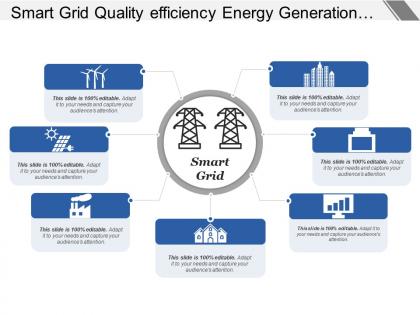
Smart grid quality efficiency energy generation storage options power distribution demand




Try Before you Buy Download Free Sample Product
 Impress Your
 Audience
 100%
100% Editable
 Save Hours
 of Time


Be always at the forefront with our Smart Grid Quality Efficiency Energy Generation Storage Options Power Distribution Demand. Be forever ahead in any game.
People who downloaded this PowerPoint presentation also viewed the following :
Smart grid quality efficiency energy generation storage options power distribution demand with all 5 slides:
Bring about agreement with our Smart Grid Quality Efficiency Energy Generation Storage Options Power Distribution Demand. Give them a chance to bury the hatchet.
FAQs for Smart grid quality efficiency energy generation storage options
So basically you've got four big pieces to think about. Smart meters track your energy use in real-time - way better than waiting for those monthly bills, honestly. Then there's automated distribution that spots outages and reroutes power without anyone touching anything. Communication networks let all the devices actually talk to each other, which is pretty cool when you think about it. Analytics software crunches the numbers to keep everything running smooth. Here's the thing though - don't get caught up in fancy individual features. What really matters is how well everything works together as a system.
So basically smart grids let your house actually talk to the power company - wild, right? Your smart meter sends back real usage data instead of them just guessing how much power you need. The system can automatically shift electricity around based on what's actually happening, not estimates. You'll see your own usage patterns too, which is honestly pretty eye-opening. Peak times get predicted better, so there's way less waste overall. Oh and obviously your bills should drop since the whole thing runs more efficiently. It's like having your electrical grid finally join the 21st century.
So renewable energy is like the heart of smart grids, but here's the thing - solar and wind are moody as hell. One minute you've got tons of power, next minute it's cloudy or dead calm. That's where the smart part kicks in. The grid uses real-time data to juggle everything automatically, switching between storage and backup sources when renewables dip. It also figures out the best times to store extra power. Honestly, the prediction algorithms are getting scary good at this stuff. Just make sure any system you're looking at can handle power flowing both ways and has solid monitoring.
So here's the deal - smart grids let you see everything happening in real-time across your network. No more waiting for angry customers to call about outages. The system monitors itself and can automatically send power around broken stuff or overloaded areas. It's actually pretty slick. You'll also get data that predicts when equipment's about to crap out, so your crews can swap it before it fails. Oh, and the predictive analytics part saves you tons of headaches down the road. Start with smart sensors at your most critical points - that gets the data flowing right away.
Okay so first thing - network segmentation is huge for isolating your critical stuff. Encrypt everything that's moving between systems. All those connected devices create such a massive attack surface, it's honestly kind of scary. Zero-trust is where you want to be - verify every single device and user, don't assume anything. You'll need continuous monitoring to catch weird behavior early. Regular audits and solid incident response plans aren't optional here. Oh, and this isn't like securing a normal office network - power grids can't go down for updates, so availability has to stay your top priority.
So basically smart grids let your EV and the power system talk to each other, which is actually pretty neat. You can set it to charge overnight when rates are lower. During peak hours? The grid can even borrow power back from your car's battery - honestly didn't know that was a thing until recently. It also helps prevent the whole neighborhood from losing power when everyone gets home and plugs in at 6pm. Definitely check if your utility offers time-of-use pricing, and maybe grab a smart charger to take advantage of it all.
So data analytics takes all that sensor info from smart grids and turns it into stuff you can actually use. Real-time monitoring shows energy flow patterns, plus predictive maintenance catches problems before everything goes dark. The demand forecasting is honestly pretty impressive - algorithms spot things we'd never notice and balance supply automatically. Oh, and it helps optimize distribution routes too. Renewable integration works way better with good analytics backing it up. One thing though - if your data quality sucks from the start, don't expect miracles from your algorithms. That whole garbage in, garbage out thing is real.
Smart grids basically save everyone money through lower operating costs and way better energy efficiency. Utilities don't have to send trucks out as much since everything's automated and outages get fixed faster. Your electric bill becomes predictable too - no more shock when you open that envelope (do they even mail those anymore?). Businesses love it because power stays on consistently. The cool part is how much easier it makes adding solar and wind power to the mix. Honestly, start keeping track of what you're paying now for electricity so you'll know how much you're actually saving later.
Smart meters show you exactly what's eating up your electricity bill in real time - usually it's that ancient fridge, trust me. You can track everything through apps and see which appliances are the worst offenders. The cool part is time-of-use pricing lets you run stuff like dishwashers when rates drop at night. If you've got solar panels, you can actually sell power back to the grid. Some systems will even mess with your thermostat automatically during peak hours. Basically just shift when you use the big energy stuff and watch your bill shrink.
Dude, utilities face three big headaches with smart grids. First up - the money situation is brutal. We're talking billions just for new meters and sensors. Cybersecurity keeps everyone up at night too since you're basically connecting the power grid to the internet (yikes). Getting customers to actually want this stuff? That's another beast entirely. People freak out about privacy and just hate change in general. Don't even get me started on regulatory approval - takes forever. Oh, and all their old systems need to play nice with the new tech while retraining staff. Honestly, pilot programs are the way to go first.
So smart grids are basically like the communication layer that lets microgrids talk to the main power network. They handle all the switching when you want to disconnect during outages or plug back in. Real-time data flows both ways - pricing, power levels, all that stuff gets coordinated automatically. You can actually sell your extra solar back or buy when you're running low. Pretty cool setup if you ask me. Just heads up though - check if your utility even has smart grid tech before planning anything major, because that'll make or break how smooth the whole integration goes.
Smart grids are actually pretty amazing - they cut emissions by 10-20% through better efficiency and renewable integration. Real-time data helps utilities balance supply and demand more precisely. Less waste from backup power plants running unnecessarily. The renewable integration part is huge though - makes incorporating solar and wind so much easier. Your devices can automatically dial back power usage during peak times through demand response programs. Oh, and if you're looking at energy solutions, definitely check for smart grid compatibility. I mean, why wouldn't you want to maximize your environmental impact?
So basically your utility can talk to your smart devices to cut power during busy times. Your thermostat might go up a few degrees automatically, or your car stops charging for like an hour when the grid's overwhelmed. Way better than just building more power plants, right? The smart grid does this two-way communication thing that old systems couldn't handle. Most programs give you bill credits for participating - and honestly, you can usually override it if you really need to. Just see what your utility offers first.
Ugh, smart grids are kinda invasive tbh. They track your energy usage so precisely that companies can figure out when you're home, what you're doing, your whole routine basically. Your utility can literally build a profile of how you live from this data - which is honestly gross. Plus there's always the risk of breaches or them selling your info to whoever wants it. Oh and don't even get me started on government surveillance possibilities. Definitely check what your utility's privacy policy says about data collection and sharing.
So basically smart grids are like having a really good traffic controller for electricity. Your solar panels are cranking out power? The grid instantly knows where to send that extra juice. Same with wind turbines, batteries, all that stuff. It's got two-way communication so it can actually predict when demand's gonna spike - way better than the old dinosaur systems we used to have. Honestly pretty impressive tech. Oh, and if you're thinking about installing solar or whatever, definitely check if your utility company has smart grid setup first. Makes the whole process way less of a headache.
-
Good research work and creative work done on every template.
-
Great experience, I would definitely use your services further.