


Social Media Marketing Strategy To Improve Brand Loyalty Powerpoint Presentation Slides MKT CD V




Try Before you Buy Download Free Sample Product
 Impress Your
 Audience
 100%
100% Editable
 Save Hours
 of Time


Were pleased to introduce our comprehensive and informative PowerPoint presentation on Social Media Marketing Strategy to Improve Brand Loyalty. This presentation is centered around providing a deep understanding of direct marketing and furnishing businesses with practical techniques to effectively reach their target segments and drive sales. Additionally, the direct mail module on social media marketing covers strategies that explore the vast potential of platforms such as Facebook, Instagram, and YouTube for direct marketing. Moreover, the Internet advertising slides on direct selling marketing offer insights into budgeting for direct marketing campaigns and optimizing return on investment ROI. Lastly, the web advertising modules include key performance indicator KPI dashboards that can assist marketers in monitoring the performance of their direct marketing strategies. This fully editable template is available for instant access, providing a valuable resource for enhancing your brands sales through effective direct marketing strategies.
People who downloaded this PowerPoint presentation also viewed the following :
Content of this Powerpoint Presentation
Slide 1: This slide introduces Social Media Marketing Strategy to Improve Brand Loyalty. State your company name and begin.
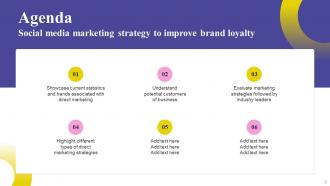
Slide 2: This is an Agenda slide. State your agendas here.
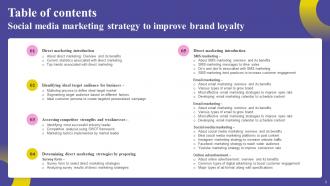
Slide 3: This slide shows Table of Content for the presentation.
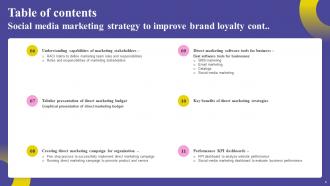
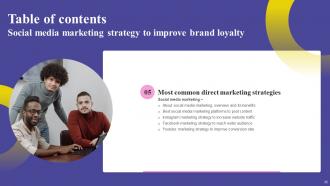
Slide 4: This slide also shows Table of Content for the presentation.
Slide 5: This slide shows title for topics that are to be covered next in the template.
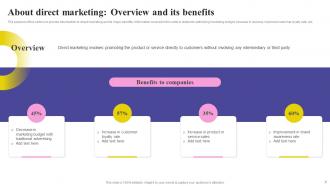
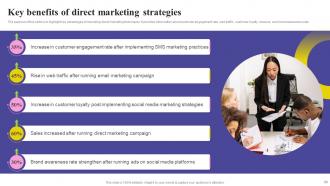
Slide 6: This slide provides introduction to direct marketing and its major benefits.
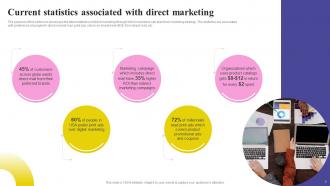
Slide 7: This slide showcases the latest statistics of direct marketing through which marketers can plan their marketing strategy.
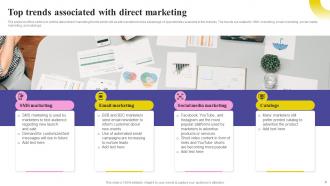
Slide 8: This slide outlines latest direct marketing trends which will assist marketers to take advantage of opportunities available in the industry.
Slide 9: This slide shows title for topics that are to be covered next in the template.
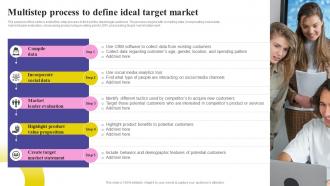
Slide 10: This slide exhibits five step process to find out the ideal target audience.
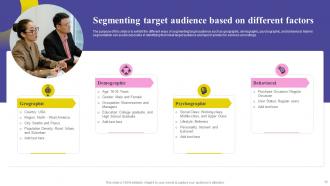
Slide 11: This slide presents different ways of segmenting target audience such as geographic, demographic, psychographic, and behavioral.
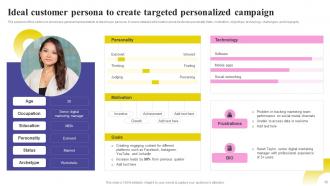
Slide 12: This slide showcases general representation of ideal buyer persona.
Slide 13: This slide shows title for topics that are to be covered next in the template.
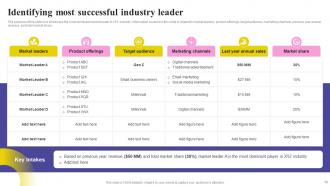
Slide 14: This slide showcases the most dominant market leader in XYZ industry.
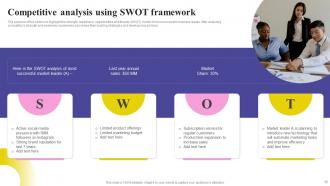
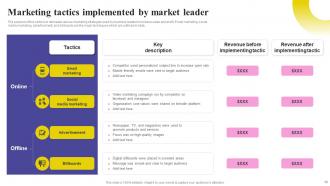
Slide 16: This slide describes various marketing strategies used by business leader to increase sales and profit.
Slide 17: This slide shows title for topics that are to be covered next in the template.
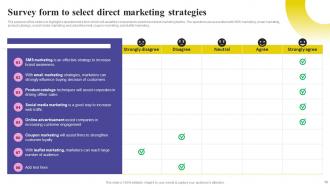
Slide 18: This slide highlights a questionnaire form which will assist the companies to select best direct marketing tactics.
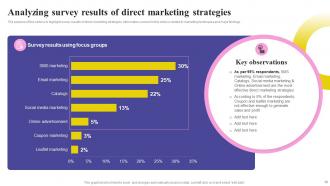
Slide 19: This slide presents survey results of direct marketing strategies.
Slide 20: This slide shows title for topics that are to be covered next in the template.
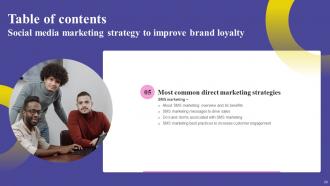
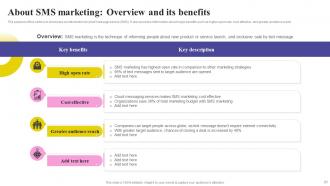
Slide 21: This slide showcases an introduction to short message service (SMS).
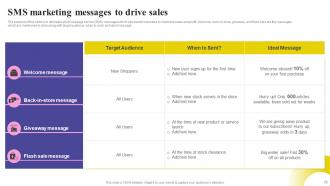
Slide 22: This slide displays short message service (SMS) messages which can assist corporates to maximize sales and profit.
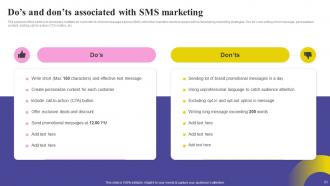
Slide 23: This slide showcases multiple do’s and don’ts of short message service (SMS) which the marketer needs to aware before developing marketing strategies.
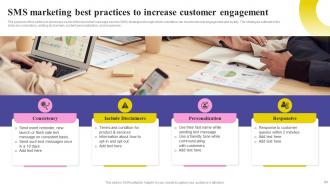
Slide 24: This slide presents some of the best short message service (SMS) strategies through which marketers can boost customer engagement and loyalty.
Slide 25: This slide shows title for topics that are to be covered next in the template.
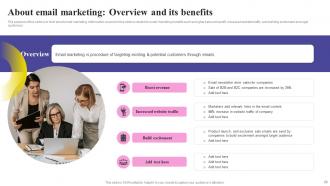
Slide 26: This slide brief about email marketing including email marketing benefits.
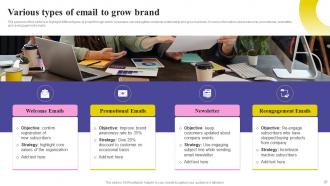
Slide 27: This slide highlights different types of email through which corporates can strengthen customer relationship and grow business.
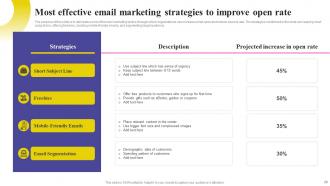
Slide 28: This slide displays some of the best marketing tactics through which organizations can increase email open and reduce bounce rate.
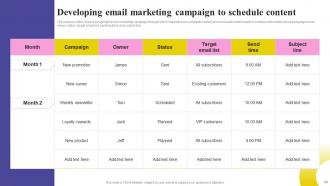
Slide 29: This slide highlights email marketing campaign through which marketers can schedule content and send automated emails.
Slide 30: This slide shows title for topics that are to be covered next in the template.
Slide 31: This slide provides introduction to marketing collateral document.
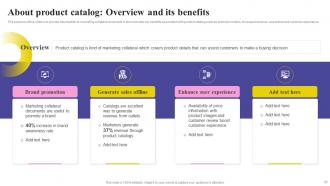
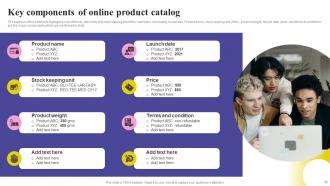
Slide 32: This slide highlights some of the key elements of product catalog which the marketers can display on website.
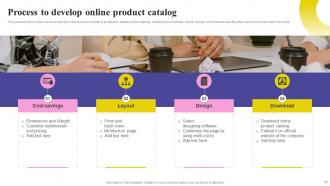
Slide 33: This slide showcases four step process of creating an effective digital product catalog.
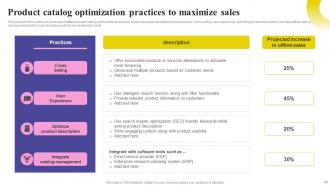
Slide 34: This slide presents multiple product catalog optimization techniques which can assist marketers to boost revenue.
Slide 35: This slide shows title for topics that are to be covered next in the template.
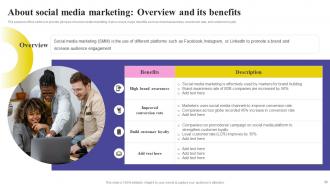
Slide 36: This slide provides glimpse of social media marketing and covers major benefits.
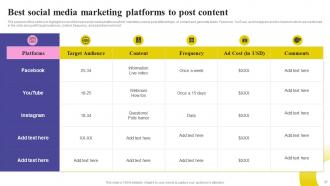
Slide 37: This slide highlights some of the best social media platforms which marketers uses to post different type of content and generate leads.
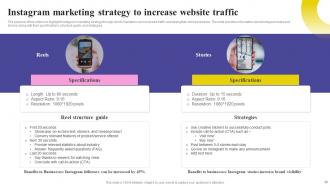
Slide 38: This slide presents Instagram marketing strategy through which marketers can boost web traffic and strengthen online presence.
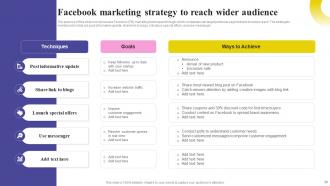
Slide 39: This slide showcases Facebook (FB) marketing techniques through which companies can target particular segment and increase reach.
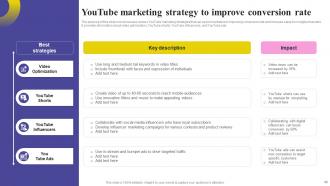
Slide 40: This slide displays various YouTube marketing strategies that can assist marketers in improving conversion rate.
Slide 41: This slide shows title for topics that are to be covered next in the template.
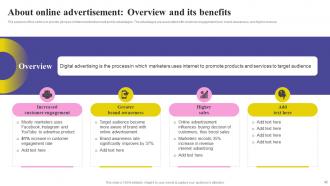
Slide 42: This slide provides glimpse of internet advertisement and its advantages.
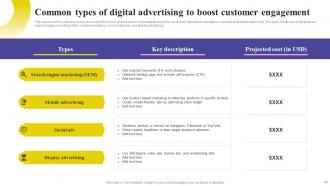
Slide 43: This slide showcases some of the most common types of web advertising which can assist marketers to strengthen customer relationship and loyalty.
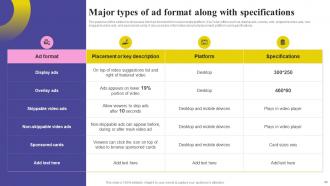
Slide 44: This slide displays list of ad format which social media platform (YouTube) offers.
Slide 45: This slide shows title for topics that are to be covered next in the template.
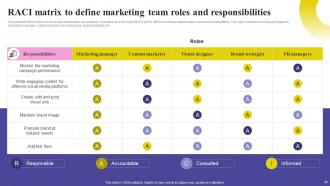
Slide 46: This slide showcases responsible, accountable, consulted, and informed (RACI) grid to define marketing stakeholders roles and responsibilities.
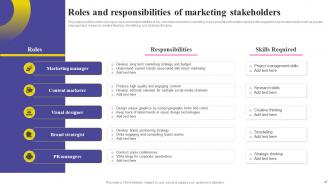
Slide 47: This slide presents major roles and responsibilities of key members involved in marketing.
Slide 48: This slide shows title for topics that are to be covered next in the template.
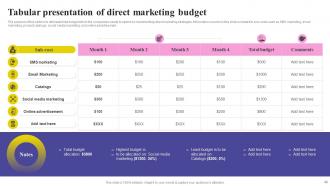
Slide 49: This slide displays total budget which the companies needs to spend on implementing direct marketing strategies.
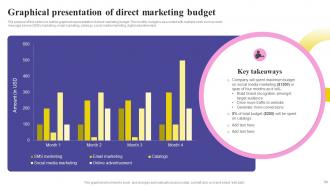
Slide 50: This slide outlines graphical representation of direct marketing budget.
Slide 51: This slide shows title for topics that are to be covered next in the template.
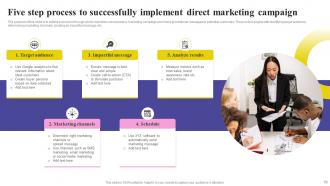
Slide 52: This slide outlines a process through which marketers can execute a marketing campaign and share promotional messages to potential customers.
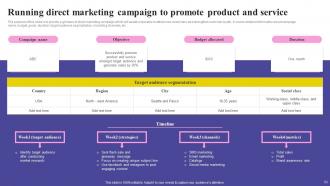
Slide 53: This slide provides direct marketing campaign which will assist corporates to attract new customers and strengthen customer loyalty.
Slide 54: This slide shows title for topics that are to be covered next in the template.
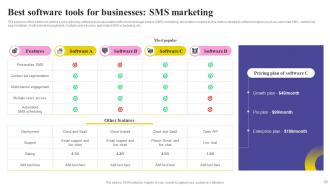
Slide 55: This slide outlines some of the top software tools associated with short message service (SMS) marketing.
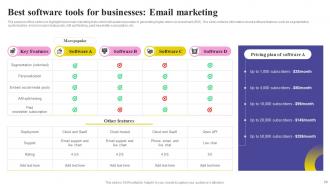
Slide 56: This slide highlights best email marketing tools which will assist corporates in generating higher return on investment (ROI).
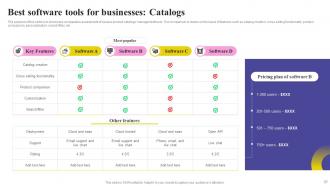
Slide 57: This slide showcases comparative assessment of various product catalogs management tools.
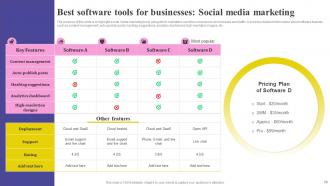
Slide 58: This slide highlights social media marketing tools using which marketers can drive conversions and increase web traffic.
Slide 59: This slide shows title for topics that are to be covered next in the template.
Slide 60: This slide highlights key advantages of executing direct marketing techniques.
Slide 61: This slide shows title for topics that are to be covered next in the template.
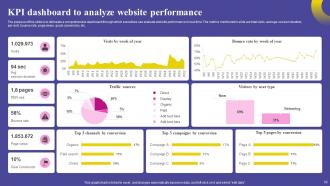
Slide 62: This slide displays a comprehensive dashboard through which executives can evaluate website performance in real-time.
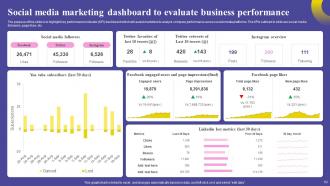
Slide 63: This slide highlights key performance indicator (KPI) dashboard.
Slide 64: This slide shows all the icons included in the presentation.
Slide 65: This slide is titled as Additional Slides for moving forward.
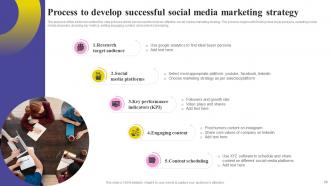
Slide 66: This slide outlines five step process which can be used to build an effective social media marketing strategy.
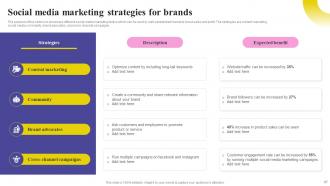
Slide 67: This slide showcases different social media marketing tactics which can be used by well-established brands to boost sales and profit.
Slide 68: This is Our Vision, Mission & Goal slide.
Slide 69: This is About Us slide to show company specifications etc.
Slide 70: This is a Quotes slide to convey message, beliefs etc.
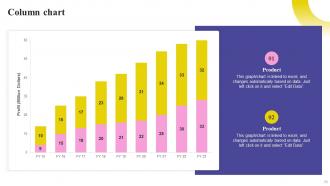
Slide 71: This is a financial slide. Show your finance related stuff here.
Slide 72: This slide provides 30 60 90 Days Plan with text boxes.
Slide 73: This is a Timeline slide. Show data related to time intervals here.
Slide 74: This is a Thank You slide with address, contact numbers and email address.
Social Media Marketing Strategy To Improve Brand Loyalty Powerpoint Presentation Slides MKT CD V with all 82 slides:
Use our Social Media Marketing Strategy To Improve Brand Loyalty Powerpoint Presentation Slides MKT CD V to effectively help you save your valuable time. They are readymade to fit into any presentation structure.










FAQs for Social Media Marketing Strategy To Improve Brand Loyalty Powerpoint Presentation Slides
Key components include audience research and targeting, content planning and creation, platform selection, engagement tactics, and performance analytics. These elements work together by identifying ideal customers, developing relevant messaging, choosing appropriate channels, fostering meaningful interactions, and measuring results, ultimately delivering enhanced brand visibility, stronger customer relationships, and improved conversion rates across digital touchpoints.
Identifying and analyzing your target audience involves examining demographics, psychographics, engagement patterns, platform preferences, and competitor followers through social media analytics tools. These insights enable businesses to create targeted content strategies, optimize ad spend, and enhance customer engagement across platforms like Instagram, LinkedIn, and Facebook, with many organizations finding that precise audience segmentation significantly improves conversion rates.
Content variety enhances social media marketing strategies by maintaining audience engagement, expanding reach across different user preferences, and showcasing brand versatility through posts, videos, stories, and interactive content. This strategic approach enables businesses to connect with diverse audience segments, increase platform algorithm visibility, and build stronger community relationships, with many brands finding that varied content drives higher engagement rates and sustained follower growth.
Analytics enhance social media marketing by tracking engagement rates, audience demographics, content performance, and conversion metrics across platforms. Through tools like Facebook Insights, Google Analytics, and native platform dashboards, businesses identify high-performing content types, optimal posting times, and audience preferences, ultimately enabling data-driven strategy refinements that boost ROI and customer engagement.
Best practices for creating shareable content include developing authentic storytelling, using high-quality visuals, incorporating trending hashtags, posting at optimal times, and encouraging user-generated content. These strategies enhance audience engagement by building genuine connections, increasing brand visibility, and fostering community interaction, with many organizations finding that consistent, value-driven content ultimately delivers higher reach and stronger customer loyalty.
Measuring social media ROI involves tracking conversion rates, customer acquisition costs, engagement metrics, brand awareness lift, and revenue attribution through analytics platforms. Companies use UTM parameters, social listening tools, and CRM integration to connect social activities with sales outcomes, with many organizations finding that multi-touch attribution models provide the most accurate assessment of campaign effectiveness.
Effective engagement strategies include posting interactive content like polls and questions, sharing user-generated content, responding promptly to comments, using trending hashtags strategically, and posting when your audience is most active. These approaches enhance visibility and foster community building by encouraging authentic conversations, creating shareable moments, and establishing consistent brand presence, ultimately delivering stronger customer relationships and increased reach across platforms.
Posting frequency varies by platform, with Instagram and TikTok performing best with daily content, LinkedIn requiring 3-5 posts weekly, Twitter benefiting from multiple daily tweets, and Facebook succeeding with 3-4 weekly posts. These strategic posting schedules enhance audience engagement, improve algorithmic visibility, and maintain consistent brand presence, with many businesses finding that platform-specific consistency delivers better reach and conversion rates than sporadic high-volume posting.
Paid social media advertising offers precise audience targeting, guaranteed visibility, immediate results, scalable budgets, and detailed performance analytics, while organic reach builds authentic relationships and long-term trust at no direct cost. Many businesses find that combining both approaches delivers optimal results, with paid campaigns driving immediate conversions and organic content nurturing customer loyalty, ultimately maximizing overall marketing ROI.
User-generated content can be effectively incorporated through branded hashtag campaigns, customer story features, review showcases, contest submissions, and community challenges. These approaches enhance authenticity and engagement by leveraging customer testimonials, product demonstrations, and social proof, while brands like Starbucks and Nike find that curated UGC significantly increases trust and reduces content creation costs.
Visual content serves as the cornerstone of social media marketing, driving engagement, brand recognition, storytelling, and message retention across platforms. These formats enhance audience connection by simplifying complex information, increasing shareability, and boosting algorithmic visibility, with brands finding that visual posts generate significantly higher engagement rates, ultimately delivering stronger brand awareness and competitive advantage.
Maintaining consistent brand voice across social media channels requires developing comprehensive brand guidelines, training all content creators on tone and messaging standards, and implementing regular content audits. Through strategic planning and clear communication protocols, organizations streamline their social presence while enhancing customer recognition and trust, with many brands finding that consistency ultimately delivers stronger engagement and competitive advantage.
Social media marketing tools include Hootsuite, Buffer, Sprout Social, Canva, and Google Analytics for scheduling, content creation, and performance tracking. These platforms streamline operations by automating post scheduling, centralizing multi-channel management, and providing detailed analytics, with many businesses finding they reduce management time while enhancing engagement and strategic decision-making capabilities.
Adapting to algorithm changes requires diversifying content formats, maintaining consistent engagement, prioritizing authentic interactions, and analyzing performance data regularly to identify what resonates with audiences. Many brands find success by focusing on community building rather than reach alone, creating valuable content that encourages meaningful conversations, and staying flexible with posting strategies across platforms.
Common social media marketing mistakes include inconsistent posting schedules, ignoring audience engagement, posting without strategic planning, neglecting platform-specific content optimization, and failing to track performance metrics. These oversights can significantly undermine brand credibility and reach, with many businesses finding that strategic consistency, authentic engagement, and data-driven adjustments ultimately deliver stronger customer relationships and competitive advantage.
-
Fantastic collection. Loved how we can personalize these templates as per the requirements.
-
The designs are super attractive. Me and my team love using SlideTeam’s presentations.