


Social media roadmap powerpoint presentation slides




Try Before you Buy Download Free Sample Product
 Impress Your
 Audience
 100%
100% Editable
 Save Hours
 of Time


Outline the various marketing campaigns to sell your products to the customers by using our content ready Social Media Roadmap PowerPoint Presentation Slides. With the help of this visually appealing social media management tools PPT theme, you can explain how to create compelling content that grabs the attention of your viewers. Use internet marketing PowerPoint graphics and mention the right digital media platform to advertise your product. With the aid of this easy-to-edit media management presentation template, determine the steps to attain customer interest in products and services. Take the assistance of this professionally designed digital marketing & advertising PPT visual to build brand reputation in the market. Employ social marketing campaigns PowerPoint layout to share the message of your product or brand with the target audience. Therefore, download our ready-to-use social media marketing PPT complete deck and design a strategy to launch your products at the right time.
People who downloaded this PowerPoint presentation also viewed the following :
Content of this Powerpoint Presentation
Slide 1: This slide introduces Social Media Roadmap. Mention your company name and begin.
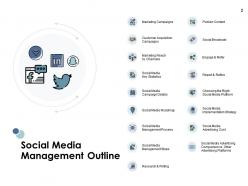
Slide 2: This slide presents the Outline.
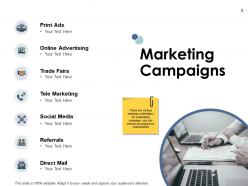
Slide 3: This slide showcase various Marketing Campaigns such as Online Advertising, Print Ads, Trade Fairs, Tele Marketing, Social Media, Referrals, Direct Mail
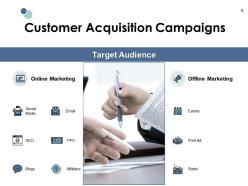
Slide 4: This slide showcases Customer Acquisition Campaigns like Online Marketing, Social Media, SEO, Blogs, Email, PPC, Affiliates, Offline Marketing, Events, Print Ad and Radio
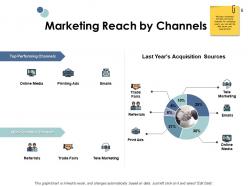
Slide 5: This slide depicts Marketing Reach by Channels. Showcase best and worst channels for marketing reach.
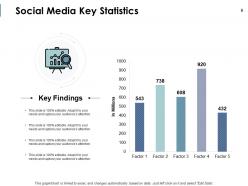
Slide 6: This slide represents Social Media Key Statistics.
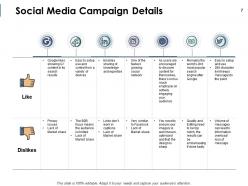
Slide 7: This slide Social Media Campaign Details
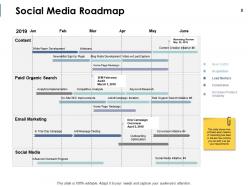
Slide 8: This is Social Media Roadmap slide.
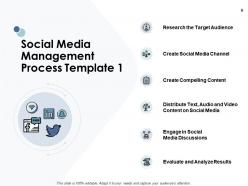
Slide 9: This slide showcases Social Media Management Process.
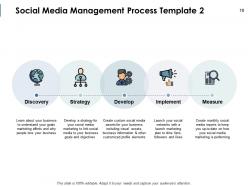
Slide 10: This is another slide for Social Media Management Process.
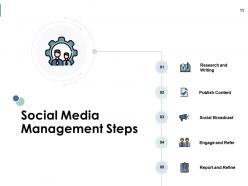
Slide 11: This slide represents Social Media Management Steps such as Research and Writing, Publish Content, Social Broadcast, Engage and Refer and Report and Refine
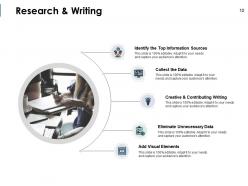
Slide 12: This slide represents Research & Writing.
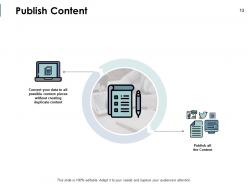
Slide 13: This slide represents the Publish Content.
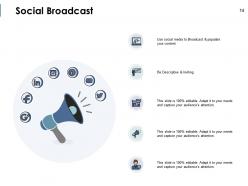
Slide 14: This slide showcases Social Broadcast.
Slide 15: This is Engage & Refer slide. You can post comments, answer questions and thank connections for their participation
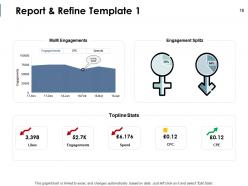
Slide 16: This slide showcases Report & Refine.
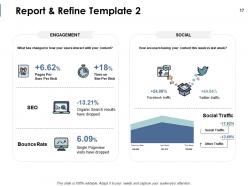
Slide 17: This is another slide showcasing Report & Refine.
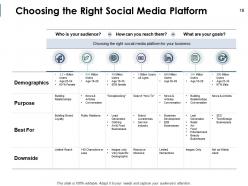
Slide 18: This slide is about Choosing the Right Social Media Platform.
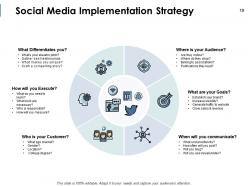
Slide 19: This slide showcases Social Media Implementation Strategy. List out the strategies such as What Differentiates you?, What's your elevator pitch?, Gather best testimonials, What makes you unique?, Craft a compelling story?, Where is your Audience?, Are they online?, Where do they shop?, Belong to associations?, Publications they read?, Who is your Customer?, What age bracket?, etc.
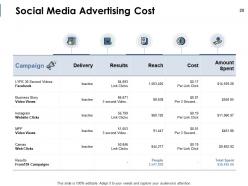
Slide 20: This slide showcases Social Media Advertising Cost.
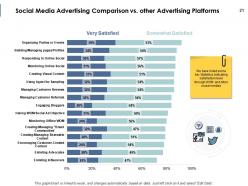
Slide 21: This slide showcase the comparison between Social Media Advertising and other Advertising Platforms.
Slide 22: This slide represents Coffee Break for 15 minutes.
Slide 23: This is Social Media Roadmap Icons Slide.
Slide 24: This slide is titled as Additional Slides for moving forward.
Slide 25: This is Our Mission slide. Showcase your Vision, Mission and Values.
Slide 26: This is Our Team slide with names and designation.
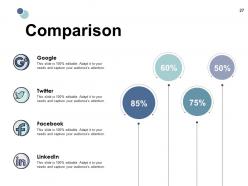
Slide 27: This slide showcase the Comparison between different social medias like Google, Facebook, LinkedIn, Twitter etc.
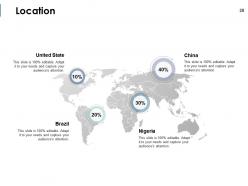
Slide 28: This is Location slide.
Slide 29: This slide showcases the Magnifying Glass that you can use emphasize on a particular content.
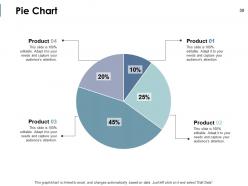
Slide 30: This slide represents the Pie Chart.
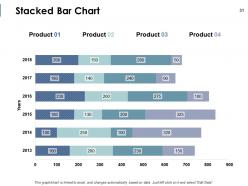
Slide 31: This slide showcases the Stacked Bar Chart.
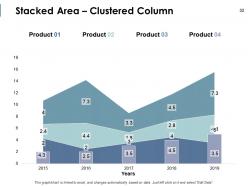
Slide 32: This slide showcases Stacked Area – Clustered Column.
Slide 33: This is Contact slide with Address, contact numbers and Email address.
Slide 34: This is Thank You slide.
Social media roadmap powerpoint presentation slides with all 34 slides:
Give them a good grounding with our Social Media Roadmap Powerpoint Presentation Slides. They are great for explaining fundamentals.






FAQs for Social media roadmap
Key components of an effective social media strategy include clear objectives, target audience identification, platform selection, content planning, and performance analytics. These elements work together by aligning business goals with audience preferences, optimizing resource allocation across channels, and enabling data-driven refinements, with many organizations finding that this strategic combination delivers enhanced brand visibility, improved customer engagement, and measurable competitive advantage.
Businesses identify their target audience through social media analytics, demographic insights, engagement patterns, competitor analysis, and customer surveys. These methods enable companies to understand user behaviors, preferences, and platform usage across sectors like retail, hospitality, and financial services, ultimately delivering more targeted content and improved customer engagement rates.
Content creation serves as the foundation of successful social media strategies, encompassing engaging visuals, compelling copy, educational materials, interactive posts, and brand storytelling that resonates with target audiences. These diverse content formats drive audience engagement, build brand authority, and foster community connections, with many organizations finding that consistent, value-driven content ultimately delivers increased reach, customer loyalty, and measurable business growth across platforms.
Analytics influence social media strategy development by providing data-driven insights into audience behavior, content performance, engagement patterns, and optimal posting times. Through comprehensive tracking tools, businesses can identify which platforms generate the highest ROI, refine content strategies, and allocate resources more effectively, ultimately delivering improved customer engagement and measurable business growth.
Best practices for scheduling social media posts include understanding platform-specific peak times, maintaining consistent posting frequency, adapting content formats for each channel, using scheduling tools for automation, and analyzing audience engagement patterns. These strategies streamline content management by optimizing reach timing, ensuring brand consistency, and maximizing audience interaction, with many organizations finding that strategic scheduling delivers improved engagement rates and enhanced operational efficiency.
Engagement metrics refine social media strategy by revealing content performance, audience preferences, optimal posting times, and platform-specific trends through detailed analytics analysis. These insights enable marketers to adjust messaging, reallocate resources across high-performing channels, and optimize content formats, ultimately delivering improved reach, stronger brand connections, and higher conversion rates.
Essential social media management tools include Hootsuite, Buffer, Sprout Social, Later, and native analytics platforms like Facebook Insights and Twitter Analytics. These platforms streamline content scheduling, audience engagement, and performance tracking across multiple channels, with many businesses finding that integrated dashboards significantly reduce time spent on manual posting while delivering enhanced audience insights and improved campaign ROI.
Influencer collaboration amplifies brand reach, enhances credibility, and drives targeted engagement by leveraging established audiences and authentic storytelling capabilities. These strategic partnerships integrate seamlessly with content marketing, community building, and conversion optimization efforts, with brands across retail, beauty, and technology sectors finding that influencer-generated content delivers higher engagement rates and builds stronger consumer trust than traditional advertising approaches.
Effective brand visibility strategies include consistent visual branding, strategic hashtag usage, authentic storytelling, influencer partnerships, and engaging community management. These approaches enhance reach by creating memorable content, leveraging algorithm optimization, and building genuine connections, with many retail and service businesses finding that consistent posting schedules and interactive content ultimately deliver higher engagement rates and stronger brand recognition.
Businesses can leverage user-generated content by encouraging customer reviews, showcasing product photos from users, creating branded hashtag campaigns, featuring customer testimonials, and reposting authentic experiences. This approach builds trust through authentic voices while reducing content creation costs, with many retail and hospitality brands finding that UGC drives higher engagement and conversion rates than traditional promotional content.
Legal considerations for social media content include copyright compliance, trademark usage, privacy regulations like GDPR, disclosure requirements for sponsored content, and defamation risks. These frameworks help organizations navigate complex regulatory landscapes by ensuring proper attribution, obtaining necessary permissions, and maintaining transparent advertising practices, with many brands finding that proactive legal compliance ultimately delivers stronger customer trust and competitive advantage.
Companies maintain consistent brand voice across platforms by developing comprehensive style guides, training content teams regularly, using centralized content calendars, and establishing clear approval processes. While each platform requires tailored approaches, organizations like Starbucks and Nike successfully adapt their core messaging to different audiences, ultimately delivering cohesive brand experiences that enhance customer recognition and trust.
Social media ROI assessment methods include conversion tracking, attribution modeling, customer lifetime value analysis, engagement rate calculations, and cost-per-acquisition metrics. These analytical approaches streamline performance measurement by connecting social activities to revenue outcomes, lead generation, and brand awareness goals, with many organizations finding that multi-touch attribution ultimately delivers the most comprehensive understanding of campaign effectiveness.
Trends and cultural shifts significantly reshape social media strategies by influencing audience preferences, platform algorithms, content formats, and engagement patterns. Brands must continuously adapt their messaging, visual aesthetics, and communication styles to remain relevant, with companies in fashion, entertainment, and consumer goods finding that staying culturally attuned ultimately delivers stronger audience connections and competitive advantage.
Adapting social media strategies for different demographics presents challenges including varying platform preferences, communication styles, content consumption habits, engagement patterns, and cultural sensitivities. These complexities require strategic audience segmentation, platform-specific content creation, and tailored messaging approaches, with many organizations finding that personalized demographic targeting ultimately delivers higher engagement rates and stronger brand connections.
No Reviews