


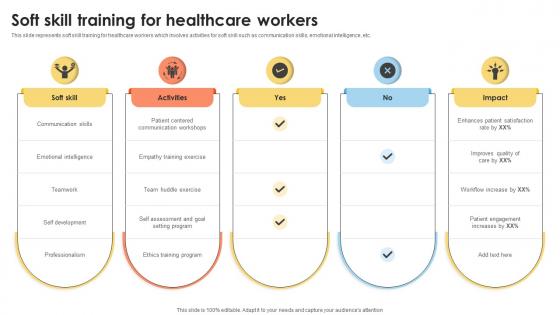
Soft Skill Training For Healthcare Workers




Try Before you Buy Download Free Sample Product
 Impress Your
 Audience
 100%
100% Editable
 Save Hours
 of Time


This slide represents soft skill training for healthcare workers which involves activities for soft skill such as communication skills, emotional intelligence, etc.
People who downloaded this PowerPoint presentation also viewed the following :
Soft Skill Training For Healthcare Workers with all 9 slides:
Use our Soft Skill Training For Healthcare Workers to effectively help you save your valuable time. They are readymade to fit into any presentation structure.








FAQs for Soft Skill Training
Oh man, communication skills make such a difference with patients. Like, when you actually explain stuff clearly and listen, they'll follow their treatment plans way better. Patients feel more confident too. The thing is, good communication helps you catch problems early - people open up more when they trust you. I've honestly seen so many complications that could've been avoided if someone just made patients feel safe to talk. Quick tip that works: ask "What questions do you have?" instead of "Do you have any questions?" Sounds weird but it totally works better.
Dude, empathy is like magic with patients. They actually open up when you listen and acknowledge their fears instead of rushing them out. "It sounds like you're really worried about..." - say something like that and watch them visibly relax. Crazy how much more honest people get about symptoms when they feel heard. Plus you'll catch way more non-verbal stuff when you're actually tuned in. Makes them way more likely to follow through on treatment too. I mean, nobody wants to feel like just another number, right? Building that trust is honestly half the battle.
Honestly, having a solid team makes such a huge difference - you catch mistakes that would've gotten past just one person. Good communication means smoother shift changes and everyone's actually on the same page about treatment plans. Patients pick up on that coordinated vibe too, which helps them trust the process more. Your stress levels drop when you know your colleagues have your back (and vice versa). I'd say just start being the one who speaks up with questions and shares what you're seeing. Oh, and do those quick check-ins with your team regularly. It really does set the tone for everyone else to follow.
Honestly, emotional intelligence is everything - you've gotta read the room when things get tense. Communication across different teams and families is critical too. I'd say start with how you listen in meetings because that's where most leadership problems begin. People just want to feel heard, you know? Healthcare changes so fast that being rigid will destroy your impact. Oh, and conflict resolution skills are a must since you're always juggling competing priorities between departments and budgets. Active listening especially matters when you're dealing with stressed staff. Adaptability probably ties it all together though.
Honestly, active listening is a game changer. You'll catch way more details when you're actually focused on what they're saying instead of planning your response. Patients pick up on that attention too - they feel heard, which builds trust super fast. I've noticed people are way more likely to follow through on treatment when they feel understood. The emotional stuff matters just as much as symptoms sometimes. Quick tip: just repeat back what you heard before responding. Takes maybe 10 seconds but the difference is night and day. Makes the whole interaction feel more real.
Honestly, start with just really listening to your patients - not just their words but how they're sitting, their facial expressions, all that stuff. After rough shifts, take a few minutes to think through what set you off emotionally and why. When patients are being jerks (which happens), try remembering they're probably scared or hurting. I know it's easier said than done. Pause before you react when things get heated - even a few seconds helps. Ask your coworkers how you handle stress, they'll give it to you straight. Oh, and maybe journal about difficult cases once a week? Sounds cheesy but it actually works.
Honestly, conflict resolution can totally make or break how well healthcare teams work together. Handle disagreements the right way and you'll see trust build between doctors, nurses, everyone. Mess it up though? That's when you get those toxic silos and patient care goes downhill fast. I've noticed teams that deal with conflict well actually collaborate way better during emergencies - they're not afraid to call out safety issues either. The trick is tackling problems early before they blow up into something bigger. Those little uncomfortable conversations? They're worth it to avoid drama later.
Healthcare's crazy unpredictable, so you've gotta roll with it. Patients crash out of nowhere. New protocols drop constantly. Technology changes faster than I can keep up with sometimes - nobody wants to be that person still fumbling with the EMR while everyone's moved on. When you're rigid, you miss critical moments that could save someone's life. Honestly, the whole field rewards quick thinking over stubbornness. Try switching up small things in your daily routine first. Builds that flexibility muscle before the real curveballs hit. Trust me, it makes all the difference when things get intense.
Dude, cultural competency is a game changer for patient satisfaction. People just feel more comfortable when you get their background - like asking if they want family involved in decisions or learning a few words in their language. Trust goes way up, and suddenly they're actually following treatment plans. Short sentences work. But then you get these longer moments where everything clicks and patients genuinely want to keep seeing you instead of dreading appointments. I mean, sometimes I forget how huge this stuff is until I see it work. Don't assume your way is the only way - that's honestly half the battle right there.
Dude, the difference good people skills make is honestly crazy - we're talking 20-40% better patient compliance in some studies. When you actually listen and explain stuff clearly, patients trust you way more. They don't feel rushed or like you're judging them, which makes a huge difference. Plus they're way more likely to actually take their meds right and show up for appointments. I've noticed the biggest thing is making it feel like you're working together instead of just telling them what to do. Ask about what's really stopping them from following through - that's where the magic happens.
Honestly, leadership has to actually walk the walk first - if they're not modeling this stuff in meetings and with patients, forget about it. Put soft skills in your performance reviews and promotion requirements because let's be real, people only care about what affects their paycheck. Skip the boring lecture-style training. Do interactive sessions instead and connect them to patient outcomes - that's what actually matters. Daily huddles are perfect for this kind of thing. Oh, and make sure your managers can coach these skills too, not just the clinical stuff. Consistency is everything here.
Look, soft skills are honestly a game-changer for keeping people around. Better communication and empathy = way less workplace drama, and trust me, healthcare has enough stress without dealing with colleagues who can't talk to each other properly. People stick around when they feel supported instead of dealing with toxic BS every day. Plus managers actually notice who works well with others when promotion time comes. My advice? Just invest in some soft skills training for your team. Yeah, it costs money upfront, but it beats constantly hiring new people who'll probably leave in six months anyway.
Honestly, you can't just wait until you're drowning to deal with stress - gotta build it into your routine somehow. Take those lunch breaks for real, do some deep breathing between patients. I know, I know, sounds super basic but exercise and sleep actually help way more than you'd think with those insane shifts. Oh and definitely talk through the rough cases with your coworkers afterward - that stuff sticks with you otherwise. Maybe just pick one thing this week? Like literally commit to doing it every day for seven days straight and see what happens.
Oh man, resource allocation is like 90% negotiation honestly. You're always fighting for your patients while trying not to piss off other departments - they've got their own crap to deal with too. I've found it helps to come prepared with actual data instead of just complaining. Listen to what others need first, then find that sweet spot where everyone wins. Patient outcomes are usually your best argument since nobody can really argue with that. Practice having these convos when things aren't crazy busy. Trust me, when resources get tight (and they will), you'll be glad you built those relationships beforehand.
Honestly, mentorship is a game-changer for soft skills. You get to watch how experienced people handle tough conversations with families or navigate tricky coworker situations. School doesn't teach you that stuff - like, how do you tell someone their loved one isn't improving? Your mentor shows you in real time. They'll call you out when your communication feels off too. Just make sure you find someone who actually wants to coach you, not just let you follow them around. Ask them directly about your bedside manner - that feedback is gold.
-
Innovative and Colorful designs.
-
Thanks for all your great templates they have saved me lots of time and accelerate my presentations. Great product, keep them up!