


Soft Skills Every Salesperson Should Have Training Ppt




Try Before you Buy Download Free Sample Product
 Impress Your
 Audience
 100%
100% Editable
 Save Hours
 of Time


These slides provide an in-depth understanding of various soft skills that are required in sales. These are communication, active listening, empathy, self-motivation, time management, adaptability, goal orientation, relationship building, and collaboration.
People who downloaded this PowerPoint presentation also viewed the following :
Content of this Powerpoint Presentation
Slide 1
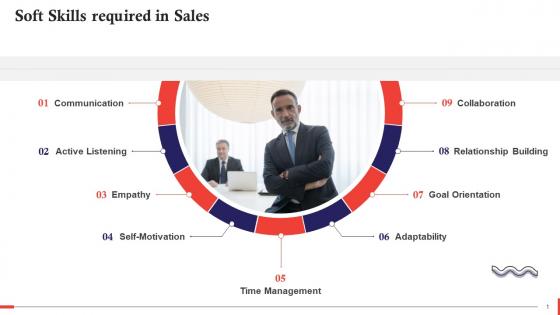
This slide lists soft skills required in sales. These are communication, active listening, empathy, self-motivation, time management, adaptability, goal orientation, relationship building, and collaboration.
Slide 2
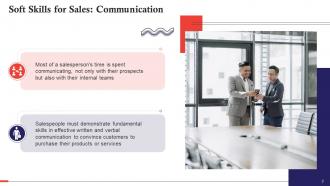
This slide talks about the importance of communication as a soft skill for sales. Most of a salesperson's time is spent communicating, not only with their prospects but also with their internal teams. Hence, salespeople must demonstrate exceptional or master-level skills in effective written and verbal communication.
Slide 3
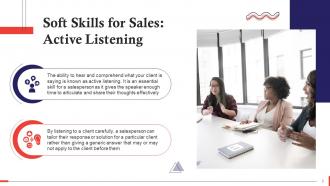
This slide discusses the importance of active listening as a soft skill for sales. The ability to hear and comprehend what your client is saying is known as active listening. It is an essential skill for a salesperson as it gives the speaker enough time to articulate and share their thoughts effectively.
Slide 4
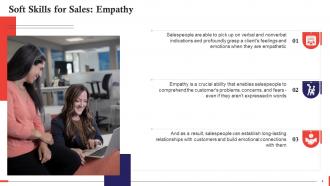
This slide discusses the importance of empathy as a soft skill for sales. Salespeople are able to pick up on verbal and nonverbal indications and have a profound grasp of a client's feelings and emotions when they are empathetic.
Slide 5
This slide talks about the importance of self-motivation as a soft skill for sales. Sales reps need to be diligent and self-motivated. The finest sales professionals ensure they are consistent in their job despite their career ups and downs.
Slide 6
This slide discusses the importance of time management as a soft skill for sales. Time management is the ability to maximize productivity in high-performance and revenue-generating tasks.
Slide 7
This slide discusses the importance of adaptability as a soft skill for sales. An adaptable salesperson creates a difference that benefits an entire sales organization's longevity and prosperity in a fast-evolving market.
Slide 8
This slide discusses the importance of goal orientation as a soft skill for sales. All salespeople have monthly, quarterly, or annual sales targets and metrics they must meet. A salesperson's success depends on their capacity to meet these sales objectives.
Slide 9
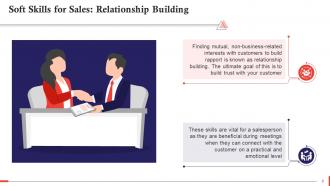
This slide talks about the importance of relationship building as a soft skill for sales. Finding mutual, non-business-related interests with customers to build rapport is known as relationship building. The goal of this is to build trust with your customer.
Slide 10
This slide discusses the importance of collaboration as a soft skill for sales. Salespeople must work closely with organizational divisions like inside sales, manufacturing, and CRM. Effective and efficient collaboration with these departments can help in making a salesperson's job easier.
Soft Skills Every Salesperson Should Have Training Ppt with all 26 slides:
Use our Soft Skills Every Salesperson Should Have Training Ppt to effectively help you save your valuable time. They are readymade to fit into any presentation structure.











FAQs for Soft Skills Every Salesperson Should
Dude, active listening is seriously a game changer in sales. Most people just wait for their turn to talk (guilty as charged lol), but when you actually pay attention, you pick up on the real stuff - their hesitations, pain points, even how they describe their problems. That intel is gold because then you can tailor everything to what they actually need. Here's what works: ask follow-up questions about what they just said instead of jumping straight to your next pitch. You'll be shocked how much more they open up when they feel heard.
Look, empathy is huge because you'll actually get what your customers are dealing with instead of just throwing features at them. Most salespeople don't listen - they're already planning their next pitch while the customer's talking. Ask "how does that affect you?" and then shut up. Really listen to their frustrations. When people feel heard, they trust you more. Then you can match your solution to their actual problems, not what you assume they need. Also helps you read the vibe in conversations better so you don't steamroll them when they're clearly not ready.
Honestly, preparation is everything. Research their needs and constraints beforehand - who makes decisions, what they're actually worried about. During the conversation, ask open questions and genuinely listen instead of just waiting to jump in (we all do this). Try summarizing what they said before you respond. Also, have backup options ready so you're not stuck if they say no to your main ask. Oh, and practice with coworkers first! Role-play the awkward scenarios. Trust me, it helps way more than you'd think.
Dude, emotional intelligence is everything when dealing with clients. You basically become a mind reader - picking up on stress, excitement, whatever they're throwing at you. Then you can actually adjust instead of just steamrolling through your usual spiel. Honestly, the empathy part is what really gets them. Once clients feel like you actually get their situation, they'll trust you way more and tell you what they really need. Oh, and you won't lose your cool during awkward rejections either. Just start watching their body language more this week and listen better.
Honestly, communication can make or break your sales - I've seen it happen so many times. Listen to what customers actually want instead of just pitching at them. Ask good questions, then shut up and let them talk (this is harder than it sounds lol). Building real rapport matters way more than people think. When you nail this stuff, objections become easier to handle and your close rates go up. Poor communicators wonder why deals keep falling through - it's because they never made the customer feel heard. Start small: ask a question, then actually wait for their full answer before jumping back in. Works every time.
Look for real common ground first - same school, favorite coffee place, whatever clicks. Listen to what they're actually saying and ask about their specific problems. Match how they talk too. Fast and direct? Do that. More thoughtful? Slow your roll a bit. Honestly, people just want to work with someone they actually like, so don't be fake about it. Remember the random stuff they mention - their kid's soccer game or whatever - and bring it up later. It sounds cheesy but it works. Be yourself while genuinely caring about fixing their business headaches.
Okay so adaptability in sales is basically reading the room and switching gears when your usual pitch falls flat. You gotta pick up on how they communicate - some prospects want hard data, others connect with stories. I swear it's like being a social detective sometimes. Don't just bulldoze through your standard spiel. Match their energy instead. Ask questions upfront to figure out what'll actually resonate with them. When you adjust to what matters to them specifically, you'll build rapport way faster and handle objections better. It's honestly one of those skills that separates good salespeople from great ones.
Honestly, you can't crush sales targets flying solo - I learned this the hard way. Marketing feeds you leads, customer service keeps clients happy, other reps share gold nuggets about prospects. The team players I know keep leveling up while lone wolves hit walls. When everyone's rowing in the same direction, those numbers suddenly don't look so scary. Oh, and here's something that actually works - drop one helpful tip to a teammate this week. Watch how fast good karma circles back to you.
Dude, conflict resolution is seriously clutch in sales. When prospects get pissed or push back hard, you can actually flip that into trust instead of just getting defensive. Listen to what they're really saying and validate their frustration - even when they're being totally unreasonable, there's usually something real underneath. I've watched reps turn angry prospects into their biggest advocates just by staying calm and focusing on solutions. Active listening is huge here. Oh and don't take their attitude personally - that's when things go sideways fast.
Honestly, it's all about listening way more than talking - sounds weird for sales, right? Ask open-ended questions to figure out what's actually bothering them. Then connect your solution to their specific problems instead of just rattling off features. Stories work great too - share examples of other customers who had similar issues. When they push back, treat it like a normal conversation, not some debate you have to win. Oh, and try that 70/30 thing where they're talking most of the time while you listen and ask follow-ups. Works better than you'd think.
Dude, time management is everything in sales - seriously changes how many decent prospects you can actually hit up. My first year I was running around "busy" all the time but closing absolutely nothing lol. Here's the thing: when you're organized, you can block out real time for prospecting and follow-ups instead of just putting out random fires. I'm big on protecting your best energy hours for actual selling, not admin BS. Try time-blocking your calendar first - it sounds basic but works. You'll be way more strategic about when you make calls versus when you handle the boring stuff.
Think of networking like hitting the gym, but for your people skills. Every time you chat with someone new, you're getting better at reading the room and building connections. You pick up so much just watching how other successful salespeople work their magic - honestly, that alone is worth showing up for. Coffee meetings, industry events, whatever - I treat them all as practice sessions. The wider variety of people you meet, the easier it gets to vibe with different types of prospects later. Sure, leads are great, but the real win is sharpening those conversation skills.
Dude, storytelling is everything in sales pitches. People remember stories way better than boring stats - there's actual research on this stuff. When you share how your product solved another client's problem, prospects start picturing themselves in that exact scenario. Their brain goes "wait, that could totally be me." Way more powerful than just listing features like a robot. You'll want to keep stories short and super relevant to their situation though. Oh and always connect it back to how you can get them the same results. Trust me, it works so much better than traditional sales speak.
Don't sit on feedback for weeks - that's just awkward for everyone. When you're giving it, call out specific behaviors instead of personality stuff. So like "interrupting the client made them go quiet" vs "you're pushy," you know? Getting feedback is honestly harder. Ask follow-up questions and try not to get all defensive (still working on this myself lol). Set up regular check-ins with your boss instead of waiting for those painful annual reviews. Oh, and always wrap up with actual next steps. Otherwise you'll both forget what you talked about by next week.
Look, rejection's gonna sting no matter what - that's just how it is. But resilience helps you shake it off way faster instead of spiraling for hours. You start seeing each "no" as practice rather than proof you suck at this. Honestly took me forever to figure that out when I first started. The bounce-back time gets shorter, your confidence stays more stable, and you don't burn out as quickly. I know it sounds cheesy, but that whole "each rejection gets you closer to yes" thing? It genuinely helped me stay sane during rough stretches.
-
Keep doing the good work guys. Surpass the needs and expectations always!!
-
Crisp and neat slides. Makes it fun and easier to curate presentations.