


Essential Selling Skills Every Salesperson Should Know Training Ppt




Try Before you Buy Download Free Sample Product
 Impress Your
 Audience
 100%
100% Editable
 Save Hours
 of Time


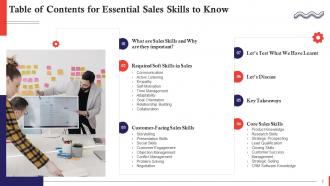
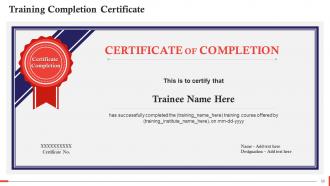
This training module on Essential Selling Skills Every Sales Person Should Know in detail covers Soft Skills Active Listening, Empathy, Self-Motivation, Time Management, Adaptability, Goal Orientation, Relationship Building, Collaboration, Customer-Facing Sales Skills Storytelling, Presentation, Customer Engagement, Objection Management, Conflict Management, Problem-Solving, Negotiation and Core Sales Skills Product Knowledge, Strategic Prospecting, Lead Qualification, Lead Closing, Strategic Selling, CRM Software Knowledge. It also includes Key Takeaways and Discussion Questions related to the topic to make the coaching session more interactive. The deck has PPT slides on About Us, Vision, Mission, Goal, 30-60-90 Days Plan, Timeline, Roadmap, Training Completion Certificate, and Energizer Activities. It also includes a Client Proposal and Assessment Form for training evaluation.
People who downloaded this PowerPoint presentation also viewed the following :
Content of this Powerpoint Presentation
Slide 4
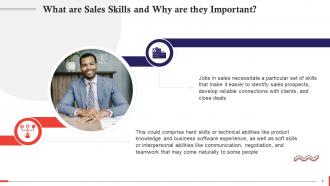
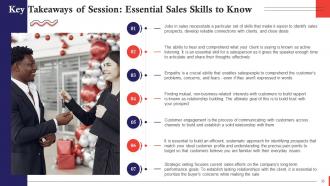
This slide gives an introduction to sales skills and their importance. Jobs in sales necessitate a particular set of skills that make it easier to identify sales prospects, develop reliable connections with clients, and close deals.
Slide 5
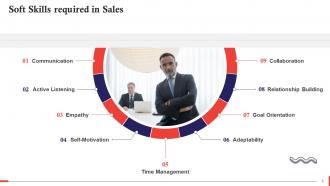
This slide lists soft skills required in sales. These are communication, active listening, empathy, self-motivation, time management, adaptability, goal orientation, relationship building, and collaboration.
Slide 6
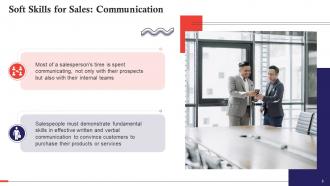
This slide talks about the importance of communication as a soft skill for sales. Most of a salesperson's time is spent communicating, not only with their prospects but also with their internal teams. Hence, salespeople must demonstrate exceptional or master-level skills in effective written and verbal communication.
Slide 7
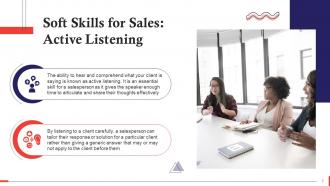
This slide discusses the importance of active listening as a soft skill for sales. The ability to hear and comprehend what your client is saying is known as active listening. It is an essential skill for a salesperson as it gives the speaker enough time to articulate and share their thoughts effectively.
Slide 8
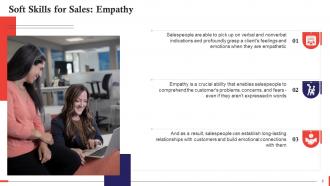
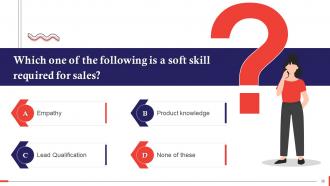
This slide discusses the importance of empathy as a soft skill for sales. Salespeople are able to pick up on verbal and nonverbal indications and have a profound grasp of a client's feelings and emotions when they are empathetic.
Slide 9
This slide talks about the importance of self-motivation as a soft skill for sales. Sales reps need to be diligent and self-motivated. The finest sales professionals ensure they are consistent in their job despite their career ups and downs.
Slide 10
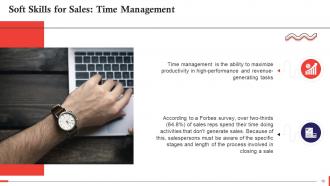
This slide discusses the importance of time management as a soft skill for sales. Time management is the ability to maximize productivity in high-performance and revenue-generating tasks.
Slide 11
This slide discusses the importance of adaptability as a soft skill for sales. An adaptable salesperson creates a difference that benefits an entire sales organization's longevity and prosperity in a fast-evolving market.
Slide 12
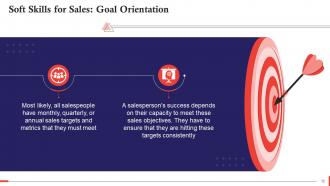
This slide discusses the importance of goal orientation as a soft skill for sales. All salespeople have monthly, quarterly, or annual sales targets and metrics they must meet. A salesperson's success depends on their capacity to meet these sales objectives.
Slide 13
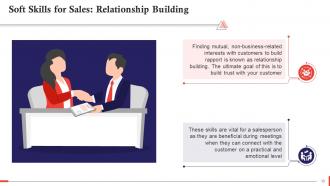
This slide talks about the importance of relationship building as a soft skill for sales. Finding mutual, non-business-related interests with customers to build rapport is known as relationship building. The goal of this is to build trust with your customer.
Slide 14
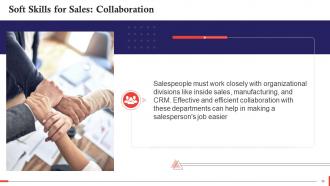
This slide discusses the importance of collaboration as a soft skill for sales. Salespeople must work closely with organizational divisions like inside sales, manufacturing, and CRM. Effective and efficient collaboration with these departments can help in making a salesperson's job easier.
Slide 16
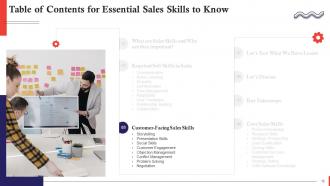
This slide lists customer-facing sales skills. These are storytelling, presentation skills, social skills, customer engagement, objection management, conflict management, problem solving, and negotiation.
Slide 17
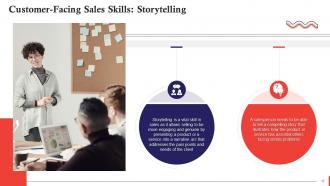
This slide talks about the importance of storytelling as a customer facing sales skill. Storytelling is a vital skill in sales as it allows selling to be more engaging and genuine by presenting a product or a service into a narrative arc that addresses the significant pain points and needs of the client.
Slide 18
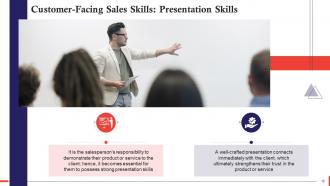
This slide talks about the importance of salesperson's responsibility to demonstrate their product or service to the client; hence, it becomes essential for them to possess strong presentation skills.
Slide 19
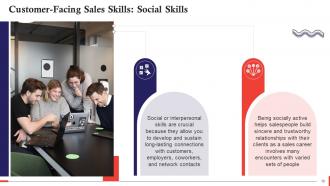
This slide discusses the importance of social skills as a customer facing sales skill. Social or interpersonal skills are crucial because they allow you to develop and sustain long-lasting connections with customers, employers, coworkers, and network contacts.
Slide 20
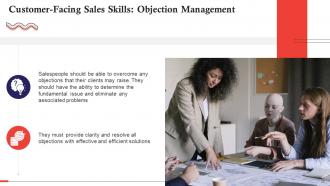
This slide discusses the importance of objection management as a customer facing sales skill. Salespeople should be able to overcome any objections that their clients may raise. They should have the ability to determine the fundamental issue and eliminate any associated problems.
Slide 21
This slide talks about the importance of customer engagement as a customer-facing sales skill. Customer engagement is the process of communicating with customers across channels to build and establish a solid relationship with them.
Slide 22
This slide discusses the importance of conflict management as a customer facing sales skill. Learning and practicing how to handle conflict is a crucial component of professional sales. There may be instances of conflicts involving customers, peers, management, and other parties.
Slide 23
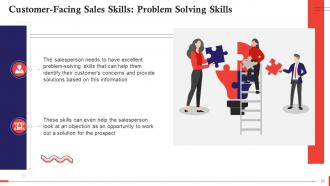
This slide talks about the importance of problem-solving skills as a customer facing sales skill. The salesperson needs to have excellent problem-solving skills that can help them identify their customer's concerns and provide solutions
Slide 24
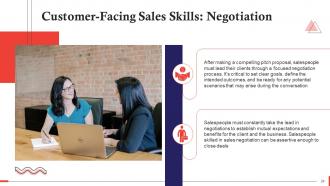
This slide discusses the importance of negotiation as a core sales skill. After making a compelling pitch proposal, salespeople must lead their clients through a focused negotiation process. It's critical to set clear goals, define the intended outcomes, and be ready for any potential other scenarios that may arise during the conversation.
Slide 26
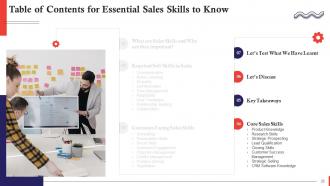
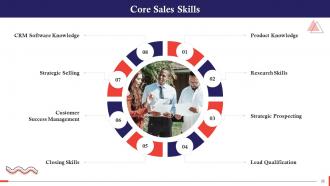
This slide lists core sales skills. These are product knowledge, research skills, strategic prospecting, lead qualification, closing skills, customer success management, strategic selling, and CRM software knowledge.
Slide 27
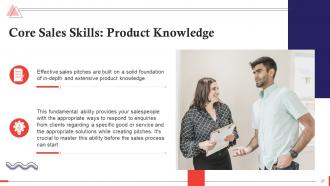
This slide discusses the importance of product knowledge as a core sales skill. Effective sales pitches are built on a solid foundation of in-depth and extensive product knowledge. It's crucial to master this ability before the sales process can start.
Slide 28
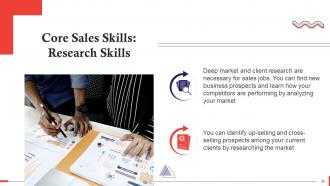
This slide talks about the importance of research skills as a core sales skill. Deep market and client research are necessary for sales jobs. You can find new business prospects and learn how your competitors are performing by analyzing your market.
Slide 29
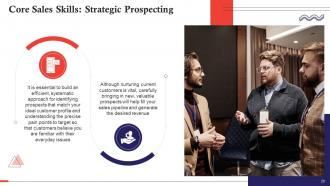
This slide talks about the importance of strategic prospecting as a core sales skill. It is essential to build an efficient, systematic approach for identifying prospects that match your ideal customer profile and understanding the precise pain points to target so that customers believe you are familiar with their everyday issues.
Slide 30
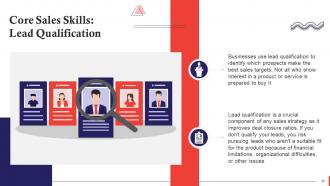
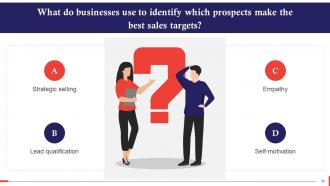
This slide talks about the importance of lead qualification as a core sales skill. Businesses use lead qualification to identify which prospects make the best sales targets. Lead qualification is a crucial component of any sales strategy as it improves deal closure ratios
Slide 31
This slide discusses the importance of closing skills as a core sales skill. As closing is the main objective of every sales effort, every salesperson must possess excellent closing skills. The best salespeople prioritize the customer's demands throughout the sales cycle
Slide 32
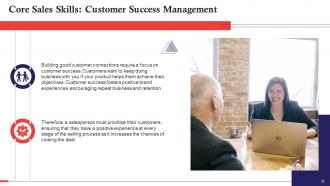
This slide discusses the importance of customer success management as a core sales skill. Building good customer connections requires a focus on customer success. Customers want to keep doing business with you if your product helps them achieve their objectives. Customer success fosters positive brand experiences, encouraging repeat business and retention.
Slide 33
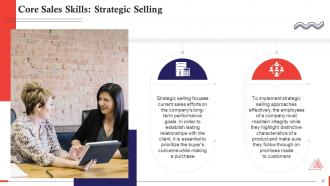
This slide talks about the importance of strategic selling as a core sales skill. Strategic selling focuses current sales efforts on the company's long-term performance goals. In order to establish lasting relationships with the client, it is essential to prioritize the buyer's concerns while they make a purchase from you.
Slide 34
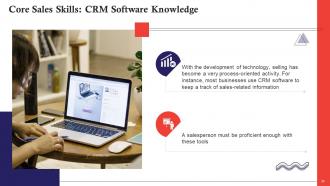
This slide discusses the importance of CRM software knowledge as a core sales skill. With the development of technology, selling has become a very process-oriented activity. A salesperson must be proficient enough with these tools.
Slide 51 to 66
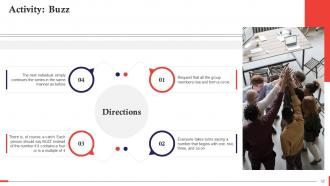
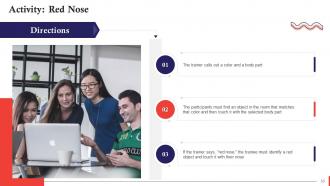
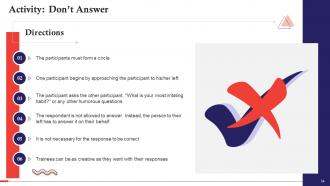
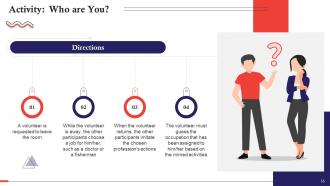
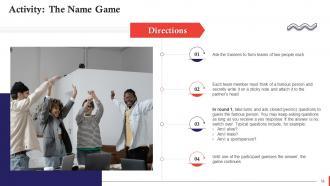
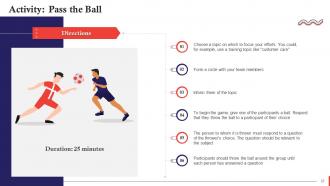
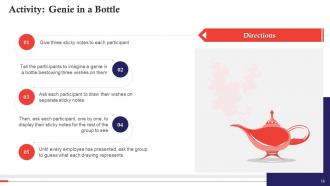
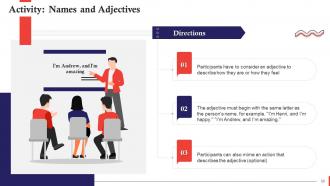
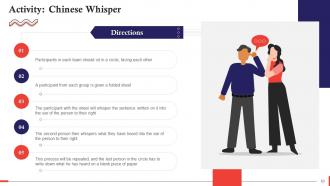
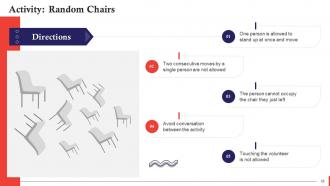
These slides contain energizer activities to engage the audience of the training session.
Slide 67 to 94
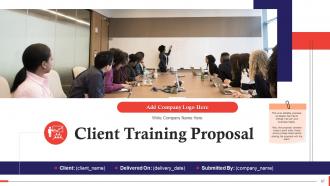
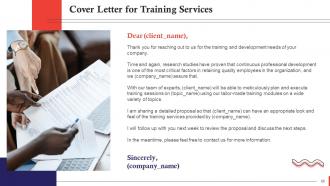
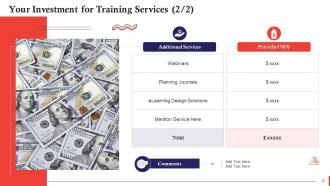
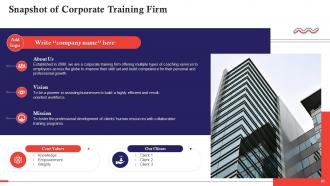
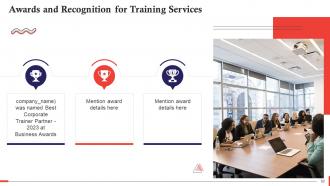
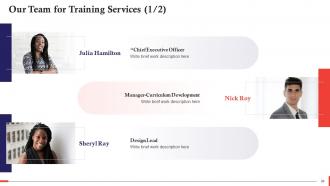
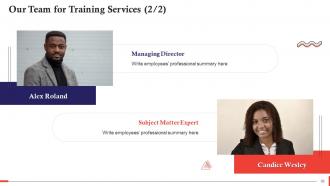
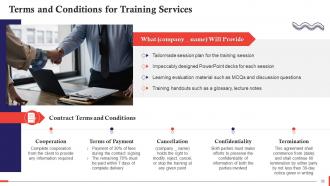
These slides contain a training proposal covering what the company providing corporate training can accomplish for the client.
Slide 95 to 97
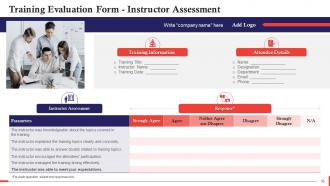
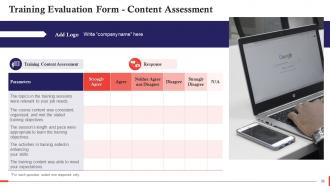
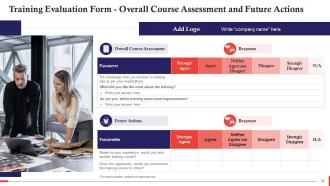
These slides include a training evaluation form for instructor, content and course assessment.
Essential Selling Skills Every Salesperson Should Know Training Ppt with all 102 slides:
Use our Essential Selling Skills Every Salesperson Should Know Training Ppt to effectively help you save your valuable time. They are readymade to fit into any presentation structure.





















FAQs for Essential Selling Skills Every Salesperson Should
Honestly? Focus on these three: actually listening, building real relationships, and not freaking out when people object. Most reps just wait for their turn to talk instead of hearing what prospects say. You'll miss obvious buying signals that way. People buy from folks they trust - doesn't matter how much you know about your product if they don't like you. And objections aren't personal attacks, they're just asking for more info. I used to take them way too seriously. Try this stuff on your next few calls. You'll notice the difference pretty quick.
Dude, active listening is a game changer for sales. When you actually focus on what they're saying instead of planning your pitch, you catch problems they don't even mention directly. People can totally tell when you're engaged vs just waiting to talk - it's so obvious. I always repeat back what I heard before responding, builds trust instantly. Shows you care about solving their actual issues, not just selling stuff. My buddy taught me this trick and honestly? It works way better than any fancy sales technique I've tried.
Honestly, emotional intelligence is everything in sales. You've gotta read the room and match people's energy. If someone's freaking out about budget, don't be that pushy salesperson - that never works. Instead, acknowledge their stress and show how you can actually help solve it. Ask questions that prove you get their situation. Listen way more than you talk (I know, easier said than done). But seriously, try active listening on your next few calls. People can tell when you're actually hearing them vs just waiting for your turn to pitch. The difference in their response is night and day.
Stories hit different than just listing features, you know? Like instead of saying "boosts efficiency 50%" tell them about Sarah in accounting who suddenly finished her reports in half the time with your software. People actually picture themselves doing that. Way more memorable too. The cool thing is stories handle objections naturally - you're literally showing problems getting solved. Keep them short and make sure they match what your prospect's dealing with. Oh, and always wrap up with the exact outcome they're after. Works every time.
Honestly, just treat them like actual people instead of walking dollar signs. Ask real questions about what's bugging them at work and actually listen to their answers. Share stuff from your own experience when it's relevant. Oh, and match however they talk - formal with formal, casual with casual, you know? Here's something weird that works: admit when you don't know something. Builds way more trust than BS-ing your way through. I'm genuinely curious about their day-to-day problems, not just trying to sell them stuff. Next call, bring up something personal they mentioned last time. Sounds cheesy but it's gold.
Honestly, research is everything - don't walk in there blind or you'll look like an amateur. Hook them right away with something that grabs attention. Ask good questions first before pitching anything, figure out what's actually bothering them. When you do present, talk benefits that fix their specific mess, not just random features. Objections will come up so handle them smoothly. Always ask what's next - that part trips people up sometimes. Oh and practice your flow beforehand so it doesn't sound like you're reading a script. Trust me on this one.
Honestly, objections are where you make your money. When someone pushes back, they're basically handing you a roadmap to close the deal. Don't get defensive - dig deeper with questions to figure out what's really bugging them. I actually get excited when people say "too expensive" now (weird, I know). That's my cue to pull out ROI numbers and success stories that prove the value. Short objections? They're still shopping. The longer complaints mean they're seriously thinking about buying but need that one last worry handled. Just treat each pushback like a mini problem-solving session.
Honestly, scarcity is your best friend here. Limited inventory, only a few spots left - that stuff works. Just don't go overboard because people can smell BS from a mile away. Time-sensitive pricing hits different too - "this deal ends Friday" creates real pressure. Market conditions are solid angles, like mentioning prices increase next quarter. One thing I've noticed that's super effective? Show them what waiting costs. Paint that picture of what happens if they don't act now. The key is making sure your urgency isn't fake - tie it to actual business stuff, not manufactured drama.
Buyer personas are basically like having cheat codes for sales calls. You'll know exactly what problems keep your prospects up at night and can skip all the generic feature dumps that make people's eyes glaze over. I learned this the hard way after way too many failed pitches! The cool thing is you can predict their objections before they even say them. Start with your best customers - ask what actually made them buy. Once you get their decision-making process down, you can match your style to how they prefer to communicate. Saves so much time.
Look, most sales don't happen on the first try - people need time to think it over. Following up keeps you in their head when they're finally ready to pull the trigger. It also lets you tackle any doubts they might have. Here's the thing though - your competition is probably terrible at this, so you've got an edge if you actually do it right. Just don't be annoying about it. Share useful stuff, ask about their timeline, maybe throw in some insights they'd actually care about. Make it super easy for them to say yes when the moment hits.
Dude, social media is clutch for warming up prospects before you call them. LinkedIn's obviously perfect for stalking - I mean researching - potential clients and engaging with their posts. You can also share industry stuff to look smart (but actually be helpful, not salesy). Twitter and Instagram are great for seeing what people are complaining about in your industry. Honestly, I probably waste too much time on there, but hey, it counts as work research. Don't be that pushy person though. Start small - maybe comment on like 5 prospect posts this week?
Honestly? Most people talk way too much instead of actually listening. You'll sound robotic if you just pitch features without figuring out what's bugging them first. I've seen seasoned reps mess this up constantly. Don't get all defensive when they object either - that's literally their job. Oh, and this sounds obvious but you'd be shocked how many people forget to actually ASK for the sale at the end. Listen to what they're saying, then connect your stuff back to their specific problems. Makes all the difference.
Dude, prospecting and closing are like two totally different games. When you're prospecting, you're basically cold-calling strangers who don't wanna hear from you - requires thick skin and decent research skills. Closing though? That's pure psychology. You're reading body language, handling their concerns, walking them through buying decisions. One's about starting conversations, the other's finishing them right. Honestly took me forever to realize they needed separate practice. It's kinda like being good at basketball doesn't automatically make you great at tennis, you know? Work on them individually.
Dude, your body language is everything - it literally makes or breaks deals before you say a word. I figured this out the hard way when I kept losing prospects and had no clue why. Eye contact and leaning in slightly shows you're actually paying attention. Don't cross your arms or check your phone - instant turnoff. Watch them too though. If they're pulling back or looking at their watch, you've already lost them. Honestly, practicing in front of a mirror feels weird but it works. Match their energy level and you'll seem way more trustworthy.
Role-playing is honestly the best thing you can do for your sales team. Let them practice handling tough objections without the stress of losing real deals - it's basically a practice gym for sales. Your team can throw different scenarios at each other and catch mistakes before they happen with actual customers. Plus everyone learns new techniques by watching how others handle the same situation. I'd start with the most common objections you face and have people take turns being the difficult customer. The group feedback after each round is where the magic happens.
-
I am really satisfied with their XYZ products. Used their slides for my business presentations and now I am taking their help for my son's high-school assignments. Super satisfied!!
-
Thank you for offering such fantastic custom design services. The team is really helpful and innovative. In a very short time, I received my personalized template.